Tag: dress

  • Uniqlo to open global flagship in former Bicqlo site in Shinjuku

    Uniqlo to open global flagship in former Bicqlo site in Shinjuku

    Uniqlo is set to open a new global flagship store in Shinjuku, replacing the former Bicqlo location, as part of its aggressive expansion plan.

    In addition to offering its range of clothing and accessories, the store will feature unique elements such as Uniqlo Flower, Uniqlo Coffee, and Re:Uniqlo.

    Uniqlo Flower is located on the first floor, selling seasonal flowers and will be displayed at the store’s entrance. On the second floor, Uniqlo Coffee will serve beverages and local sweets.

    Additionally, the third floor will house Re:Uniqlo Studio where customers can access embroidery and clothing repair services, encouraging shoppers to care for and extend the life of their garments.

    To celebrate its opening, Uniqlo will release an exclusive Shinjuku Mainstore Special, which will feature select Western products not previously available in Japan; and a Shinjuku Department Store Guidebook, a booklet introducing the town, insights from staff from long-established local stores, and cultural figures from the district.

  • Uniqlo Vietnam opens new store in Ho Chi Minh City

    Uniqlo Vietnam opens new store in Ho Chi Minh City

    Uniqlo Vietnam is to open Ho Chi Minh’s second store this year despite the coronavirus outbreak.

    Located at SC Vivo City shopping mall in District 7, the city’s second Uniqlo Vietnam store will occupy more than 2000sqm of area, featuring its LifeWear products for males, females and kids.

    The opening date has yet to be disclosed, but the store is expected to open this spring/summer with the interior fit out well underway.

    “We are aware of the huge demand from Vietnamese customers for Uniqlo products,” said Osamu Ikezoe, Co-CEO of Uniqlo Vietnam. “We are excited to open the SC Vivo City store to introduce our fashion philosophy LifeWear to our customers.”

    Osamu said Uniqlo Vietnam plans three more stores this year. According to a prior company statement, the brand aims to operate at least three stores in Hanoi and eventually reach up to 20 nationwide.

    Earlier this month, Uniqlo Vietnam made its Hanoi debut, attracting more than 2000 people on its opening day.

  • Esprit’s restructuring shows first Results

    Esprit’s restructuring shows first Results

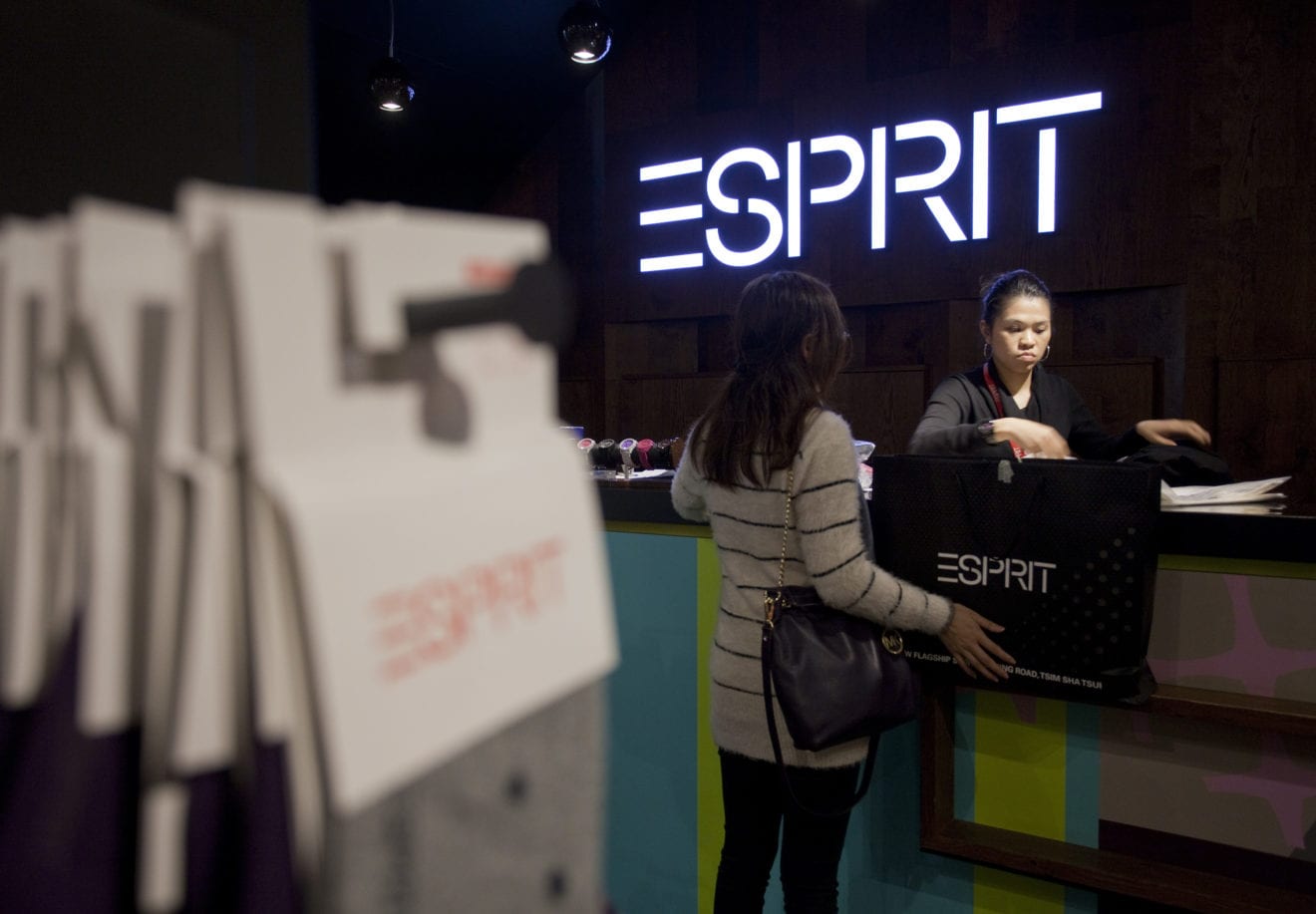
    Esprit’s restructure is beginning to pay off, the company says, despite another quarterly same-store-sales decline.

    For the three months to March 31, Esprit sales were HK$3.156 billion (US$402.3 million), down 11.6 per cent in local currency on the same period a year earlier. However, the company said that marks an improvement on the 12.4 per cent reduction in retail space occupied by the fashion brand.

    “This is the first-time since the first quarter of 2017-18 where the group recorded a quarterly revenue decline that is less than the corresponding space reduction,” the company said in a stock-exchange filing.

    “It is worth noting that while the quarter recorded a revenue decline, the rate of decline has continued to narrow quarter-on-quarter, reflecting a positive trend of improvement.”

    During the first quarter to September 30, sales declined 16.2 per cent, in the next quarter by 12.5 per cent and now to 11.6 per cent.

    The “improvement” was mainly driven by Germany which accounted for the largest share of the group’s sales. For Asia Pacific, the higher rate of revenue decline in the second quarter and third quarter was mainly due to the group exiting Australia and New Zealand, where all stores were closed by the end of last September as part of Esprit’s restructure.

    The company said it remains focused on the execution of its Strategy Plan to restore Esprit to sustainable growth and profitability.

    “Management is encouraged by the quarter-on-quarter improvements seen in different aspects of the business … and the progress of the strategic initiatives are progressing well and on track.

    The group is encouraged by the initial progress achieved during the early stages of the Strategy Plan, and this gives us confidence that we are on the right track. However, it is important to appreciate that the strategic closure of loss-making stores will exert pressure on our top-line in the short term, and as other initiatives are still work-in-progress at this stage, it will require time to make the corresponding improvements in brand and product visible to our customers for attracting them back into Esprit stores.”

  • Islamic clothing market growing to US$88bn by 2025

    Islamic clothing market growing to US$88bn by 2025

    The global Islamic clothing market is expected to reach US$88.35 billion by 2025, according to a new report by US marketing and consulting firm Grand View Research. Increasing expenditure by Islamic populations on lifestyle and apparels, especially among the wealthy, elite, and traditional Middle Eastern populations, is expected to propel demand.

    In 2017, ethnic wear accounted for 70.9 per cent market share, in terms of revenue, owing to rising demand for abayas, hijabs, thobes and jubbas in countries with a high Islamic population. The burkha and naqaab segment is expected to expand at a CAGR of 5.4 per cent from 2017 to 2025, owing to increasing demand from Middle Eastern countries – including Saudi Arabia, the UAE, and Iraq.

    Sustainable fashion is expected to register a CAGR of 4.9 per cent over the forecast period on account of the shifting focus of leading fashion brands towards the development of innovative clothing options for the younger population. The Asia-Pacific region accounted for 31.3 per cent of revenue in 2017, with more than 63 per cent of the world’s Muslim population located in Indonesia, Pakistan, India, Bangladesh, Myanmar and Morocco.

    Key players operating in the Islamic clothing market include House of Fraser, Marks & Spencer, Aab, H&M, and Mango, which are catering to the rising demand for diverse options from different parts of the world.

    Major countries outside the Western fashion industry contributing to a significant share include Malaysia, Turkey, and Indonesia, where the industry is highly lucrative.

    However the research says controversies around losing the ethnic value of Muslim clothing due to its shift towards mainstream fashion industry may hamper market growth. Initiation of various marketing campaigns by industry players in line with maintaining the core of the Muslim precepts – Sharia, or the Islamic law – is projected to propel growth of the Islamic clothing market.

    In addition, increasing demand for modest-yet-fashionable clothing, especially from the younger generation with high purchasing power, is likely to complement market growth.

    Increasing reservations regarding over-commercialisation of what is primarily meant to be a rigorous religious mandate can pose a challenge to market players. In addition, involvement of multinational fashion brands is projected to restrain growth of the small Islamic clothing companies.

  • Matching mom-and-daughter outfit is a new trend

    Matching mom-and-daughter outfit is a new trend

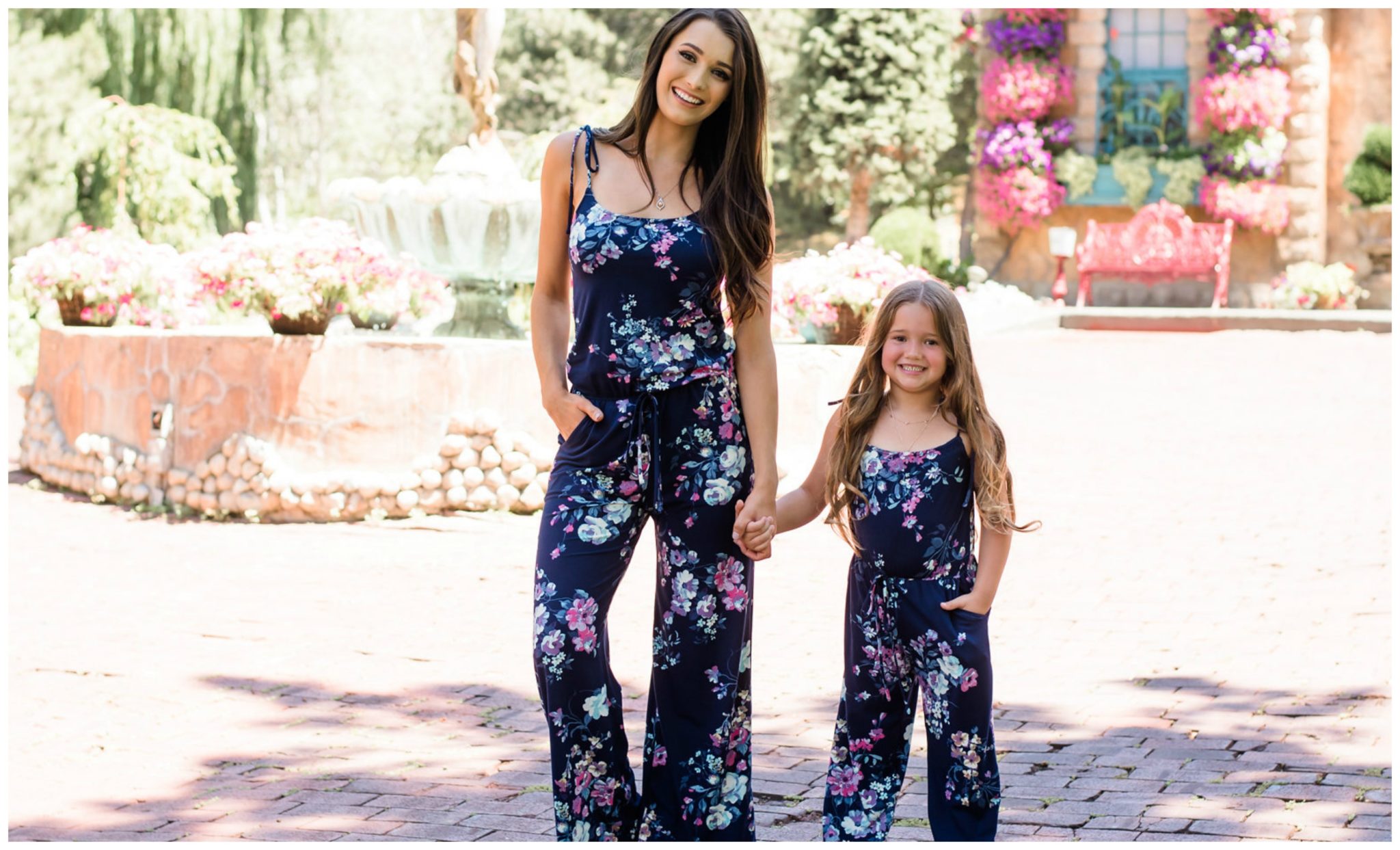
    The luxury childrenswear market is forecast to reach $6.6 billion in 2018, up by 3.8 percent year-on-year, presenting ample growth opportunities as spending power increases and parents dish out upwards of $500 for a pair of miniature Gucci loafers to match their own.

    Brands from Gucci and Balenciaga through to Burberry have their own multi-million dollar childrenswear lines (the latter made £117 million in revenue in 2017, about $153 million) which largely shrink runway looks from ready-to-wear collections to fit young children rather than designing them from scratch, hoping to bank on a mother’s desire to wear matching pieces with her daughter.

    But putting celebrity power to one side, as Kim Kardashian West signaled that mini-me dressing is once again big business by stepping out in a matching outfit with her daughter, what else is driving this phenomenon that seems to reappear every few years?

    “Childrenswear is increasingly trend-oriented,” says Nathalie Christen-Genty, the founder of Paris-based Melijoe, the luxury e-commerce site dubbed “the Net-a-Porter for childrenswear.” “A few years ago, childrenswear was dictated by just a few kids-only brands and parents’ motivation to buy was first and foremost driven by practicality,” meaning pieces for children were designed specifically for them with a timeless and classic design in mind.

    In the recent past, matchy-matchy ensembles were considered passé, reminiscent of bygone eras like the 1960s when women would make garments for themselves and their children from the same piece of fabric.

    When luxury brands began launching childrenswear lines in the 2000s, “they didn’t think it would be big business,” says Giuliana Parabiago, a consultant at Pitti Bimbo, a key international childrenswear trade show where the latest trends are often discovered. They would use past-season styles that would be delayed by six months or a year, she says, but now childrenswear and ready-to-wear runs at the same speed. “This new generation wants to be young — and matching.”

    Chloé launched its children’s line in 2010 with licensee Children Worldwide Fashion (CFW), which also makes lines for Givenchy, DKNY and Little Marc Jacobs.

    For the current season, stand-out pieces include a velvet bomber jacket with horse embroidery and a pair of suede ankle boots — mini-versions of products creative director Natacha Ramsay-Levi sent down the runway.

    “The pieces which are obviously Chloé, [for instance] the horse pattern, tend to perform better,” says Geoffroy de la Bourdonnaye, the brand’s chief executive who credits the success of mini-sized versions to the fact that some “mothers take pride in seeing their daughters look like themselves” and that others want “to share the brand’s DNA of being ‘free’ with their children.”

    “The [childrenswear] business has consistently grown for the last eight years,” he adds. “The countries that spend a lot of money to dress their kids tend to be Russia and the Middle East, along with China. Countries in Latin America also invest in their kids.”

    While Chloé’s relationship with its licensee means there is constant contact with the ready-to-wear design studio and the capacity for CWF to select the runway pieces it wants to adapt for children, Dolce & Gabbana’s approach was to take its line in-house allowing it to have complete control like Ralph Lauren, Burberry and Dior Baby who also go it alone.

    However, such arrangements are still unusual; most luxury brands sign with a handful of specialist licensees. Simonetta produces childrenswear for Balmain and Fendi Kids; Kidiliz Group has the license for Kenzo Kids, Paul Smith and Levi’s Kids; and Brava Kid takes care of the brands under the OTB umbrella which include Diesel, Marni and Trussardi Junior.

    The reason that the license route is so popular is that childrenswear requires an expert hand since it is not as simple as it may seem to scale down a garment pattern to fit the body shape of a child. The specialist experience on offer by the licensed manufacturers means they also understand intuitively how to make an outfit appropriate for children.

    The movement has also helped drive childrenswear into the same trend cycle as womenswear as brands respond to demand by bringing out more novelty.

    “Children’s lines [now] have their long-awaited collections as much as the ready-to-wear for the parents,” says Emi Ozmen, the mother of one of the child vloggers behind Silver and Lux.

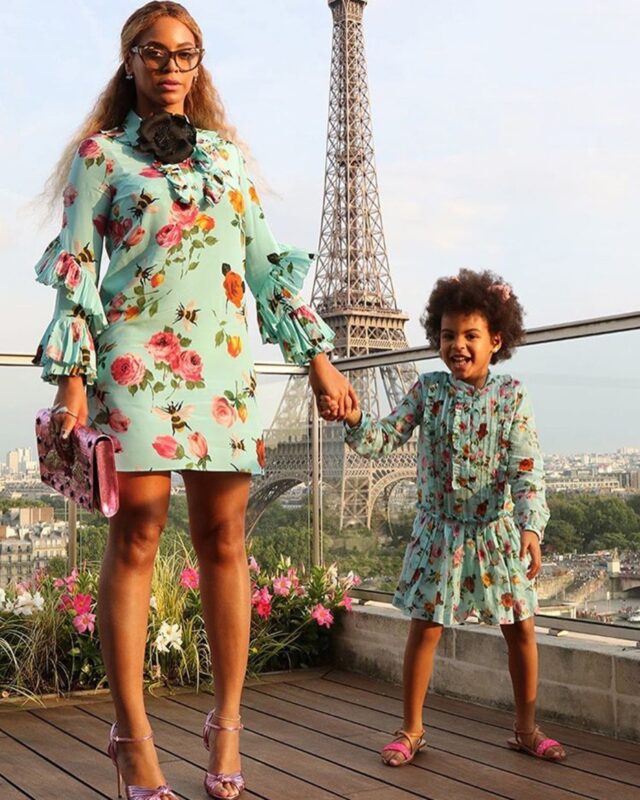
    Source: @beyonce

    Dolce & Gabbana launched a four-week kids pop-up at Net-a-Porter, including a £1,100 tiered fil-coupé silk-blend dress for ages two to six, a £775 satin-trimmed brocade suit for ages two to five and an array of handbags and footwear.

    “When [the mini-me trend] is executed well, it’s incredibly fun and expressive,” says the site’s global buying director Elizabeth von der Goltz. “It’s performed particularly well in the Middle East.” Having launched Gucci and Dolce & Gabbana capsules, Net-a-Porter’s next collaboration is with Moncler for miniature-sized puffer jackets.

    However, not everyone sees the trend as a harmless way for kids to bond with their parents; some find it incredibly uncomfortable and question the subtle messages it seems to underscore.

    “Two troubling phenomena converge in this mommy-and-me thing,” said Natalia Mehlman Petrzela, an associate professor at the New School in Manhattan. “There’s the infantilisation of women to look like little girls and, on the flip side, [the pressure] for young girls to always look older— to wear bikinis and crop tops.”

    Some mini-me dressing is criticised as a gimmick; there is a fine line between matchy-matchy dressing and ill-fitting clothing to be worn once and thrown away.

    “It’s clever marketing and appeals to emotional values,” says Jane Lewis, the founder of womenswear line Goat.

    In August, the brand launched a mini-me line of dresses for girls with the design remaining unmodified bar reducing the size — the crepe dresses have a timeless feel to them. “Again, it depends — I’m not going [to do] a pink bomber jacket. There’s going to be a distinction between viable mini-me childrenswear and the theatrical element.”

    Foraying into theatre is something SemSem founder Abeer Al Otaiba is also weary of.

    The Emirati entrepreneur launched the brand after seeing a gap in the market — there was an absence of stylish yet understated occasionwear for mothers and daughters. “It’s more of a lifestyle, and mothers in [markets like Russia and the Middle East] enjoy elegant pieces for themselves and their daughters all within one brand. It’s unique to find a brand that caters to both,” she says.

    SemSem’s Spring/Summer 2019 collection features matching lamé mother-daughter dresses and shirt dresses made from the same cotton fabric. Rather than shrinking women’s dresses to children’s size, Al Otaiba prefers to play around with fabrics and silhouettes.

    A far cry from Kardashian’s more literal matchy-matchy approach.

    Yet, social media and Instagram influencers continue to be the main driver of mini-me mother-daughter dressing.

    While the trend has long been popular in the Middle East and Russia, it has rapidly expanded to the US thanks, in part, to celebrities like Beyoncé, whose Instagram in matching Gucci with her daughter Von der Goltz cites as an example of celebrity culture popularising mini-me.

    Indeed, mommy-and-me looks drive likes and engagement, becoming good reasons for multi-brand retailers such as The Tot, a Dallas-based childrenswear store founded by Nasiba Adilova, to approach companies and ask for small-sized pieces of womenswear best-sellers.

    “The era when childrenswear was entirely functional is over,” says Christen-Genty. “It’s now firmly in the territory of fashion.”
  • Richemont sells Shanghai Tang

    Richemont sells Shanghai Tang

    Richemont has sold Hong Kong-based dressmaker Shanghai Tang, showing that a Chinese name still doesn’t have the same ring to luxury shoppers as a French or Italian one.

    Italian fashion entrepreneur Alessandro Bastagli and private equity fund Cassia Investments Ltd. bought the brand, one of the first Chinese fashion labels to seek a global presence, according to a statement Monday. It’s the first sale of a luxury unit by Geneva-based Richemont since 2007, and follows a pledge by Chairman Johann Rupert in November to fix or sell underperforming businesses.

    “The disposal of Shanghai Tang is a logical step,” Rene Weber, an analyst at Vontobel, said in a note. “The brand was neither material in terms of sales nor of profit.”

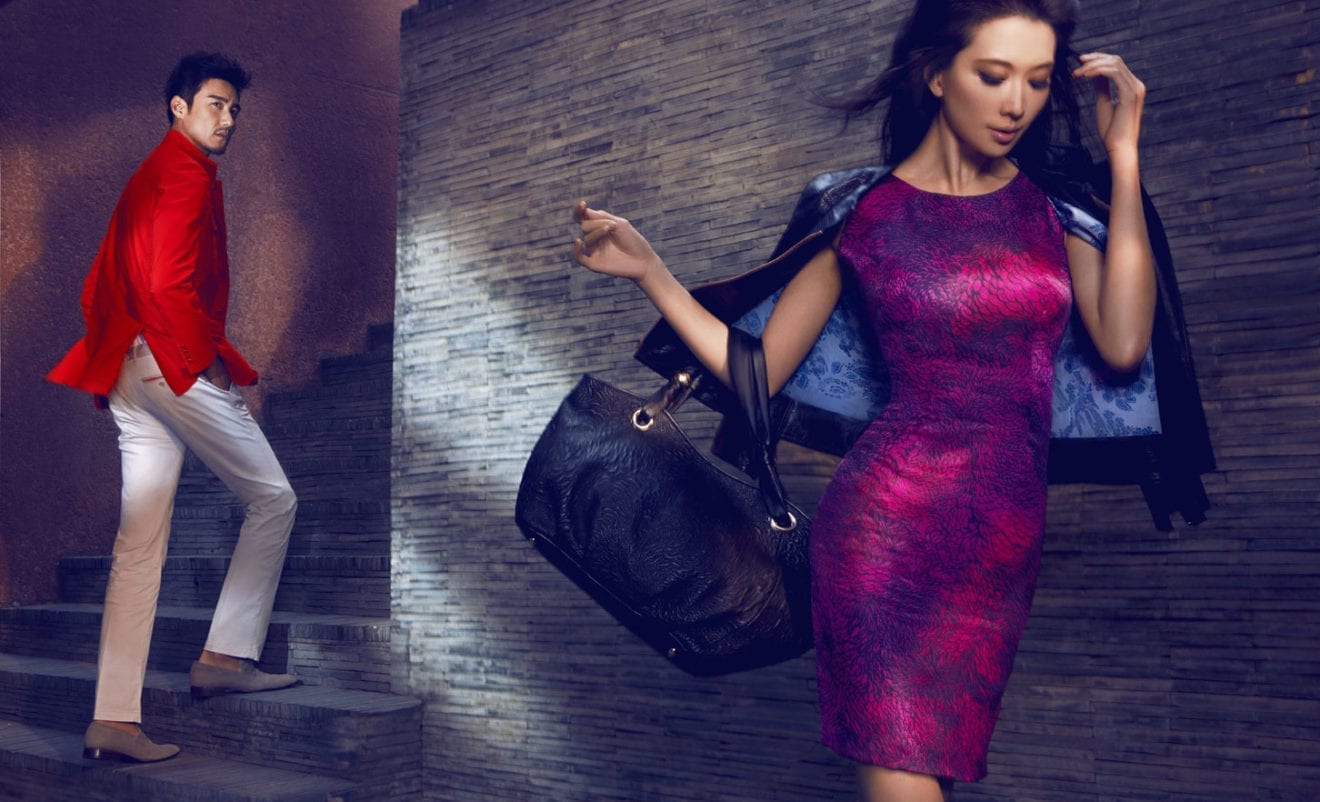
    Shanghai Tang attracted stars such as Nicole Kidman and Kate Moss with its 1920s-inspired dresses — some costing more than $2,000 — but struggled to gain a broader following in the west, while consumers in China have preferred western luxury brands. In a ranking by researcher Hurun of the top fashion brands for Chinese women, Shanghai Tang ranked 10th, behind nine European brands including Chanel, Dior and Gucci. It didn’t show up on the top 10 for men, which was led by Giorgio Armani.

    Richemont acquired a controlling stake in Shanghai Tang in 1998, a year after sovereignty over Hong Kong was transferred from the U.K. to China. It bought the rest in 2008. The luxury company is revamping its portfolio, having merged its Net-a-Porter online unit with Yoox SpA in 2015 after disposing of Italian penmaker Montegrappa in 2007. It now owns 18 brands, including Cartier, Montblanc and IWC.

    Richemont didn’t disclose the price for Shanghai Tang, one of four labels that Sanford C. Bernstein analyst Mario Ortelli said in 2013 he expected might be sold. The others were Dunhill, Chloe and Azzedine Alaia. Richemont said that year that it decided against any divestments, and has since reconsidered. Its shares were up 0.7 percent at 15:04 p.m. in Zurich.

    The company has restructured Dunhill and rejuvenated Chloe’s management with a new creative director. Other small Richemont brands include Purdey, a maker of luxury shotguns, and Lancel, a French pursemaker that the company considered selling in 2013.

    Sir David Tang, who now writes a column in the Financial Times, started Shanghai Tang as a bespoke tailor shop in 1994, combining Chinese and western design influences and expanding into accessories and housewares. While the brand attracted buzz about China’s growing cultural and design influence around the turn of the millennium, when its form-fitting qipao dresses were worn in Wong Kar-Wai’s film “In the Mood for Love,” its Mandarin collars never caught on in a big way in Europe or the U.S.

    The original Shanghai Tang location in Hong Kong closed in 2011 due to high rents, and the brand also shut a New York shop. The fashion maker has 32 stores currently. Rival Hermes International has provided competition with its Shang Xia brand since 2010.

    Cassia, which focuses its investments on consumer companies, is based in Hong Kong. Bastagli is the chairman of Italian fashion producer and distributor A. Moda SpA, and of Lineapiu Italia, a maker of luxury yarn. A.Moda’s clients have included Versace, according to its website.