Tag: driverless

  • Waymo Offers Driverless Rides To San Francisco Employees, Expands In Phoenix

    Waymo Offers Driverless Rides To San Francisco Employees, Expands In Phoenix

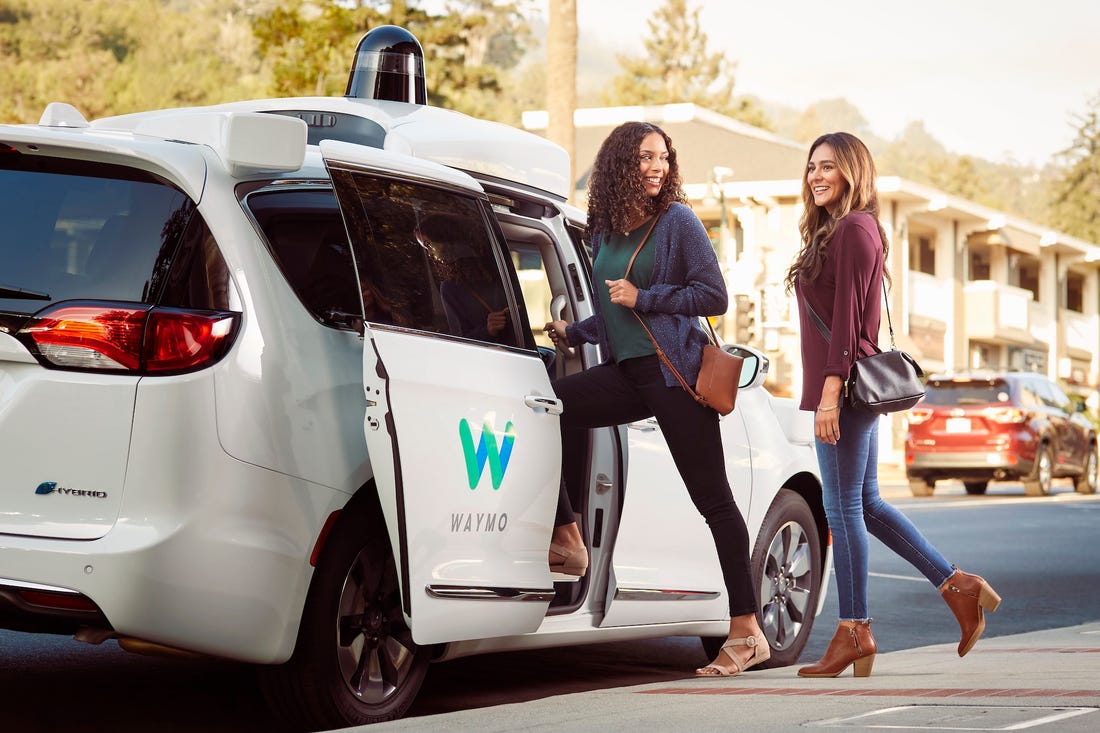
    Alphabet Inc unit Waymo said on Wednesday it has started offering driverless rides to employees in San Francisco, accelerating a race with General Motors Co-backed rival Cruise to commercialize the technology in the dense city.

    Waymo also introduced autonomous rides to employees in downtown Phoenix with safety drivers behind the wheel, with a goal to open it to public testing.

    “Operating fully autonomously in multiple markets – in addition to Waymo’s growing trucking operations – is a critical validator of the scalability of Waymo’s operations and technology,” it said in a statement.

    A self-driving technology pioneer, Waymo started the first U.S. driverless taxi service in 2020, over a decade after it was born in 2009 as a project inside Google. While it gives paid rides to hundreds of people a week using Chrysler minivans, Waymo’s service has not expanded beyond suburban Phoenix areas that cover about 50 square miles (129.5 square kilometers).

    Waymo in August started giving autonomous rides free of charge to a limited number of people in San Francisco with safety drivers on board, using its Jaguar electric vehicles equipped with sensors such as spinning lidars on the top.

    Waymo needs to receive at least two more permits from the California Department of Motor Vehicles (DMV) and the California Public Utilities Commission (CPUC) to start charging passengers for driverless rides in San Francisco.

    Waymo declined to comment on whether it had applied for the permits.

    Cruise already is giving fully driverless rides to employees and members of the public free of charge in San Francisco. The company is seeking CPUC approval for commercial driverless service, with a goal to get permitted this year.

    Self-driving technology firms, which have attracted billions of dollars of investments, face challenges of scaling up their technology, after missing their earlier targets to launch commercial services.

  • JD driverless delivery vehicles up for test

    JD driverless delivery vehicles up for test

    JD driverless delivery vehicles have been deployed in live testing in two Mainland China cities. The technology-cum-e-commerce company has opened two smart-delivery stations in the cities of Changsha and Hohhot, strengthening its autonomous logistics capabilities. The stations are carrying out research and development testing and personnel training to solve issues related to last mile delivery.

    The JD driverless delivery vehicles can be loaded with up to 30 parcels before autonomously delivering them within a 5km radius. The vehicles can plan routes, avoid obstacles and recognise traffic lights.

    The vehicles have locked boxes so each customer’s purchases are kept separate. Once the robots reach their destination, facial recognition technology enables customers to easily and securely collect their parcels from the correct locker.

    When running at full capacity, the two delivery stations, operating with a half-half split between robots and human couriers, can deliver up to 2000 packages a day.

    The JD driverless delivery vehicles are part of the company’s Boundaryless Retail vision, in which consumers can buy whatever they want, wherever and whenever they want it.

    “As China’s largest retailer, JD is in the unique position of being able to research and develop, and commercially deploy, innovative new technology that is shaping the future of shopping worldwide,” said Chen Zhang, JD’s chief technology officer.

    “As JD opens its technology up to other companies and industries, the features that we’ve already rolled out in China from automated warehouses to virtual shopping are going to be enjoyed by consumers everywhere,” he said, referring to the company’s Retail as a Service strategy.

    CES debut

    The opening of the smart delivery stations comes days before JD attends its first Consumer Electronics Show in Las Vegas, Nevada – the world’s largest event for the latest technology, innovation and creative thinking.

    The company will showcase cutting-edge technology which is changing the way consumers shop in China, and which it says will revolutionise global commerce. Visitors will be able to see how JD uses its drones to deliver consumer goods and medical supplies to remote areas in China, and catch a glimpse of the world’s first fully-automated fulfillment centre. They will also see how underground urban logistics will make shopping more convenient than ever, and fundamentally alter how cities work.

    This year, CES attendees will be able to see JD’s futuristic technology up close and even try some of it for themselves at the company’s interactive booth.

    Aside from drones and delivery robots, visitors will be able to experience drone flights in virtual reality, as well as JD’s augmented-reality fitting and styling software. They will also see how JD is developing Internet of Things technology that enables consumers to remotely control the smart devices in their homes, even from their cars.

    JD will also give people the chance to try a special exoskeleton worn by staff in JD warehouses that makes lifting heavy objects easier.

  • DHL looks to pilot driverless trucks

    DHL looks to pilot driverless trucks

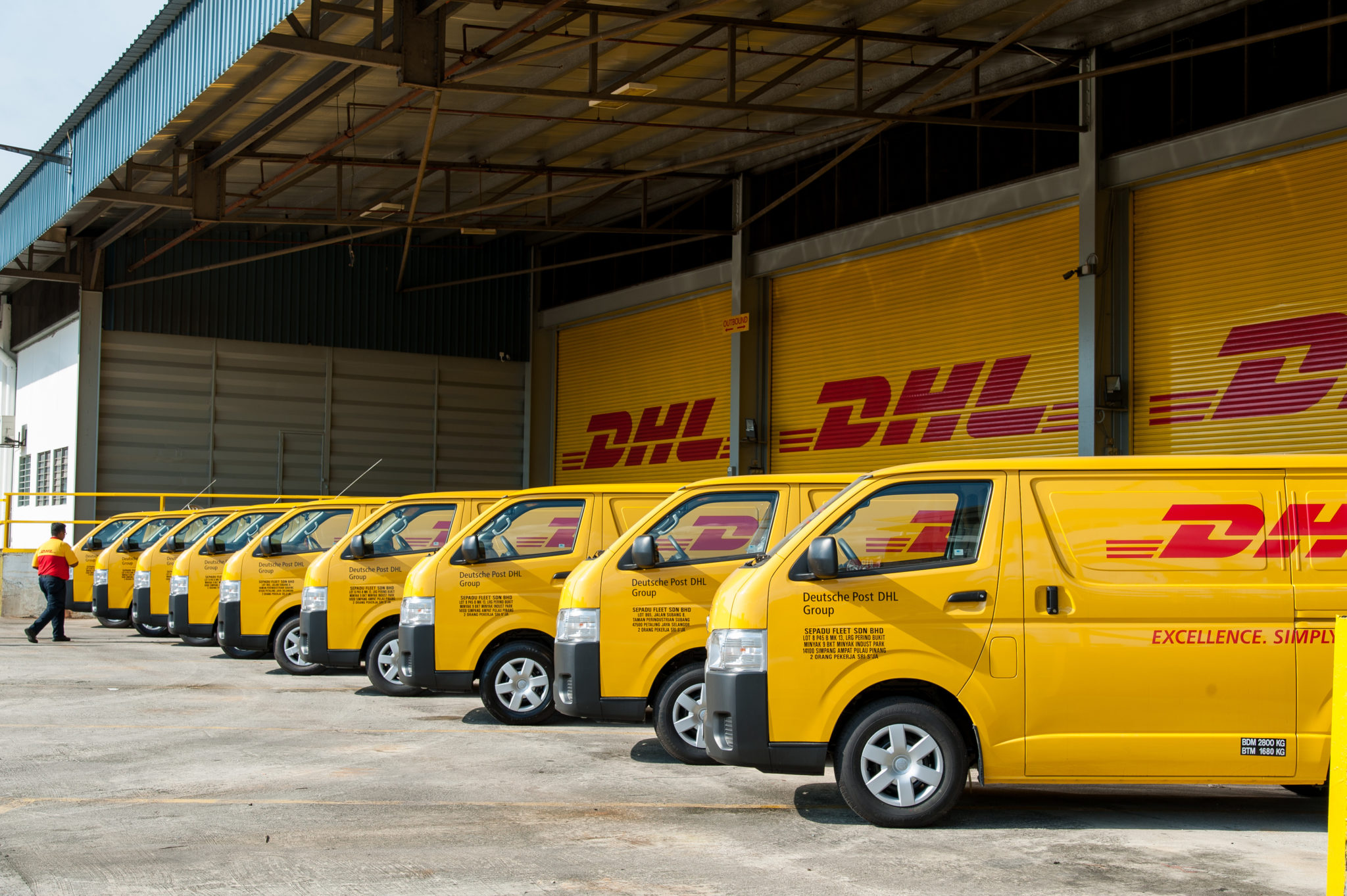
    A driverless car on Indian roads may still be a distant dream, but companies are actively looking at ways to use other autonomous vehicles like tractors, buses, trucks, and even choppers. German logistics giant DHL, for instance, feels driverless trucks can halve logistics costs and improve customer service.

    “In the last mile, on the line haul itself, the driverless technologies that are being piloted in Germany, we believe, have the potential to reduce line haul costs by 50 per cent,” Malcolm Monteiro, CEO, DHL eCommerce India told.

    About 65 per cent of logistics movements in India happen by road and about 85 per cent of these are in the unorganised sector; typically, a driver takes a truck for a long distance, and has to make stops for rest and food, which reduces the efficiency of truck use.

    “There’s a tremendous shortage of skilled drivers. We’re looking to see whether these vehicles can ply driverless in line haul on the last mile. If that happens, it brings in a lot of reliability into the system, besides reducing cost. Then we’ll probably not have to work on a hub-and-spoke model; we can even work point to point. So the entire business models could be looked at afresh with these technologies,” Monteiro said.

    Govt ‘favourable’ to idea

    Monteiro said the initial discussions with the Indian government over driverless technologies have been positive. “The government is favourable in terms of looking into it because it does realise there is a tremendous shortage of skilled drivers. So it will look at any technology to make sure the demand side is addressed. But we don’t have a concrete timeline. The intent is there, there’s ongoing discussion,” he added.

    Safety aspects

    But Moteiro said the company will test the safety aspects of driverless technologies in Germany before beginning pilots in India to ensure there is no scepticism about the technology here.

    “If we get this to work, it might look at it, pilot it. The intent is there, there’s ongoing discussion,” said Monteiro.

    DHL, however, is taking it one step at a time. “For a vehicle to be autonomous, driven fully, one of the first things that needs to happen is the electrification; we have a concrete target for electrification. And for autonomy to happen, we need everything electric. So, we are really focussing more of our efforts to electrify all our vehicles as a first step,” said Pang Mei Yee, Vice-President, Head of Innovation, Asia Pacific, Customer Solutions & Innovation, DHL.

    Yee feels these technologies can make the existing trucks a lot safer and more efficient even as the company prepares itself for a fully autonomous future.

    “Our smart trucks are a fantastic example where we are introducing a lot of optimisation efforts, notification to drivers for their behaviours. There are sensors that allow drivers to get reminded when they are eating while driving or when they are dozing off. So, progressively you’ll see intelligence built into the truck. Full autonomous vehicles are still some time off,” Yee said.

  • Germany draws up rules of the road for driverless cars

    Germany draws up rules of the road for driverless cars

    Protecting people rather than property or animals will be the priority under pioneering new German legal guidelines for the operation of driverless cars, the transport ministry said on Wednesday.

    Germany is home to some of the world’s largest car companies, including Volkswagen, Daimler and BMW, all of which are investing heavily in self-driving technology.

    German regulators have been working on rules for how such vehicles should be programmed to deal with a dilemma, such as choosing between hitting a cyclist or accelerating beyond legal speeds to avoid an accident.

    Under new ethical guidelines – drawn up by a government-appointed committee comprising experts in ethics, law and technology – the software that controls such cars must be programmed to avoid injury or death of people at all cost.

    That means that when an accident is unavoidable, the software must choose whichever action will hurt people the least, even if that means destroying property or hitting animals in the road, a transport ministry statement showed.

    The software may not decide on its course of action based on the age, sex or physical condition of any people involved.

    “The interactions of humans and machines is throwing up new ethical questions in the age of digitalization and self-learning systems,” German Transport Minister Alexander Dobrindt said in a statement.

    “The ministry’s ethics commission has pioneered the cause and drawn up the world’s first set of guidelines for automated driving,” he added.

    Germany earlier this year passed legislation under which a driver must be sitting behind the wheel at all times ready to take back control if prompted to do so by the autonomous vehicle, clearing the way for the development and testing of self-driving cars.