Tag: drivers

  • 2026 Health Sector Boom: Five Key Drivers Powering a Robust Year in Healthcare

    2026 Health Sector Boom: Five Key Drivers Powering a Robust Year in Healthcare

    The healthcare industry is entering the new year with a strong momentum, backed by increased transparency surrounding government healthcare policies and a surge of investor interest. The sector’s future earnings prospects are on the rise, spurred by a robust innovation pipeline and the emergence of new market segments. Despite this, healthcare stocks continue to trade at a discount relative to the global market, creating a re-evaluation underway that is accelerating. At present levels, there are still appealing opportunities for increasing exposure to the healthcare sector.

    Five Key Developments Driving the Sector’s Momentum

    The sector’s momentum is being bolstered by five key developments:

    Firstly, policy clarity is attracting investors back to the sector. The pricing agreement reached between the US administration and Pfizer in September, and subsequent agreements with Eli Lilly and Novo Nordisk in November, marked a significant turning point. These developments have resulted in a predictable framework for drug pricing and reimbursement policies, thereby reducing uncertainty and improving planning visibility. Reaction from investors was swift, with healthcare emerging as one of the strongest global stock market performers this quarter, attracting an additional $8 billion in capital to healthcare ETFs worldwide in just three months.

    Secondly, a re-evaluation process has begun, with further potential for catch-up. Healthcare valuations are moving back towards historical averages, but the sector is still valued approximately 13% lower than global stocks. The future looks bright for healthcare companies, with average profit growth predictions for biopharmaceuticals and life science tools between 2024 and 2027 standing at approximately 15%, more than double the historical growth rate of about 7% per year.

    Thirdly, the biopharma sector is set to benefit from formidable growth drivers and high M&A capacity. Looking ahead to 2026, this sector stands to gain from various structural trends such as new oncology treatment classifications, advances in obesity and diabetes treatments, and therapeutic innovations in cardiovascular care.

    Fourthly, the medical technology sector continues to be a key growth driver, spurred by high demand in established markets and the emergence of new billion-dollar niches. Markets such as robot-assisted surgical systems, glucose monitoring devices, and structural heart disease treatment continue to register double-digit growth rates.

    Lastly, emerging markets are boosting their innovation capabilities and market clout. These markets are steadily transforming into innovation powerhouses in their own right. China, for instance, is transitioning from an out-licensing partner to a global pharmaceutical player, while India’s rapidly growing middle class and substantial government healthcare infrastructure spending stand out as growth engines.

    Conclusion

    Entering 2026, the healthcare sector is backed by strong structural growth drivers and improved earnings visibility. Innovation continues to be key, supported by robust pipelines, new therapy platforms, and tech-enhanced solutions. However, the sector’s performance disparity, as measured by the MSCI World Healthcare Index, is also noteworthy, with a performance gap of +72% and -38% between the best and worst-performing stocks in the first half of 2025.

    After a recent period of policy uncertainty, the healthcare sector is back in its historical position of innovation, growth, and high operational visibility, a position from which it has consistently delivered tangible value.

    Questions & Answers

    What has attracted investors back to the healthcare sector?
    Investors are being drawn back to the healthcare sector due to increased policy clarity, including agreements on drug pricing and reimbursement policies between the US administration and pharmaceutical companies.

    What are some key growth drivers for the biopharma sector looking ahead to 2026?
    Key growth drivers for the biopharma sector include new classifications of oncology treatments, advancements in obesity and diabetes treatments, and therapeutic innovations in cardiovascular care.

    How are emerging markets contributing to the growth of the healthcare sector?
    Emerging markets like China and India are increasingly becoming innovation powerhouses in their own right. China is transitioning from an out-licensing partner to a global pharmaceutical player, while India’s growing middle class and substantial government spending on healthcare infrastructure are key growth drivers.


  • Ho Chi Minh City’s Ambitious Plan: Complete Transition To Electric Motorcycles By 2029 Amidst Infrastructure Challenges

    Ho Chi Minh City’s Ambitious Plan: Complete Transition To Electric Motorcycles By 2029 Amidst Infrastructure Challenges

    In Ho Chi Minh City (HCMC), approximately 14,000 ride-hailing motorbike drivers have transitioned from gasoline-powered vehicles to electric versions. This represents about 3.5% of the total fleet. Ngo Hai Duong, Head of the Road Transport Management Department of the city’s Department of Construction, revealed at a recent forum that HCMC aims to completely transition its 400,000-strong ride-hailing motorbike fleet to electric vehicles (EVs) by 2029.

    Reducing Registrations for Gasoline-Powered Bikes

    The city has plans to decrease the number of registered gasoline-powered motorbikes for ride-hailing platforms starting next year. Duong revealed that out of the city’s 21,300 taxis, over 68% are now electric. He clarified that this transition was primarily driven by the businesses themselves rather than any city ordinances.

    Challenges in the Transition to Electric Vehicles

    However, one of the main obstacles to the successful transition to EVs is the limited availability of charging stations. The growing demand from electric motorbikes, cars, and buses is starkly in contrast to the city’s fewer than 1,000 charging stations with 15,000 ports. Duong acknowledged that the growth of charging infrastructure has not kept up with the rise in electric vehicle numbers.

    Hoang Anh Tuan, Director of the Transport and Traffic Safety Department of the Ministry of Construction, suggested that priority should be given to a city-wide plan for charging stations, akin to the existing network of gasoline stations. This would require setting criteria for locations and technical standards, along with a commitment to universal charging for all vehicles.

    The Vietnam Automobile, Motorcycle and Bicycle Association echoed this sentiment and urged the government to implement “non-monopoly” regulations for charging infrastructure. This means that charging stations should be open to all electric vehicles.

    Recycling Electric Vehicles and Batteries

    Analysts have proposed the establishment of a system for recycling electric vehicles and their batteries. There is also a proposal being considered by the city to give households up to VND20 million (approximately US$800) to trade their gasoline motorbikes for electric ones. This move is part of the city’s concerted efforts to reduce pollution and create low-emission zones.

    Questions & Answers

    What is the percentage of the total fleet that has transitioned to electric vehicles in HCMC?
    Approximately 3.5% of the total fleet in HCMC has transitioned to electric vehicles.

    What obstacles are being faced in the transition to electric vehicles?
    One of the main challenges is the lack of sufficient charging stations to meet the growing demand from electric motorbikes, cars, and buses.

    What initiatives are being considered to encourage the transition to electric vehicles?
    The city is considering a proposal to provide households with up to VND20 million (approximately US$800) to swap their gasoline motorbikes for electric ones. This initiative is part of the city’s broader efforts to reduce pollution and create low-emission zones.

  • Motorbike taxi driving unsustainable for laid off workers

    Motorbike taxi driving unsustainable for laid off workers

    More than a few workers made unemployed by increasing layoffs in Vietnam recently have become motorcycle taxi drivers only to realize it’s not a lasting solution.

    After starting his workday at 5 a.m., at 10 a.m. Le Van Manh had completed only one trip, which made him VND40,000 (around $1.7) in cash.

    Manh started working as a motorbike taxi driver four months ago, after two years suffering from his old factory’s unstable business performances.

    “The factory started layoffs, forced us to work overtime, and cut down on our salaries,” he said.

    His income as a factory worker used to be around VND20 million, but was reduced to only half that starting last year. Not being able to get by with that income, he quit his job and turned to ride-hailing applications, hoping for better financial rewards.

    Manh spent around 12 hours a day on the road after his career turning point. Things went smoothly at first, as he was able to earn between VND400,000 and VND500,000 a day during the first two months working as a motorbike taxi driver.

    But the number of drivers has increased over the recent months, and Manh now has to share his customer pool with his new “colleagues,” and thus, earn a lower income of only VND300,000, or even VND100,000 sometimes, per day.

    “I can only complete around 10 trips a day now, compared to over 20 trips a day before,” he said.

    According to data published by the General Statistics Office of Vietnam, more than 149,000 workers lost their jobs in Q1 this year, 13% higher than the previous quarter. Of these laid off workers, most worked in companies in the FDI sector based at industrial areas in and around the provinces of Dong Nai, Binh Duong, Bac Ninh, Bac Giang.

    The Private Sector Development Research Board projected that the layoff wave could continue in this year’s second half, due to both external and internal challenges for businesses.

    Not requiring any educational background or specific skill sets, motorbike taxi drivers are the first career choice for many laid off workers to make a new living.

    Hoang Van Trieu, a former truck driver at a Binh Duong-based wood warehouse, started working as a full-time motorcycle taxi driver three months ago, after becoming unemployed when his company went bankrupt. Having expected that the new occupation would help him cover his living expenses, he got depressed after a while.

    “I spend about 10 to 11 hours a day, in exchange for between VND300,000 and VND400,000,” he said. “I cannot get by if I maintain this as my full-time job.”

    He is now trying to look around for other career opportunities. The best scenario he can think of is being able to find an office job, which allows him to leave at around 4 p.m. or 5 p.m., so that he can hit the road and start the second “working shift” of his day as a motorcycle taxi driver until before midnight.

    Ride-hailing applications, of which the most popular in Vietnam are Grab, Gojek, and Be, were once considered a life saver for those that were looking for another occupation, including laid off workers looking for career chances or fresh graduates waiting for a job after finishing school.

    The Vietnam General Confederation of Labor estimated in 2021 that there were over 200,000 partner drivers working with Grab, which rose from around 175,000 in 2018. Of these, around 26% graduated from a higher educational institution or equivalent.

    Gojek reported that the platform surpassed 200,000 drivers in mid-2021, while Be announced that the number of its partner drivers surpassed 100,000 at the beginning of the same year.

    Drivers’ daily income was as high as between VND500,000 and VND600,000 at that time.

    However, things have become harder for drivers recently. The supply of drivers increased and the fees taken out by the applications rose and currently range between 30% and 39% of the amount charged to customers. All of these mean it has become harder for drivers to maintain their income.

    Nguyen Dinh Vuong, former worker at a Hanoi-based leather company, decided to return to his hometown after months of suffering from this “high cost, low reward” job. He spent around 12 hours working a day to get between VND300,000 and VND400,000 in return. With this income, he did not have much left after paying his bills.

    “Motorcycle taxi drivers in Hanoi have to work at least 12 hours to earn enough to get by,” he said. “The cost of living in my hometown Thanh Hoa is lower, so I spend less, and don’t have to work that hard.”

    According to him, many former industrial workers, who were laid off due to the downfall in the orders, are trying their best to get by, in the hope of an economic recovery that will lead to improved business performances and thus, higher demand for labor.

    Dr. Huynh Thanh Dien, an economic expert, made a prediction aligning with this hope. He projected that the labor market would soon retrieve a state of stability and temporary motorcycle taxi drivers would soon be able to return to their occupations.

    He also warned that partner drivers for ride-hailing applications should not be considered a long-term career goal, as the job cannot provide a stable income in the long run. Instead, it should be treated as a temporary “cover” occupation only while the economy follows its natural rhythm and proceeds on its way to recovery.

    In the meantime, these people have no other choices than optimistically enduring.

    “The economy can’t be gloomy forever,” Manh said. “As I heard from the news, the situation is predicted to become better in 2024, so I will try to get by and wait until then.”

  • Walmart to hire over 3000 US drivers as it expands home delivery

    Walmart to hire over 3000 US drivers as it expands home delivery

    Walmart said on Tuesday it plans to hire more than 3,000 U.S. delivery drivers and build out a fleet of all-electric delivery vans to support its “in-home” grocery delivery service, its latest investment in its last-mile fulfillment network.

    The retailer, which said it has about 100 drivers at present, expects to be able to reach 30 million homes by the end of the year. It now services 6 million homes.

    Bentonville, Arkansas-based Walmart in 2019 launched its InHome delivery service through which workers deliver groceries directly into shoppers’ homes, sometimes placing items straight into kitchens or garage refrigerators when people are not in the house.

    The driver uses a one-time access code to unlock the customers’ doors or garages through an app that pairs with a “smart” entry lock.

    Fearing COVID-19, many shoppers have turned to online grocery delivery since the start of the pandemic, sparking aggressive competition in the industry from the likes of Amazon.com Inc’s Whole Foods, Instacart and Uber Technologies Inc.

    Walmart has experimented for years with last-mile delivery options. In 2017, for instance, Walmart established a program through which its own store employees would bring online orders directly to shoppers’ homes after completing their usual shifts on sales floors.

    In August, ahead of the U.S. holiday shopping season, Walmart launched a last-mile delivery service for other merchants. Last year, it also tested company-branded “last-mile” delivery vans, taking a page from Amazon’s playbook as online demand pressures United Parcel Service, FedEx Corp and the U.S. Postal Service.

  • Waze brings the college football experience to drivers on Android and iOS devices

    Waze brings the college football experience to drivers on Android and iOS devices

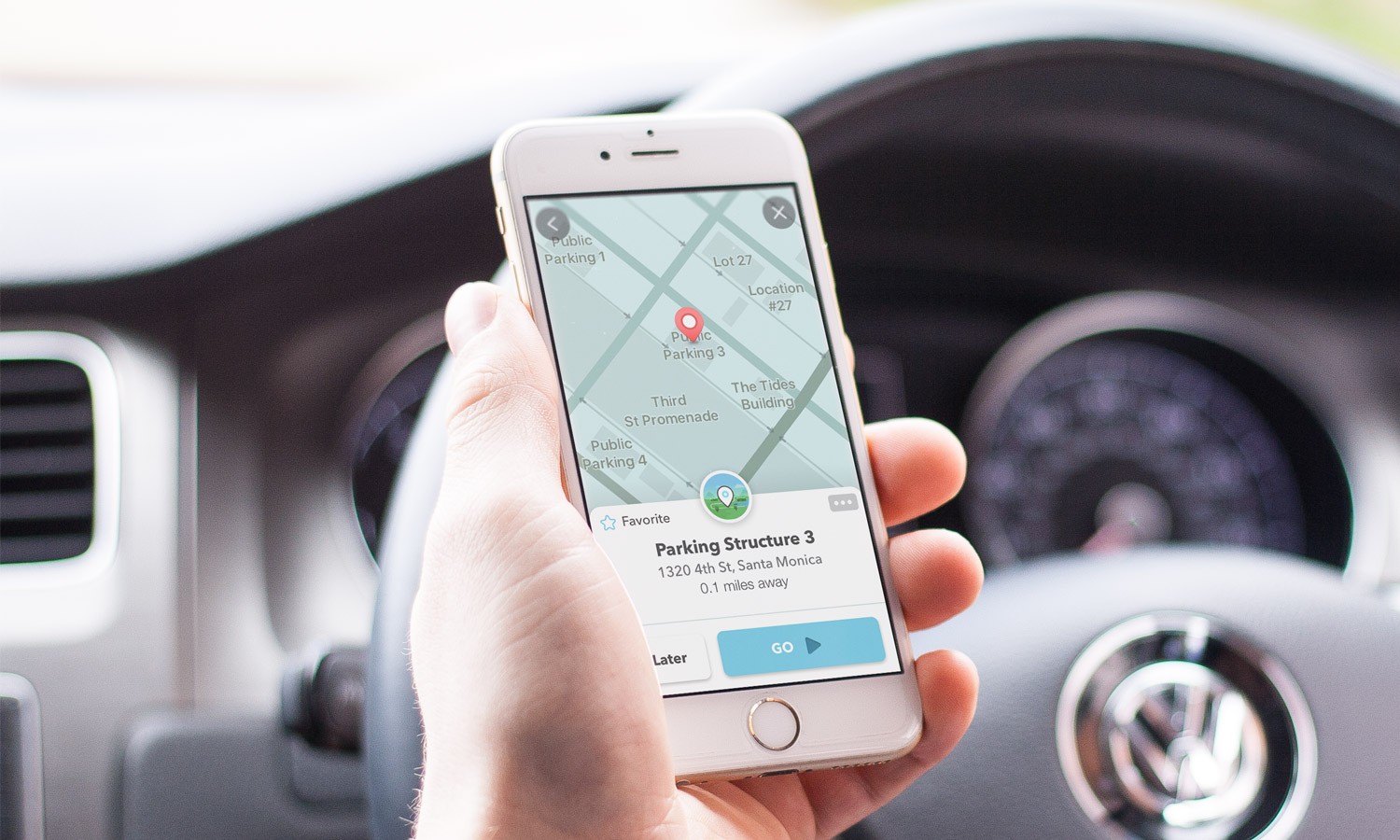
    Waze has been putting out a lot of new themes for its users all over the world, but the new experience released this week is aimed at US users only. Thanks to a partnership with Goodyear, Waze is bringing its users the College Football experience beyond the stadium to the roads.

    Although it will only be available for a limited time, Waze announced that its users will be able to download it starting this week and through January 31, 2022, so plenty of time to do that. If you’re living in the United States, you can now select the Goodyear Blimp icon to guide you to your destination.

    Additionally, drivers can receive navigation instruction from famous college football analyst Kirk Herbstreit as the voice for their trips on Waze. Furthermore, all 129 D1 college football stadiums will be marked on the Waze map to make it easier for fans to travel to their favorite stadium.

    On a side note, Goodyear will be hosting sweepstakes now through November 13. Fans who submit their predictions on the teams who will make it to the championships will have a chance to win tickets to the 2021 Goodyear Cotton Bowl Classic and the 2022 CFP National Championship.

  • Gojek Vietnam raises fares after tax regime change

    Gojek Vietnam raises fares after tax regime change

    Ride-hailing company Gojek has raised fares by 8.3-10 percent following the recent revamp of the value-added tax regime, which requires it to pay more.

    The hike applies to all three services it offers in Vietnam, motorbike taxi, food delivery and goods delivery, and takes effect on Saturday, the Indonesian company said in a statement.

    In Hanoi, a two-kilometer GoRide trip now costs 8.3 percent more at VND13,000, while in HCMC, it costs 10 percent more at VND11,000.

    From December 5 the government mandated that ride-hailing companies should pay the VAT of 10 percent on the full fare passengers pay instead of just their share of it.

    Gojek also increased the commission it gets from drivers from 20 percent to 27.2 percent like its competitor Grab did recently.

    But it assured that the increase would not affect drivers’ incomes.

    A trip that cost a passenger VND51,000 before would now cost VND56,000, but the driver’s income would remain unchanged at VND40,000, it said.

    Grab last week raised its fares by 5-6 percent and increased its commission by over 7 percentage points, causing hundreds of drivers in Hanoi and Ho Chi Minh City to strike.

  • Singtel signs cross-promotion deal with GOJEK

    Singtel signs cross-promotion deal with GOJEK

    Singtel has inked a new partnership with ride hailing company GOJEK aimed at cross-marketing their offerings and providing perks to users and drivers.

    Under the agreement, Singtel will offer GOJEK drivers who subscribe to its Combo mobile plans data-free usage while using GOJEK, as well as a 20% discount on their subscription costs and a complementary caller ID service.

    Meanwhile new and existing customers of Singtel’s digital focused GOMO plan will receive ride hailing credits worth S$5 ($3.67), and all Singtel customers will be offered other ride hailing perks.

    “With this partnership with GOJEK, we are taking our business and customer relationships to the next level, beyond just providing traditional carriage and connectivity,” Singtel CEO consumer Singapore Yuen Kuan Moon said.

    “While our customers have come to expect reliable and comprehensive mobile coverage from us, they are always looking for more value and this we can extend in the form of perks and privileges that come from mutually-beneficial partnerships.”

  • Over 20,000 Vietnamese work as Uber motorbike drivers

    Over 20,000 Vietnamese work as Uber motorbike drivers

    The ride hailing company releases business data for the first time, one year after launching its motorbike service in Vietnam.

    More than 20,000 Vietnamese men and women have registered to work as motorbike taxi drivers for Uber, a representative of the ride hailing company said Sunday.

    Dang Viet Dung, general manager of Uber Vietnam, did not break down the number but he seemed eager to share that the top motorbike drivers clocked in more than 5,000 rides within a year.

    This is the first time the company, since the launch of UberMOTO in April last year, has released such figures. It also has a network of cars for the traditional Uber service.

    For future plan, Uber will offer English courses for its drivers to serve foreigners in Vietnam, Dung said.

    Before Vietnam, the UberMOTO service had been launched in Thailand, India and Indonesia.

    After Uber entered Vietnam in June 2014, collecting tax from for the U.S.-based car hailing service had been a headache for local authorities.

    Then in September last year, Uber paid taxes to Vietnam for the first time.

    In April this year Uber’s car and motorbike services were finally legalized here, even though local passengers rarely paid attention to these legal formalities.

    Before Uber, Vietnam’s transport authorities approved a pilot scheme for Grab Vietnam, Uber’s main rival, which also entered Vietnam in 2014.

    The Malaysia-based Grab is operating both car and motorbike services in the country.

    Their market shares have not been disclosed but other service providers, from taxi companies to xe om drivers, have felt threatened.

    Retail News earlier this year interviewed motorcyle taxi drivers, who said they were being beaten by Uber and Grab on their own turf.

    Some even predicted that these newcomers could eventually put old-fashioned drivers, now usually referred to as “traditional” drivers, out of business.

    This month, a video spread on social media showing a group of xe om drivers in a heated conflict with Grab drivers in front of a hospital in Hanoi.