Retail News CRM

Tag: Dropbox

  • Dropbox Passwords app will soon be free for everyone

    Dropbox Passwords app will soon be free for everyone

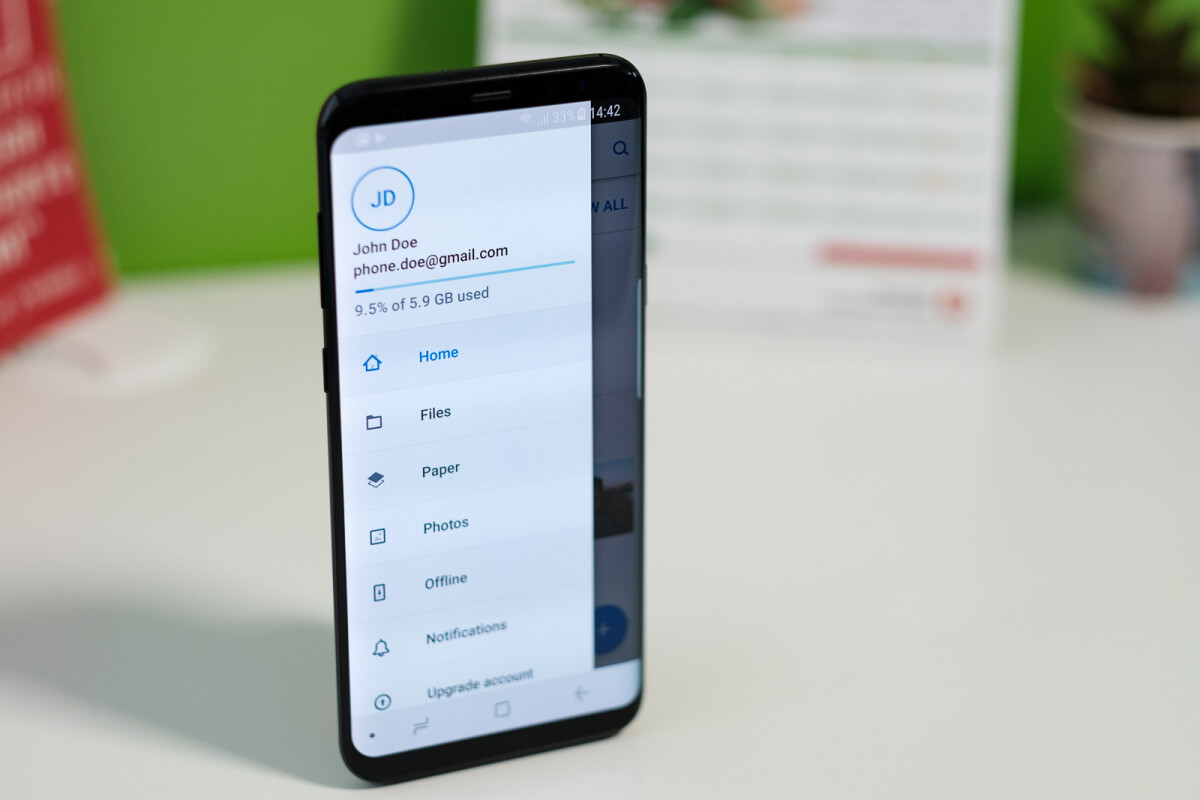
    Dropbox is probably one of the most popular cloud services out there. It’s easy to take advantage of what it has to offer and, more importantly, its basic features are completely free. Dropbox Passwords is an extension of the main service that’s meant to provide more security to users who more often than not are using Dropbox to send passwords.

    However, Dropbox Passwords is not a free service and those who want to use it must pay a $9.99 monthly subscription. Passwords is included in the Dropbox Plus subscription along with other benefits, but a free version will soon be available for those who’d like to use it.

    Dropbox announced today that Passwords will be available for free to all users starting in early April. The limited version of Passwords will include some basic features that should be enough for those who don’t want to pay the $9.99 monthly subscription.

    For example, with a free Dropbox Basic plan, users will be allowed to store up to 50 passwords, as well as access them anywhere with automatic syncing on up to three devices. Also, Dropbox will add a feature after launch that will allow users to share any password with anyone through the Passwords app. If you’d like to try out Dropbox Passwords once it becomes available, don’t forget to sign up to be notified when it becomes available.
  • Dropbox and Google team up

    Dropbox and Google team up

    Dropbox has just announced it has teamed up with Google Cloud to integrate Docs, Sheets, and Slides into its system. The highly-anticipated new feature will be available as a beta for Dropbox Business users starting April 9 and is meant to allow users to create, edit, and store Google Docs, Sheets, and Slides in Dropbox.

    If you’re a Dropbox Business users, you must sign in to both your Google and Dropbox accounts so that you can create and store Docs, Sheets, and Slides files in any Dropbox folder. But the new feature doesn’t stop here, as you’ll be able to share individual files, manage access to your files and get feedback at the same time.

    Of course, sharing and co-editing is done in real-time, while adding Docs, Sheets, or Slides files to a shared Dropbox folder will automatically grant member access, which means you won’t have to leave Dropbox.

    Keep in mind that since the new feature is still in beta, you’ll have to opt-in by visiting Dropbox’s sign-up page. Once you activate it, you will be able to create Google Docs, Sheets, and Slides files, as well as browse, move, copy and delete them from the iOS and Android apps.

  • Is There a Tech Bubble in China?

    Is There a Tech Bubble in China?

    Wealthy Chinese investors are in a bind. All the usual, typically safe investment vehicles—commodities, stocks, even stable real estate—have been anything but usual or safe over the last couple months. The Chinese economy has slowed and inflation has picked up, the yuan has been under pressure, oil has tanked, and gold markets have been rattled. Real-estate markets in previously inviolable zip codes like Manhattan, a longtime sure bet for foreign investors looking to park their money in the stability of multi-million-dollar apartments, have started to sway.

    With the new reality of so much risk and little hope for returns in these markets, Chinese investors are pushing their money toward technology start-ups, according to Reuters. Investments in these companies more than doubled last year, according to CB Insights research, leaping to $32.2 billion. So far this year, venture-capital investments have already climbed to $4.7 billion. That stands in stark contrast to the Shanghai Composite Index, which is down nearly 20 percent in 2016. Established-enough Chinese start-ups like the ride-hailing Uber competitor Didi Kuaidi have benefited the most. The company saw its valuation jump 25 percent to about $20 billion—dwarfing its American competitors.

    We’ve watched this movie before in the U.S. As investors got tired of waiting to wade back into the muck of traditional markets in the wake of the financial crisis, they looked for new places to strike gold. They set their sights out West, to Silicon Valley, pouring their money into small start-ups with huge funding rounds, hoping for a payday. The result was the birth of dozens of new billion-dollar companies. On a hope, a prayer, and the blood, sweat, and tears of many a millennial, these unicorns hung on and continued to raise money. But now, the chickens are coming home to roost.

    Last month, Fidelity marked down investments in 19 start-ups, including onetime Silicon Valley standouts Dropbox and Zenefits (the markdown, however, seems like the least of Zenefits’s worries). Millennial darling Snapchat got similar treatment from Fidelity last fall. Others, like Jawbone, and again, Zenefits, have laid off workers. Funding has started to dry up, yet even those able to raise capital are struggling. Oscar, the health-care app pegged to Obamacare exchanges, closed a round last month that boosted its valuation to $2.7 billion. But on Tuesday, the company reported that it was bleeding money, losing more than $100 million in 2015.

    American investors thought they were trading risky investments for the kinds of returns they could only dream of, but it appears the risk in their their start-up bets were just as great. Now, as Chinese investors make similar calculations, they may face a similar fate.

  • Smartphones outpace tablets in Asian eCommerce

    Smartphones outpace tablets in Asian eCommerce

    For the first time, 34 per cent of browser-based online transactions globally are now made on a mobile device, compared to slightly more than 30 per cent last quarter.

    And smartphones are starting to outpace tablets.

    These were key findings of the fourth quarter edition of the Mobile Payments Index by Global payments technology company Adyen, which tracks mobile payment data from browser-based transactions across its client base and monitors Asian eCommerce shopping patterns.

    It also found that many consumers in Asia are increasingly using mobile devices to shop online. This is being driven particularly by such major payments methods as Alipay, JCB and UnionPay. JCB had the highest share (54 per cent) of mobile payments on the Adjen platform, up from 47 per cent the previous quarter. Alipay increased to 44 per cent (up from 35 per cent) while UnionPay reached 31 per cent (from 23 per cent).

    “The checkout stage of the shopper journey is not the end, but the beginning of an on-going relationship with the consumer,” says Adyen Asia Pacific president Warren Hayashi. “Merchants with a frictionless mobile checkout experience are driving repeat traffic, especially in Asia.”

    For the first time, the index shows that smartphones have overtaken tablets as the preferred device for online shopping – 17.5 per cent on smartphone against 16 per cent on tablet, compared to 14 per cent and 17 per cent respectively the previous quarter.

    When it comes to mobile payments globally, the trend to use smartphones rather than tablets continues for the 10th consecutive quarter. Last quarter this share was up 2 per cent to 68 per cent on smartphone versus 32 per cent on tablet.

    Smartphone use far outweighed tablet in Asia, with 29.5 per cent of online payments on a smartphone compared to 4.5 per cent on a tablet.

    In terms of average transaction value, iPad led the way for the first time at $107, edging out not just smartphones but also desktop/laptop, the traditional leader (at $106). Following were Android tablets at $86, iPhone at $83 then Android smartphones at $73.

    Adyen has been tracking the evolution of mobile payments since June 2013. The index is based on its global browser-based mobile payment transaction data. It does not track in-app mobile payments. With its headquarters in Amsterdam and San Francisco, Adyen serves more than 4500 businesses, customers including Airbnb, Booking.com, Crocs, Dropbox, Facebook, KLM, Mango, Netflix, Spotify and Yelp.