Retail News CRM

Tag: dtac

  • DTAC service center flagship store ‘dInfinite’ at Siam Paragon

    DTAC service center flagship store ‘dInfinite’ at Siam Paragon

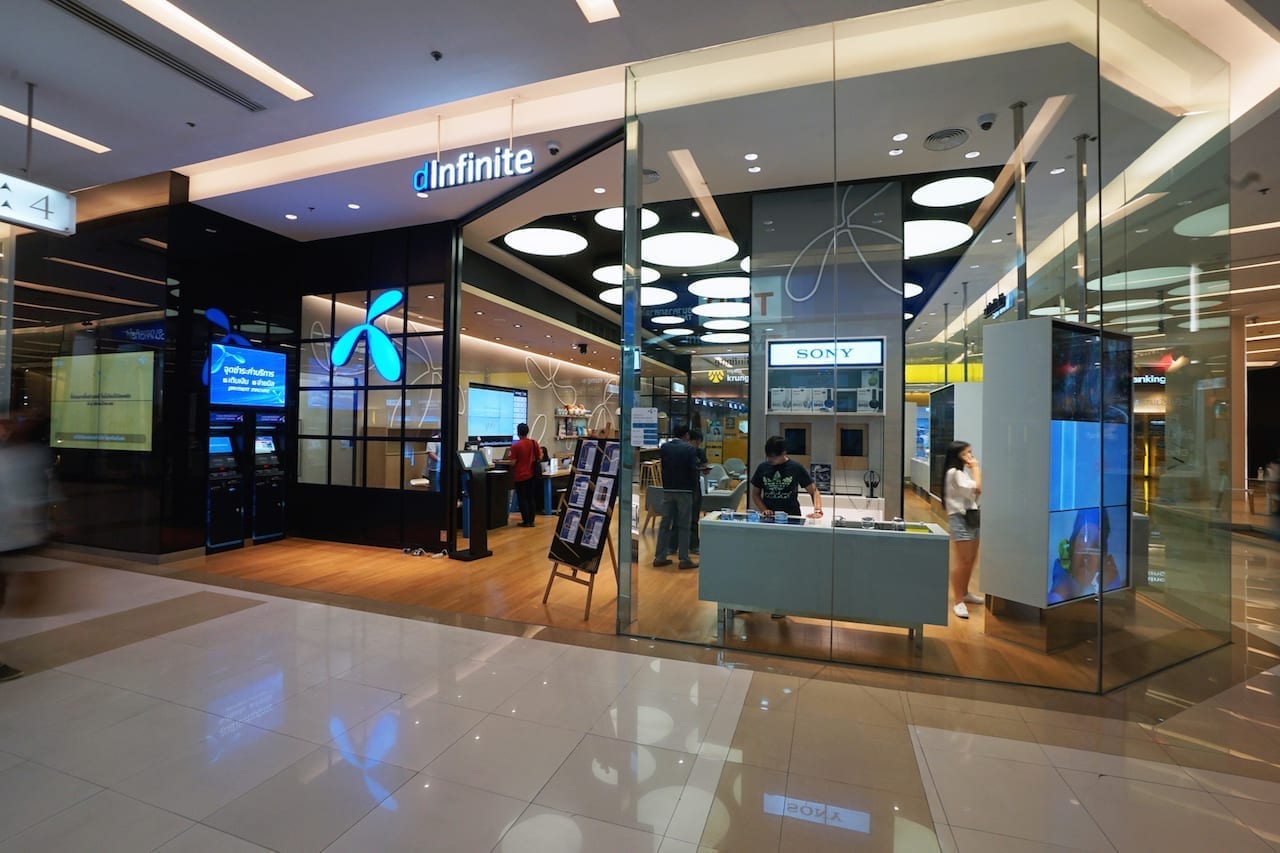
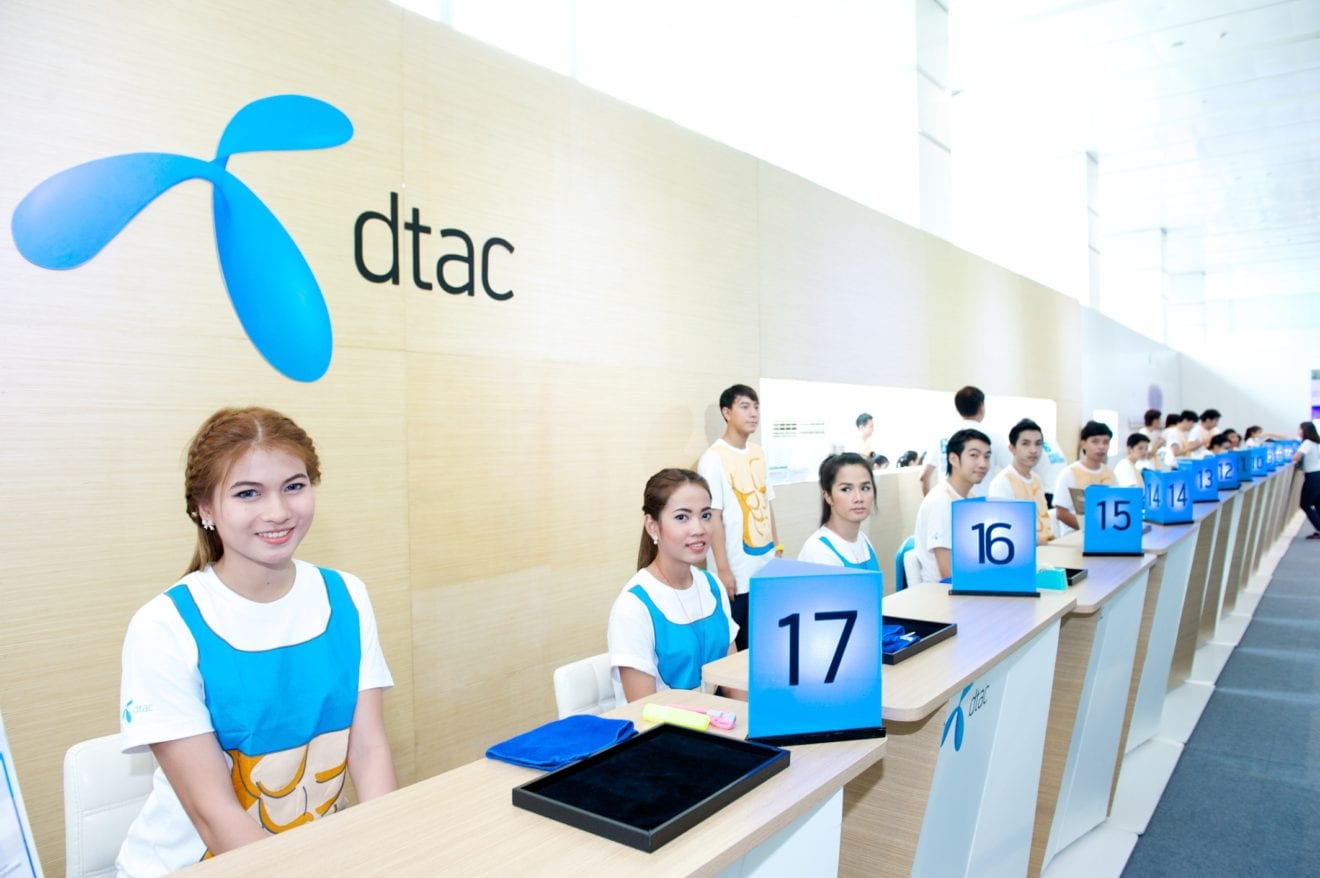
    The new dtac service center flagship store, dInfinite, was launched at Siam Paragon Department Store with the concept ‘the endless digital experiences’. The store has been re-designed to enhance the customer experience through the use of digital services.

    The service center was designed by Whitespace Ltd., a professional retail design company. The key service area has been arranged to serve two main functions: counter service and consultation. The layout reflects of how retail stores have changed overtime; the transaction counter is no longer a key area as e-service, Speedy Queue, allows customers to easily queue online and to check out anywhere in the store.

    dsc00985edit-copy_s

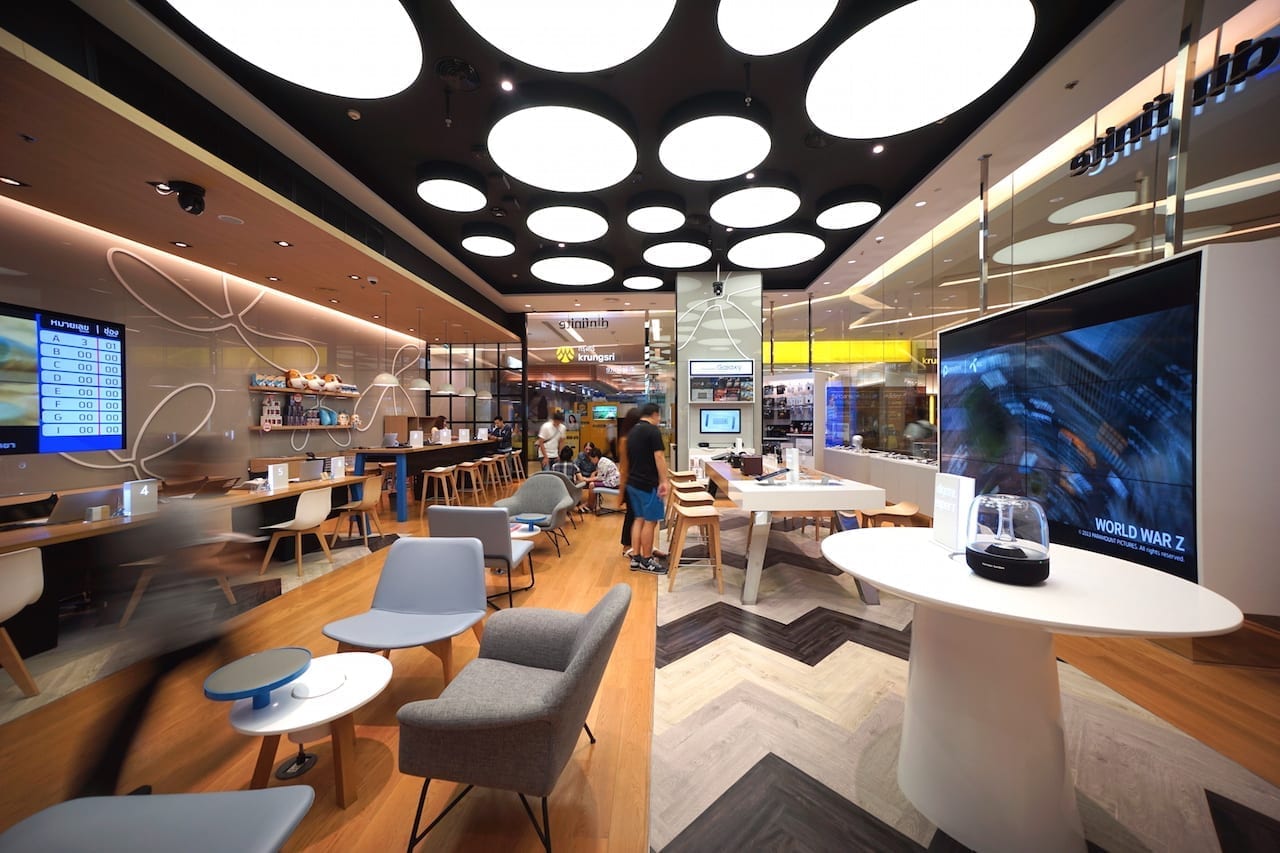
    Rather than waiting in line to pay ones bill, customers are urged to spend their time discovering, testing, and experiencing dtac’s newest devices. Cutting-edge smart phone models are available for customers to interact with at the Smart Table. The latest trends of gadgets and accessories are also available for customers to tryout in the Experience Corner.

    Moreover, the dInfinite flagship store delivers convenience and entertainment through the use of digital devices including a touchscreen e-brochure wall with the most up-to-date dtac promotions and at the Knowledge Table big screen tablets are used to live-stream entertainment via dtac Music Infinite and Primetime apps.

    When customers walk into dInfinite, they will feel at home and welcomed by the casual and warm ambience of the store. The cozy mood and tone is enhanced by custom-made wood furnishings, comfortable seating, wood floors and a black and gray color palette. Circular lights on the ceiling and the use of the dtac logo symbol on the walls throughout the store adds a sense of energy and excitement as well as reinforces the brand.

  • NBTC to sue TrueMove, AIS for profit owed

    NBTC to sue TrueMove, AIS for profit owed

    Thailand’s telecoms regulator is in a race against time to sue TrueMove and AIS for profit owed during the final days of the 2G concession.

    The National Broadcasting and Telecommunications Commission telecoms sub-board has recommended the full board sue TrueMove and DPC (an AIS subsidiary) for $30.6 million (1069.98 million baht) and $17.9 million (627.64 million baht) for all profit during the so-called consumer protection phase of their 2G concessions.

    The non-extendable concessions expired in 2013 but were extended to protect consumers until March this year, under the condition that all profit be returned to the state, not just the 30% revenue share under concession terms.

    Previously the NBTC had decided only to sue TrueMove, but because of a fear that they may be viewed as biased, the board this week issued a new recommendation to the full board to sue both True and DPC (AIS).

    The lawsuit must be filed before September 18 as it is when the statute of limitations expires.

    Elsewhere the NBTC is to set up a committee to investigate a data breach by AIS which involved an AIS employee leaking customer information and call logs. The matter made a big splash on social media earlier this week and AIS responded by firing their staff responsible.

    However, NBTC Secretary-General Takorn Tantasit said that AIS might face a maximum penalty of cancellation of its license due to the breach, and executives may be jailed up to two years.

    The committee will convene for the first time on 19 September.

    Elsewhere as expected, Thailand has transformed its ICT Ministry into the new Digital Ministry for Society and Economy.

    The DMSE act also sets up what is colloquially called the Digital Economy Commission, though now formally it is, strictly translated, the Office of the Digital Commission for Society and the Economy which will be chaired by the Prime Minister.

    A number of bureaus that used report to the ICT Ministry’s Permanent Secretary are now to report to the DE Commission – Space Affairs Bureau, ICT Promotion Bureau, e-Government Promotion Bureau and ICT Industry Promotion Bureau.

  • TrueMove to be ordered to set up Pokemon no-go zones

    TrueMove to be ordered to set up Pokemon no-go zones

    Thailand’s telecom regulator has summoned Pokemon master license holder True for urgent meetings today (9 August) and will order True to communicate with the franchise holder to set up Pokemon no-go zones.

    Dtac has confirmed it has also been summoned to give evidence about Pokemon to the NBTC. It is understood that AIS will also be present.

    NBTC secretary-general Takorn Tantasit further said that Pokemon have been appearing in inappropriate places such as hospitals, monasteries and government offices and this has led to chaos as players enter to try and catch them.

    Takorn said that Pokemon Go poses a threat to national security and has led to traffic mayhem.

    Royal Thai Police deputy spokesperson Pol Col Krisana Patanacharoen has called Pokemon Go a national security risk with people entering secure government facilities to hunt down Pokemon. He also said that anyone caught playing the game while driving will be prosecuted and fined.

    The only voice calling for reason came from Education Minister General Daopong Rattanasuwan. General Daopong said he would begin his own Pokemon Journey and play the game before passing judgement though he said it was unlikely he would order a ban on the game.

    “If you do not play Pokemon Go yourself, you will not understand the game. I have heard it is good for exercise,” the general said, referring to the distances of up to 10 km trainers have to walk in order to hatch a Pokemon egg.

    Earlier the Culture Minister Vira Rojpojchanarat came out against Pokemon in religious and historic sites as inappropriate and Election Commissioner Somchai Srisutthiyakorn said it was illegal to enter polling stations to catch Pokemon.

    On the other hand, the Sports and Tourism permanent secretary Pongpanu Svetarundra welcomed Pokemon Go and said that they would place Pokemon and Pokestops at key historic sites to promote tourism. The election commission also warned that catching Pokemon in polling stations is illegal.

    ICT Minister Uttama Savanayana has not made a formal comment for or against Pokemon, but he has spent the day re-tweeting news about Pokemon no-go signs across the globe which suggests he is also anti-Pokemon.

    What is clear is that none of the people in power in Thailand have any clue about how the actual game mechanics work. Nor has anyone clarified what rights, if any, True’s Pokemon license gives it over Niantic Labs’ Pokemon Go.

    NBTC secretary-general Takorn compounded his act of total cluelessness by saying that the game needed to be adapted to Thailand as Thai pavements are narrower than in Japan.

    Takorn clearly believes that Nintendo of Japan created Pokemon Go and placed the Pokestops. California-based Niantic, until recently a Google subsidiary, developed the game and the Pokestops are simply re-used sites from its other augmented-reality game, Ingress the vast majority of which are user-submitted.

    True is the master license holder of the Pokemon franchise in Thailand granted by the Pokemon Company back in December 2014. This includes merchandise and TV rights for TrueVisions, but not the right for a game which was made clear when they first held a press conference about the partnership.

    However the telco has recently said the license includes the rights to Pokemon Go, according to True’s head of content Peerathon Kasemsri. True CEO Supachai Chearavanont said there would be special in-game items for TrueMove subscribers and perhaps even a unique Thai Pokemon. None of that has happened.

    When Pokemon go was launched in Thailand through the Apple and Google stores, all telcos had equal access to the game.

    For its part, TrueMove is running a big Pokemon Go promotion campaign under a slogan, “True home of Pokemon” but other than offering an e-book and a Pokemon-branded data package for trainers (which is a simple 5 GB data package that is in any way special or tied to Pokemon Go), nothing exclusive has been launched yet to tap into its Pokemon franchise master license.

  • Thailand’s Dtac calls for frequency act amendments

    Thailand’s Dtac calls for frequency act amendments

    Dtac’s new chief corporate affairs officer Paradai Theerathada gave evidence at the National Legislative Assembly committee on the new National Broadcasting and Telecommunications Act.

    Paradai joined Dtac from TMB (formerly Thai Military Bank) on June 26.

    Dtac has called for an early auction clause with the new licence taking effect the day after the old licence expires.

    This would solve the problem of uncertainty for operators and users alike who fear that their SIMs may be rendered dead after an auction.

    Paradai pointed out that without a provision for an early auction, Thailand has ended up with extension after extension in the name of consumer protection that benefits nobody. An early auction would also mean that the state gets the licence fees earlier too.

    Dtac also calls for the law to enable spectrum trading. The current draft only allows for spectrum sharing and spectrum leasing. Paradai said that spectrum trading would allow a new entrant to enter the market without waiting for an auction and would allow for a graceful exit with the spectrum sold off if need be.

    Paradai said that spectrum trading would keep incumbents on their toes and lead to better service as a new entrant with a better business plan could enter the market at any time.

    He said that rules would need to be put into place to prevent someone bidding for spectrum to sell off with no intention of operating a business.

    Finally Dtac reiterated its call for a clear spectrum roadmap going forth.

    Thailand still has an acute shortage of spectrum. Of the 1960 MHz of spectrum the ITU has earmarked for data by 2020, Thailand only has 320 MHz available today. Paradai called for clear, five year plans, open to the public so that operators can plan their investments in advance.

  • Dtac profit tumbles 90% to $4m in Q2

    Dtac profit tumbles 90% to $4m in Q2

    Thailand’s Dtac has reported a record 90% slump in net profit for the second quarter of the year, due to a steep decline in prepaid subscribers as well as high capex and other costs.

    Net profit for the quarter fell to 141 million baht ($4 million), in a result the operator also attributed on higher depreciation and amortization costs and lower ebitda, as well as a one-time 394 million baht restructuring cost.

    The company’s total subscriber base shrank by 524,000 to 25 million, with prepaid subscribers falling by 715,000. By contrast, postpaid net additions increased by 77% to 191,000.

    In its quarterly report, Dtac blamed the weak prepaid performance on “competitors’ aggressive subscriber acquisition activities through heavy handset subsidization and strong distribution channels.”

    To address the decline, Dtac has reintroduced prepaid handset subsidies and launched new Dtac prepaid branded SIMs targeting data-oriented users.

    Dtac’s 4G userbase meanwhile increased from 2.9 million in Q1 to 3.5 million in the second quarter, and the operator aims to grow this to 6 million by the end of the year.

    Blended ARPU for the second quarter grew 7% year-on-year to 211 baht as a result of the lower prepaid subscriber base, but declined 2.6% quarter on quarter as growth in data revenue failed to fully compensate for declining voice revenue.

    Capex meanwhile grew to reach 4.29 billion, or 22% of total revenue, as Dtac spent heavily on network rollouts. Network opex increased 3.9% year-on-year to 1.49 billion baht.

    For the full year, Dtac warned it expects intense market competition to continue into the second half. As a result, the company expects service revenues to slightly decline from the previous year, and plans to maintain capex at the same level as last year, which was around 20 billion baht.

  • Thailand’s big three cellcos oppose tariff caps

    Thailand’s big three cellcos oppose tariff caps

    Thailand’s three largest mobile operators – AIS, Dtac and True Move – have united to oppose current regulations capping tariffs for 3G and 4G services.

    The operators brought up their opposition a group discussion with regulator NBTC on Monday.

    Revising the regulations would encourage greater competition and stimulate the further development of mobile networks and services, the operators claimed.

    They have argued that existing caps have diminished the development of service packages, distorted price mechanisms and impeded the operation of an open and competitive market.

    Currently the NBTC caps the maximum 3G tariff at 0.82 baht ($0.02) per minute for voice service, 1.33 baht per SMS, 3.32 baht for MMS and 0.28 baht for data services. The equivalent 4G limits are 0.69 baht, 1.15 baht, 3.11 baht and 0.26 baht respectively.

    A representative for Dtac stated that other mobile markets with the same level of development as Thailand do not impose tariff caps, and noted that tariffs in Thailand are among the lowest in the ASEAN region.

  • Thailand will tighten call drop regulations

    Thailand will tighten call drop regulations

    Thai regulator NBTC will introduce stricter standards governing the quality of mobile signals in an effort to address a growing number of complaints related to dropped calls.

    The NBTC will amend current regulations, which require operators not to exceed a dropped call rate of 15% across all calls, to instead require operators to maintain this rate in each of Thailand’s service areas.

    The new regulations, which are expected to come into effect in September, have been implemented in response to the fact that in more busy service areas with congested traffic dropped call rates are much higher than the average.

    In addition to the new regulation, the NBTC has given five mobile operators – AIS, Dtac, True Move, CAT Telecom and TOT – 15 days to resolve their dropped call problems.

    According to the report as of May there were 994 complaints involving dropped calls from AIS, 497 from Dtac, 386 from True Move, 32 from CAT and seven from TOT. Complaints are picking up now operators are focusing on customer acquisition strategies to maximize their 4G investments.

    Indian regulator Trai is also focusing heavily on the issue of call drops.

  • Dtac plans major prepaid brand revamp

    Dtac plans major prepaid brand revamp

    Thailand’s Dtac has announced a major prepaid brand revamp and introduced new promotional tariff plans as  part of efforts to attract at least 1 million digital consumers to its prepaid subscriber base.

    As part of the revamp, Dtac will replace its Happy prepaid brand as it moves to bring all its prepaid brands under the Dtac umbrella.

    The operator has allocated 200 million baht ($5.7 million) this year towards marketing the Dtac prepaid brand.

    Dtac has also introduced plans offering unlimited internet access and free calls within Dtac networks for 29 baht ($0.83) per day.

    Prepaid customers will also be offered free YouTube streaming from midnight to 8am and 24 hour music streaming.

    Around 80% of Dtac’s 25.5 million subscribers are prepaid customers, with the wide majority using the operator’s 3G network, statistics provided by the company show. Around 68% of Dtac’s prepaid customers own a smartphone.

  • Thailand’s AIS faces $71k fine per day

    Thailand’s AIS faces $71k fine per day

    Thailand’s National Broadcasting and Telecommunications Commission has written to AIS warning of $71,114 (2.5 million Baht) a day fines unless they complete the handover of 300,000 subscribers to TrueMove under the mobile number portability system by May 10th.

    Thai language daily Thairath reported that AIS has refused to release the subscribers due to incomplete or erroneous documentation. The story also said that AIS had no problems with Dtac all valid Dtac porting requests had been completed.

    Earlier we reported on how the government was trying to force AIS to sign an MOU with True and allow the NBTC to step in with the final say on MNP with no recourse of appeal.

    AIS did not respond to request for comment by the time of going to press.

  • Dtac won’t participate in 900-MHz re-auction

    Dtac won’t participate in 900-MHz re-auction

    Thailand’s Dtac has decided not to participate in the upcoming re-auction of 900-MHz spectrum due primarily to the high reserve price.

    The operator has informed regulator NBTC that it does not plan to bid in the auction

    Dtac will instead rely on its 20 MHz of 1800-MHz bandwidth held under a concession agreement due to expire in 2018. The operator also has 15 MHz on the 2100-MHz band under a 3G licensing agreement.

    But Dtac CEO Lars Norling has urged the regulator to bring the 1800-MHz spectrum up for auction before its concession expires.

    Rival operators AIS and True Move have both expressed a strong interest in securing the spectrum, and have both picked up bid documents for the June auction, the report states.

    This is despite the military government’s decision to set the reserve price at the 75.65 billion baht ($2.16 billion) bid by Jas Mobile Broadband before it defaulted on its first instalment payment, triggering the need to reallocate the spectrum.

  • Dtac launches social media campaign in support of AIS

    Dtac launches social media campaign in support of AIS

    Dtac has launched a social media campaign under the hashtag #fairfight pledging support for AIS and its subscribers.

    The campaign features Dtac CEO Lars Norling saying that he cares for all mobile users and that AIS 2G subscribers are welcome to roam on Dtac and do not have to worry about their SIM cards being cut off. AIS subscribers do not need to port their numbers to any new network to continue using their phones.

    This is a thinly veiled reference to TrueMove’s ongoing campaign to win customers from both their networks.

    However, at the last moment literally minutes before the planned network switch-off, AIS was granted an injunction by administrative court nullifying the NBTC order that AIS would have to switch off its 2G network on midnight of 15 March.

    AIS CEO Somchai Lertsutiwong asked the court that it be allowed to continue to use 5 MHz of Jas’ 900-MHz spectrum (that it is already using). Somchai argued that continuing to use Jasmine’s as yet unclaimed spectrum would have no effect on TrueMove’s 900-MHz licence that was granted on Monday 14 March.

    The court order allowed AIS to continue using the 900-MHz spectrum for another 30 days until 14 April. The deadline for Jasmine to pay for its 900-MHz spectrum is 21 March.

    AIS has an estimated 400,000 users still dependent on its 2G network, most with 3G capable SIMs but old 3G handsets.

    Meanwhile AIS has been ordered by the supreme court to pay state-owned CAT Telecom $200,000 (7 million baht) plus interest for negligence. The court ruled in CAT’s favour that AIS was responsible for negligence in allowing 165 subscribers to take out 185 numbers with incomplete or falsified identity documents or signatures and make overseas calls on CAT’s network that could not be traced and billed.

  • Dtac’s 4G rollout proposal rejected for now

    Dtac’s 4G rollout proposal rejected for now

    Thai regulator NBTC has rejected a request from mobile operator Dtac to be allowed to deploy a 4G service based on its existing unused 1800-MHz spectrum.

    Dtac has access to 50MHz of 1800-MHz spectrum under its existing 2G concession arrangement with state-owned CAT Telecom, which is due to expire in 2018.

    But the NBTC has declared that approving the proposal to use an unused portion of the 1800-MHz spectrum would violate the concession agreement.

    The regulator stated that Dtac must present formal evidence demonstrating that CAT and Dtac have mutually agreed on the 4G proposal, noting that it has no authority to allow companies to violate the terms of concession agreements.

    Dtac currently uses 25MHz of its 1800-MHz spectrum for 2G, and after returning 5MHz of the remainder for the 4G auction last year now has 20MHz left unused.

    But securing the go-ahead from CAT will require the companies to negotiate on a revised revenue sharing agreement. This threatens to delay Dtac’s 4G rollout, which would potentially be a significant disadvantage if rival operators are able to deploy LTE services more rapidly.

  • Premium SMS Scam in Thailand by Foreign Content Providers

    Premium SMS Scam in Thailand by Foreign Content Providers

    Scammers create SMS competitions or trivia scams to trick you into paying extremely high call or text rates when replying to an unsolicited text message on your mobile or smart phone. Over the last few months mobile operators in Thailand managed to close some sms gateways from frauduleus foreign content providers like Mexcomm.

    A Malaysian company, with offices in Thailand who’s tricking mobile users offering free gifts and promises to win numerous prizes. All fake. True Move together with AIS and DTAC are doing everything they can and even created mobile scam teams to reveal the companies behind these marketing techniques. Shortcode 4741777 was used by one of them, to trick unwilling clients and let them pay high mobile fees. Mobile operators have shut down the companies shortcode and is on the look for other companies who’r running similar marketing campaigns.

    According to their website, Mexcomm has won several mobile content prizes. You can question this, as most of the events were sponsored direct or indirectly by the company over the last decade.

    How this scam works

    An unsolicited text message may invite you to enter a competition for a great prize—for example, a smart phone or tablet or gift vouchers for a well-known retailer. You will be required to send a text message back. You may also receive an email or encounter a pop-up window online asking you to enter your mobile number in order to claim a prize you’ve supposedly won. Sometimes these come in the guise of a ‘customer survey’ in which you are prompted to provide your mobile number.

    Alternatively the message may invite you to take part in a trivia contest with a great prize on offer if you answer a certain number of questions correctly. The first lot of questions will be very easy – scammers do this intentionally to encourage you to keep playing. However, the last one or two questions that you need to answer to claim your ‘prize’ could be very difficult or impossible to answer correctly and may even require you to guess a random number.

    The scammers make money by charging extremely high rates for the text messages you send, and any further messages they send to you. These charges will not be made clear to you, and could be as high as $4 for each message sent and/or received. You may also be automatically subscribed to ongoing charges. You will not discover these charges until you see your next itemised phone bill.

    Warning signs

    • You receive a text message, which may look like an advertisement, offering you the chance to win a great prize by sending a return text to enter a competition.
    • A text message tells you that you could win a great prize by participating in a trivia competition over SMS. The first message may even contain a very easy question to tempt you.
    • The text message (or advertisement) does not contain all the terms and conditions, or an ‘opt out’ to stop receiving more messages.

    Protect yourself

    • Do not respond to text messages or missed calls that come from numbers you don’t recognise.
    • Look out for SMS and MMS numbers that start with 19 or phone numbers beginning with 190. These are charged at a premium rate, even sometimes for receiving a message, and can be very expensive.
    • Contact your mobile phone service provider to ask about the number—they will know if it comes from a premium rate service. Ask your telephone company to put a bar on premium rate services (190 numbers) to and from your phone.
    • If you did not want to participate and you receive more messages, contact your mobile phone service provider and explain that the charges are being made without your permission.
    • Do not provide your mobile number to websites or in response to unsolicited emails claiming you can win a prize without very carefully checking the terms and conditions. If there are no terms and conditions or they seem to be hidden from plain view, don’t risk it.
    • Read all terms and conditions of any offer very carefully. Claims of ‘free’ or ‘very cheap’ offers often have hidden costs. Before you sign up to a subscription service check that there is an option to ‘unsubscribe’.

    Retail News will hold a close watch and will monitor this more the next few weeks and months.

  • 4G auctions set to generate B1.3tn

    4G auctions set to generate B1.3tn

    A woman walks past telecom and cable lines along Phahon Yothin road. The 4G auction is expected to spur huge investment in telecom lines. PATTARAPONG CHATPATTARASILL

    The imminent fourth generation (4G) spectrum auctions could stimulate direct and indirect investment valued at 1.3 trillion baht over the next five years.

    The development will also transform Thailand into an internet-empowered economy and add impetus to the country becoming an Asean digital infrastructure hub by 2020, said Takorn Tantasith, secretary-general of the National Broadcasting and Telecommunications Commission (NBTC).

    The private sector, meanwhile, believes that having faster high-speed mobile network technology will promote the country’s e-commerce.

    The NBTC expects to receive at least 73 billion baht from the 4G spectrum auctions of four licences in November. The revenue will pass directly to state coffers, Mr Takorn said at a seminar entitled ‘4G: the turning point of the country’.

    The winning bidders of the 4G auctions must roll out networks worth a combined 160 billion baht in 2016.

    An additional 260 billion baht will come from telecom-related businesses and employment in 2017, plus another 300 billion baht in 2018.

    Based on an internal estimate, Mr Takorn said all direct and indirect investment stemming from the 4G auctions would reach 1.3 trillion bay by 2020, in line with a study by the economics faculty of Chiang Mai University.

    “Thailand can no longer afford to lose this opportunity for the sake of our country and our people,” he said.

    There are 104 million mobile subscribers in Thailand, only 4 million of whom are 2G users.

    Worawoot Aunjai, chief executive of Central Online Plc, said having a 4G infrastructure would directly benefit the local e-commerce and online trading industry. It will also encourage small and medium-sized enterprises to grab a bigger slice of the e-commerce market.

    “Companies without technology will find it nearly impossible to flourish in the current business environment,” he said.

    Mr Worawoot said development of the 4G infrastructure was essential to accommodate the rapidly changing needs and growth of businesses.

    He said Thailand’s retail trade via online transactions accounted for only 1% of total retail trading value, compared with 5.8% of the average global retail market and 12% in China.

    Global online trading is expected to account for some 20% of total retail trade by 2020.

    Mr Worawoot said online trading was expected to reach 8% of the total retail trade in Thailand by 2020.

    “The growth of online trading will be in line with the quality of wireless connection and affordable mobile devices,” he said, adding that 4G service will play a crucial role in driving the local e-commerce industry.

    Mr Worawoot said Central Group’s annual retail sales were expected to reach 260 billion baht this year, half of which will be conducted via mobile devices.

    Ariya Banomyong, managing director of Line Thailand, said the quality of wireless connections and telecom infrastructure could attract foreign investment from global tech companies such as Google, Facebook, Amazon and Apple.

    “This will promote Thailand as a regional digital infrastructure hub,” he added.

    Vichai Bencharongkul, honorary president of the Telecommunications Association of Thailand, said developing an internet-based economy would essentially need a high-speed telecom infrastructure, developing knowledge workers and building organisational confidence with digital practices.

    4G service is expected to ensure wireless service continuity and provide business recovery experience, thanks to the greater speed of wireless data services, said Mr Vichai.