
Tag: duitnow

  • Macau Police Uncover 33,000 Fake Sites as Android Trojans Hit Wallets

    Macau Police Uncover 33,000 Fake Sites as Android Trojans Hit Wallets

    Malware syndicates across Southeast Asia are deploying fraudulent gambling applications to intercept digital wallet transactions, targeting systems run by Malaysian payment networks Touch ‘n Go and DuitNow. Instead of processing transactions through secure banking rails, malicious overlays draw counterfeit payment interfaces directly over mobile screens to capture personal identification numbers.

    The scale of the threat infrastructure emerged when INTERPOL concluded Operation Synergia III in March, taking down 45,000 malicious IP addresses and servers worldwide. Within that total, police in Macau alone uncovered more than 33,000 fraudulent websites operating as fake casino platforms and spoofed portals designed to harvest personal and financial credentials.

    Recent security investigations demonstrate how threat groups use localized mobile tools to penetrate devices across the region. In October, cybersecurity firm ThreatFabric documented Hirudo, an Android trojan that triggers a purchase before projecting an interface carrying counterfeit Malaysian bank and wallet branding.

    Spoofing Local Checkout Interfaces

    ThreatFabric documented a trojan called Hirudo, which operates by initiating a transaction and generating a transparent graphical overlay across the phone screen. The counterfeit screen replicates the checkout branding of major Malaysian banks and electronic wallet providers, intercepting the user’s personal identification number before presenting a falsified success notification.

    The mechanics exploit payment habits developed in regional commerce. Malaysian shoppers expect deposit screens to show Touch ‘n Go or DuitNow interfaces, rather than standard payment cards. In a review of PIN-approved e-wallet casino payments, a Malaysian comparison site that deposited with two local wallets at each operator found Touch ‘n Go accepted at all ten it listed and DuitNow at eight. Genuine transactions process verification inside the standalone payment app, with the merchant receiving merely a reference code.

    Hirudo alters that structure entirely. The malicious package renders the credential entry form within the host program itself. When a transaction completes, the software sends a forged confirmation notice back to the lure interface, even though no legitimate funds transfer occurred through the wallet system.

    Surveillance Disguised as Consumer Tools

    Technical analyses reveal identical delivery models elsewhere in Southeast Asia. Security firm PT ITSEC Asia dissected an Android application named Gacor Max, distributed across Indonesia via direct messaging campaigns that routed users to spoofed Google Play storefronts. The name borrows Indonesian slang for a slot machine paying out cash.

    The code requested immediate access to phone states, cameras, and local media storage before reaching any interactive interface. Devices running the package maintained persistent background wake locks, keeping the malware operational while freezing on an emulator loading screen. Similarly, threat monitors at Infoblox traced a fraudulent program named Universe Browser, circulated across regional gaming sites by a group tracked as Vault Viper. While marketed as a privacy platform, the software redirects web traffic through external servers in China and executes background payloads.

    The Proliferation of Interface Overlays

    Interface overlays have become standard infrastructure for financial malware operating across regional digital ecosystems. Group-IB documented RemControl, an Android banking threat that projects full-screen replicas of legitimate banking apps over consumer software. Related tracking of ToxicPanda revealed fake login interfaces designed for 349 financial institutions operating in 16 markets.

    For mobile commerce operators, these intrusions undermine user confidence at checkout. Digital wallets rely on end-to-end user confirmation, directing customers never to share one-time passwords or input credentials outside designated application boundaries. When third-party apps simulate checkout dialogues, the security perimeter established between merchants and payment gateways breaks down on the local client device.

    The current malware expansion builds on structural distribution networks uncovered during INTERPOL’s Operation Synergia III, which dismantled cross-border cyber infrastructure earlier this year. As regional mobile wallet adoption accelerates across consumer services, threat groups continue shifting away from general phishing links toward targeted, localized mobile payloads disguised as consumer entertainment software.
  • DuitNow Caps Singapore Cross-Border Fund Transfers at RM3,000 a Day

    DuitNow Caps Singapore Cross-Border Fund Transfers at RM3,000 a Day

    Malaysian merchants processing cross-border remittances through the national DuitNow payment network face an outbound ceiling of RM3,000 a day for fund transfers to Singapore as of October 2026.

    Domestic business transfers across the same network clear up to RM10 million per transaction, highlighting the gap between local retail payment rails and regional settlement links.

    Operated by Payments Network Malaysia, known as PayNet, the retail payments platform functions under the primary ownership of Bank Negara Malaysia alongside commercial lenders. The infrastructure connects commercial banks and non-bank e-wallets into a single interoperable clearing system. Retailers and suppliers send and receive funds using proxy identifiers including mobile numbers, identity card records and verified Business Registration Numbers issued by the Companies Commission of Malaysia.

    Domestic Transfer Limits and Merchant Fees

    Consumer transactions clear up to RM50,000 per transfer through commercial banking applications, with transfers up to RM5,000 processed without consumer transaction charges. Above that threshold, financial institutions may levy a 50 sen fee, though individual retail banks retain discretion to waive the charge. Commercial users maintain higher headroom, clearing up to RM10 million per transaction subject to institutional credit and fraud underwriting terms.

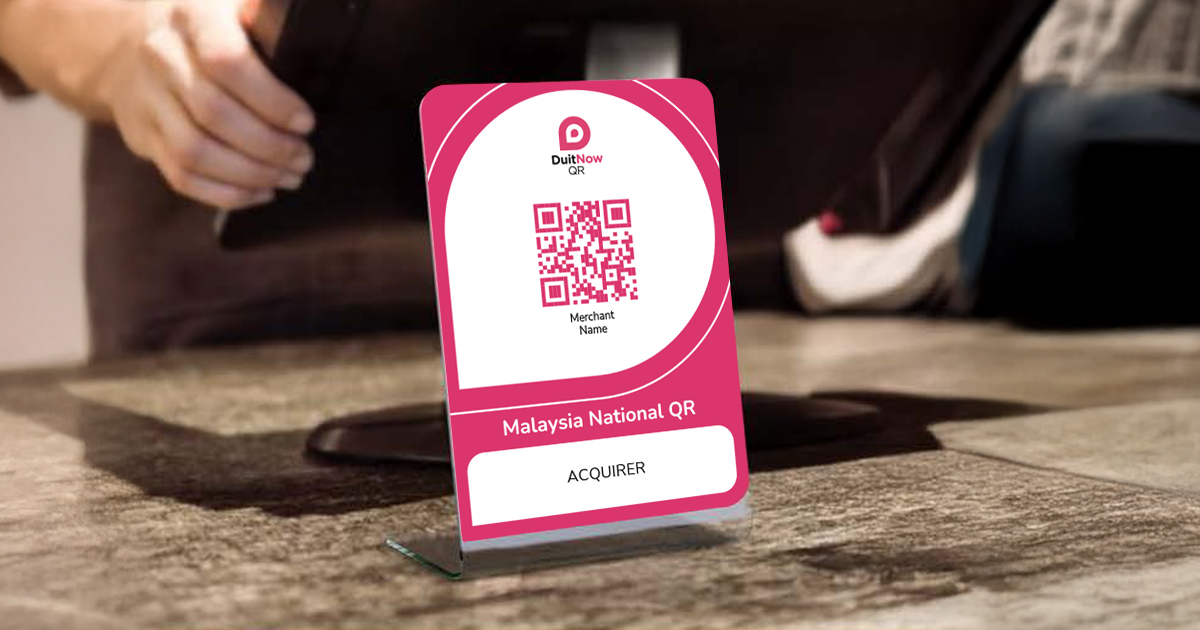
    Point-of-sale retail payments operate through unified QR standards. Merchants deploy a single static or dynamic QR code that accepts clearing requests from all domestic mobile banking applications and licensed e-wallets. Consumer payments remain fee-free at retail counters, while merchant discount rates apply to retail enterprises depending on their merchant acquirer contract.

    E-commerce checkout integrations route directly through DuitNow Online Banking and Wallets, bypassing traditional payment card rails. The direct routing pulls cleared funds directly from buyer accounts without requiring debit card credentials. For recurring invoicing, the network deploys AutoDebit protocols that clear utility billings, subscriptions and recurring wholesale invoices under pre-authorised value limits without recurring manual approvals.

    Regional Settlement Links and Currency Controls

    Inbound cross-border retail acceptance currently covers visiting consumers from six Asian economies: China, Indonesia, Singapore, Thailand, South Korea and Cambodia. Tourists and business travellers scan local merchant QR codes using their domestic banking apps. Settlements convert automatically, crediting Malaysian merchant bank accounts exclusively in Malaysian ringgit.

    Merchants cannot hold foreign currency balances directly inside the DuitNow clearing architecture. Exchange rates for incoming tourist QR spending are determined by the originating overseas payment application at the point of interaction. This leaves cross-border sellers exposed to conversion markups set by foreign issuing institutions.

    Outbound commercial transactions across the border face structural barriers. While the bilateral corridor with Singapore enables retail peer-to-peer transfers, the daily cap of RM3,000 or S$1,000 restricts corporate trade settlement. Companies paying overseas manufacturers, regional software vendors or inventory partners require separate international clearing rails or multi-currency corporate banking accounts.

    Payment Rail Fragmentation Across Retail Chains

    Retail chains across Southeast Asia are weighing single-currency domestic payment rails against cross-border fintech platforms. The local DuitNow architecture eliminates domestic card processing interchange fees, yet fails to provide working capital accounts in trade currencies such as the US dollar.

    Cross-border procurement teams that purchase stock from Mainland China or regional suppliers cannot use PayNet rails to settle trade invoices. The limitation forces operators to run dual payment workflows: national QR and real-time bank transfers for domestic store sales, and cross-border platforms such as WorldFirst or SWIFT wire transfers for import settlement. For high-volume retail chains, maintaining dual clearing mechanisms adds operational reconciliation costs and exposure to retail foreign exchange spreads.

    The operational split gives pure-play international corporate treasury providers an opening against state-backed retail clearing systems. Commercial banks capture high spreads on foreign exchange wire transfers, driving online sellers and cross-border merchants toward multi-currency accounts that issue local clearing details in overseas markets.

    Building the Regional Payment Network

    PayNet developed DuitNow to consolidate a fragmented mobile payment sector where competing digital wallet operators deployed incompatible proprietary QR codes. The central bank intervened to mandate standardisation, creating a shared national QR code and central proxy registry.

    The central bank expanded the domestic retail clearing platform through bilateral central bank linkages, starting with Thailand and Indonesia before connecting Singapore PayNow. The bilateral linkages aim to reduce regional reliance on traditional card networks and correspondent banking systems for micro-transactions and tourism spending.

    Bank Negara Malaysia and regional central banks continue testing multilateral clearing arrangements across ASEAN economies, with broader business settlement ceilings remaining the key requirement for commercial supply chain operators.