Dusit International, the venerable Thai hotel chain, is expanding its overseas operations in regions such as Africa and the Middle East, offering Asian tastes to compete with major American and European chains. While Dusit began to go abroad due to the instability of a domestic tourism industry shaken by frequent political upheavals, it now seeks to open up to 20 new hotels a year on the back of a strategy promoting the nurturing of local human resources. Dusit targets an overseas revenue ratio of 80%.
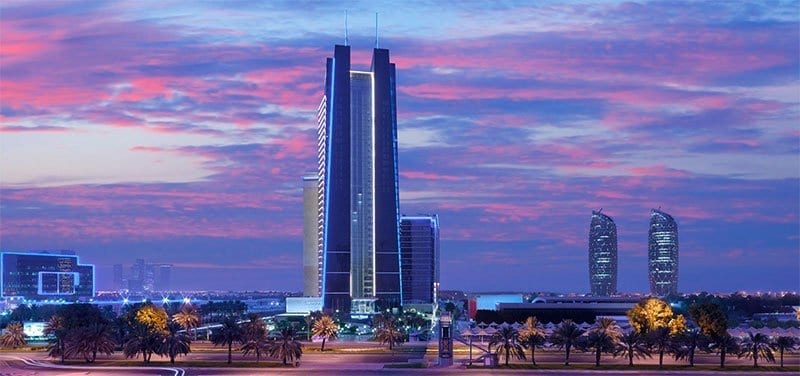
A high-rise building in the heart of the business district in Dubai, a city in the United Arab Emirates and one of the Middle East’s main commercial hubs, is a prominent landmark because of its striking inverted Y-shaped design. It is the Dusit Thani Dubai hotel, opened by Dusit in 2001.
The unique design represents the Thai greeting “wai,” in which the palms are pressed together in a prayer-like fashion.
In the lobby of the hotel, staff members in Thai ethnic costumes play traditional Thai musical instruments. “I feel as if I were in Asia and relaxed,” said a businessman, 39, from Kuwait.
Benjarong, a Thai restaurant in the hotel, is popular with local gourmets. Few hotels offer an Asian sensibility in the international market, said Chanin Donavanik, CEO of the hotel chain, also known as the Dusit Thani group.
In Oman, which neighbors the state of Dubai, Dusit signed a deal in September to become a tenant in what is to be the country’s biggest commercial complex and has since been promoting a project to open a hotel in 2017. The complex is slated to have an aquarium and a snow park on its property. Dusit puts weight on the nurturing of human resources. In Thailand, it operates a cooking school in collaboration with a university, a vocational school and an outlet of Le Cordon Bleu, France’s cooking and hospitality education institute.
In the Philippines, Dusit opened a class for future hotel workers at the Lyceum of the Philippines University in 2009. It has also announced a deal to open a school in Indonesia next year in a tie-up with a hospitality management school in Bali.
Chanin is promoting plans to open universities and vocational schools in countries where Dusit operates. Dusit has agreed with Oman’s Al Jarwani Group to open a school after 2017. While the hotel industry is large, education tends to be downplayed, Chanin said in reference to his project of building schools where students can learn not only the ABCs of hotel management but also hospitality befitting Asian hotels, including manners, greetings and cooking.
Dusit currently operates a total of 26 hotels in nine countries and half of them are outside Thailand. Principal targets for its overseas expansion are emerging markets such as the Middle East, Africa and China. It plans to open 15-20 hotels per year, mostly overseas, and raise the ratio of revenues abroad from the current 20% to 80% in 10 years’ time.
In the business year ended in December 2014, Dusit logged 4.78 billion baht ($134 million) in revenue, down 4% from the previous year, and a net loss of 20 million baht, as it was hammered by the adverse effects of a military coup and the imposition of martial law. It is imperative for the group to expand overseas operations for the sake of risk dispersion.
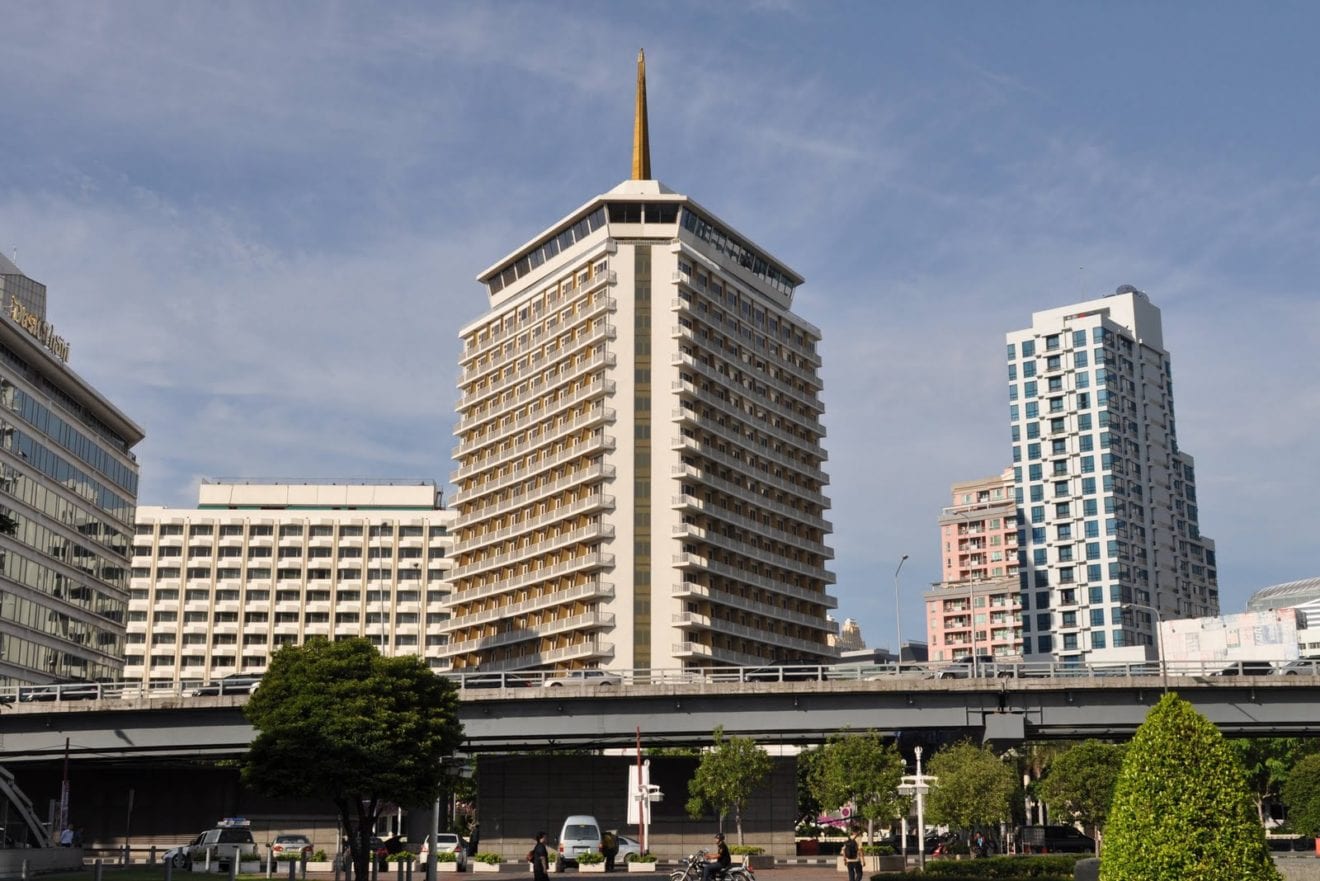
Dusit was founded by Chanin’s mother, and its flagship hotel, Dusit Thani Bangkok, is known as a venerable hotel. Early next year, Dusit will install as its new group CEO Suphajee Suthumpun, who has held executive posts at such companies as IBM of the U.S. Suphajee will be the first top executive in the group from outside the founding family.
To further expand its operation, Dusit should leave its helm to a professional manager who has been active in the global business arena, Chanin said.
Dusit went abroad for the first time through a joint investment in Kempinksi Hotels of Germany in 1994 but relinquished its stake only five years later, partly because of the Asian currency crisis, which struck Thailand in 1997.
The investment was unsuccessful because Dusit failed to communicate well with its European partners, who were located far away from Thailand, Chanin said.
Dusit thus decided to go overseas under its own brand and promote locally oriented operations through the establishment of subsidiaries and tie-ups with major local businesses.
The strategy combining Asian hospitality and local businesses has enabled Dusit to steadily expand its business overseas.
Venturing abroad
Major companies in Southeast Asia are increasingly venturing abroad ahead of the establishment of an economic community by the Association of Southeast Asian Nations at the end of 2015. While capturing markets in the U.S. and Europe, they need to make investments outside the region for the sake of acquiring know-how and brand power to compete with multinational companies in their own region.
Thai retail giant Central Group placed three German department stores, including Kaufhaus des Westens, commonly known as KaDeWe, in Berlin under its wing earlier this year. The move followed the successive acquisitions of well-established European department stores such as the 2011 purchase of Italy’s La Rinascente.
The acquisitions of upscale European retailers are highly valuable as historic deals and landmarks, said Vittorio Radice, who oversees Central’s European operations. The deals will help the Thai group improve its business and attract tourists, he said.
According to the United Nations Conference on Trade and Development, Southeast Asian companies’ investments outside the region totaled $80 billion in 2014, a 20-fold increase from 1998, the year after the Asian currency crisis struck.
As the economic slump in Europe has made European companies easier takeover targets, Southeast Asian companies’ mergers and acquisitions outside the region are increasing.