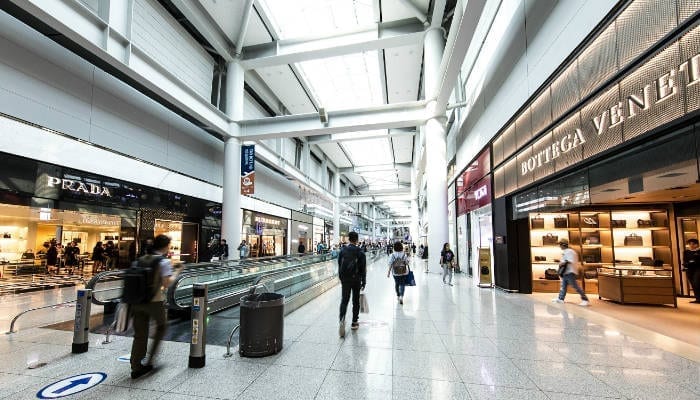
KT&G has secured new duty-free retail space across international airport hubs in Istanbul, Bahrain, and Kyrgyzstan. The rollout builds on its 25-year retail tenure at Seoul’s Incheon International Airport.
Management is targeting high-traffic transit corridors. Global passenger volumes are recovering, and overseas demand for the group’s flagship cigarette brand Esse continues to climb.
Istanbul Airport handles roughly 84 million passengers annually as a key transfer nexus between Europe, Asia, and the Middle East. KT&G rolled out five Esse products across terminal duty-free shops there in August. Esse generated approximately 2 trillion won in total sales last year. More than 1 trillion won of that came from international markets. New supply contracts also placed KT&G product lines into duty-free outlets at Muharraq in Bahrain and Bishkek in Kyrgyzstan after negotiations at international travel retail trade events.
Incheon Track Record Anchors Global Play
This push into Eurasian and Middle Eastern travel retail builds on KT&G’s position at Incheon International Airport, where it has operated continuously since the terminal opened in March 2001. The manufacturer lists roughly 100 product variations at the hub today. Between 2015 and 2017, the company ranked as the top-selling brand by value across Incheon’s entire retail floor. Sales reached 159 billion won ($118 million) in 2017, outbilling second-place Louis Vuitton by nearly two to one, according to Incheon International Airport Corp data.
That domestic track record gives the company use when negotiating concession shelf space with multinational operators. Incheon’s retail turnover climbed 11.2 percent in the first half of the year against the previous six months. South Korea welcomed 10.7 million foreign tourist arrivals during that period, providing steady cash flow to fund overseas distribution buildouts.
Targeting High-Volume Travel Retail Corridors
For airport landlords and operators, tobacco remains one of the highest-margin, fastest-turning categories per square meter. Industry estimates from the Business Research Company project the global travel retail tobacco sector will expand from $8.04 billion in 2024 to $13.47 billion by 2029. Asia-Pacific accounted for 42 percent of that turnover in 2024. Airport shops generated 60.7 percent of total sales across all travel retail channels.
Securing distribution inside megahubs like Istanbul lets KT&G drive consumer sampling while bypassing local advertising bans common in domestic retail channels. Still, risks remain. Regulatory scrutiny around cross-border tobacco allowances is rising, and airport traffic patterns could shift away from intermediate transit hubs toward direct point-to-point routes.
Earnings Guidance and Pipeline
Stronger duty-free placement aligns with rising profitability across KT&G’s core tobacco operations. The group posted an 18.5 percent year-on-year increase in second-quarter operating profit to 414.5 billion won on revenue of 1.7 trillion won, delivering its fourth straight quarter of double-digit profit growth. Overseas revenue grew 18.9 percent to 557.7 billion won during the period. Operating profit for the tobacco division alone reached 382.5 billion won on sales of 1.22 trillion won.
Following those figures, KT&G raised its full-year financial outlook. The group now projects 5 to 7 percent revenue growth and 10 to 13 percent operating profit growth, up from previous guidance ranges of 3 to 5 percent and 6 to 8 percent. Management plans to convert buyer leads from recent trade exhibitions in Cannes, Singapore, and Germany into additional airport supply listings before the close of the financial year.