Tag: Dyson

  • Electrolux Gains Competitive Edge with New Apac Head, Dyson Prodigy Bernard Chong

    Electrolux Gains Competitive Edge with New Apac Head, Dyson Prodigy Bernard Chong

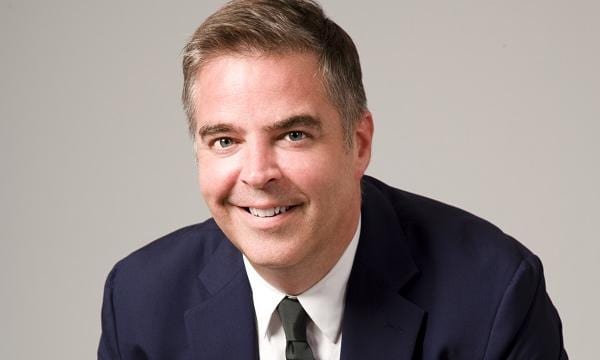
    Bernard Chong has been named the new leader of the Asia-Pacific (APAC) region for Electrolux Group. His tenure will commence from the first day of June. Formerly serving as the president of Greater China at Dyson, Chong proactively oversaw operations and managed a workforce of over a thousand employees.

    A New Chapter at Bangkok

    With his office in Bangkok, Chong will be rendering reports directly to Yannick Fierling, the CEO of Electrolux Group. “I am pleased to welcome Bernard to our team,” Fierling stated. “Throughout his career, Bernard has demonstrated his ability to build brands and execute successful turnarounds, leveraging his unique approach of merging market insights, data-driven strategy, and unyielding focus. His skills will be of great value to our team. I look forward to seeing him drive the region and working with him.”

    Chong possesses a diverse and rich work history, having held several senior leadership positions across Asia and Europe. His experience spans various markets, including Southeast Asia, Portugal, and Japan. Previously, he has also collaborated with renowned organizations such as Sony Mobile Communications and Nike Southeast Asia.

    Recent Developments at Electrolux

    In other recent news, Electrolux’s Kelvinator, a seller of electronics and appliances such as refrigerators, air conditioners, and washing machines, was acquired by Indian retailer Reliance Industries last year.

    Questions & Answers

    Who has been appointed as the new head of the APAC region for Electrolux Group?
    Bernard Chong has been appointed as the new head of the APAC region for Electrolux Group.

    What are some of the previous organizations that Bernard Chong has worked with?
    Bernard Chong has previously worked with Dyson, Sony Mobile Communications, and Nike Southeast Asia.

    Who acquired Electrolux’s Kelvinator last year?
    Electrolux’s Kelvinator was acquired by Indian retailer Reliance Industries last year.

  • Singapore’s Dyson disappoints union with 1-day notice layoff

    Singapore’s Dyson disappoints union with 1-day notice layoff

    A workers’ union in Singapore has expressed disappointment in household appliance maker Dyson for informing it of a layoff only one day in advance.

    The United Workers of Electronics and Electrical Industries (UWEEI) said in a Facebook post Wednesday that the company only gave it a one-day notice about the layoff on Tuesday, which was “unacceptable.”

    The move did not give sufficient time for the union, Dyson and the affected workers to discuss the matter to ensure employees’ interest and welfare are supported, it added.

    It has brought the matter to the attention of the Ministry of Manpower.

    Dyson, which did not disclose the number of workers it had let go, said that the company had “respectfully informed UWEEI in advance.”

    The company was following all prevailing guidelines from the Ministry of Manpower and providing employees with the support they need, including outplacement services and employment assistance programs, it added.

    The layoff came three months after it announced a global restructuring that involved about 1,000 job cuts in the U.K.

    The company said at the time that Singapore employees were “not directly impacted” by the plan.

    Some employees told Channel News Asia that the retrenchment exercise was done “very discreetly” and came as a surprise.

    “People are shocked and have low morale, as they are not sure when their turn might come,” a laid-off employee spoke on condition of anonymity.

    Dyson is known as a manufacturer of high-end vacuum cleaners, air purifiers and bladeless fans. It opened the first Singapore office in 2007 and chose the country as its global head office in 2019.

  • Dyson to invest US$1.1 billion in Singapore as part of global plan

    Dyson to invest US$1.1 billion in Singapore as part of global plan

    Dyson, the inventor of the bagless vacuum cleaner, said on Friday it would invest S$1.5 billion ($1.1 billion) in Singapore over the next four years, the newest phase of a S$4.9 billion global investment plan.

    When Dyson announced the global investment plan in 2020, it said the money would be divided between the company’s global head office in Singapore, its two campuses in Wiltshire, southern England, and the Philippines.

    On Friday, it launched its new global headquarters in a restored power station in the Southeast Asian city-state, where it plans to hire more than 250 additional engineers and scientists.

    The positions will span robotics, machine learning, high-speed electric digital motors, energy storage, and more.

    Singapore is a hub for Dyson’s research and engineering teams, as well as commercial, advanced manufacturing, and supply chain operations. It has more than 1,400 staff in the country, including 560 engineers and scientists.

    Singapore, a low-tax global business centre, has been ramping up efforts to lure technology and research firms.

    “This is the future for technology companies – to go wherever talent is available and made welcome,” its prime minister, Lee Hsien Loong, said at the opening of the headquarters.

    “It is also the future for Singapore – to welcome companies and talent, which can help make us a hub of new ideas and scientific progress.”

    Founded by British entrepreneur James Dyson in the 1990s, the company became a household name by developing sleekly designed products ranging from hand driers and air purifiers to hair care tools and vacuums.

    Dyson, a billionaire Brexit supporter, announced plans in 2019 to move his company’s head office to Singapore to be closer to its fastest-growing markets, sparking a backlash at home.

    The company has other sites in Singapore, including an engineering hub, a motor manufacturing facility and a new battery factory.

    Southeast Asia is a major production base for Dyson with Malaysia counting as its second-biggest global hub.

    Last year, Dyson split with its supplier ATA IMS Bhd following an audit of the Malaysian company’s labour practices and allegations by a whistleblower.

    ATA made parts for Dyson’s vacuum cleaners and air purifiers.

  • Dyson opens Demo store in Singapore

    Dyson opens Demo store in Singapore

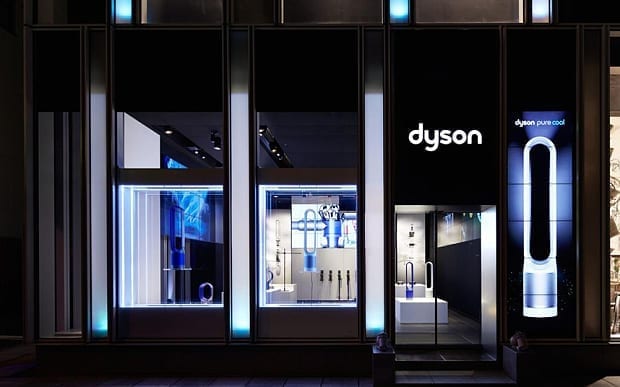
    Southeast Asia’s largest Dyson Demo store has landed in Singapore’s VivoCity, creating what the brand describes as an immersive experience retail space.

    The launch of the Dyson Demo store is part of the brand’s global drive to “further grow its direct-to-consumer retail ambitions”. The new store will join Dyson’s three smaller stores in the city – Dyson Demo Zones in Westgate, Nex and Tampines Mall, together with a Demo Store in Capitol Singapore.

    Located on the first floor of the shopping mall and spanning 172sqm, the store features several demonstration zones and interactive displays to create an in-store experience. Customers will be able to access Dyson’s full portfolio of household appliances and try the products before purchasing.

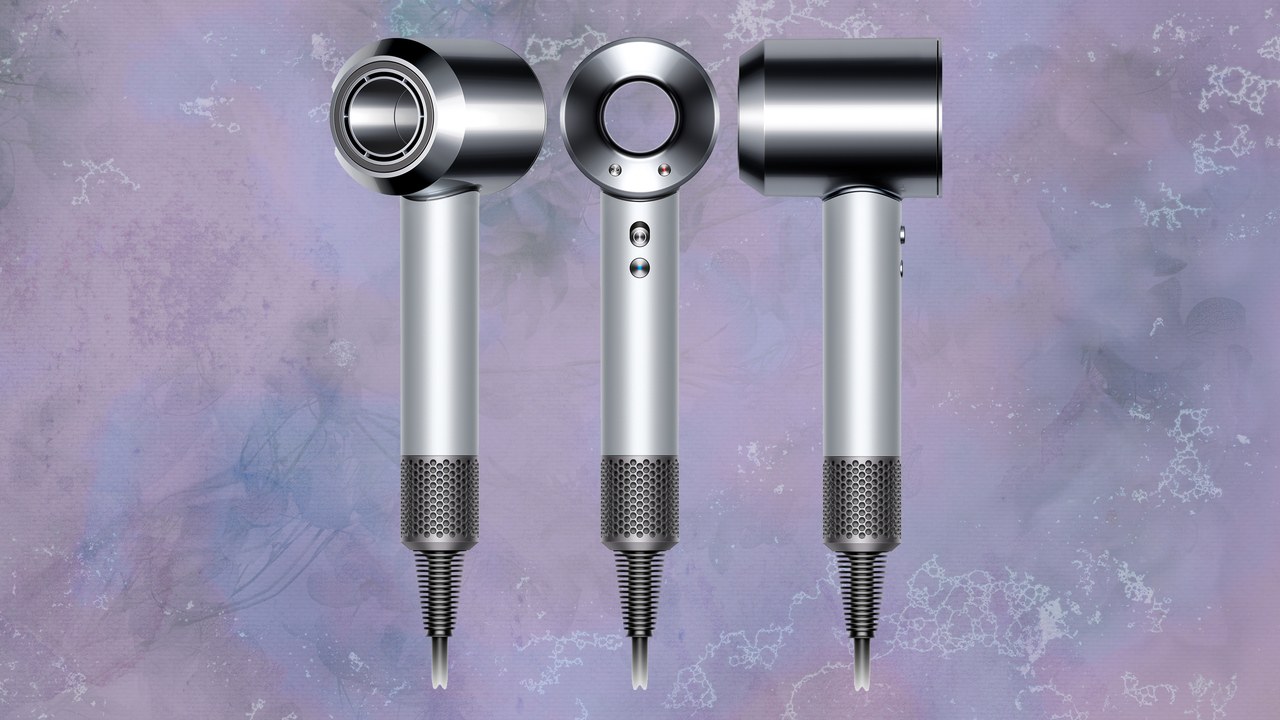
    Meanwhile, Dyson’s Beauty Labs are designed for in-house hair care, equipped with three styling stations. Customers can have their hair styled and meet the brand’s experts to get advice based on their hair type and styling preferences.

    At the Personalisation Bar, customers can enjoy complimentary case embossing for their Dyson Supersonic hairdryer, Dyson Airwrap styler, and Dyson Corrale straightener with a selection of colors for the foil initials and gift-wrapping services.

  • Dyson splits with Malaysia supplier, stoking concern over migrant worker treatment

    Dyson splits with Malaysia supplier, stoking concern over migrant worker treatment

    A transient drive right by the border from Dyson’s contemporary headquarters in Singapore is the boomtown constructed round its enterprise: a Malaysian industrial declare dominated by its finest supplier, ATA IMS Bhd (ATAI.KL).

    ATA, one amongst Malaysia’s high electronics manufacturing companies and products suppliers, rode Dyson’s success in excessive-close vacuum cleaners and air purifiers, supplying parts for a firm that got right here to story for 80% of its income.

    Ten contemporary and former workers, and a former ATA govt, tell the expansion got right here at an unseen mark: its mostly migrant workforce worked up to 15 hours a day, had been repeatedly requested to skip relaxation days to support up with set aside a query to, and had been coached to cowl correct working and dwelling prerequisites from labour inspectors and Dyson.

    In interviews over the final two months, the workers furthermore tell ATA, which analysts tell is Dyson’s finest global contract producer, employed hundreds of foreigners without work permits.

    After questions from Reuters on Nov. 18, Dyson final month stated it might perchance perhaps well pull its enterprise from ATA in six months, citing a up to date fair audit on prerequisites for workers and allegations by an unidentified whistleblower.

    ATA stated in a observation it turned into as soon as audited by the To blame Industry Alliance (RBA), a physique broadly engaged by electronics corporations to behavior factory audits. RBA hires third-social gathering auditors for the inspections. It declined to comment.

    On Nov. 29, ATA stated it had viewed the summary of Dyson’s audit, which stumbled on sad dwelling prerequisites, considerations of retaliation and unpaid allowances, among varied components. It described the findings as “non-conclusive” and stated it turned into as soon as reviewing them. Reuters has no longer viewed the audit.

    ATA declined to comment, and referred Reuters to its most recent public statements.

    Dyson stated on Tuesday it wouldn’t comment as a result of accusations associated to ATA.

    Malaysia on Wednesday stated it might perchance perchance perhaps well mark ATA over complaints it had received by the labour department. It did no longer tell what the charges or complaints had been about or whether or not they associated to the workers’ accusations about its Dyson factories.

    The country’s human resources minister, M. Saravanan, stated compelled labour allegations at Malaysian corporations had been hurting international traders’ confidence in merchandise manufactured there. He had earlier stated the federal government turned into as soon as investigating Dyson’s resolution to interrupt up with ATA.

    After Dyson’s hurry, ATA shares dropped 60%. Some analysts accept as true with raised doubts about ATA’s skill to attract contemporary customers, and on Nov. 29 a observation from the firm forecast income declines and mark cuts.

    With Dyson’s departure, six workers and shopkeepers interviewed within the Johor Bahru industrial declare stated they feared they might perchance perhaps lose their livelihoods.

    “There’s now not one of these thing as a screech of a job right here anymore,” stated one off-responsibility ATA employee, carrying his royal-blue factory work shirt on a up to date Sunday. Love others, he requested now to now not be diagnosed for dismay of reprisal.

    ATA officially employs round 8,000 workers, although four ATA workers and the former govt estimated its workers had been as excessive as 17,000 unless lately, including these without permits. Most of 17,000 had been from Bangladesh and Nepal, according to the workers and govt.

    ATA’s factories are concentrated in adjoining industrial parks in suburban Johor Bahru, a 30-minute drive to Singapore, the put Dyson is headquartered.

    ATA posted document income of 4.2 billion ringgit ($991.74 million) for the fiscal 300 and sixty five days that resulted in March. Dyson, owned by British billionaire James Dyson, accounted for nearly $800 million of that.

    Analysts tell the increased scrutiny of Malaysia might perchance perhaps well expand production charges and deter traders. The United States has banned six Malaysian corporations within the final two years over accusations of compelled labour.

    “Cost will definitely hurry up because of loads extra care must be taken into story, no longer fine on recruitment but furthermore employee accommodation. The ramifications are vastly increased charges for labour,” stated Vincent Khoo, head of Malaysia compare at brokerage UOB Kay Hian.

    Malaysia, which makes every little thing from iPhone parts to semiconductors, is reliant on electrical and electronics manufacturing in disclose for exports and economic tell. Between January and October 2021, such merchandise accounted for 36% of total exports.

    Foreigners manufacture up about 10% – 1.48 million – of Malaysia’s workforce, according to government info, although that percentage is increased within the manufacturing sector. The federal government and labour teams estimate hundreds and hundreds extra undocumented migrants.
  • Dyson ditches Malaysian supplier over labour practices

    Dyson ditches Malaysian supplier over labour practices

    Dyson has terminated its relationship with supplier ATA IMS Bhd following an audit of the Malaysian company’s labor practices and allegations by a whistleblower, the British firm famed for its high-tech vacuum cleaners told Reuters.

    Dyson said it had commissioned an audit of working conditions at ATA earlier this year, the results of which were received on Oct 4.

    In addition, it was informed in September of a whistle-blower making allegations about unacceptable actions by ATA staff and immediately commissioned an international law firm to undertake a further investigation, Dyson said.

    “Despite intense engagement over the past six weeks, we have not seen sufficient progress and have already removed some production lines,” Dyson said in a statement to Reuters. “We have now terminated our relationship with six months’ of contractual notice.”

    ATA, which makes parts for Dyson’s vacuum cleaners and air purifiers, did not immediately respond to a request for comment.

    According to ATA, Dyson accounts for almost 80 percent of its revenue.

    ATA had in May denied allegations of forced labor at its factories after a prominent rights activist said US authorities were going to scrutinize the company’s work practices.

  • Dyson opens its flagship store in Seoul

    Dyson opens its flagship store in Seoul

    British home appliance maker Dyson Ltd. said Thursday it will open its first flagship store in South Korea this week as the company eyes to expand its sales amid the pandemic.

    Dyson Demo Store will open at IFC Mall in western Seoul on Friday, featuring all of Dyson’s products and services. It is the first flagship store to be directly run by Dyson Korea since the Korean unit was established in 2018.

    “We want to offer a place where people can explore, test and try Dyson’s full lineup of technology, get advice and support on everything from their first demo store in Korea,” Tomas Centeno, the managing director of Dyson Korea, said. “The demo store will offer ultimate Dyson experience of our full products and services under one roof to choose the right product for you.”

    At the 323-square-meter space, Dyson Korea said its employees who were trained by Dyson engineers, called “experts,” will assist consumers in selecting its products from vacuum cleaners to hair appliances.

    Centeno said Dyson aims to “grow strongly” in South Korea, saying the country is one of its key markets.

    “Koreans are nimble in their approach to tech,” he said. “Not only do they have high interest but are also quick to evaluate new products.”

    Last year, Dyson’s vacuum cleaner with an omnidirectional head, the Omni-glide, was launched in South Korea first in the world.

    “We will continue to introduce new products, which have never existed before, based on our deep understanding of Korea,” he said.

  • Billionaire James Dyson Buys Lavish Singapore Bungalow

    Billionaire James Dyson Buys Lavish Singapore Bungalow

    Following his S$73.8 million Wallich Residence penthouse purchase, the billionaire inventor’s real estate shopping spree in Singapore continues with a luxury bungalow in a pricey neighborhood.

    After snapping up Singapore’s biggest and priciest penthouse earlier this month, billionaire James Dyson, the inventor of the bagless vacuum, has purchased his second property in the city-state – a Good Class Bungalow. (GCW)

    Located on a hill along Cluny Road, the 1,400 square-meter property has unobstructed views of the UNESCO World Heritage-listed Singapore Botanic Gardens. It makes full use of the steeply sloped site and features a curved swimming pool, sculptural staircase, and a waterfall surrounded by lush plants.

    Foreigners and permanent residents are barred from purchasing landed property in Singapore, though exceptions are made for those who have made exceptional economic contributions in Singapore. Still, Dyson would have to fork out an additional 15 percent buyers’ stamp duty on the purchase price that is estimated at S$41 million, as it is his second property here.

    Dyson, 72, a vocal supporter of the U.K.’s decision to leave the European Union, said in January that he would move his company’s head office and research team from the U.K. to Singapore. However, he denied the move had anything to do with Brexit, saying that he wanted to be closer to the firm’s fastest-growing markets. Dyson plans to build the company’s first electric car in the city-state.

  • Dyson opens Beauty Lab in Sydney

    Dyson opens Beauty Lab in Sydney

    On Wednesday, Dyson opened its first ‘Beauty Lab’ in Australia, where customers can book hair styling appointments, drink prosecco and try out and buy the company’s extremely popular hair products.

    Located in Sydney’s Queen Victoria Building, the store marks a shift from the wholesale and e-commerce channels the company has traditionally relied on. While Dyson has previously held pop-ups, the Beauty Lab marks its first permanent bricks-and-mortar location in the country.

    The Beauty Lab concept is focused on educating customers and providing a luxury experience.

    “Dyson is continually disrupting the styling industry and its Beauty Lab is no exception,” said Joey Scandizzo, Dyson styling ambassador.

    “It’s exciting to be part of the journey to create amazing styles and educate people on how to help prevent extreme heat damage by using game-changing Dyson styling technologies.”

    The store features two products – Dyson’s Supersonic hair dryer and Airwrap styler – which took two years and almost £100 million ($179 million) to develop, the company said.

    The styling tools have been extremely popular in a product category that had not seen much innovation for decades, and are only now back in stock after having sold out.

    Customers can make appointments to have their hair styled by an expert at the Beauty Lab. For $50, they receive a complimentary beverage including prosecco, a hair consultation by a Dyson styling expert, a luxury hair wash with treatments and a head massage.

    The session is free for those who purchase a Dyson hairdryer or styler. Buyers will also buy receive a free gift (choosing from a brush kit, Supersonic stand or a woven bag).

    The launch of the Beauty Lab comes after the company added a second call centre in Australia last year, in what it said was a significant commitment to its presence here.

  • Dyson Beauty Demo Zone opens at 1 Utama mall

    Dyson Beauty Demo Zone opens at 1 Utama mall

    A Dyson Beauty Demo Zone has opened at Kuala Lumpur’s 1 Utama mall. The outlet, which opened a few days ago, invites shoppers to examine, test and purchase the brand’s range of hair care products.

    Dyson is a British engineering design firm opened by James Dyson, the inventor of cyclonic vacuum technology. Its hair care products employ a high-speed jet of focussed air to effect drying and styling without intense heat.

    The brand is offering a free stand to OneCard members purchasing the Dyson Supersonic hair dryer as an opening special, while stocks last.

  • JD.com surprises with first profitable quarter

    JD.com surprises with first profitable quarter

    JD.com profit soared 50 per cent after a 39 per cent increase in sales during the Chinese online retailer’s latest quarter.

    Its unaudited results for the three months to the end of September show revenue of RMB83.7 billion (US$12.6 billion), with a record 50.3 per cent surge in gross profit to RMB13 billion. Non-GAAP gross profit was RMB12.8 billion, up 51.9 per cent.

    Active customer accounts increased by 34 per cent to 266.3 million in the 12 months to September 30.

    Chairman/CEO Richard Lio says the company is building robust product content and enhancing user engagement with innovative tools that enable brands to launch highly targeted online marketing programs.

    “The scale economies of our model are becoming clearer with every quarter,” says CFO Sidney Huang. “Looking ahead, we will continue to prioritise investments in technology and leading R&D talent as we execute on our vision to revolutionise China’s retail industry.”

    While releasing its third-quarter figures, JD.com also listed its latest business developments…

    In October, JD and Tencent expanded their partnership with the launch of a marketing initiative that integrates insights on consumer behaviour from Tencent’s social-media platforms with online and offline shopping data from JD and its brand partners. As well as enabling more precise target marketing, the move benefits consumers by offering them wider access to sales promotions and preferred discounts.

    Strategic partnerships

    During the past three months, JD.com also formed strategic partnerships with Baidu, iQIYI, NetEase, Sogou and Qihoo 360 with their big-data resources, massive user bases and AI algorithm technologies.

    JD also continued to strengthen its position among top-tier international brands, expanding its partnership with high-fashion brand Armani with the opening of official online stores for Armani Exchange and Emporio Armani.

    JD Worldwide also launched flagship stores for such companies as Reckitt Benckiser, Spectrum Brands and Tiger, while its new Toplife platform attracted marquee brands like Dyson, La Perla, Rimowa (LVMH) and Trussardi.

    During the quarter, JD Logistics test-launched an unmanned sorting centre, the first of its kind in the logistics industry. JD also signed agreements to lay the groundwork for the rollout of China’s largest drone network.

    In September, JD Logistics expanded its environmentally friendly logistics and packaging campaign, working with brands including  Johnson & Johnson, Kimberly-Clark, Lego, L’Oreal, P&G, Nestle, Unilever, Watsons and Wrigley. The aim is to minimise environmental impact by cutting back on packaging materials.

    Customer demand

    JD also enhanced its fresh product offerings during the quarter to meet customer demand. In July, it launched the Canadian Fresh Food Pavilion, the first country pavilion for fresh products on the JD.com platform. Live lobsters from Canada can now be delivered to customers’ doorsteps in China in as little as 48 hours. During JD’s Super Canadian Day, 140,000 lobsters were sold within 24 hours.

    In September, JD.com, JD Finance, Central Group and Provident Capital announced agreements to establish two JVs in Thailand covering e-commerce and fintech services, with an aggregate investment of $500 million. JD.com is providing its expertise in technology, e-commerce and logistics while Central Group is drawing on its retail store network, brand and merchant relationships, and retail behaviour insights from its loyalty program.

    In October, JD and Sam’s Club launched a promotion offering customers discounted bundled memberships for Sam’s Club and the JD Plus paid-for membership service.

    By the end of October, JD.com JV New Dada had partnered with 146 Walmart stores and 301 Yonghui stores, as well as many other supermarkets and grocery stores, to provide online fresh grocery shopping with one-hour home delivery.

    At the end of September, JD.com had 405 warehouses and provided scheduled delivery services in 250 Chinese cities. It had about 160,000 merchants on its online marketplace, and 137,975 full-time employees.

  • Dyson Malaysia opens concept store in KL

    Dyson Malaysia opens concept store in KL

    Dyson Malaysia has opened its first concept store, in The Gardens Mall, Kuala Lumpur. Dyson Demo is also the largest space in Southeast Asia for the British engineering company.

    “We want our visitors to have the chance to be hands-on with our products. They can pick up, test and experience Dyson’s technology,” says Dyson Southeast Asia GM Martyn Davies.

    Three main products feature in the minimalist store – cord-free vacuum cleaners, purifying fans and hairdryers. Davies says Dyson hopes to introduce four new technologies by 2020.

    “We have a development centre in Johor Baru, so there is a high chance Malaysian engineers worked on the technology behind these products, and are working on our upcoming ones,” he says.
    Visitors to the store can try the vacuum cleaners on three different floor surfaces.

    “This space is designed for our clients to pick up the machines, pull them apart and test them on our test track with various dust samples,” says Dyson Electronics head Jim Roovers.

  • Dyson plans to enter India

    Dyson plans to enter India

    UK company Dyson, known for its innovative vacuum cleaners and air purifiers, plans to open its own retail stores in India by the middle of next year.

    It has already sought permission from the Department of Industrial Policy and Promotion (DIPP) to import and sell products in India.

    “If we get the permit, we’ll set up middle of next year,” says founder James Dyson, in New Delhi for the India-UK Tech Summit.

    “Over the first five years, we’ll invest about £154 million [US$190.8 million] in India. Our investment will be in building infrastructure (retail), taxes (to the government), marketing and promotions.”

    India will be the 76th market for Dyson, which in its last overseas foray entered China three years ago.

    “India is an interesting market, but it may take time to develop – unlike China, which has emerged as the third-largest market for Dyson after the US and Japan,” says Dyson.

    Online portals

    The company’s plan is to set up a retail store in each of the top 20 cities in India, as well as selling through other retailers and online shopping portals.

    “Online helps our business,” Dyson says. “We sell through Amazon in some countries and may sell through Amazon in India as well.”

    The company will import products from Malaysia, Singapore and Philippines for the Indian market. Depending on volume, Dyson may look at making products in India after a few years.
    As well as vacuum cleaners, the company will also look at the beauty and hygiene market with hair dryers and hand dryers, as well as LED lighting products.

    Dyson is a family-owned technology company that employs more than 7000 people globally—a third of whom are engineers and scientists.

    “India produces 1.3 million engineers every year – that’s very exciting. We’ll look at working with Indian universities soon,” Dyson says. The company spends £5 million a week in research, design and development, and has more than 200 live technology projects and 50 active research programs with 40 universities around the world.

    Dyson’s revenue rose 26 per cent to £1.7 billion last year while profit increased 19 per cent to £448 million.