Tag: E-Commerce

  • Chow Tai Fook changes strategies to tackle tough market

    Chow Tai Fook changes strategies to tackle tough market

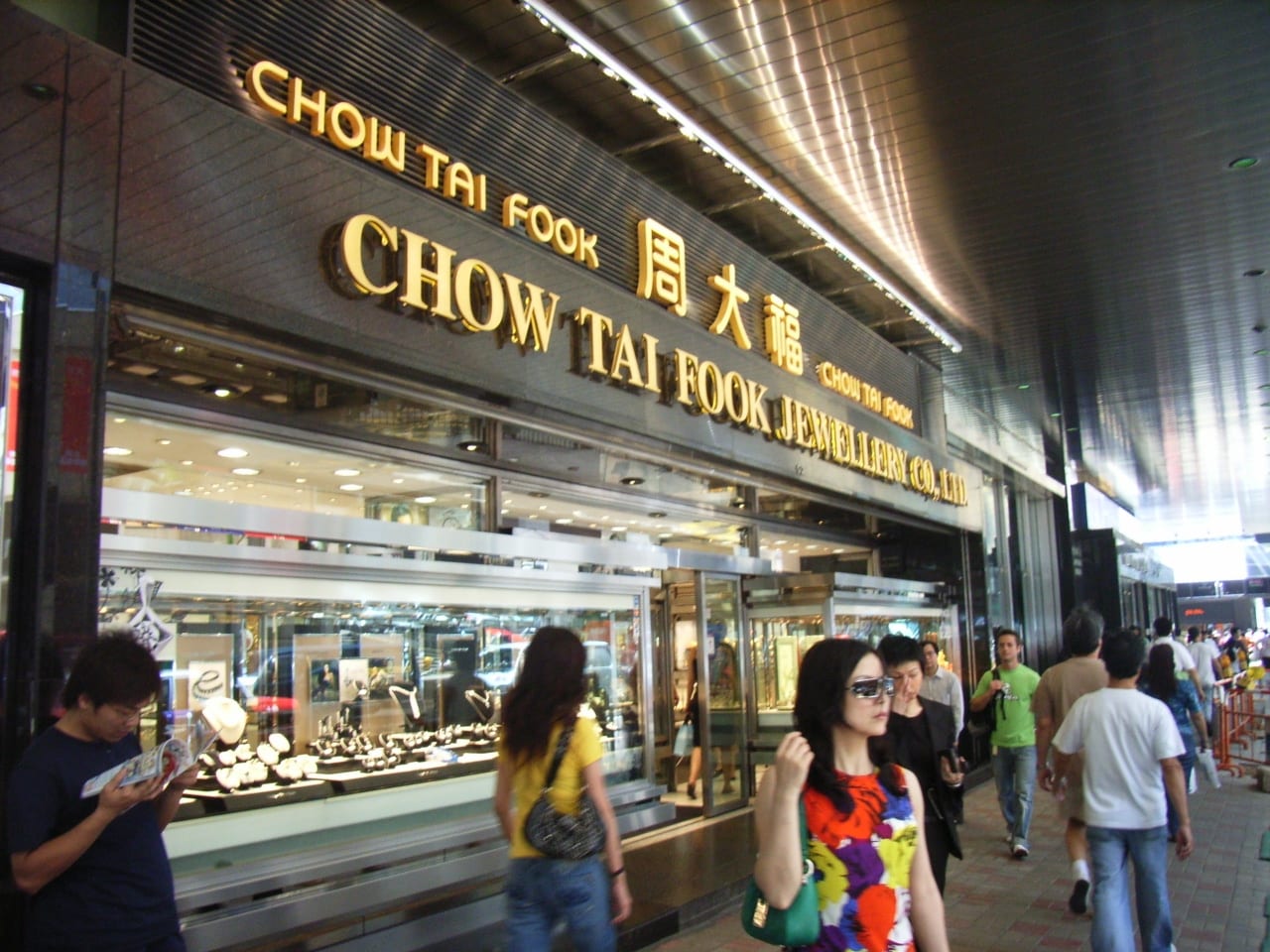
    Chow Tai Fook Jewellery Group is renegotiating store rents and consolidating its retail network in order to manage rental costs, chairman Henry Cheng Kar-shun said on Thursday.

    Amid a downturn in the city’s retail landscape, the largest Hong Kong-listed jeweller in terms of market capitalisation had also shifted focus to smaller-priced items to attract customers, Cheng said.

    Business is getting tougher for retailers, with sales in July dropping 2.8 per cent from a year earlier to HK$37.6 billion, following a 0.4 per cent fall in June. The drop in July was the biggest since March’s decline of 2.9 per cent.

    Sales of jewellery, watches, clocks and gifts all recorded a smaller decrease of 5 per cent, after four months of double-digit falls.

    “There are a number of external factors that are out of our control, such as the macroeconomic conditions, the central government’s policies and the devaluation of China’s currency,” Cheng said. “What we can do is do our best to operate the business well.

    “While we are still making profits in all of our [Hong Kong] stores, we may consider cutting some to maximise profits. For example, if we have three shops on one street, we may opt for two in order to cut costs.”

    Facing a sluggish retail market, commercial landlords are now willing to set more realistic prices and reduce rents.

    Cheng said the company was renegotiating with landlords to lower rents and the extent of rent cuts would depend on the business performance of the store concerned, said Cheng, suggesting the average cut could be between 20 and 30 per cent.

    Chow Tai Fook in June reported net profit for the year ended March fell about 25 per cent to HK$5.46 billion from the previous year.

    Revenue dropped 17 per cent to HK$64.28 billion.

    The average selling price of gem-set jewellery fell 12.7 per cent and that of gold products declined 1.2 per cent.

    The company extended its e-commerce network to strengthen its capability to reach more online customers, particularly the younger generation, said Cheng, adding the online division was making profits.

    He was speaking at an event to mark the company’s unveiling of a diamond piece centred on a 24 D-colour internally flawless diamonds cut from a 507.55 carat rough diamond, known as the Cullinan Heritage, that Chow Tai Fook acquired for HK$275 million in 2010.

  • Wal-Mart says heavy e-commerce investments put a crimp on earnings

    Wal-Mart says heavy e-commerce investments put a crimp on earnings

    The retailer’s global online sales increased 16% in Q2, excluding the impact of the stronger U.S. dollar.

    Wal-Mart Stores Inc. says its heavy investment in e-commerce infrastructure is paying off, with online sales growing by double-digit percentages, but that it hit a rough patch in international online sales and that the spending is weighing on its earnings.

    The retail giant, No. 3 in the Internet Retailer 2015 Top 500 Guide, said Tuesday its global online sales, excluding the impact of the strengthening dollar, grew 16% in the second quarter. But investments in e-commerce are estimated to lower full-year earnings per share by between 6 cents and 9 cents, company officials said. With 3.23 billion shares outstanding, that suggests Wal-Mart will spend between $190 million and $295 million on e-commerce this year.

    “The highlight was solid growth in the Walmart.com and SamsClub.com U.S. businesses, while international was soft, due to economic challenges in several of our key markets,” chief financial officer Charles Holley said on the company’s earnings call. The international results led Wal-Mart to revise its e-commerce sales growth forecast for 2105 to the mid to high teens from the previous mid-20s range.

    Wal-Mart also said its e-commerce investments, meant to vie with Amazon.com and other online retailers, are vital given the competitive environment.

    “We’re pleased that the investments we’ve made are helping to improve our business,” CEO Doug McMillon told analysts during the company’s earnings conference call, according to a transcript from Seeking Alpha. “Even if it’s not as fast as we would like, the fundamentals of serving our customers are consistently improving. In this case, our desired changes require investments, which are pressuring earnings this year.”

    Also in the quarter, the retailer opened two automated online fulfillment centers in the U.S., each bigger than 20 football fields, and two more are coming this quarter, said Holley. The centers will serve customers this holiday season and serve as the cornerstones of Wal-Mart’s fulfillment network, he says.

    On the call, Wal-Mart executives discussed its deal, announced last month, to acquire the remaining 49% it did not already own in Yihaodian, a Chinese online grocery retailer that’s been expanding into other categories and is No. 7 in the Internet Retailer 2015 China 500 Guide. Wal-Mart spent $760 million in the quarter to acquire the remaining 49% of Yihaodian, the online retail site in China with 100 million registered users.

    “Our primary goal is to continue to accelerate Yihaodian’s core e-commerce business and maintain strong local Chinese expertise,” Neil Ashe, CEO of Wal-Mart Global e-Commerce, told analysts. “Now that we are the sole owners, we will be expanding our leadership team from within the Yihaodian business, from within Wal-Mart and from the e-commerce industry in China. We will also leverage Walmart’s global reach and scale to better benefit Yihaodian, including global sourcing. China is an exciting, dynamic, large and competitive market. We are excited about our long-term opportunity in China.”

    For the quarter ended July 31, Wal-Mart reported:

    • Net sales of $120.229 billion, relatively flat from $120.125 billion.
    • Wal-Mart did not report online sales but said e-commerce sales increased 16% globally when adjusting for the strengthening dollar, which is reducing the dollar value of sales outside the United States. The total value of purchases on Wal-Mart’s e-commerce sites in 11 countries increased 18% on a constant-currency basis. That includes sales by outside merchants selling on Walmart.com and other sites that offer goods from other retailers.
    • Net income of $3.475 billion, down 15.1% from $4.093 billion in the same period in 2014
    • A decline in operating income in the retailer’s three primary divisions. At Wal-Mart U.S. it was $4.819 billion, down 8.2%; at Wal-Mart International it was $1.277 billion, down 14.2%; and at Sam’s Club it was $428 million, down 13.4%.
  • MatahariMall aims for 20% of Indonesian e-commerce market by 2020

    MatahariMall aims for 20% of Indonesian e-commerce market by 2020

    MatahariMall, which is planned to be launched next September, is eyeing 20 per cent of the e-commerce market in Indonesia by 2020. That year, the total market volume is projected to reach US$20-30 billion, compared to US$1.3 billion currently.

    It was told by MatahariMall’s Chairman Emirsyah Satar to Berita Satu. He stated that the team uses Alibaba as their role model. As we know, MatahariMall is the first marketplace to use O2O (Online to Offline) concept since the very beginning.

    Satar said, “Currently, the e-commerce market in Indonesia is worth around $1.3 billion. It’s so low, not even one percent of the total national retail sales. In other countries, e-commerce could cover 5-8 per cent of total retail sales. So, we estimate that out market volume would reach around US$20-30 billion by 2020.”

    “Our network footprint is quite strong and well-distributed all over Indonesia. We also have the experience of doing offline retail. Users may inspect their desired products before purchasing them, thanks to the support by Matahari and Hypermart. So, they may touch, feel, and even return the product should they feel that the it doesn’t meet their expectation,” he continued.

    MatahariMall has been accessible at the moment, although it’s still in form of a teaser page. Satar claimed that the number of buyers is already quite significant.

    Challenges of the e-commerce industry

    Satar pointed out two main challenges of the e-commerce industry in Indonesia, which are infrastructure and regulation. Infrastructure refers to the poor distribution of the Internet network, while regulation refers to the government’s law.

    “For instance, the regulation that requires merchants to fill out their TIN or ID number before posting at marketplace. I don’t think it’s urgent, as the industry is still infant. It should be enforced once the right time comes,” he said.

    The government, led by the Minister of Communication and Information Rudiantara, is currently formulating the roadmap for e-commerce in Indonesia, as President Joko Widodo stated in the opening of Indonesia Convention Exhibition (ICE) last Tuesday.

  • SingPost flourishes on eCommerce focus

    SingPost flourishes on eCommerce focus

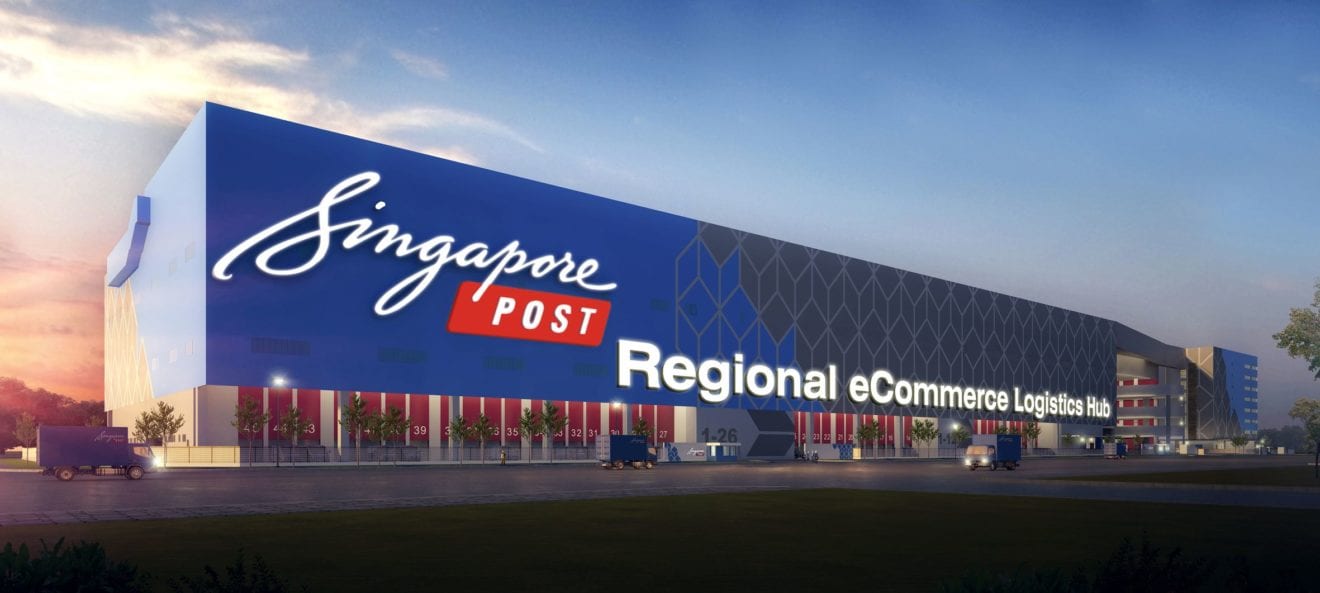
    A firm focus on serving the booming eCommerce market has helped Singapore’s national postal service achieve a record first quarter profit.

    SingPost on Wednesday says in made S$46.6 million net profit in the first three months as its eCommerce strategy paid dividends. Its performance comes in an era when postal services internationally are struggling to break even and remain relevant as traditional mail volumes fall.

    Like every other mail service provider, traditional mail volumes declined in the quarter – by 1.6 per cent – but a modest increase in postal charges offset declining traditional postage income. However revenue from logistics, which includes SingPost’s eCommerce logistics business, soared 43.6 per cent to S$140.1 million – $15 million more than postage revenue.

    The company also achieved a one-off gain from divestments.

  • E-commerce market in China is big enough for multiple players

    E-commerce market in China is big enough for multiple players

    Cross border e-commerce is gaining traction worldwide, partly because of rising business from China. Despite the rise in global players, US online retailer Amazon is not afraid of the competition.

    Amazon has felt the wind of late comers. Alibaba has brought the war onto Amazon’s home turf, recruiting small US businesses to join its sales network after its debut on the New York Stock Exchange last year.

    Amazon’s senior vice president of international consumer business Diego Piacentini says the market is big enough for multiple players.

    “Business is not sport, where there is one winner. Business has multiple winners,” Piacentini said.

    “The size of the business, particularly e-commerce, would be so large. There is room for global players. Amazon is going to be one of them, absolutely, Alibaba and Tmall is one of them and many others.”

    Besides talking the talk, Amazon has beefed up its operation in China since last year. It opened direct mail to China from six of its global locations. Amazon also set up a Chinese e-commerce website and increased its overseas purchases in China to bolster local sales.

    “For countries like China or India, they are not exposed to many years of modern retail, e-commerce, or mobile commerce. You can expect in the next few years, that the vast majority of retail activities in China and India would happen online,” Piacentini said.

    Last year, 18 million Chinese consumers spent US$213 billion overseas—more than double Amazon’s annual sales. For any global commerce site, such potential is hard to ignore.

  • Facebook, Twitter to drive online shopping growth

    Facebook, Twitter to drive online shopping growth

    New data from Juniper Research predicts global eCommerce sales will reach $1.7 trillion this year – up more than 17 per cent on last year.

    And while recent growth has been buoyed by expansion of public Wi-Fi networks and 4G, the next round of growth will be driven by social media companies creating direct sales platforms.

    The new research, Mobile & Online Purchases: Cards, Carrier Billing & Third Party Payment Platforms 2015-2020 concludes that Twitter, Facebook, Pinterest and Instagram have already launched ‘buy’ buttons on their mobile apps.

    “Such players are also likely to enhance their sales prospects through strategic retailer partnerships, with Twitter already enabling users to link their accounts to Amazon,” the report said.

    The research also finds that online retailers are increasingly seeking to reduce time-to-consumer by launching same-day delivery, while ‘bricks and mortar’ stores now widely offered next-day in-store collection – often charging a premium for this option.

    But Juniper cautions that retailers need to deliver a consistency of message, branding and shopping experience across all channels.

    “Integration between in-store and online is critical if retailers want to maximise the extent to which they can identify a unique individual’s omnichannel shopping habits,” the report said.

    Author Dr Windsor Holden said the key is to ensure consumers are allowed to choose their own path to purchase rather than have it effectively mandated by channel limitations.

    The report also concludes that smartphones will account for more than 40 per cent of online transactions by 2020.

    “While carrier billing should provide content providers with a key mechanism for monetising digital content, its use for buying physical goods is likely to be limited by comparatively higher share of revenues demanded by network operators and billing platforms.”

  • Food fight! The next battle for China e-commerce

    Food fight! The next battle for China e-commerce

    A number of e-commerce firms in the mainland are inking deals to import foreign delicacies, reflecting growing consumer worries over a series of domestic food scandals.

    JD.com, the mainland’s largest online direct sales company, announced on Monday the launch of a new channel dedicated to selling a range of authentic Australian food products, including milk, meat and fruit, as well as wine from Treasury Wine Estates. Australia is the latest entrant to JD.com’s online ‘country malls’, which already include France, South Korea and Japan.

    “Chinese consumers are increasingly enthusiastic about trying, buying and using products from all over the world” said JD.com founder and CEO Richard Liu.

    Online supermarket Yihaodian opened a similar exclusive channel for Canadian seafood and meat earlier this month in an agreement with Agriculture and Agri-Food Canada (AAFC). Alibaba, meanwhile, already leads the way in terms of foreign food products. Last week, the e-commerce giant announced it added 11 more countries to its Tmall Global site, a platform dedicated to foreign brands. Food is Tmall’s most popular product category, according to Alibaba.

    The transaction volume of imported goods purchased online could reach $245 billion in five years, with more than 200 million Chinese consumers engaging in cross-border shopping, said a recent report from Accenture and AliResearch, Alibaba’s research arm.

    The taste for imports comes as no surprise given the country’s ongoing battle with food hygiene. Last week, authorities seized a batch of smuggled frozen meat that was 40 years old. Scandals like these explain why 75 percent of Chinese have no confidence in domestic food safety, a March survey by the China Food and Drug Administration (CFDA) showed.

    “Food safety issues, an increased focus on health and wellness, and a growing willingness to spend on children have made organic or fresh fruits, meats and vegetables, and baby-related products top spending priorities this year,” Boston Consulting Group (BCG) in a report on Monday.

    While JD.com was unable to share top-selling brands, it told CNBC that dairy and wine had traditionally been two of the biggest selling categories of Australian products.

    A two-speed market

    E-commerce trends are only a partial reflection of Chinese consumption, consulting firm BCG noted.

    China has a “two-speed consumer market,” where middle to upper-middle-class and affluent households, known as high-speed consumers, make up the bulk of digital shoppers, it said. Forty percent of these consumers shop online frequently-at least once a week-compared with 20 percent of less affluent households, i.e. the low-speed consumers.

    Wealth gaps account for the difference between the groups, BCG explained.

    “The average affluent household is expecting nearly 11 percent income growth; the average aspirant household, only 6 percent. This 5 percentage point difference, given the vast disparity in income levels between these two groups of consumers, translates into a 20-fold difference in actual earnings.”

  • China’s e-Commerce market is 80 times larger than India

    China’s e-Commerce market is 80 times larger than India

    Retail e-commerce sales in India are expected to reach $17.5 billion (Rs 105,120 crore) by 2018, from $5.3 billion (Rs 31,800 crore) in 2014, according to data analysed by eMarketer, a digital-research firm, but only two of 10 internet users in India shop online.

    India’s e-commerce market is intensely competitive, with US giant Amazon establishing its presence in India in 2013 and Alibaba, the Chinese giant, planning to start selling by August this year. Flipkart, India’s largest e-commerce firm, recently raised $550 million (Rs 3,300 crore) at a valuation of $15 billion (Rs 90,000 crore).

    Despite having the third-largest internet user base in the world with 200 million users at the end of 2014, India does not feature in the top ten e-commerce markets in the world, according to an eMarketer report. The reasons centre on low Internet reach, slow internet speeds outside the metropolitan cities and poor customer services.

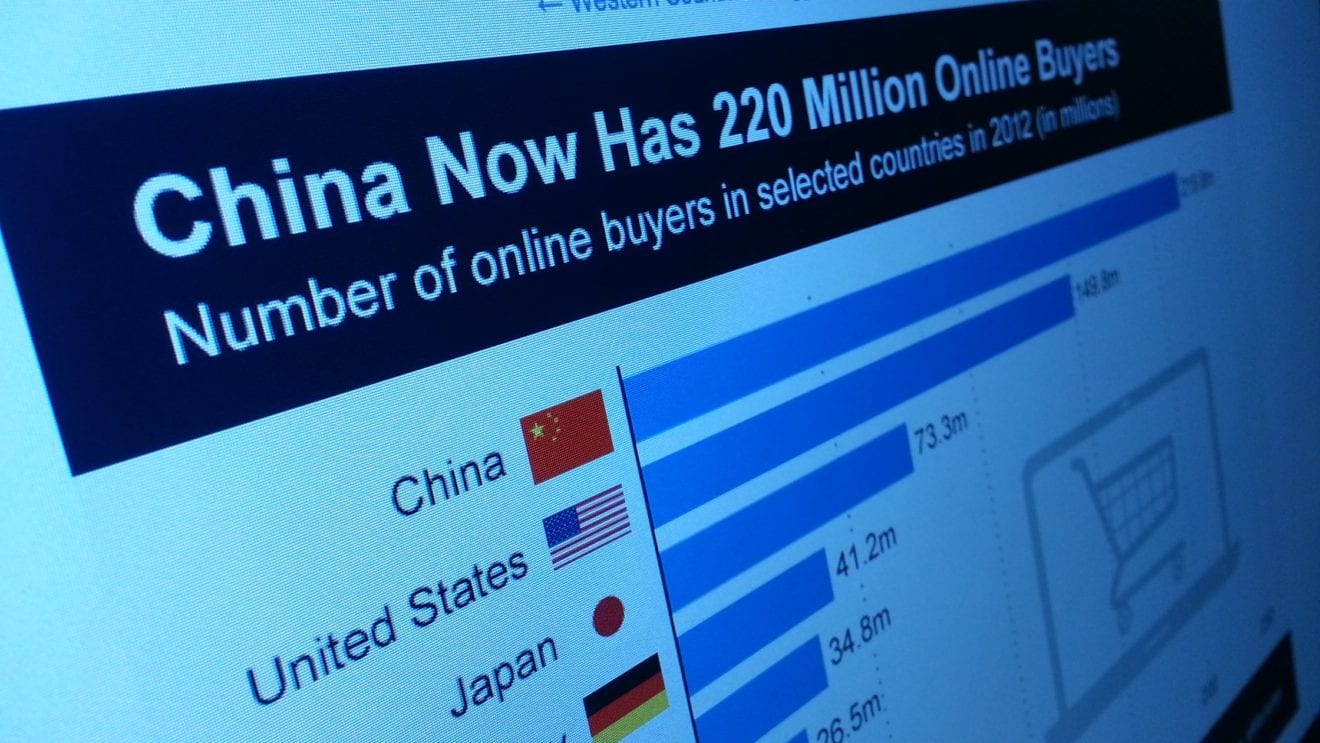
    India’s e-commerce sales in 2014 were $5.3 billion (Rs 31,800 crore), 1/80th the size of China’s $426.26 billion (Rs 2,557,760 crore) and 1/58th the size of the US’ $305.6 billion (Rs 1,833,900 crore).

    “If you look at Japan, China and US, e-commerce became popular as early as 2002-2003. It has taken them about 12-13 years to reach where they have reached.  E-commerce really took off in India only in 2012-13. It will take India also that much time to reach there,” Rajnish (he uses only one name), a technology expert, said.

    China: Number 1 in e-commerce with skyrocketing growth ahead

    China and the US accounted for more than 55% of global internet retail sales in 2014. China’s growth over the next five years will widen the gap between the two countries.

    China will likely exceed $1 trillion (Rs 6,000,000 crore) in retail ecommerce sales by 2018, accounting for more than 40% of the total worldwide.

    Globally, retail sales reached $22.492 trillion (Rs 134,952,000 crore) in 2014 but retail e-commerce sales stood at $1.316 trillion (Rs 7,896,000 crore, 5.9% of overall retail sales).

    E-commerce sales are expected to increase 89% to $2.489 trillion (Rs 14,934,000 crore, 8.8% of overall retail sales) in 2018.

    Digital-buyer penetration—a measure of digital reach—is a major factor in determining the success of retail e-commerce sales. India’s digital-buyer penetration was quite low at 24.4% in 2014 as compared to the global average of 41.6%.

    The UK leads the world with 88% penetration. Ironically, China with 55.2% and US with 74.4% penetration do not feature in the top five.

    Indian e-commerce has a long way to go

    “E-commerce in India still has a lot of friction,” Rajnish said. “Till that is solved, it will be hard for penetration to go beyond 30%. For example, India has very low credit-card penetration and the cash-on-delivery (COD) model is why Flipkart really took off.”

    People above 35 are not very comfortable using their debit card online. PayTm and others solve this problem but there is a lot of friction. “I use PayTm for Uber and it is still a process that has friction. In US, the return policy is very generous. I bought a coat from Amazon in the Bay area; it ended up being the wrong size. My experience of changing to the correct size was very seamless. When I bought a down jacket in Bangalore, and it ended up being the wrong size, getting the right size was really a painful experience,” said Rajnish.
    That view is echoed by Paritosh Sharma, an advisor to tech startups and an entrepreneur with PayUMoney, a digital-payment platform.

    “Digital buying has an attached expectation to it. I place the order and it should appear in front of me over the next two or three days. In many cases this does not happen. Also, in a lot of cases (especially in tier-2 and tier-3 cities) in India, if you get a product that is not of the exact quality that you ordered, returning it is a major problem. Most people, hence, prefer what’s available in a physical retail store,” Sharma said.

    There are two more reasons for low online sales, said Sharma.

    First, the internet infrastructure in India is poor. If one steps outside city limits, you automatically are shifted from 3G to an Edge (a lower-speed) connection, deterring buyers.

    Second, lack of good service and support. While most Indian e-commerce companies are sprucing up their support via phone and digital media, it’s quite haphazard. Most companies still lack processes to ensure customer satisfaction and trust.

  • Singaporean retailers thrive on online market

    Singaporean retailers thrive on online market

    A study by eBay shows that Singapore’s tech savvy retail exporters, who use the company’s online market place, sell to an average 41 international markets.

    eBay defines retail exporters as those sellers on its site who garner US$10,000 in sales to global customers (that is buyers outside of Singapore).

    According to an eBay spokesman, Singaporean retail exporters have been experiencing solid growth on the back of a revitalised US dollar. In South-east Asia, Singapore is ranked second in terms of reach behind Thailand. Interestingly, Singapore’s ranking is five destinations higher than US retail exporters.

    Jason Lee, director, eBay South-east Asia, noted that the US is the top trade corridor for Singaporean retail exporters.

    “An exciting trend for Singapore businesses seeking new revenue streams is the speed in which entrepreneurs are able to become a retail exporter, with 22 per cent of Singaporean retail exporters on eBay hitting the US$10,000 sales mark in the past year alone,” he added.

    The top three categories that Singaporean retail exporters sell on eBay are jewellery and watches, cell phones and accessories and clothes, shoes and accessories.


  • Chinese, South Koreans prefer online shopping to stores

    Chinese, South Koreans prefer online shopping to stores

    Online shopping has overtaken bricks and mortar retail as the most popular method of purchase in several Asian markets.

    That stunning revelation comes from a new report from real estate company CBRE How We Like to Shop Online which is based on responses from online consumer panels. CBRE warns the findings represent the emerging behavior of this important and fast-growing segment of all markets, but may not fully represent consumer behavior in markets with low online penetration.

    That said, the conclusions remain relevant to traditional retailers.

    “While 50 per cent of Asia Pacific consumers still physically visit a shop to make a purchase, findings show that in emerging markets such as China and India, the majority of respondents – 76 per cent and 68 per cent respectively – use online shopping as their most commonly used method of making purchases,” said CBRE in an overview of the report.

    “This is also the case in more developed markets of South Korea and Taiwan where 73 per cent and 55 per cent of consumers respectively, also said their primary method of making purchases is online.”

    “For emerging markets, given the lack of quality retail space – particularly in lower tier cities – advances in technology and logistics networks mean that online retail is often the most efficient way for retailers to reach their customers,” said Jonathan Hsu, head of occupier markets research, CBRE Asia Pacific.

    Along with convenience, pricing ranks as one of the top reasons why consumers shop online – 63 per cent of the total number of respondents surveyed identified this as their key deciding factor. These correspond to the same deciding factors when shopping at physical stores.

    “With 56 per cent of Asia Pacific consumers using their desktop or laptop to check prices of products online, price transparency is an important aspect for retailers to consider,” said Joel Stephen, senior director, head of retailer representation, CBRE Asia.

    “We recommend retailers review their regional pricing strategy, particularly in China and South Korea where more than two-thirds of consumers identified lower prices and better offers as the main reason behind their decision to shop online. In Asia Pacific, foreign brands – in particular luxury – are often more expensive than other regions due to import duties, exchange rates and the franchise model impacting the price. This may encourage consumers to consider alternative sales channels, such as overseas online markets, in search of better deals,” said Stephen.

    The ability to compare products without having to physically visit individual stores is another key factor for the region’s consumers when shopping online. This trend is more prominent in emerging markets such as Vietnam (64 per cent), China (61 per cent) and India (58 per cent) where quality shopping centers or shops are often located far from each other.

  • Chinese language thirst for funding wine insatiable

    Chinese language thirst for funding wine insatiable

    Acker Merrall & Condit, the world’s largest wine auctioneer, says consumers from Hong Kong, China Macau and Taiwan accounted for greater than 48 per cent of worldwide gross sales by worth within the final yr.

    “Their urge for food for the best wines stays robust,” the corporate says.

    Acker Merrall has just lately developed a brand new format, ‘Connoisseur’s Membership’ reside public sale in Hong Kong, which is simulcast in Beijing, Shanghai and Taipei. It has additionally unveiled a brand new cellular App permitting clients to bid whereas on the transfer, and runs month-to-month internet-only auctions in Hong Kong.

    These improvements, squarely aimed toward Asian collectors, helped Acker Merrall shut the primary half of the 2015 wine public sale season with over US$40 million in income, setting 750 new world data, of which greater than two-thirds have been Burgundy.

    “What being primary once more in each the US and Hong Kong markets actually means is that the World’s Prime Collectors proceed to decide on Acker Merrall,” stated chairman John Kapon.

    “We work onerous, and we play onerous, too. We’re wine lovers initially, and we’re very grateful to share our love with probably the most passionate collectors all over the world, a world that continues to develop with every new day.”

    In tons, or quantity of wine moderately than worth, the US nonetheless accounts for 61 per cent of the corporate’s gross sales, and 41 per cent of the worth.

    “The web public sale enterprise skews the info a bit on the subject of the variety of tons, since that enterprise is rather more developed in America, and since we simply began them right here in Hong Kong,” stated Kapon.

    “However it does present that America is shopping for extra A to Z, accumulating extra wines and getting stronger usually. It additionally exhibits how a lot potential stays within the Far East. China continues to be actually in its improvement levels but continues to spend probably the most cash.

    “With 4 new stay auctions and month-to-month web auctions added this yr in Hong Kong, together with simulcasts in three new main (and thirsty) cities, Higher China stays an thrilling and critically necessary market.”

  • New Alibaba financial institution targets SMEs

    New Alibaba financial institution targets SMEs

    Chinese language e-commerce behemoth Alibaba has launched an web financial institution aimed toward serving small companies, which frequently wrestle to acquire credit score from giant banks.

    MYbank, 30 per cent owned by Alibaba linked Ant Monetary Providers Group, stated in a microblog publish on Thursday it will supply loans of as much as 5 million yuan ($A1.04 million).

    The financial institution, based mostly within the metropolis of Hangzhou the place Alibaba has its headquarters, stated it might serve small companies, particular person shoppers and rural customers.

    Alibaba accomplished the world’s largest IPO final September with an inventory on the New York Inventory Change that raked in $US25 billion and made founder Jack Ma considered one of China’s richest males.

    The corporate’s ambitions prolong past e-commerce and it has already sought to shake up state banks with a monetary product referred to as Yuebao, an funding fund that gives higher returns than conventional deposits.

    The IPO was priced at $US68 and the shares rocketed to $US120 in November. However since then they’ve been hammered by poor third-quarter outcomes and a row with Chinese language authorities, who’ve accused Alibaba of permitting imitation items to be bought on its platform.

    Alibaba stated final month it might exchange its chief government regardless of a 45 per cent achieve in income within the January-March quarter. Income plunged by almost half within the interval.

    Final yr, China accredited a number of personal banks together with one invested in by web big Tencent, a key rival of Alibaba.

    China beforehand had solely two personal banks, Minsheng and Ping An. Its state-run banks have been seen as reluctant to lend to small and medium-sized enterprises.

    Different main shareholders in MYbank embrace models of privately owned conglomerate Fosun with 25 per cent, auto elements maker Wanxiang Group with 18 per cent and funding agency Yintai with 16 per cent.

  • 11Street takes KWC Trend on-line

    11Street takes KWC Trend on-line

    KWC Fashion mall has grow to be Malaysia’s first wholesale bodily mall to go surfing, after partnering with eCommerce newcomer 11street.

    11Street , already one of many largest on-line marketplaces in Malaysia, and KWC Fashion mall, certainly one of Kuala Lumpur’s excessive profile retail vacationer locations, have signed a memorandum of understanding to embark on 11street’s quick rising market portal to supply wholesale buying on-line.

    Merchandise from KWC Fashion mall’s tenants at the moment are stay on 11street, with reductions of as much as 70 per cent and free delivery on greater than 2000 chosen trend gadgets.

    “The partnership between 11street and KWC is critical as a result of this additional reinforces our ongoing dedication to increase our vary of merchandise and to supply one of the best selection to shoppers,” stated Hoseok Kim, 11street CEO.

    “Including a wholesale mall will definitely widen the web retail website’s repertoire, increase shopper expertise and supply extra for buyers to sit up for as 11street continues so as to add new merchandise on a regular basis.”

    KWC centre supervisor Fiona Bong stated the collaboration will profit KWC tenants on the bodily mall by offering them with on-line publicity to boost model consciousness while providing a constructive increase in transactions and gross sales for his or her enterprise.

    “11street is a gateway to new goal audiences for the varied retailers that we’ve beneath our roof. In immediately’s fast-paced, cost-conscious and aggressive setting, it’s not sufficient to depend on only one single go-to-market channel.”

  • Brazilian On-line Consumers Are Enamored with AliExpress

    Brazilian On-line Consumers Are Enamored with AliExpress

    Enterprise is booming in Brazil for Alibaba’s AliExpress.

    Regardless of the language barrier, lengthy delivery occasions, and cost inconveniences, increasingly Brazilians have been drawn to AliExpress because of the excessive value of many gadgets in Brazil. Even with import duties, which is greater than 60 %, many merchandise, together with garments and baggage, are cheaper on AliExpress by as much as two-thirds, in response to China Day by day.

    “AliExpress is now my favourite abroad buying web site as a result of it presents higher costs and extra choices,” stated Amanda Bernardo, who boasts over a million views on her on-line buying movies, through which she lately featured gadgets purchased from AliExpress.

    Bruno Calheiros, an exhibition designer who makes a middle-class revenue of $2,540 per thirty days, prefers to buy on-line over going to modern malls.

    “I used to purchase garments, home equipment and health gear from Ebay and Amazon, however extra so from AliExpress since I attempted it. I simply like it,” stated Calheiros. He added that he has beneficial AliExpress to lots of his acquaintances.

    On final yr’s Singles Day sale on November 11th, Brazilian spending on Alibaba’s web sites was second solely to that of the Russians.

    Current findings from analysis agency E-Bit revealed that middle-class Brazilians accounted for 62 % of internet buyers from the nation in 2014. Final yr, Brazilian internet buyers totaled 51.5 million individuals, together with 10.2 million individuals who shopped on-line for the primary time. The variety of on-line orders is predicted to rise 19 % to 123 million orders in 2015.

    Spending by Brazilian internet buyers rose 24 % final yr to $11.three billion, and analysis agency eMarketer predicts that it might attain $26.17 billion in 2018.

    In quantity, Chinese language companies accounted for 55 % of all Brazilian on-line purchasing for a complete of $2.1 billion final yr, in accordance with E-Bit.

  • Cracking the native advertising code

    Cracking the native advertising code

    Journey, books, electronics, style, classifieds and now native providers – e-commerce has disrupted the established order in virtually each sector. With Amazon venturing into grocery (Kirana Now), Snapdeal getting into providers and Flipkart able to comply with go well with, on-demand providers look like the subsequent frontier for competitors within the crowded e-retail area.

    Take a look at what’s within the pipeline. Amazon lately launched Amazon Residence Providers within the US market. It’s anticipated to launch an identical service in India quickly. On-line market main Snapdeal has gone a step additional with its service platform to incorporate utility funds and a market for monetary providers apart from house providers. Given the large investor curiosity within the class, a handful of extremely localised house providers start-ups (comparable to UrbanClap, LocalOye, Taskbob and UrbanPro) have additionally thrown their hats within the ring .

    This can be a huge shift, thoughts you. From being on-line marketplacesfor merchandise you at the moment are shifting into providers, you’re aggregating photographers and tutors and handymen, and organising a extremely fragmented however big market. Take a look at some numbers. The homecare and set up providers market in India is estimated at Rs 90,000 crore; the laundry market at Rs 200,000 crore yearly, of which 95 per cent is unorganised.

    You possibly can see why e-commerce corporations are muscling in, however does it actually assist the native man who want to supply a extremely personalised service? Apparently sure, it broadens the potential shopper base and provides him an opportunity to scale up shortly. Specialists say an entry in providers can even assist the massive horizontal gamers trim prices and enhance margins. The incremental value of supply of providers is decrease and may probably give higher returns on funding.

    Says Devangshu Dutta, chief government, Third Eyesight, “A seek for margin enchancment and a want to be ‘the e-commerce of every thing’ are the prime drivers to enter the providers aggregation area. Merchandise e-commerce has moved from inventory-led fashions to marketplaces, however as soon as all prices are labored into the equation, even these are margin-negative, if not for the marketplace then for the sellers on the marketplace. Aggregating extra providers can be a method to generate additional margins and in addition defray customer-acquisition and retention prices over a wider base of companies.”

    For giant horizontal gamers, the power to cross-sell providers can result in higher margins in comparison with area of interest gamers. Additionally native providers may be seen as a differentiator. It permits e-retailers to not simply goal the retail share of the buyer pockets however all the consumption basket. “Why would they need to restrict themselves to only retail merchandise when there’s a lot of value-add they will present by way of providers,” asks Pragya Singh, VP, retail & shopper merchandise division, Technopak.

    Jabong.com co-founder & MD Praveen Sinha, who has invested in two native providers start-ups, Zimmber and Wassup, says, “Native providers is the subsequent part of ecommerce and can see big progress offered corporations are capable of execute it nicely. Nevertheless, operational complexity is the most important problem right here.”

    So what are the challenges an e-commerce market is more likely to encounter when it decides to combination providers? How ought to it tweak its provide chain community to reap the benefits of the rising demand for hyper-local providers?

    The larger the higher
    An eretailer can ship a product to any location from its centralised warehouse by way of courier companions however the identical concept does not work in providers. Execution is a problem as you can’t replicate a profitable mannequin in lots of geographies on the similar time.

    That stated, massive horizontal retailers with their established provide chain networks have a bonus over smaller gamers/start-ups within the class. Contemplate Snapdeal, which presently provides house/set up providers, and monetary providers by means of RupeePower. “The house and set up providers enterprise is an extension of our residence and dwelling class, providing an assortment of 10 lakh merchandise and end-to-end residence providers that embrace furnishings set up, electrical, plumbing, pest management and professional residence cleansing providers,” says Saurabh Bansal, vice-president, residence, Snapdeal.

    On-line classifieds platform Quikr can also be engaged on a service providing. Pranay Chulet, co-founder and the CEO of Quikr, says, “We’re launching a sub-brand referred to as Quikrservices, which can allow higher interplay between consumers and sellers. Providers is a unique ballgame. The supply of purchaser and vendor on the similar time is necessary. It isn’t so simple as delivery a product to the buyer’s doorstep.”

    Specialists reckon providers might be cracked however solely at scale. Merely put, until you’re very giant in measurement you can’t hope to offer customised service. Extra quantity means higher customisation and aggressive pricing. “Service suppliers are additionally capable of get extra enterprise from a platform, to allow them to supply higher costs,” provides Chulet.

    However scale can solely clear up 50 per cent of the issues. Delivering a standardised service expertise is an enormous problem. Says Debadutta Upadhyaya, co-founder, Timesaverz, a cellular market for providers, “Standardisation of processes, talent verification, background checks and tender talent coaching of service companions are a should.” Timesaverz is current in Mumbai, Pune, Bengaluru. It fees a 20 per cent fee from service companions for each transaction and noticed 10x income progress final yr over the earlier yr.

    On its half, Snapdeal has tied-up with service suppliers resembling EasyFix and Hicare with confirmed capabilities. “We’re working to make sure that professionals who carry out end-user duties are educated in buyer communication and repair supply,” says Bansal.

    Most gamers are making in depth use of know-how to attach a buyer with a service supplier who’s greatest suited to service her distinctive want. In a approach it additionally makes the native providers enterprise extra clear and environment friendly, says Varun Khiatan, founder, UrbanClap. UrbanClap is an internet market that gives providers in 20 classes together with private providers and occasions.

    Nevertheless, service just isn’t a simple area to function in. Aggregation of native providers are open not solely to ecommerce gamers, but in addition to look big Google on the one hand (by way of search outcomes and advertisements) and native aggregators (sector-specific information bulletins in a metropolis like Noida). “Most home providers, for example, are extra high-involvement than merchandise buys and the last-mile, last-minute connectivity with the client is the place the connection is made or damaged. In such instances native aggregators with a hands-on strategy may have a aggressive benefit,” says Dutta.

    Internet-net, whereas search and repair aggregation might seem a low-margin recreation, over time, technology-powered giant e-commerce platforms have the potential to leverage the excessive volumes it provides and organise this extremely fragmented market within the course of.