Tag: E-land

  • E-Land shutters stores as profit tumbles

    E-Land shutters stores as profit tumbles

    South Korean retail giant E-mart is closing loss-making specialty stores as it responds to falling sales in a gloomy retail market.

    After closing outlets in its discount Pierrot Shopping network in July, the company is now looking at trimming the network further.

    “We’re considering closing the Pierrot Shopping store in Myeong-dong in order to enhance the profitability of specialty stores,” an E-mart official told The Korea Times.

    The company has also closed 18 out of its 33 Boots health & beauty stores and the Pangyo branch of its technology-retailing chain Electro Mart.

    E-Land launched Boots under license in 2017 to take on CJ Group’s market-leading chain Olive Young, but the brand has made a little impact to date.

    E-mart’s profit fell from 194.6 billion won (US$166 million) in the third quarter of last year to 116.2 billion won ($97.2 million) in the same period this year.

    Analysts predict incoming CEO Kang Heui-seok will continue to rationalize store networks and focus on the group’s burgeoning online business SSG.com.

    “E-mart will accelerate is business transformation under Kang’s leadership, as the CEO has extensive retail experience and ability to drive growth” an HI Investment & Securities analyst told The Korea Times.

    “The company will seek to recover its profitability by minimizing unprofitable businesses and focusing more on the online sector, SSG.com.”
  • South Korea’s E-Land Group completes US shoe business exit

    South Korea’s E-Land Group completes US shoe business exit

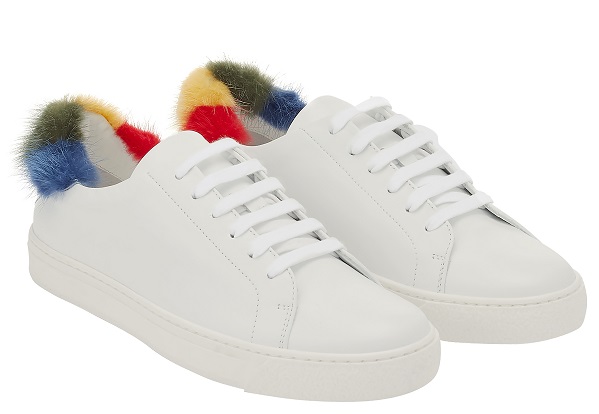
    South Korean conglomerate E-Land Group is pulling its OTZ Shoes brand from the US market, six years after buying it.

    E-land Group, through its subsidiary E-Land USA Holdings, bought the California-based OTZ Shoes at US$8.5 million in 2013. But now, the conglomerate has decided to withdraw the brand from the country and develop it in South Korea instead, completing its exit from the US footwear market.

    OTZ will be marketed as a private brand in South Korea by its fashion unit E-Land World and will be sold at its multi-shoe brand store Folder. The brand is aimed at catering to young customers aged 15 to 25.

    Aside from growing the brand at home, E-Land Group says it plans to boost its sales overseas to achieve its target of 50 billion won (US$43 million) sales annually.

    E-Land Group sold its subsidiary E-Land Footwear, which owns brands K-Swiss, Palladium, Supra, PLDM and KR3W, to Chinese sportswear company Xtep International Holdings for US$260 million three months ago.

    E-Land Group is Korea’s largest integrated fashion and retail company, owning around 250 brands and operating more than 10,000 stores worldwide.

  • E-Land to stop selling Coffee Bean & Tea Leaf in China

    E-Land to stop selling Coffee Bean & Tea Leaf in China

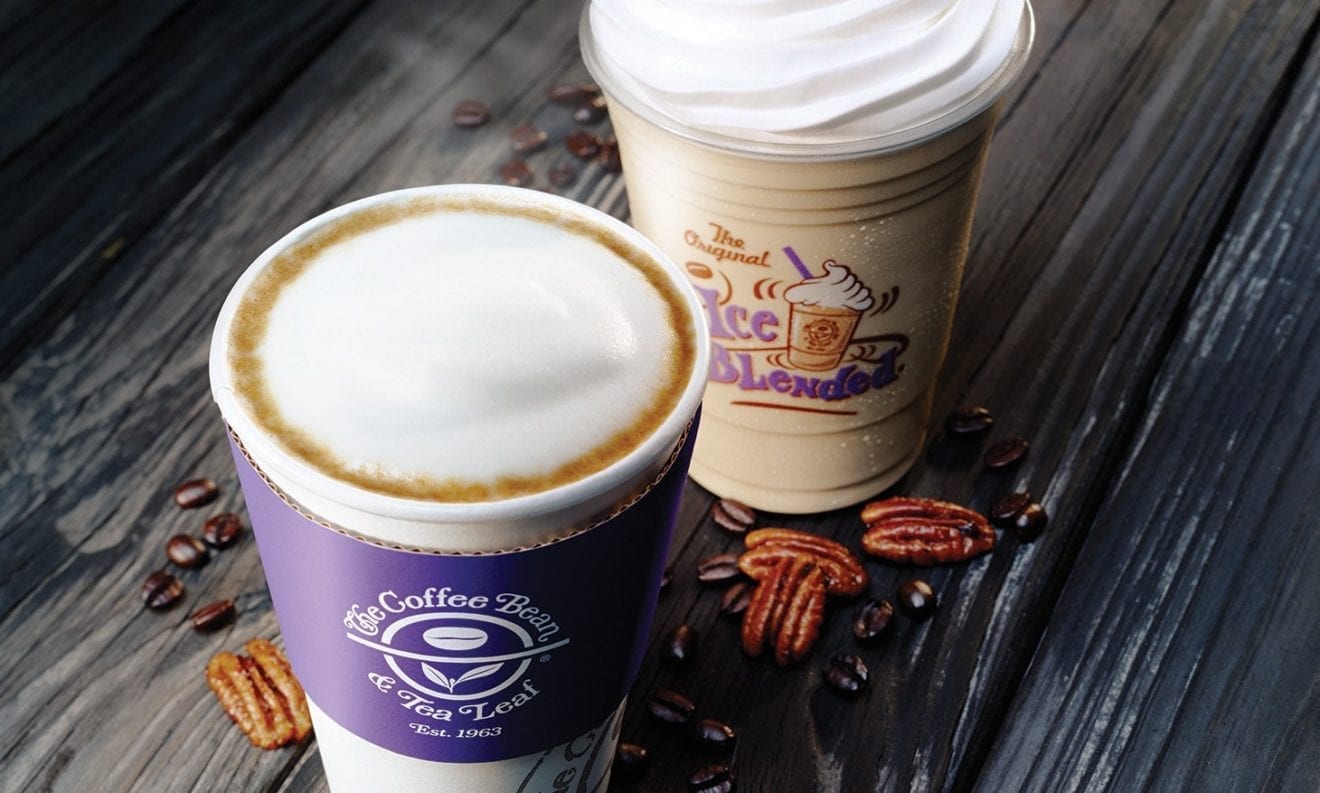
    South Korean fashion and retail group E-Land is surrendering its Coffee Bean & Tea Leaf China franchise licence.

    The move is expected to improve the conglomerate’s reportedly strained cash-flow situation and mark a more focused approach to retail. It comes after expanding the franchise to 17 locations in China over the past two years. It had originally pledged to expand the Chinese business to 1000 stores.

    The group’s liquidity has been under significant pressure in recent years, forcing it to relinquish its resorts and cruise businesses as well as other holdings. It currently runs around 250 brands spanning retail, fashion and restaurants.

  • E-Land Group to get US$91 million fund injection

    E-Land Group to get US$91 million fund injection

    Singapore’s sovereign wealth fund GIC has injected KW100 billion (US$91 million) into Korean retail major E-Land Group.

    The round was part of a KW200 billion investment led by Hong Kong-based Anchor Equity Partners. With interests in malls, restaurants, theme parks, hotels and construction businesses, E-Land has built its cornerstone on fashion apparel.

    This latest infusion of capital follows the Meritz Financial Group investing KW300 billion in the firm as part of a consortium led by Korea’s Keystone Private Equity last month. GIC has previously invested in E-Land – in 2009 it acquired an outlet of hypermarket Kim’s Club and the Gangnam branch of its NewCore Department Store. It subsequently leased them back to E-Land.

    At the end of March last year, GIC was estimated to have assets under management of between US$359 and $398 billion.

    GIC’s previous investments in South Korea include KW130 billion backing for cafe chain A Twosome Place.

  • Teenie Weenie deal is a big one

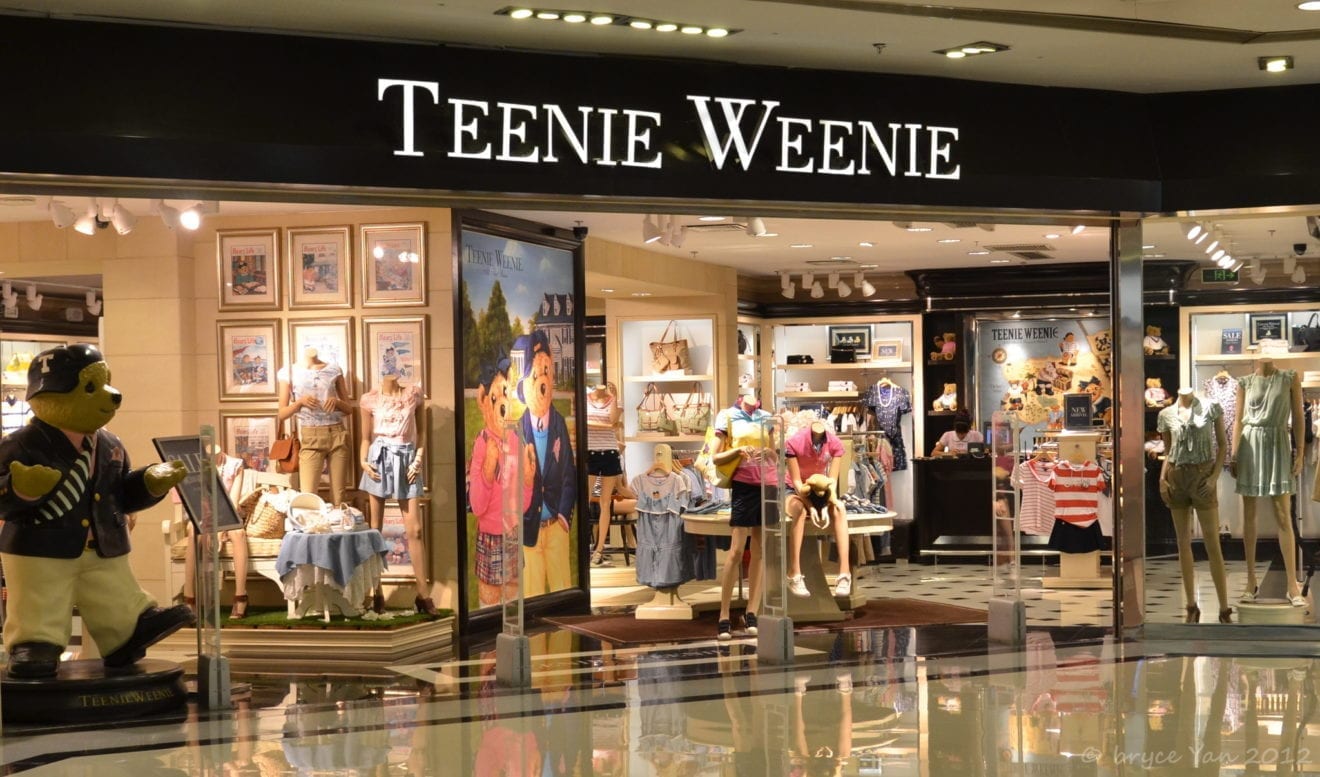
    Teenie Weenie deal is a big one

    The deal with V-Grass represents the biggest cross-border merger and acquisition agreement in Korea’s fashion industry.

    E-Land Group said proceeds from the sale will help the company reduce its debt level to 240 percent by the first quarter from the current level, which is above 300 percent.

    The final price is lower than the previously reported range of 1 trillion won. “After we adjusted our position on the operation of E-Land’s women’s wear unit in China, we finally agreed on the deal,” said a source at E-Land familiar with the deal.

    The company said that since Teenie Weenie’s book value stands at 120 billion won, it would obtain a profit worth 750 billion won through the sale.

    However, it will still own 10 percent of the fashion brand’s shares for three years to “maintain a stable partnership” with the Chinese company. “The reason why E-Land keeps a 10 percent stake is that both companies need to cooperate on production and business and generate synergy after the deal,” E-Land said in a statement.

    The board of directors at V-Grass passed the takeover agenda on Tuesday, and the shareholders are expected to cast a vote on Feb. 10.

    Following the decision, the Chinese retailer is expected to pay the price for sale on Feb. 20.

    The Nanjing-based company captured Chinese consumers’ shifting purchase behaviors in favor of more premium brands. But since the sale price is higher than its market capitalization, the company will pay with debt.

    On E-Land’s end, the sale is its latest effort to restore financial liquidity. The group had sold three properties in Mapo District, western Seoul, and Gangnam District, southern Seoul, last year, a move that brought in 250 billion won.

    The company will push forward to secure cash through sales of other properties. By the first quarter, it will sell 200 billion won worth of real estate and then 500 billion won later this year.

    The fashion group also plans to take E-Land Retail public in a capital-raising effort by the first half of this year, a move that E-Land believes will reduce its debt level to 200 percent.

    E-Land has been accumulating more debt as some of its brands like New Balance have lost traction among young consumers.

    Other analysts believe the group is excessively focused on physical expansion, increasing the number of brick-and-mortar stores even though more are turning to online and mobile shopping.

    Faced with headwinds, E-Land Group companies saw their credit ratings downgraded in December by the Korea Investors Service.

    There are 1,300 Teenie Weenie stores in China. Last year, the brand earned 421.8 billion won in sales while generating 112 billion won in operating profit and 86.3 billion won in net profit.

    V-Grass was established in 1997 and specializes in high-end women’s fashion.


  • E-Land refutes credit downgrade

    E-Land refutes credit downgrade

    E-Land Group, headed by Chairman Park Sung-su, is fiercely refuting the Korea Investors Service’s latest credit downgrade of its holding firm, E-Land World, vowing to file a lawsuit against the ratings agency affiliated with the U.S.-based Moody’s.

    Officials at the mid-tier fashion-and-retail business group argued that the ratings agency’s assessment was flawed, calling on the company to retract its decision to cut the credit worthiness of E-Land World, which has a controlling stake in E-Land Retail and E-Land Park.

    E-Land Retail owns Kim’s Club and other retail outlets, while E-Land Park operates hotels, restaurants and other leisure-related businesses.

    On Monday, the Korea Investors Service lowered E-Land World’s credit ratings by one notch to BBB- from BBB, citing its deteriorating financial health as a result of snowballing debt. The agency maintained its negative outlook for the holding firm.

    “We see no improvement for E-Land Group’s financial conditions even though it has implemented self-rescue measures,” a company analyst said. “With E-Land’s struggling retail and fashion businesses, it would be difficult for the company to generate an operating profit. It is uncertain as to whether E-Land would be able to improve its financial health by executing self-rescue plans.”

    E-Land officials were furious over the credit downgrade, pledging to take the ratings agency to court.

    “It is absurd for the Korea Investors Service to cut the credit ratings for E-Land World when it has successfully been improving its financial soundness over the past few months,” an E-Land Group spokesman said. “The agency assessed the holding firm based on the data available in early September. But it should have included what happened in the fourth quarter of 2016. This is what they did wrong.”

    In late September, E-Land, sold its casual clothing brand, Teenie Weenie, to Chinese fashion brand, V-GRASS, for 1 trillion won ($900 million). Teenie Weenie has about 1,200 stores in major department stores and shopping malls in China.

    The group, which has been desperate to raise cash over the past year, has also sold real estate and plans to list the shares of E-Land Retail in the first half of this year.

    “We believe that the Korea Investors Service has failed to reflect a series of self-rescue moves in its credit assessment of E-Land World. This is just irrational,” the spokesman said. “We will file a lawsuit against the agency to correct its irresponsible behavior.”

  • Hyundai buying SK Networks’ fashion sector

    Hyundai buying SK Networks’ fashion sector

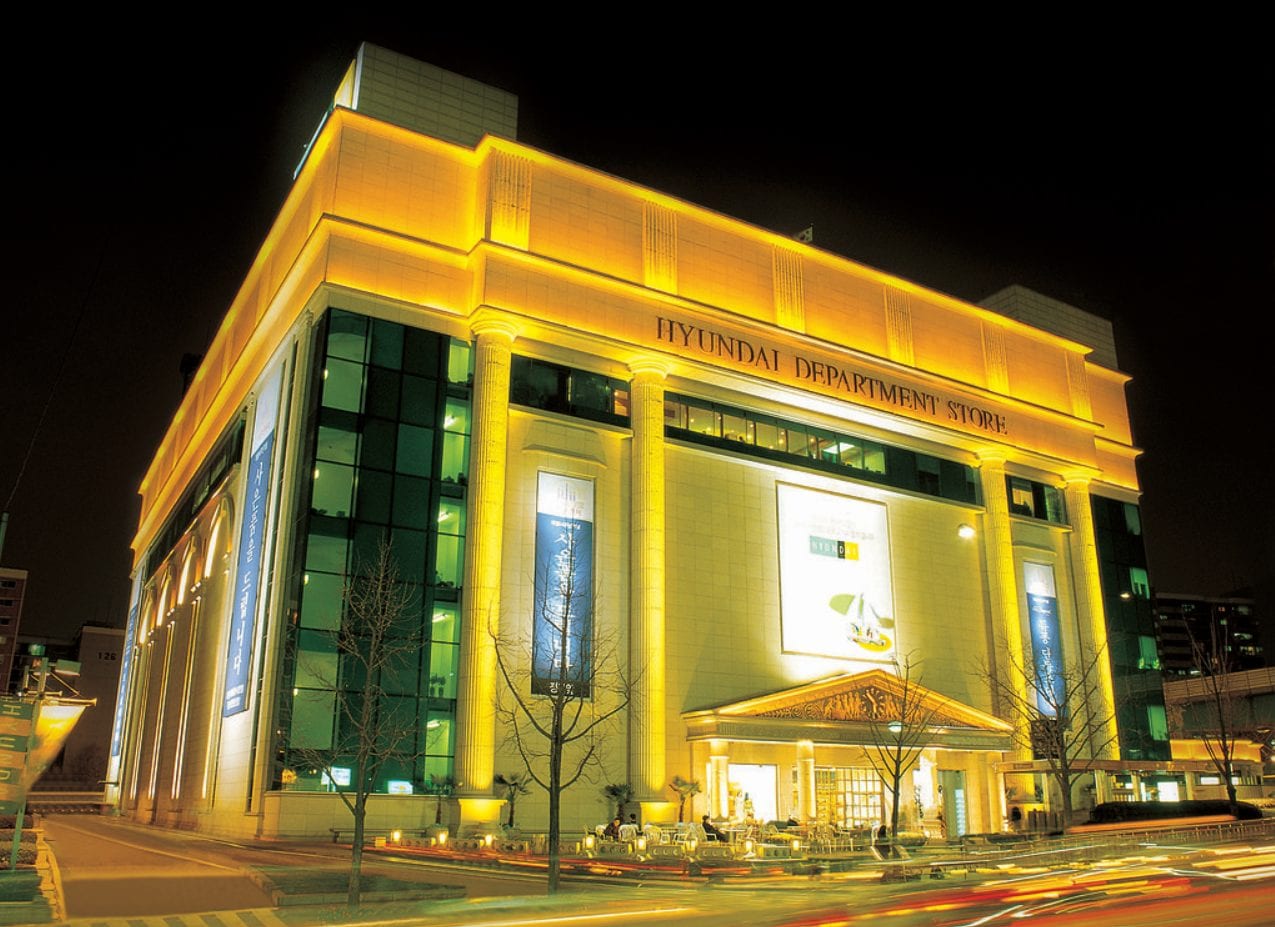
    South Korea’s Hyundai Department Store is buying trading company SK Networks’ fashion business for KRW326.1 billion (US$284 million).

    When the purchase is complete, probably by February, SK Networks (SKN) will no longer have interests in the fashion industry.

    The two companies have signed a deal to merge SKN’s 12 fashion brands into Hyundai’s Handsome fashion unit, which has annual sales of KRW750 billion. With SKN’s KRW600 billion added in, the merged group becomes the fourth-largest fashion company in South Korea behind E-Land, Samsung C&T and LF.

    Hyundai says it will retain SKN’s 400 designers, merchandisers, marketers and production staff, guaranteeing their jobs for five years.

    Analysts say the two businesses are a good fit and are unlikely to cannibalise each other’s trade as Handsome is known largely for its local womenswear brands while SKN is a major importer of global labels such as American Eagle, Club Monaco, DKNY and Tommy Hilfiger.

    Its house brands  include Obzee, O’2nd and Rouge & Lounge.

  • Korea’s Eland Aims At Ten Shopping Centers In China In 2016

    Korea’s Eland Aims At Ten Shopping Centers In China In 2016

    South Korean apparel brand Eland plans to develop ten shopping centers in China before the end of 2016. Eland started tapping the shopping center market in China from January 2016. By cooperating with Parkson, the company aims to transfer traditional department stores into city outlets. For the next step, Eland will cooperate with other department stores and shopping malls in China, aiming to open ten shopping centers in this marketplace before the end of 2016. For the year 2017, the company aims to have over 30 outlets and by 2020, they aim at 500 outlets and sales scale of CNY200 billion.

    Eland Group has 56 Newcore Outlets in South Korea. The company plans to bring its successful operating model and experience into China and transfer traditional department stores into city outlets to attract young consumers.

    At present, Eland has opened two shopping centers in China, one cooperating with Parkson in Shanghai and the other cooperating with Hualian in Chengdu. In addition, Parkson previously closed a store in Nanchang in September 2016 and said they will team with Eland Group to implement transformation and upgrades for the store.

  • US buyer for Korea’s Kim’s Club

    US buyer for Korea’s Kim’s Club

    A US private equity giant is the successful bidder for South Korean hypermarket chain Kim’s Club, part of the fashion and retail conglomerate E-Land Group.

    Named the preferred bidder for Kim’s Club, Kohlberg Kravis Roberts (KKR) will now discuss with E-Land the acquisition of the right to run the 37 hypermarkets as well as the group’s logistics centres, according to Business Korea.

    KKR focuses on online-to-offline (O2O) retail business investment, and with its bid for Kim’s Club seeks to create synergy with its previous investment in the retail industry, both online and offline, says an E-Land spokesman.

    As Kim’s Club is located in E-Land Retail’s department stores and outlets as a food market, the two companies are expected to maintain the partnership. Moreover, KKR is continuing talks for a possible sale of the Gangnam branch of the New Core Department Store.

    E-Land and KKR plan to conduct due diligence and set the selling price before signing a final contract in early May. The sell-off of Kim’s Club is expected to be complete within the first half of the year.

    E-Land is seeking between 700 billion to one trillion won (US$598-$854 million) for the rights to the hypermarket chain, according to wire service Yonhap.

  • E-Land to launch Coffee Bean China

    E-Land to launch Coffee Bean China

    South Korean retailer E-Land has sealed a deal to launch Coffee Bean China by the end of 2015.

    The California-headquartered cafe chain, also known by its full name Coffee Bean & Tea Leaf, says China will be its 28th international market. The China joint venture plans 700 cafes across the country.

    It has already achieved considerable success in Asia, especially in Malaysia, Vietnam, Singapore and Thailand.

    E-Land operates a vast network of 7000 fashion stores in China and about 20 restaurant brands.

    “Together with E-Land’s vast retail experience and success to ensure our continued growth in China, we’re proud to put our Southern California style of hand roasted coffee and whole leaf teas on the map in yet another country,” said Jeff Schroeder, senior VP of operations at The Coffee Bean & Tea Leaf, in a statement.

    Coffee Bean has more than 1000 cafes in 28 countries and earlier this year opened its first stores in Japan.

    While 700 cafes might seem like a large number in China, it would be dwarfed by rival Starbucks which already boasts 1700 cafes.

  • Taiwanese embrace E-Land concept

    Taiwanese embrace E-Land concept

    South Korean retailer E-Land says its first full scale store in Taiwan’s capital Taipei drew 80,000 shoppers in its first week.

    Collectively, they spent US$843,000 in the week-long trial opening.

    E-Land opened its first Taiwanese boutique as a concession inside the Taipei 101 skyscraper last September. That helped build brand awareness in the city.

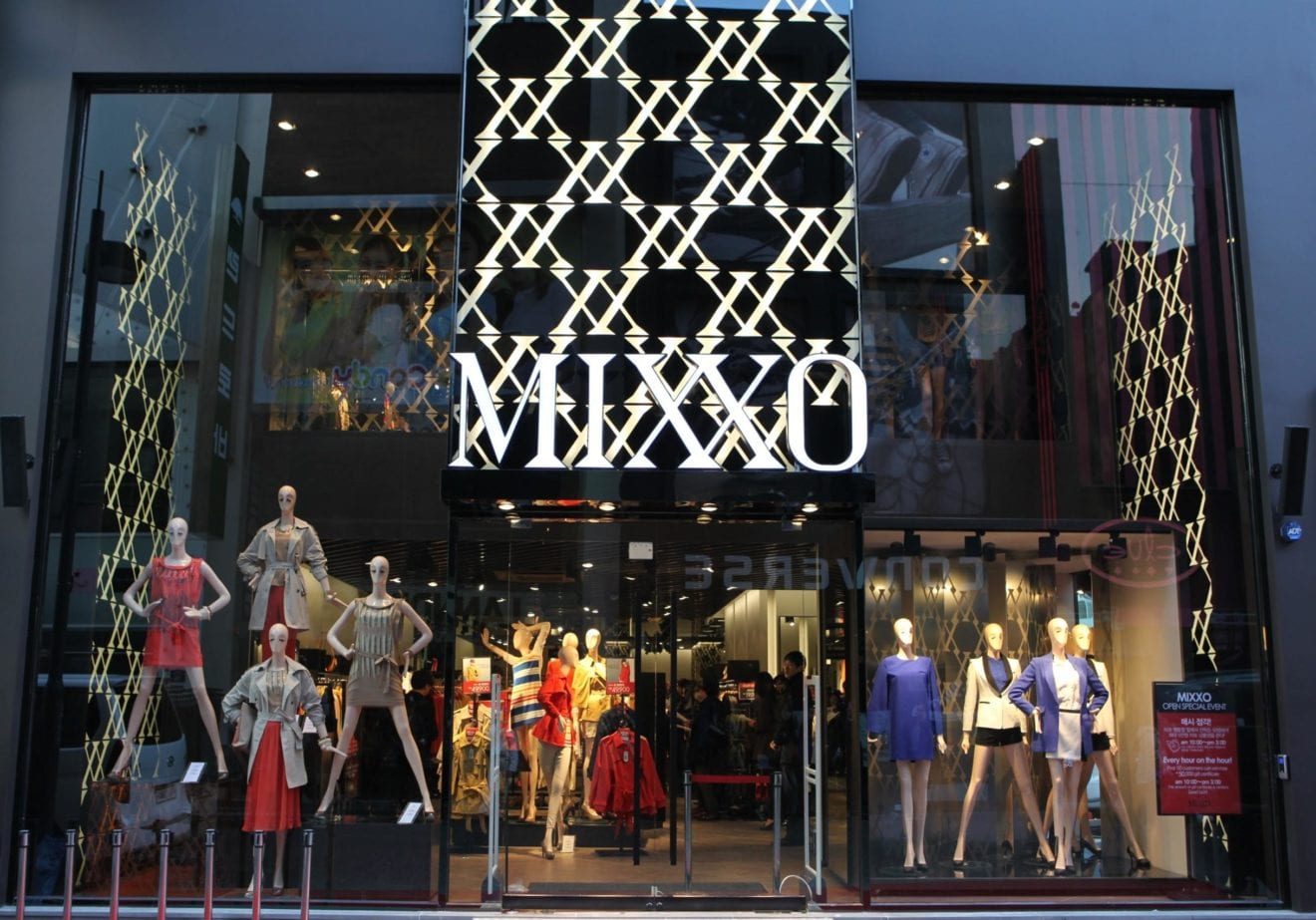
    Now the company has opened its first standalone store, in a shopping district in eastern Taipei, selling clothes and accessories under E-Land’s Mixxo and Spao labels. The 2800 sqm store also features its Lugo cafe concept

    “The response was very enthusiastic,” E-Land Group executive director Yoon Kyung-Hoon told theChosun Ilbo Daily newspaper.

    E-Land made its Greater China debut in 2013 opening stores on the China Mainland and followed in Hong Kong last year.

  • E-Land ready to rumble for a duty-free license

    E-Land ready to rumble for a duty-free license

    Just a few days shy of the deadline to apply for a Seoul duty-free business license, E-Land announced plans to join the fray.

    The conglomerate, whose businesses span from retail and fashion to restaurants, said Thursday that it plans to build a duty-free shop at a property near the hip Hongik University area in Mapo District, northwestern Seoul, where it is currently working with GS Engineering & Construction to build a luxury hotel.

    The company will collaborate with the area’s 20,000 shop owners, street performers and artists to give a new perspective on duty-free shopping, setting itself apart from other competitors that have located their shops in larger, more commercial areas with other big-brand stores.

    It has plans to build an outdoor performance arena by the shop where young artists, independent bands and even K-pop stars will be invited to perform daily. E-Land will also work with the district’s well-known shops and restaurants to draw more foreign tourists to the neighborhood, the company said.

    It recently signed a memorandum of understanding (MOU) with Wanda Tourism and Dufry Duty Free for collaborations on its duty-free business. Wanda Tourism, a unit of Wanda Group, is one of the biggest tour agencies in China, and E-Land expects the partnership to help bring in more than 1 million VIP customers from the country per year. Dufry, a Swiss duty-free franchise and the world’s biggest duty-free store operator with over 2,000 worldwide, will share luxury retailing strategies with E-Land.

    “Around 70 percent of local duty-free sales come from the Chinese,” said an E-Land official. “As an influential brand in China with over 20 years of Chinese retail experience under our belt, we will expand the size of the local duty-free market.”

    The company currently operates 44 brands and 7,300 stores in China, ranging from restaurants to shops specializing in fast fashion brands.

    Competition for duty-free licenses is getting fiercer by the day, with almost every major conglomerate – including Lotte, Shinsegae, Hyundai, Samsung-affiliate Shilla, SK Networks and Hanwha – having submitted a bid.

    Sluggish sales at other retail outlets, including department stores and discount retail chains, have forced companies to shift their focus to duty free, which offers double-digit profit margins and growing sales. According to the Korea Customs Service, Korea’s duty-free market was worth 8 trillion won ($7.2 billion) as of last year, compared to 4.8 trillion won in 2010.

    Korea Customs Service is scheduled to make a decision about the licenses in July, two of which will be given to conglomerates and one to a midsize firm.