Tag: e-money

  • E-Money More Popular than Credit Cards in Southeast Asia

    E-Money More Popular than Credit Cards in Southeast Asia

    Five Southeast Asian Countries have attracted non-banks to build regional electronic wallet platforms, with total e-money transactions exceeding 10 billion.

    Indonesia, Malaysia, the Philippines, Singapore and Thailand saw over 10 billion e-money transactions occur in 2018. Singapore led the region, accounting for 34 percent of total e-money transactions, having attracted nonbanks to build regional electronic wallet platforms, according to the inaugural 2019 Southeast Asia E-Money Market Report released by S&P Global Market Intelligence.

    E-wallets aligned with high frequency and scalable use cases like ride-hailing and e-commerce are likely to grow and garner market share across the region. The volume of transactions processed through e-wallets is gaining steam. For example, we estimate that e-wallets’ share of total e-money volumes in Indonesia grew to 36 percent in 2018 from less than 10 percent in 2017, said Sampath Sharma Nariyanuri, CFA, Fintech Analyst at S&P Global Market Intelligence.

    The popularity of e-money products by non-banks for small-value transactions is supporting the rise of ride-hailing and e-commerce companies as financial intermediaries across Southeast Asia, the research firm noted.

    Payments processed through platforms offered by ride-hailing companies Grab and Go-Jek; TrueMoney, a unit of e-commerce and fintech company Ascend Group; and AirPay, the financial services business of e-commerce and gaming company Sea amounted to roughly US$30 billion in aggregate annualized transaction value in 2018, according to the research firm’s estimates.

  • Grab secures e-money license in the Philippines

    Grab secures e-money license in the Philippines

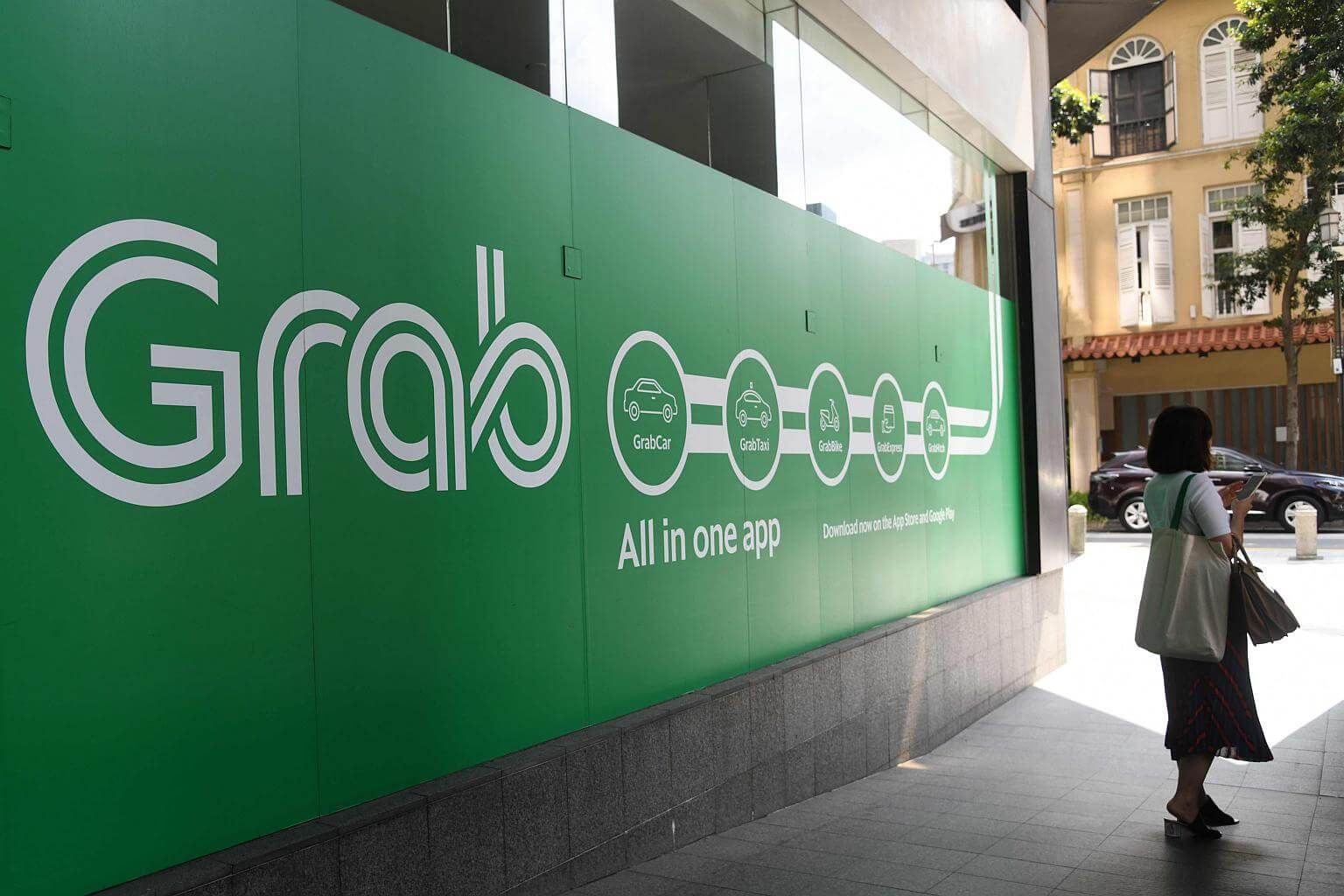
    Ride-hailing company Grab is expanding its mobile wallet services in the Philippines following receipt of an e-money license from the Bangko Sentral ng Pilipinas (BSP).

    Statistics from the central bank revealed that more than 98% of transactions in the Philippines still happen in cash, whereas 86% of people remain unbanked. Cash handling and services also cost millions of pesos a year to the banking industry.

    Besides its existing payments functions for ordering rides, express delivery and peer-to-peer credit transfer, Grab will soon be able to order food, pay their bills and purchases from their favorite stores and restaurants.

    As with rides, new services may help customers earn points with its GrabRewards loyalty program, with offers from partners such as SM Cinema, Cebu Pacific flights, McDonalds or Globe prepaid.

    The GrabPay mobile wallet built into the Grab app is designed to offer a low-entry barrier to secure cashless payment options for both consumers and merchants.

    The first feature to be launched by Grab under the e-money license will be the option to top-up prepaid load from the Grab app. Users in the Philippines who wish to top up their prepaid load, can tap the ‘Load Now’ bar below the GrabPay mobile wallet bar alongside other features including send, request and top up wallet.

    After entering the phone number to be topped up, they can select their top-up product. The request is sent to the telco service provider and receipt provided.

  • Lippo Group betting on e-money in digital age

    Lippo Group betting on e-money in digital age

    Indonesia’s Lippo Group is turning e-commerce, electronic money and other information technology-related enterprises into a new pillar of its business, closely monitoring spending trends to gain a better foothold in the greater Southeast Asian market.

    The next phase for the banking and real estate conglomerate “will be the fourth industrial revolution,” CEO James Riady told The Nikkei Tuesday on the sidelines of the 18th Nikkei Global Management Forum here.

    Lippo Group was founded as a banking institution by Mochtar Riady, the current CEO’s father and a former head of Bank Central Asia. It branched out into real estate in the 1990s when subsidiary Lippo Karawaci developed a plot outside Jakarta that the group collected as collateral. Lippo Group has since also developed retail and hospital operations, which help boost property value. It now has more than 20 listed subsidiaries and rings up a total of about $7 billion in annual revenue.

    But the fall in resource prices and China’s economic slowdown have dealt a blow to the Indonesian economy, including to its real estate sector. Lippo Karawaci suffered a 23% drop in sales last year to 9.19 trillion rupiah ($702 million), as well as a 79% plunge in net profit to 535.3 billion rupiah.

    Business of the future

    Meanwhile, the proportion of smartphone users in Indonesia has risen from about 20% of the population in 2014 to almost 40% — about 100 million people — in 2015. “We must have inward creative disruption so that we can be transformed into a new area of growth, which is the digital economy,” James Riady said.

    In addition to its communications and media businesses, Lippo Group launched e-commerce site MatahariMall in September 2015. One of the platform’s strengths is that it can use Lippo Group’s retail network throughout Indonesia to move and distribute products — a definite plus in the face of competition from Lazada Group, a subsidiary of Chinese titan Alibaba Group Holding, and Tokopedia, in which Japan’s SoftBank Group has a stake. It was revealed in October that Japanese trading house Mitsui & Co., bullish on MatahariMall’s growth potential, was investing in the site’s operating company.

    Riady considers e-money his new focus. The goal is to get Lippo Group’s 120 million customers on board by allowing them to pay at hundreds of retail locations using the service. He plans to expand the group’s e-money offerings to other Southeast Asian countries, as well as include such services as depositing and transferring e-money. Riady sees a complete transformation in the way banks do business.

    Lippo Group and Singaporean ride-hailing company Grab agreed in July to cooperate on launching a mobile payment platform. The service will roll out in earnest at the end of the year.

    Following trends

    The spread of e-money will allow Lippo Group to closely track spending by its customers at retailers, e-commerce sites and other outlets. Riady hopes to use the service to bolster overseas expansion of the group and improve products and services associated with retail operations.

    Lippo Group is currently operating real estate businesses in Singapore and Hong Kong. But it will target Southeast Asia in the future to win over the region’s young, eager consumers. “What matters is how we can capture the [Association of Southeast Asian Nations] population of 600 million into our e-money accounts and world of services,” Riady said.

    In terms of Lippo Group’s real estate business, Riady expressed his interest not just in property development but in creating entire communities spanning retailers, hospitals and schools. The group has already built hospitals in Myanmar, and the CEO said the company is looking into Vietnam and Laos as well.
  • BI Revises Regulation on E-Money

    BI Revises Regulation on E-Money

    Bank Indonesia (BI) will make another revision to regulation on electronic money and introduce electronic wallet in the Bank Indonesia Regulation. The new regulation on the payment transaction processing is expected to be finalized in November 2016.

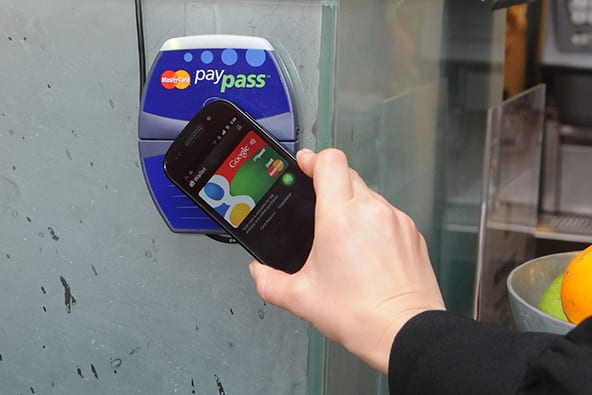
    Bank Indonesia deputy governor Ronald Waas said that one of the revision points is related to the expansion of electronic money basis. Currently, Ronald revealed, there are two types of electronic money, namely server-based and card-based electronic money. BI is considering adding gadget-based money as a new category.

    “Currently we have Samsung Pay and Apple Pay. They don’t use cards,” Ronald said in Jakarta on Wednesday, November 9, 2016.

    Ronald explained that there are two categories of e money, namely Know Your Customer (KYC) and non-Know Your Customer (nKYC).

    In the new regulation, BI has planned to require electronic money issuer with total active members of no less than 300,000 to register the electronic money.

    “[Electronic money issuer] with below 300,000 users doesn’t need to obtain a permit, but they need to report. In addition, they have to establish a legal entity,” Ronald said.

    In terms of minimum balance, Ronald clarified that there would be no revision regarding the matter. The minimum balance for non-registered electronic money is Rp 1 million (US$77), while that for registered one is Rp 10 million (US$770).

  • Hong Kong e-money ordinance to boost retail payment market

    Hong Kong e-money ordinance to boost retail payment market

    Hong Kong’s new e-money ordinance will help further develop the retail payment services market in the SAR and enhance public confidence in using such products, according to experts in the banking, financial and legal sectors. However, the high capital requirement for a licensed operator may be a barrier for startups to enter the market.

    The global retail payment landscape is changing rapidly as we see a growing number of new and innovative payment products and services. E-money or stored value facilities (SVFs) is one of them. It allows users to store pre-paid money on smart cards, mobile phones or Internet-based payment accounts and use them to pay for goods or services.

    Apart from banks, non-banks like telecom operators, e-commerce companies, technology solutions providers, FinTech startups and alike are moving into the retail payment market especially in the Internet and mobile spaces.

    New e-money regulatory framework

    Enacted on November 13, the Payment Systems and Stored Value Facilities Ordinance (PSSVFO) puts into effect a new regulatory framework for stored value facilities (SVF) and retail payment systems (RPS).

    Compared to RPS, SVF has aroused interests and concerns among industry players and the public.

    Under the Ordinance, the Hong Kong Monetary Authority (HKMA) is empowered to implement a mandatory licensing system for multi-purpose SVFs. One-year grace period is allowed for existing SVF issuers or new market operators to apply for a license from the HKMA.

    From 13 November 2016 onwards, it will be illegal for any issuers, unless exempted, to issue or operate any SVFs without a license.

    The Ordinance covers both device-based (card-based or physical device-based) and non-device based (Internet-based or mobile accounts) multi-purpose SVFs.

    The only device-based SVF that is already regulated is the Octopus card, which is licensed under the Banking Ordinance. Banks licensed under the Banking Ordinance will be deemed to be licensed to issue and operate SVFs.

    Exempted SVF types include single-purpose SVF such as prepaid cards or loyalty cards; bonus and loyalty point schemes such as airline mileage programs; and SVFs used for purchasing digital products through electronic devices.

    “We started seeing a lot of e-money products — online and mobile, but they were not captured by our regulatory regime. We saw the need to expand the scope to cover those products,” said Li Shu-pui (photo left), head of financial infrastructure development division at the HKMA at the Hong Kong International Computer Conference last November.

    He added, “We carried out consultation with industry players. They wanted us to expand the scheme because they can see the benefit of being regulated by HKMA. It provides confidence to users. As a result we expanded the Clearing and Settlement Systems Ordinance to an amended ordinance which is now called PSSVFO.”