Tag: e-payment

  • Nearly 70 Percent of Singaporeans Registered to National E-Payment System

    Nearly 70 Percent of Singaporeans Registered to National E-Payment System

    Singapore’s national e-payment system, «PayNow», currently boasts a nearly 70 percent penetration of the city-state’s population with monthly volumes exceeding S$1 billion, an MAS board member recently shared with parliament.

    Ong Ye Kung, minister of education and Monetary Authority of Singapore board member noted that take-up was «encouraging» with more than 65 percent of Singaporeans aged between 20 to 75 years old having already registered, representing 2.8 million accounts.

    Transaction volumes have also increased significantly. Two years ago, PayNow registered 150,000 transactions totaling S$24 million ($17 million) and in July this year, the figures rose to over 5 million and S$1 billion ($720 million), respectively.

    Despite PayNow’s success, Ong noted that Singapore made a conscious decision to keep the playing field open for all.

    «We made a deliberate decision not to have one player dominate the landscape and grow up very quickly,» he said, citing other channels like Apple or Google Pay.

    «Instead, we put in place the backbone infrastructure so that multiple providers can compete and innovate to increase consumer choice while encouraging interoperability. As a result, Singaporeans can now make e-payments in multiple ways which are simple, swift and secure.»

    Although corporate adoption has lagged its retail counterpart, Ong remains optimistic. Its corporate business currently serves entities representing half of the total unique entity number (UEN) issued in Singapore, an ID number required to interact with government agencies. It has 20 percent penetration rate of retail acceptance across hawker centers, supermarkets, healthcare and various F&B businesses.

    As a result, the ratio of cash and cheque’s relative usage to e-payments have decreased significantly. Cheques have fallen 8 percent per year over the past three years while the cash ratio dropped from 53 percent to 33 percent in the same period.

    When asked about pushing greater usage from banks, Ong agreed that the MAS should encourage the sector to promote PayNow corporates while also charging for cheques.

    «And I think having this carrot-and-stick, push-and-pull approach will continue to see higher take-up of pay now corporate,» he said.
  • Philippines based mobile payment service Abra joins hands with Codapay

    Philippines based mobile payment service Abra joins hands with Codapay

    Philippines-based mobile payment service Abra has announced a partnership with Singapore-based e-payment gateway Codapay.

    With this new deal, Abra users in the Philippines will be able to purchase Steam wallet codes, Skype credit, Amazon gift cards and Battle.net cards by paying with Abra at Codapay’s retail site, Codashop.

    “It is Abra’s goal to provide its users a better way to send and receive money, and to pay for things online. I am incredibly happy to partner with Codapay, a company whose vision of financial inclusion aligns with ours,” said Bill Barhydt, founder and CEO of Abra, in an official press statement.

    Founded in 2014, Abra leverages on blockchain technology to store digital cash on users’ smartphones. Credits in the mobile wallet can be topped up via any accredited Abra teller (which incurs a small fee) or through the users’ bank accounts. Users can also transfer cash to other users via the app — including cross-border money transfers between Philippines and the US.

    To date, it has raised a total of US$14 million in three funding rounds.

    While mobile payment services such as Smart Money and GCash have been operating in the Philippines for a decade, the country is experiencing a surge in mobile payment adoption due to the increasing smartphone penetration rate and growth of e-commerce (which is set to hit US$1.01 billion in revenue this year).

    Additionally, a Mastercard survey revealed that 17 per cent of consumers and 15 per cent of consumers in Philippines have made mobile commerce purchases and p2p transactions respectively.

  • Congestion-free traffic drives growth of e-payment system

    Congestion-free traffic drives growth of e-payment system

    Electronic payment system for transportation market segments and key trends 2016-2026 by Future Market Insights (FMI), provider of syndicated research reports, custom research reports, and consulting services.

    Electronic payment System (EPS) is useful for paperless monetary transaction. It brought a revolution in business process with less paper work, less time consumption, low labor cost as compared to traditional manual process business.

    There are various modes of electronic payments such as debit card, credit card, e-wallet, smart card, EFT and others. From last a few years electronic payment has also been used by transportation agencies for the collection of parking fees, highway tolls, transit fares & others.

    Electronic payment in transportation is done with the help of cards or transponders carried by user which directly communicates with devices maintained by transportation agencies for the conduction of transaction and also to track the records.

    Its use gives rise to so many advantages as electronic toll collection supports the collection of toll fare automatically by reading the data of registered vehicle from electronic transponder and driver does not need to slow down the car or stop for the payment hence it gives relief from traffic congestion and also save time of the commuters. 

    Market Dynamics

    The key trend responsible for the growth of global electronic payment system for transportation is the growing demand of electronic payment system for transportation from developed and developing region because of the advantages provided over the traditional manual system.

    The key growth drivers are congestion free traffic, with implementation on highway or Broadway, traffic jam or congestion reduces. Cashless travel facility is another advantage.

    On the other hand there are also some factors which are hindering the growth, those restraints are high installation cost of the systems & slower growth of these systems in underdeveloped regions.

    Segmentation

    Segmentation is done on the basis of system, technology & geography. On the basis of system, it is segmented as electronic toll collection (a system designed for automated collection of toll from moving as well as stopped vehicle through wireless system), electronic transit ticketing (payment is done by a smart card for a trip on transit vehicle), and regional multimodal electronic payment system (Here all mode of transportation is done by single payment system).

    On the basis of technology, it is segmented as contactless payment system technologies, near field communication, using smart phones.

    Geographically, it is segmented into seven regions which are ; North America, Latin America, Western Europe, Eastern Europe, Japan, Asia Pacific Excluding Japan (APEJ), and Middle East and Africa (MEA). Among all the regions North America is the highest contributor in term of revenue in global electronic payment system for transportation market followed by Asia Pacific & it is expected that in near future, Asia Pacific is going to lead this market.

    Key Players

    Xerox Corporation, Cubic Transportation Systems, Transcore, LP, Siemens AG, Thales Group and others are leading the global ETC market. Electronic Transit Ticketing market is covered strongly by Cubic Transportation Systems, Global Mass Transit, Snapper Services Ltd, EOS UPTRADE, Scheidt & Bachmann. On the other hand, Electronic Payment System market is been covered by LTK Engineering Services, Longbow Technologies Sdn. Bhd., Kapsch Trafficom AG & others.

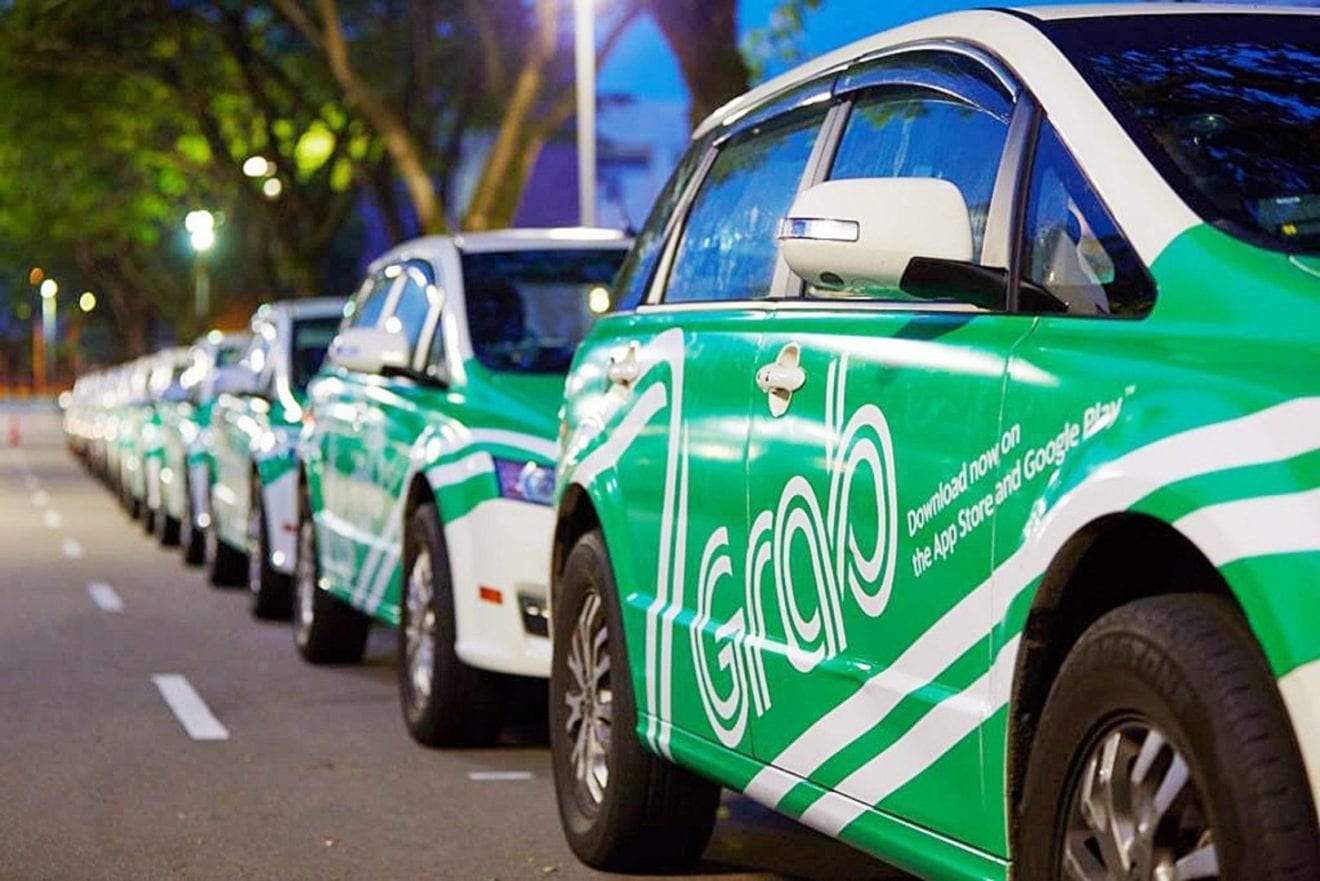
  • Grab partners Lippo Group for e-payment platform

    Grab partners Lippo Group for e-payment platform

    The partnership is an extension of a strategic deal signed between the two companies in March this year.

    According to the agreement, Lippo Group will develop a universal payments platform that enables Indonesians to top-up an e-money account and use it to pay digitally at Lippo companies.

    Grab will then integrate the payments platform into the Grab app as a mobile wallet option within GrabPay, enabling any mobile user to use the Grab app to pay for not only their daily transport needs, but also other lifestyle services.

    “We commend the government’s efforts to push Indonesia towards a cashless society and look forward to contributing towards this goal. Grab’s partnership with the Lippo Group to develop a universal payments platform will be a leap forward for e-money in Indonesia,” said Grab Group CEO and co-founder Anthony Tan.

    “With a rapidly growing middle class, people will want to have a mobile wallet option in the Grab app, which they can use every day, whether for transport, or payments for basic transactions,” he added.

    Tan believed that the potential of developing a mobile payments platform in Southeast Asia is “limitless”. The majority in Southeast Asia are unbanked but are armed with mobile phones. Thus, the only way forward is to find a cashless solution that will help customers manage their money and mobile wallets.

    “We will work with local partners to make cashless transactions a reality for the majority in Southeast Asia,” he concluded.

    The universal platform will be rolled out in the fourth quarter this year.

    With that, over 50 million existing customers from the Lippo and Grab will be able to pay via their mobile phones or use their Grab App to pay for a full suite of services from Lippo’s retail companies, including department stores, hypermarts, cinemas, coffee shops and e-commerce.

    Lippo Group director Adrian Suherman said his company will introduce more partner merchants in unrelenting efforts to push cashless transactions.

    “Lippo Group is committed to transforming lives in Indonesia, and we want to work with partners like Grab that have this common vision,” Suherman said in a statement.

    “Indonesians can enjoy the convenience of using their mobile phones and the Grab app to top-up and pay, as well as better manage their cash flow,” he added.

    Grab is determined to expand new services specifically for Indonesian preferences, as the country is Grab’s largest market. Nearly 95 per cent of Indonesians do not use credit cards. Grab said it will continue to partner with leading companies to launch innovative services to cope with these challenges.

    Began as a taxi-hailing app in 2012, Grab has expanded its core product platform to include private cars and motorbikes. The region’s largest transport network is now testing new services such as social carpooling, as well as last mile and food deliveries.

    Grab currently offers services in Singapore, Indonesia, Philippines, Malaysia, Thailand and Vietnam.

    Meanwhile its partner Lippo Group is a pan-Asian investment holding company with investments in real estate, department stores, retailing, financial services, telecommunications, hospitality, healthcare, news media, and IT services.

    With Riady family’s second generation at the helm, Lippo Group has been increasing its presence in the digital scope through aggressive investments in technology, media and online platforms.

    Its latest and largest investment is through Mataharimall.com, an online marketplace, which has pledged $500 million of funds for the platform.