Tag: e-payments

  • ZaloPay reports losses of $36.5 mln

    ZaloPay reports losses of $36.5 mln

    Zion JSC, which owns e-payment service ZaloPay, said it racked up losses exceeding VND840 billion ($36.5 million) in the first nine months this year.

    Incurring losses of VND667 billion last year, Zion has heavily invested in boosting ZaloPay coverage, competing with other payment intermediaries in recent years.

    Vietnamese online gaming giant VNG, which holds a major stake in ZaloPay, made revenues of nearly VND5.7 trillion in the first nine months of this year, up more than 28 percent year-on-year, and gross profits of over VND2.7 trillion, up 34 percent.

    VNG, which targets revenues of over VND7.6 trillion this year, up 26 percent against last year, is diversifying business by focusing on payments, artificial intelligence, and cloud computing.

    According to VNG’s 2020 annual report, the number of monthly ZaloPay users quadrupled against 2019.

  • Vietnam scraps plans to limit foreign ownership in e-payment firms

    Vietnam scraps plans to limit foreign ownership in e-payment firms

    Vietnam’s central bank has decided not to cap foreign ownership of e-payment companies at 49 percent after consulting with experts.

    Foreign investment plays an important role in payment intermediaries’ functioning since they rely on technology, and limiting foreign ownership would hamper foreign investment in this segment and the fintech sector in general, the State Bank of Vietnam (SBV) said in a statement on Monday.

    In some digital payment firms, foreign ownership already exceeds 49 percent, and so a change in regulations could affect their activities, it said.

    The SBV had released a draft of its foreign ownership cap proposal in November for consultation, saying it wanted to balance the ease of attracting foreign capital with ensuring an active role for local firms in the fintech sector.

    According to the central bank, by the end of the first quarter this year, there were 27 e-wallets in the market though five parent companies owned 90 percent of them. The five, which the SBV did not name, have foreign ownership of 30-90 percent, it said.

    Economists have said that the potential for cashless payment in Vietnam is huge due to a growing middle class and rapidly improving telecom infrastructure. The government wants to make 90 percent of all transactions cashless by the end of this year.

    But the reliance on cash remains overwhelming, with 80 percent of Vietnamese preferring to use cash for daily transactions, according to the Ministry of Industry and Trade.

  • E-payment continues to go mainstream in globalizing Vietnam

    E-payment continues to go mainstream in globalizing Vietnam

    Electronic payments are becoming more and more common in Vietnam, according to Visa.

    Its data for the 12-month period until June 30 this year shows that the number of transactions on the Visa network increased by 45 percent from the previous year, the company said in a statement.

    E-payment is rising thanks to strong e-commerce spending. Between September 1 last year and August 30 this year, e-commerce spending rose 44 percent in terms of transactions, it said.

    The country is going through a period of “incredible economic change” and becoming more involved in the global economy, Sean Preston, Visa’s country manager for Vietnam and Laos said in the statement. “Electronic payments would play in a major part in this evolution.”

    E-payments in Vietnam grew 22 percent in 2017 from the previous year to $6.14 billion, as quoted data from Statista, a local market research firm, as saying. The figure is projected to double to $12.33 billion in 2022.

    According to economists, the potential for the e-payment sector is huge due to the expanding middle class and improved communications infrastructure.

    More than half of Vietnam’s population of nearly 92 million people are online.

  • Razer aims to take over MOL

    Razer aims to take over MOL

    Gaming company Razer aims to take over Southeast Asian virtual gaming credits and e-payment platform MOL Global at a valuation of US$100 million.

    Razer already holds a nearly 35 per cent stake in the platform.

    Razer co-founder/chief Tan Min-Liang says the acquisition will enable Razer to take over one of Southeast Asia’s largest e-payment networks, deepen its presence in the “under-served” region, and create one of the world’s largest virtual-credit platforms for gamers.

    In August, Tan took up Singapore Prime Minister Lee Hsien Loong’s Twitter challenge for an e-payment proposal to turn the state into a cashless society. The following month, Razer proposed to develop and deploy an e-payment system, RazerPay, for which it would commit S$10 million in seed funding.

    Tan this week said the system would also enable cashless capabilities in Southeast Asia as well. It would be complementary and accretive to Razer’s gaming business.

    Razer, which is dual-headquartered in Singapore and San Francisco and listed on the Hong Kong Stock Exchange, says it will pay about US$61 million to acquire 65.1 per cent of MOL’s issued share capital.

    The acquisition will be by way of a statutory merger, upon which MOL will become a wholly owned subsidiary of Razer.

  • Spoiled for choice for e-payments in Hong Kong

    Spoiled for choice for e-payments in Hong Kong

    Whether it is paying for groceries, a cup of coffee or a meal in a restaurant, most places provide payment options using the Octopus card, mobile e-wallets and credit cards.

    The city was one of the first in the world to implement a cashless payment system when it launched the Octopus card in 1997. The card has since grown into a widely used payment mode for all public transport and purchases in shops, from convenience stores, supermarkets, to parking meters, car parks and other point-of-sale applications such as service stations and vending machines.

    There are now 32 million of the cards in circulation – nearly four and a half times the population of Hong Kong, reported South China Morning Post.

    China Daily Asia reported last September (2016) that Octopus had daily spending of HK$173 million (S$31.3 million).

    To stay ahead in the race to a cashless society, last year the Hong Kong government approved stored-value licences for 13 e-wallet providers, including PayPal, Optal, UniCard, Alipay Wallet, Tap&Go by PCCW’s HKT, Tencent’s WeChat Pay and TNG Wallet.

    In response, last November (2016) Octopus launched O! ePay, a smartphone app carrying out peer-to-peer payments and topping up Octopus cards.

    Following the launch of Apple Pay last July, Android Pay introduced its touchless payment system at more than 5,000 locations in the city, after Singapore and Australia.

    Hong Kongers can use the system with Visa or MasterCard cards issued by least six banks in Hong Kong, and there is no limit on the number of cards users can add.

    A report by research firm Statista estimated the total value of digital transactions in Hong Kong will reach US$13.85 billion (S$19.45 billion) this year(2017) and with an annual growth rate of 16 per cent, it is expected to hit US$25.1 billion (S$35.2 billion) in 2021.

    Last year(2016), the value of total retail sales was HK$436.6 billion (S$78.9 billion).

    The report defined digital payments to include payments for goods and services made over the internet, mobile payments for point-of-sale made over smartphone applications and cross-border peer-to-peer transfers between private users.

    The Hong Kong Monetary Authority does not have statistics on transactions using cashless payment other than credit cards.

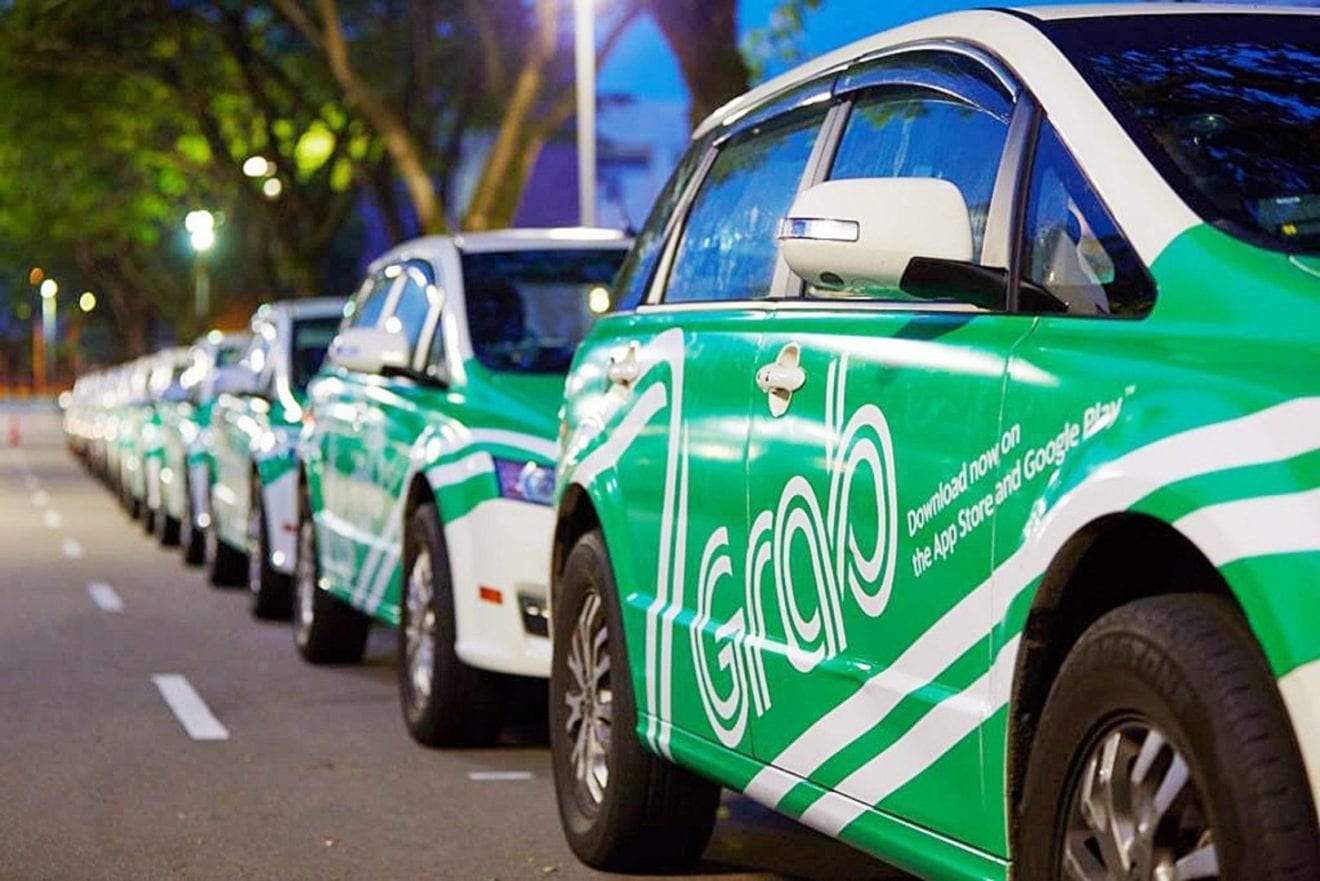
  • Grab partners Lippo Group for e-payment platform

    Grab partners Lippo Group for e-payment platform

    The partnership is an extension of a strategic deal signed between the two companies in March this year.

    According to the agreement, Lippo Group will develop a universal payments platform that enables Indonesians to top-up an e-money account and use it to pay digitally at Lippo companies.

    Grab will then integrate the payments platform into the Grab app as a mobile wallet option within GrabPay, enabling any mobile user to use the Grab app to pay for not only their daily transport needs, but also other lifestyle services.

    “We commend the government’s efforts to push Indonesia towards a cashless society and look forward to contributing towards this goal. Grab’s partnership with the Lippo Group to develop a universal payments platform will be a leap forward for e-money in Indonesia,” said Grab Group CEO and co-founder Anthony Tan.

    “With a rapidly growing middle class, people will want to have a mobile wallet option in the Grab app, which they can use every day, whether for transport, or payments for basic transactions,” he added.

    Tan believed that the potential of developing a mobile payments platform in Southeast Asia is “limitless”. The majority in Southeast Asia are unbanked but are armed with mobile phones. Thus, the only way forward is to find a cashless solution that will help customers manage their money and mobile wallets.

    “We will work with local partners to make cashless transactions a reality for the majority in Southeast Asia,” he concluded.

    The universal platform will be rolled out in the fourth quarter this year.

    With that, over 50 million existing customers from the Lippo and Grab will be able to pay via their mobile phones or use their Grab App to pay for a full suite of services from Lippo’s retail companies, including department stores, hypermarts, cinemas, coffee shops and e-commerce.

    Lippo Group director Adrian Suherman said his company will introduce more partner merchants in unrelenting efforts to push cashless transactions.

    “Lippo Group is committed to transforming lives in Indonesia, and we want to work with partners like Grab that have this common vision,” Suherman said in a statement.

    “Indonesians can enjoy the convenience of using their mobile phones and the Grab app to top-up and pay, as well as better manage their cash flow,” he added.

    Grab is determined to expand new services specifically for Indonesian preferences, as the country is Grab’s largest market. Nearly 95 per cent of Indonesians do not use credit cards. Grab said it will continue to partner with leading companies to launch innovative services to cope with these challenges.

    Began as a taxi-hailing app in 2012, Grab has expanded its core product platform to include private cars and motorbikes. The region’s largest transport network is now testing new services such as social carpooling, as well as last mile and food deliveries.

    Grab currently offers services in Singapore, Indonesia, Philippines, Malaysia, Thailand and Vietnam.

    Meanwhile its partner Lippo Group is a pan-Asian investment holding company with investments in real estate, department stores, retailing, financial services, telecommunications, hospitality, healthcare, news media, and IT services.

    With Riady family’s second generation at the helm, Lippo Group has been increasing its presence in the digital scope through aggressive investments in technology, media and online platforms.

    Its latest and largest investment is through Mataharimall.com, an online marketplace, which has pledged $500 million of funds for the platform.