Tag: e-wallet

  • E-wallets seek to grab opportunity as pandemic keeps people shopping online

    E-wallets seek to grab opportunity as pandemic keeps people shopping online

    Businesses are pushing cashless payment services amid demand triggered by social distancing measures imposed to curb Covid-19. MoMo announced on Tuesday that it plans to tie up with ride-hailing company Be Group to offer its popular e-wallet services to the latter’s customers. SmartPay earlier this month signed a deal with Viet Capital Bank to allow the lender’s customers to open saving accounts using its e-wallet.

    The company, which entered the market in May last year, targets big in Vietnam’s increasingly crowded e-payment market. It seeks to increase the number of users from 1.7 million to 4 million in the near future.

    Another player, AirPay, which has been partnering with online shopping platform Shopee for months, is offering gifts worth hundreds of thousands of dong to attract customers.

    Shopee said its cashless transactions, through credit cards and AirPay, have been rising rapidly in number since Vietnam reported the first Covid-19 case early in the first quarter. Eighty percent of cashless transactions in Hanoi, Da Nang, and central Thua Thien Thue Province are done by users aged 18-34, Shopee said.

    Industry insiders said fintech companies and banks are seeking to boost cashless payment as people refrain from going to physical stores amid pandemic fears.

    “Banks have been increasing partnerships with fintech companies during the pandemic for payment and other types of financial services,” Do Thanh Nam, director of Viet Capital Bank’s digibanking department, said.

    His bank saw online savings increase six-fold year-on-year in the first half, he revealed. An estimated 10.6 percent of the population aged above 15 use e-wallets, compared to 10.7 percent in Thailand, 17.1 percent in Singapore, and 35.2 percent in China, according to global consulting firm Boston Consulting Group.

    The government has been seeking to promote cashless payments for transactions like payment of electricity bills and tuition.

  • Singtel Adds Insurance Savings to E-Wallet

    Singtel Adds Insurance Savings to E-Wallet

    Singtel is adding financial services to its mobile wallet Dash, in the form of offer an insurance savings solution underwritten by Etiqa.

    The Dash EasyEarn savings insurance is designed for investors who want to start saving regularly for their future but who may be concerned about cash flow, Singtel said in a statement on Monday announcing its launch.

    The insurance plan has a minimum initial premium of S$2,000, up to a maximum of S$20,000. Policyholders are automatically covered with a 105 percent death benefit of the account value.

    Other benefits include up to 2-percent per annum returns for the first policy year, no lock-in period and unlimited withdrawals with zero penalties. Customers can purchase, top-up and make withdrawals on their EasyEarn plan via the Singtel Dash app on their mobile phone.

    The offering represents the next steps for Dash as it grows to become a more inclusive everyday app that will play a bigger part in enabling our customers’ digital lifestyles, Gilbert Chuah, head of mobile financial services, International Group, Singtel, said.

    Dash is among the largest non-bank mobile wallets in Singapore. Since its launch in 2014, the app has expanded beyond payments and mobile remittance to include lifestyle services like restaurant bookings and travel insurance. The app now has over 1 million registered users.

  • Ant Financial Invests in Vietnam E-Wallet

    Ant Financial Invests in Vietnam E-Wallet

    Ant is expected to have significant influence and provide technical expertise to the e-wallet, created locally by a small start-up.

    Chinese digital finance giant Ant Financial has acquired a «sizeable» stake in Vietnamese e-wallet eMonkey, «Reuters» reported on Thursday.

    The acquisition, which is below 50 percent, wasn’t publicly reported because of fears over anti-China sentiment in Vietnam, the report said, citing people familiar with the matter.

    Vietnam’s consumer market has immense potential, with a population of almost 93 million and a surging middle class, high internet and smartphone penetration, and a fast-growing liking for e-commerce. The competitive digital payments space in the country is led by Standard Chartered e-wallet Momo.

    While Ant has an office in the country, eMonkey already has the necessary operating licenses and has established partnerships with financial institutions and telecoms, making market penetration easier, the news wire said.

    Ant, a fintech affiliate of e-commerce giant Alibaba, on Thursday appointed company veteran Simon Hu as its new chief executive officer.

    The online finance giant controlled by billionaire Jack Ma started out in 2004 as a way for Alibaba Group to pay for goods. It has since evolved into a $150 billion behemoth covering micro-lending, insurance, credit-scoring, and money-market funds. Ant has a domestic user base of 900 million.

  • Singapore E-Wallet Inks Partnership With Thai Bank

    The Singapore-based firm has made its first foray into an overseas market, and is promising Thai travelers affordable options to pay with the competitive exchange rates when abroad.

    YouTrip, a multi-currency mobile wallet designed with travelers in mind, is taking its services to customers outside Singapore by launching in Thailand with a partnership with Kasikornbank (KBank), the firm announced in a press release on Tuesday.

    Juthasree Kuvinichkul, founding partner of You Technologies and Grab Thailand, will lead YouTrip’s Thailand operations. As part of the tie-up, YouTrip will be offered to KBank’s 11.6 million online customers, who will be able to register through their online banking app within 3 minutes.

    KBank president Patchara Samalapa said in the statement that he sees «strong potential» in the partnership with YouTrip. We also believe in the foreign exchange market which has benefited from the strong outbound tourism growth in Thailand, due to strong Baht, travel promotions, new flight routes openings, etc., he added.

    YouTrip allows users to pay in 150 currencies at 30 million Mastercard payment points worldwide with no hidden fees at wholesale exchange rates.

    Riding on the wave of Southeast Asia’s booming travel market, YouTrip has received strong interest in its multi-currency wallet since its launch in Singapore in August 2018, counting over 400,000 downloads of its mobile application in its home market, as well as 10 million transactions processed in the year since its launch, the statement said.

    In May, the firm announced that it closed a record $25.5 million pre-Series A fundraise – the largest for a fintech startup from Southeast Asia.

  • DBS to Expand E-Wallet Functionalities

    DBS to Expand E-Wallet Functionalities

    To mark the e-wallet’s fifth anniversary, DBS announced new functionalities and merchant deals and said it hopes to grow its user base.

    BS Bank wants to grow its PayLah e-wallet user base from 1.6 million users currently to 3.5 million users by 2023, and will roll out new functionalities and improve the user experience, the bank said in a statement on Wednesday.

    From next year, the bank will integrate its rewards app, as well as debit and credit cards payments to the PayLah platform, expand payment touchpoints across the region, and increase ecosystem partnerships, the statement said, highlighting strategic platform partnerships with merchants like KFC, SISTIC and AXS.

    «In 2020, we’ll be building on the three Ps – Payments, Partners and Platform – as part of a longer-term strategic roadmap. By linking DBS/POSB debit and credit cards and integrating the DBS Lifestyle rewards app into DBS PayLah!, our customers will be able to earn and redeem rewards instantly on a single platform simply and seamlessly, regardless of their mode of payment,» Anthony Seow, DBS head of Payments & Platforms, Consumer Banking Group (Singapore), said.

    Introduced in 2014, PayLah allows users to make instant peer-to-peer fund transfers, purchase travel insurance, movie tickets, pay bills and transport expenses and pay for their purchases at more than 80,000 NETS QR, SGQR and PayNow QR-enabled merchants. The app was the first in Singapore to allow users to send and receive funds using QR codes.

    According to DBS, its 1.6 million e-wallet users made S$1.5 billion ($1.09 billion) in transactions from August 2018 to September 2019.

  • WeChat Pay to be ready in 7-Eleven, Guardian Singapore

    WeChat Pay to be ready in 7-Eleven, Guardian Singapore

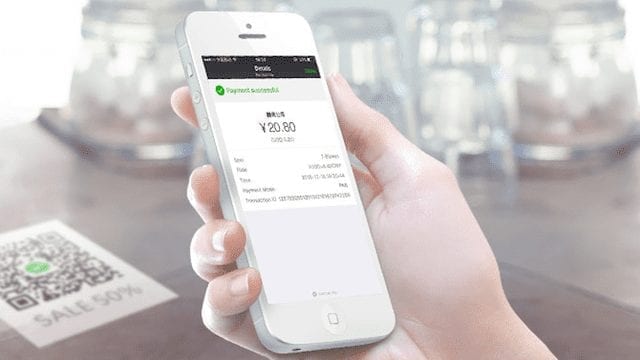
    Customers of 7-Eleven, Cold Storage and Guardian stores in Singapore will soon be able to pay for purchases using WeChat Pay. The owner of the two retail chains, Dairy Farm Group, has worked with NETS to enable visitors from China and Chinese nationals based in Singapore to use the service from November 1.

    WeChat Pay is currently being trialled at the 7-Eleven and Guardian stores at Changi International Airport and some stores in key tourist destinations in the Orchard and Chinatown districts.

    According to the Singapore Tourism Board, visitors from China increased by almost 13 per cent, from 2.8 million in 2016 to 3.2 million last year. The partnership between Dairy Farm Singapore and NETS together with WeChat will enable Singapore’s largest multi-format retailer to better cater to the growing number of China visitors, by offering visitors a convenient way to pay when they shop in Singapore.

    Head of merchant services at NETS, Alvin Seck, said working with payment partners like WeChat and retailers like Dairy Farm Group enables NETS to roll out new payment services for consumers quickly while minimising adoption costs for merchants.

    “With this partnership, 7-Eleven and Guardian in Singapore along with Cold Storage and Giant can just make use of its existing NETS uPOS terminals to accept WeChat Pay, in addition to NETS, QR, NETS FlashPay, credit and debit payments.”

    To use WeChat Pay for payments, users simply need to scan the NETS QR code on the NETS uPOS terminal.

    Dairy Farm Singapore’s regional finance director, Tom van der Lee said this latest payment mode service is part of the multi-format retailer’s digital-transformation journey in line with the government’s ‘Smart Nation’ drive.

    “More customers are adopting cashless payments, thanks to easier and faster payment transactions with the uPOS terminal plus the convenience of the wide array of payment options to choose from across our Cold Storage, Giant, 7-Eleven and Guardian stores. Cold Storage alone has seen cashless payment increase by 6 per cent and at Guardian by 3 per cent since Dairy Farm Singapore installed 1800 unified NETS POS terminals last year – the single largest deployment by retailer here.”

  • Make or break time for Vietnamese e-wallets

    Make or break time for Vietnamese e-wallets

    Big moves by some players are exerting severe pressure on many e-wallet service providers in Vietnam.

    Twenty seven payment service providers had been licensed in Vietnam as of last March, with 20 of them offering digital wallets, according to the State Bank of Vietnam. Others provide services such as financial switching, electronic clearing and payment gateway.

    There are many reasons why banks, tech companies and fintech companies are venturing into the world of electronic wallets, including the growing global trends of digital banking and setting up financial startups.

    Besides, Vietnam has a large population of young people who are compulsive smart phone users and fond of technology but lack interest in traditional banking services.

    “Consumers are increasingly living a modern lifestyle that is accompanied by digital services,” Tran Thanh Nam, founder and director of mobile payment player Moca Technology and Services Corporation, said.

    “In addition to free social networks, they have begun to pay attention to incorporating electronic services for their daily needs. From ride hailing to food delivery, it comes with safe and convenient non-cash payments.”

    Who are offering e-wallets?

    Moca’s popular rivals included MoMo, Bankplus, Vi Viet, VTC Pay, WePay, Mobivi, and Vimo.

    As of December 2017 MoMo had more than five million users and expects to see a two- to three-fold increase this year. Vi Viet has more than two million users and hopes to increase the number to 3.5 million this year.

    Late last year Pham Tien Dung, head of the State Bank of Vietnam’s Payment Department, said only about five payment intermediaries earned profits. The rest of the market has been labeled “unstable”.

    Nguyen Dinh Thang, chairman of LienVietPostBank, which owns Vi Viet, said: “E-wallets need more time to develop to meet customer needs and market potential, and using cash cannot be changed in the blink of an eye. The market needs time to experience the utility and convenience of e-wallets.”

    Industry insiders said each e-wallet has its own development strategies and target customer segments.

    But they admitted that the failure by many e-wallets to adapt to the financial ecosystem in Vietnam and the lack of widely accepted payment gateways are holding the industry back.

    In 2017 MoMo garnered more customers by offering discounts and promotions and spending on advertising. Then, this year it decided to exploit the power of the ecosystem by signing a deal with ride hailing company Uber Vietnam. Unfortunately, Uber withdrew from Southeast Asia a few months later.

    Zalo Pay was a latecomer but achieved great success at the beginning of this year by running a “lucky money” campaign during the Lunar New Year that enabled users to gift lucky money to their loved ones using the digital wallet.

    This campaign was a huge hit also in China when WeChat and AliPay ran it.

    Zalo has an advantage over other e-wallet rivals since it already has an enormous user database from its messaging application.

    The competition is fierce

    The most recent tie-up, and one that could be a game changer, is between Moca and Grab. The CEOs of both companies are ambitious about developing their electronic wallets. Their strategy is “if we grow, we grow together”.

    More specifically, the deal indicates that those who partner with Moca e-wallets will benefit from the large number of Grab population of millions of drivers and passengers across the country.

    Grab users will soon be able to choose from all payment services offered by Moca, including bill payments, phone credit recharging, and non-cash payment at retail stores and fast food chains like 7-Eleven and McDonalds.

    A combination of Momo popularity, rising Zalo Pay and the Moca-Grab marriage are exerting great pressure on dozens of other e-wallet providers.

    Traditional mobile payment services of Vietnamese banks are also intimidated by the competitors.

    Responding to this challenge, TPBank has updated the flight ticket support service on its mobile application.

    UOB Bank Vietnam now allows in-app opening of new accounts in 10 minutes, reducing the time spent opening one at the bank by 80 percent.

    “In big cities like HCM City, four out of every five people have smart phones which can assist them in completing everyday tasks in a much faster and convenient way. We always want to develop and leverage technology so that banking services are much simpler, safer and smarter for our customers from the very first transaction,” said Harry Loh, CEO of UOB Vietnam.

  • Singtel to link mobile wallets across Asia

    Singtel to link mobile wallets across Asia

    Singtel expects the service to launch mid-2018 in 20,000 points in Singapore and Thailand.

    Travellers with Singtel’s mobile wallets could soon continue to use their home wallet app to make payments when overseas.

    Singtel will link its mobile wallets across different ecosystems through an interoperable platform. It will begin with the mobile wallets of the company and its regional associates through the first commercial launch between Singtel and AIS, it said in an announcement.

    “This will be the first time that different mobile wallets across different markets are connected to offer seamless cross-border payments at physical merchants,” Singtel said, “The initiative to expand the Group’s mobile wallet services underscores the continued commitment of Singtel and its regional associates to enhance the mobile payments experience for customers.”

    The telco also noted that this will enable its 590 million mobile customers to securely and conveniently pay with their mobile wallets when they travel in Asia. “Other mobile payment apps can, in future, plug into the platform and gain ready access to the Group’s merchant and customer bases across the region,” it added.

    Singtel International Group CEO Arthur Lang noted that the mobile payments scene in Asia today is fragmented with many different systems and this poses a challenge to the adoption of mobile payments. “As a Group, we believe we can bring about change through our cross-border interoperable platform and collaboration with like-minded partners. Our vision is to unlock the growth potential of mobile payments in the region by providing customers with a convenient, seamless experience, and helping small merchants widen their reach to millions of consumers.”

    In 2017, there were more than 80 million tourist arrivals into Singtel Group’s markets in Asia. “As many small merchants are still unbanked in this region but smartphone penetration is high, mobile payments provide a simple and secure alternative to travellers who might not want the hassle of carrying large amounts of foreign currency with them,” Singtel said.

    “With our customers’ digital lifestyles and the growth in intra-region travel, it is a natural progression for us to take our local mobile wallets regional first, by leveraging the strengths and reach of the Singtel Group in Asia,” Lang added.

    The commercial launch of the service is planned for mid-2018 between Singapore and Thailand where Singtel and AIS have obtained regulatory clearance. This will enable over 1.5 million visitors travelling between Singapore and Thailand each year to use Singtel Dash and my AIS apps at a total of more than 20,000 retail merchant acceptance points in Singapore and Thailand.

    The Group plans to progressively expand this service from the second half of 2018 to other regional associates, which include Airtel, Globe and Telkomsel, taking into consideration the respective country’s regulations.

    Telkomsel CEO Ririek Adriansyah said, “Once we obtain regulatory clearance, we can provide TCASH customers greater convenience whether they are transacting locally or overseas, and give our local merchants new income opportunities from regional travellers.”

  • Thai e-wallet platform provider joins hands with Myanmar retailer.

    Thai e-wallet platform provider joins hands with Myanmar retailer.

    A joint venture agreement between them was signed during a Myanmar-Thailand cooperation mission presided over by Myanmar State Counsellor Aung San Suu Kyi and Deputy Prime Minister of Thailand Dr Somkid Jatusripitak in Nay Pyi Taw yesterday.

    The joint venture will leverage the strengths of both parties to launch various innovative fintech services such as payment platform, loyalty, e-gift platform and closed- and open-loop e-wallets for Myanmar’s population of 51 million. The joint venture is a key stepping stone for T2P to expand its services beyond its home country Thailand and for City Mart to offer new products through its existing retail platform.

  • iPay you now: Singapore’s millennials demanding mobile wallets

    iPay you now: Singapore’s millennials demanding mobile wallets

    Millennials demand faster and easier ways to pay. It seemed awkward at first, as J.D Power Director Gordon Shields recalls it, having to pay using his phone at a local supermarket in Singapore. He tells how the checkout assistant confusingly shouted “Apple Pie, Apple Pie” across the store when he handed her his iPhone in an attempt to pay using the mobile app Apple Pay at that time.

    “It makes you wary of trying the payment option again,” he says, although the cashier team finally managed to make it work.

    Launched in just May by Apple and followed in June by Samsung and Android, mobile wallets have now been adopted by one in four Singaporeans but one in three millennials. Shields said that as mobile wallets allow transactions to be made quickly and also for notifications to be registered on the mobile phone, this allows cardholders to have access to their most recent account activities, as well as to receive any alerts or messages from the card issuer on their account.

    “It also helps to improve overall transparency over the account and can work to provide greater control on spending – either for someone who wants to manage their spend on certain categories, or others who may be working towards a certain cashback or rewards spend target,” he says.

    He adds, “In essence, as consumers like to have greater transparency over their accounts and prefer quicker access and control, without going through certain hurdles with OTPs or hard tokens, mobile wallets offer a good solution. However, the barriers to usage are multifold, including acceptance level across merchants, perception of fraud or misuse by cardholders, as well as the simple awkwardness for some users when trying the first time.”

    Contactless payments using mobile phones in Singapore have gained popularity only this year with more than 30,000 retail points in Singapore have enabled payment through apps such as Apple Pay, Samsung Pay, and Android Pay.

    “We expect overall usage to increase, as people move more to having their cards and loyalty programmes on the smartphone rather than in the physical wallet. However, how fast the growth will be still remains unclear,” he explains.

    A certain way to gauge how fast mobile wallet will gain more traction is by looking at how banks in Singapore embrace the innovation. OCBC Bank says it has seen over 35% growth in contactless payments for the past year.

    “It was an easy decision to embrace digital wallets, be it Apple Pay, Samsung Pay or Android Pay, as we want to make this convenient payment method available to as many OCBC customers as possible,” says OCBC lifestyle financing group head Desmond Tan.

    For Usman Khalid, Standard Chartered Singapore’s payments head, mobile wallets dissolve friction from payments.

    “Customers have strongly embraced these platforms as part of their lifestyles, with our customer engagement metrics showing a positive increase. We are also seeing significant growth in customers’ overall contactless spends,” he notes.

    Standard Chartered says it is the only international bank in Singapore to have launched services in three mobile wallets for its clients. As the technology cuts across all three mobile phone operating systems, Khalid said they have seen consumers use mobile wallets for small ticket size “everyday spend” categories such as supermarkets, coffee shops and fast food restaurants.

    Meanwhile, Maybank Singapore Community Financial Services Head Choong Wai Hong notes that their card members have the option to pay using Samsung Pay app. More than the ease of using one, Choong says customers could rely on the added security the technology offers.

    “The mobile wallet is also safe to carry and use. While some consumers may forget to bring their cards or wallets when leaving home, they rarely forget their mobile phones. Hence it provides the added comfort that they have their wallets with them even when they forget to bring their physical cards,” he underscores.

    Wai stresses that one challenge for banks is to get more customers to adopt the new mode of payment.

    “Another challenge is that not all models of mobile handsets support the respective mobile payment apps, so we have seen cases where customers want to embrace this form of digital payment, but their current mobile handsets are not compatible,” he says.

    Out of all the apps, only Android Pay can be used by older NFC-enabled mobile phones. Samsung Pay and Apple Pay support only the latest handsets of their respective brands.

    But for users who had positive experience using mobile wallets, Wai acknowlodges it is likely that there will be high penetration of mobile wallets in the long run.

    “In the short to medium term, what’s more likely is the scenario of consumers using a combination of physical card payment and mobile payment. Furthermore, physical cards are still necessary for payment in other countries where there is no or low mobile payment acceptance,” he says.

    OCBC’s Tan has the same sentiment, adding that financial institutions should speed up their innovation process or risk becoming a laggard in this rapidly-changing world of payments.

    “We are expecting digital wallets to lead the next revolution in the rapidly growing world of payments,” he foresees.

    Some banks have gone so far as creating contactless ATMs. UOB, aside from launching Asia Pacific’s first contactless payment option through its UOB Mighty app, has promised to roll out 60 contactless ATMs around the city-state by January next year. It ambitiously eyes to replace all of its 634 ATMs with NFC-enabled ones by the end of 2018.

    UOB Head for Personal Financial services Dennis Khoo says the bank even worked with partners to introduce contactless mobile payments at all MRT stations in Singapore.

    “This means that UOB cardmembers can now simply top up their EZ-Link cards at any General Ticketing Machine with a tap of their smartphone,” he notes. “It is as important to grow acceptance points in areas that are most relevant to our customers’ lives, from retail and groceries to transit. “

    He, like Shields, believes that it will be millennials who will advance the adoption of mobile wallet technology in Singapore.

    “We have noticed that they are generally early adopters of new innovations such as contactless mobile payments. As they will soon make up the largest demographic of consumers in Singapore, it is natural that they will continue to influence and shape the consumer landscape in Singapore,” he concludes.
  • HK privacy commissioner weighs in on e-wallets

    HK privacy commissioner weighs in on e-wallets

    Privacy commissioner for personal data Stephen Kai-yi Wong has urged Hong Kong residents to vigilantly keep control of their personal data in wake of the Hong Kong Monetary Authority’s (HKMA) decision to grant Stored Value Facilities (SVF) licensesto five mobile e-wallet providers.

    Wong also called on e-wallet operators to win customers’ trust by respecting their privacy rights and safeguarding their personal data.

    While he acknowledged that e-wallet operators may need to collect significant amounts of personal data as part of their operations, he said providers should give consumers control over the types of data e-wallet apps are allowed to access, and the ability to revoke these permissions at any time.

    To keep their personal data safe, Wong recommended that users of e-wallet services find out how e-wallet operators will handle and process personal data collected, understand the apps’ privacy settings and permissions and avoid operating e-wallet apps over public or insecure Wi-Fi connections.

    Users should also use complex, unique passwords, make sure devices with the app installed have appropriate anti-theft features switched on and regulatory monitor transaction records for unauthorized payments.

    Wong said e-wallet operators are required under the new Stored Value Facilities Ordinance to clearly explain to users what personal data is collected and the reasons why.

    Operators planning to use collected data for purposes not directly related to payment should obtain the user’s explicit and voluntary consent, and are legally required to ensure the accuracy and security of personal data collected. Customers are also entitled to access this data and request corrections.

  • Online retail Visa offers new payment method to deal with abandoned carts

    Online retail Visa offers new payment method to deal with abandoned carts

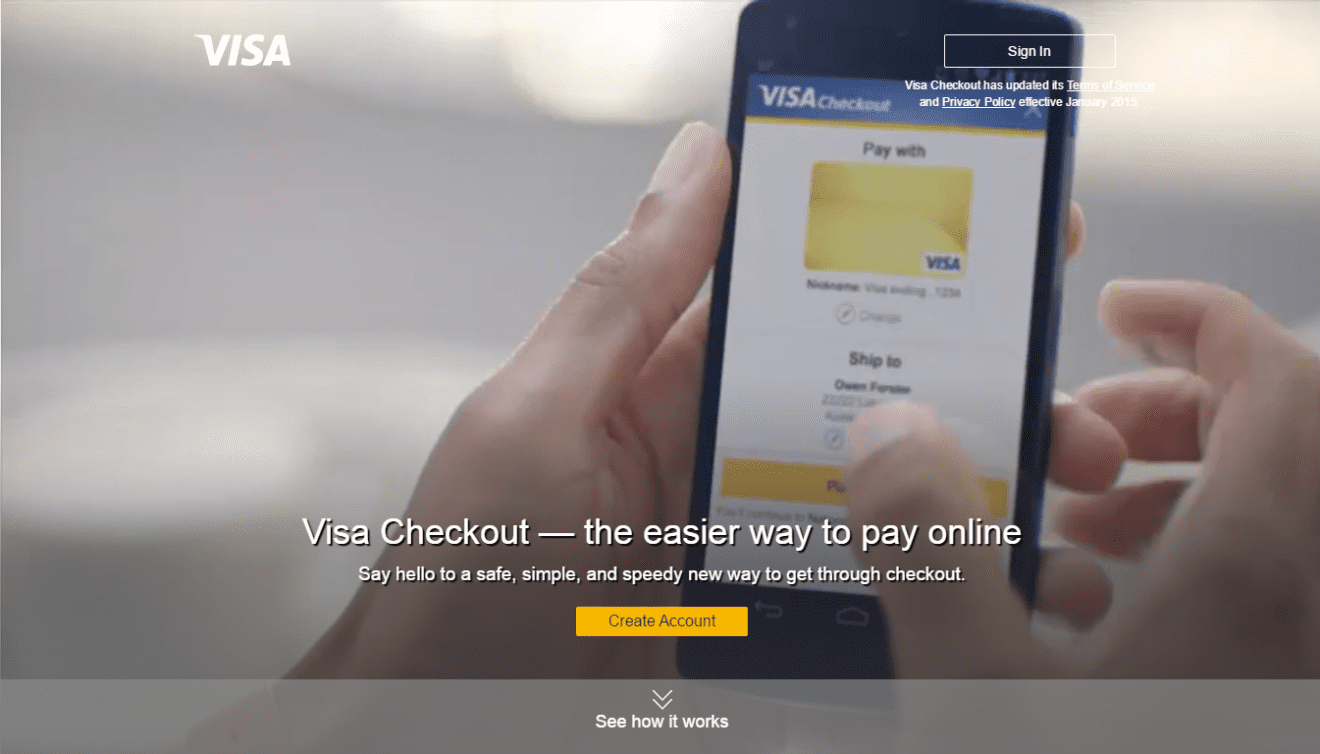
    Visa has launched a new payment service that simplifies the payment process for online shoppers in a bid to address the high percentage of abandoned online shopping carts caused by inconvenient payment methods.

    The service, Visa Checkout, captures and saves customers’ payment details. Registered users can pay for their online shopping at several merchants that have partnered with Visa through just one payment point. Users simply enter a username and password to pay for items, instead of filling up credit card information and shipping address for every transaction. The service can be used via a smartphone, tablet, laptop or PC.

    Visa Checkout is available in 16 markets worldwide, including China, Malaysia and Singapore. The company plans to extend this service to other parts of Southeast Asia in the near future.

    Ooi Huey Tyng, Visa country manager for Singapore and Brunei said that as more consumers spend more time and money on ecommerce, they are also “demanding a fast, secure and frictionless way to shop online.”

    “Two in three Singaporean shoppers have abandoned a purchase because it took them too much time to complete the payment process or it was too cumbersome to enter their personal details,” the company said in a press release on Wednesday.

    According to a recent Visa study, Singapore is among the top online shopping countries in Southeast Asia. At 88%, the city-state has the highest smartphone penetration of any country in the world, and 71% of Singaporeans shop online at least once a month, an increase from 59% last year.