Retail News CRM

Tag: eatery

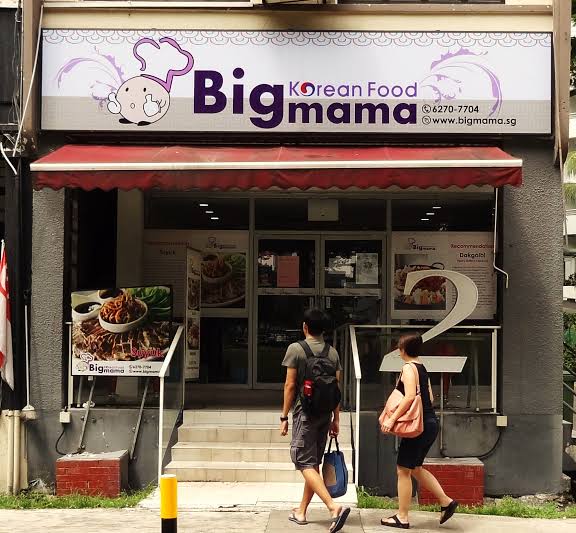
  • End of an Era: Beloved Singapore Korean Eatery Bigmama Bids Farewell After 16 Flavorful Years

    End of an Era: Beloved Singapore Korean Eatery Bigmama Bids Farewell After 16 Flavorful Years

    Bigmama, a beloved Korean eatery in Singapore, has officially closed its doors after a successful run of more than a decade. The owner made the sad announcement in a series of heartfelt social media posts and comments on Monday, revealing that the restaurant had served its final meal the previous day.

    End of an Era

    The proprietor of the popular restaurant, situated on Kim Tian Road, wrote, “After 16 glorious years, it’s time to conclude the beautiful journey of Bigmama.” She also mentioned that she was preparing for her return to South Korea.

    The restaurant was initiated in January 2012 by a former caretaker and tutor who had spent numerous years whipping up meals for her Korean students who were studying in Singapore. Bigmama quickly garnered a reputation for its delicious and authentic Korean dishes, with patrons particularly praising its suyuk (steamed pork belly) and dakgalbi (pan-fried chicken).

    A Heartfelt Farewell

    The posts expressed heartfelt gratitude towards the customers who had supported Bigmama throughout its journey. “Words cannot depict how grateful I am for your consistent love and the cherished memories we’ve created,” the post read. “Thank you for filling a significant chapter of my life with your warm smiles.”

    Questions & Answers

    How long had Bigmama been in business?

    Bigmama had been in business for over a decade, specifically 16 years.

    Who was the founder of Bigmama?

    Bigmama was started by a former caretaker and tutor who used to cook for her Korean students studying in Singapore.

    What were the signature dishes of Bigmama?

    Bigmama was particularly known for its suyuk (steamed pork belly) and dakgalbi (pan-fried chicken).

  • Eateries keen to go on board with AirAsia’s food delivery service

    Eateries keen to go on board with AirAsia’s food delivery service

    Eateries say they are keen to go onboard with airasia food because of its low commission and islandwide delivery. The newcomer is offering them free delivery within 8km for two weeks until March 16, and charging a 15 percent commission after that.

    Other food delivery platforms like Deliveroo and Foodpanda charge commissions of 30 percent to 35 percent and deliver within a restricted radius of 2km to 6km, while GrabFood delivers islandwide for only selected partners. Oddle charges 10 percent for islandwide service but uses Lalamove for deliveries, which can cost eateries another $12 to $20 for each order.

    Swee Choon Tim Sum Restaurant signed up with airasia food on Tuesday (March 2) because of its low rates and islandwide delivery. But owner Ernest Ting raised concern over the availability of riders.

    “We often face issues such as lack of riders and service reliability,” he said.

    Baoshi F&B Management goes on the platform today with five of its outlets, while the rest will go onboard three weeks later. It runs the Wee Nam Kee chicken rice, Monga Fried Chicken and Lai Bao Fish Head Steamboat eateries.

    The company’s co-founder, Mr Lem Cheong, said he, too, was attracted to airasia food’s attractive rates and islandwide delivery.

    Mr Douglas Ng, who runs Fishball Story in Circuit Road selling fishball noodles, said he messaged airasia food for more information last Thursday after learning about its launch, and will sign up due to the attractive rates.

    He currently uses GrabFood, which he finds efficient, and he considers the 20 percent commission fair. But he finds its delivery radius of 3km too small – which is why he also does his own deliveries.

    Mr Melvin Chew of Jin Ji Teochew Braised Duck & Kway Chap in Chinatown Complex said he heard about airasia food’s low commission and was keen to find out more, such as the availability of drivers or riders.

    The founder of Facebook group Hawkers United – Dabao 2020, which supports hawkers during the pandemic, said he will likely sign up so he can understand how airasia food’s system works and share the information with fellow hawkers.

    All the eateries agree that having more delivery platforms is good for them.

    Baoshi’s Mr Cheong said: “Being on more platforms makes our food more accessible. We are positive that as the competition increases, the rates and prices offered to us will be better.”

  • Japanese cheap eatery operator Ootoya set for ownership fight

    Japanese cheap eatery operator Ootoya set for ownership fight

    A long-running feud for control of a Japanese provider of home-cooked meals Ootoya has spilled out of the boardroom and into the kitchen.

    Colowide, which owns multiple restaurant chains in Japan, is seeking to take control of Ootoya Holdings, a well-known operator of cheap and convenient eateries that serve what it describes as “mom’s food.” Having failed in an earlier bid to install its preferred slate of directors, Colowide earlier this month launched a tender offer aimed at boosting its share in Ootoya to a majority and give it control of the company.

    Ootoya on Monday formalized its opposition to the offer, setting up a proxy fight for the future of the franchise at a time when the restaurant business in Japan, as in much of the world, is struggling to stay afloat due to the coronavirus pandemic. Restaurants have had to cut back on hours, staffing, and capacity to comply with social-distancing measures, eroding their profitability.

    At its heart of the struggle in Japan is a dispute over the place of kitchens: Ootoya makes its traditional Japanese meals on-site in each restaurant and argues this is crucial to its business. Colowide wants to modernize the chain and integrate into its network of central kitchens, hubs that can serve multiple restaurants at once.

    The struggle also highlights how hostile takeovers, once frowned upon in Japan, are increasingly becoming an option for management feeling ever-greater pressure from shareholders to boost long-term sluggish performance.

    The battle has its roots in the sudden death in 2015 of Hisami Mitsumori, the man who built the Ootoya brand. Following a reported clash with CEO Kenichi Kubota, Mitsumori’s son Tomohito left the company, and he and his mother eventually sold their sizable stakes in Ootoya to Colowide in 2019. Kubota himself is also a cousin of Mitsumori.

    Colowide first tried to install its preferred slate of directors, which included Tomohito Mitsumori, only for shareholders to roundly reject the proposal last month. Colowide is now offering 3081 yen (US$28.74) per share to take its stake above 51 percent. That’s a 46-per-cent premium to the closing price before the offer, with shares closing at 2934 yen on Monday.

    Ootoya’s management has hit back, accusing Colowide of bungling past takeovers, including that of Kappa Sushi, acquired in 2014 and which Ootoya says has trailed rival sushi outlets. In its statement of opposition to the tender offer, it warned shareholders that a successful Colowide bid would put Ootoya’s business in jeopardy. A group of more than 400 restaurant employees on Friday said they opposed the deal.

    “We do not view Colowide as being in good shape to drive a turnaround of Ootoya,” Mio Kato, an analyst at LightStream Research who publishes on Smartkarma, wrote in a note on July 9. “This looks to be a potential acquisition of a struggling company by a financially weak and in our view, also struggling company, during a crisis period for their industry.”

    “I have no intention of ever changing our style of cooking in-store,” Kubota told Nikkei Business magazine in an interview in May, before the bid had been finalised. “A tender offer is not illegal, but would be in extremely bad faith.”

    One intriguing complication is Ootoya’s retail-heavy shareholder base. Most of Ootoya’s shares are in the hands of individual investors, with many holding the stock long term in order to claim “yutai” shareholder gifts, which include free meals an

  • David Jones opens first food store in Melbourne

    David Jones opens first food store in Melbourne

    David Jones has opened its first standalone food store in Melbourne in a bid to lock down Australia’s gourmet grocery market and take share off the country’s leading supermarkets, Coles and Woolworths, by offering fresher and, it argues, tastier prepared food.

    The 425sqm store, located on the ground level of Capitol Grand, a high-end residential and retail development on Chapel Street in South Yarra, stocks a large range of prepared meals, including a newly launched vegan range, alongside meat, eggs, dairy, fresh produce and other groceries and pantry staples, such as pasta, olive oil, tea and biscuits.

    Roughly 60 per cent of items in the store are private label, most of which were developed exclusively for David Jones by Inspired Foods, the Australian arm of Interfood, South Africa’s leading food supplier.

    According to Pieter de Wet, David Jones’ managing director of food, this partnership gives the retailer a competitive edge in Australia’s $110 billion grocery market, which increasingly is shifting towards fresh and prepared food.

    “Because of the long distances and supply chain issues in Australia, when [supermarkets] go into fresh, and I’m talking particularly about convenience and fresh meals, shelf life becomes a big issue,” de Wet told Inside Retail Australia.

    “You’ll find products deemed fresh have a shelf-life of 30 days, and then there’s no flavour, quality goes out the window.”

    In comparison, most of David Jones’ prepared meals have a shelf life of four to five days, he said. This is because Inspire Foods has developed different processes to prepare food without preservatives.

    “The IP we created over decades of working with our suppliers is what delivers those products, and over time, that’s what we see as a big opportunity that will differentiate us,” he said.

    De Wet declined to say how many standalone food stores David Jones will open, but said the retailer aims to be the only national player in Australia’s underdeveloped gourmet grocery market.

    “If you look at other markets, there are one or two retailers occupying the top end of the market,” he said, pointing to M&S and Waitrose in the UK and Whole Foods in the US.

    “In Australia, it’s a little bit different. It’s almost occupied by food service. You’ve got a couple independents, but nobody is doing it at scale and cohesively. There’s an opportunity there,” he said.

    Gary Mortimer, an associate professor at Queensland University of Technology’s business school, agrees that the top end of the market is “ripe for exploitation”.

    “Such a strategy has proved successful in cushioning several international supermarkets from increased price discounting,” he said.

    But it is not without risks. Woolworths closed down its gourmet grocer business Thomas Dux in 2017, and Brisbane-based Mercado slipped into voluntary administration in May.

    “The key challenge is volume and selecting the right locations,” Mortimer said.

    The store in South Yarra marks David Jones’ third food format since it announced its $100 million food strategy in 2017.

    The retailer over the past two years has opened food halls in its department stores in Sydney, Melbourne, Adelaide and Perth, where customers can dine on sushi and oysters and purchase gourmet food products between shopping for clothes and homewares, and in August, it announced a partnership with BP to offer fresh food and prepared meals in its service stations.

    The new store occupies a middle territory between these two formats. In addition to its grocery offer, it also features an in-house espresso bar and a pop-up shop from The Plant Society, where customers can buy freshly cut flowers, potted plants and accessories.

    Going forward, de Wet said the retailer will expand its food offer primarily through its partnership with BP and standalone stores like the one in South Yarra, rather than food halls.

    “BP have got a massive network, the opportunity there is very big. If you look at M&S, they’ve got 400 BP stores in their network, there’s a real opportunity there for us,” he said.

    “How big this could become over time…time will tell.”

    David Jones is set to open its second store in New Zealand next month at Westfield’s newly opened Newmarket shopping centre. The location will reportedly include a food offer.
  • October Singapore retail sales static

    October Singapore retail sales static

    October Singapore retail sales inched up by 0.5 per cent year on year, after excluding motor vehicle sales from the data.

    Month-on-month they fell by 2.1 per cent, reaching S$3.7 billion (US$2.69 billion).

    Online retail sales breached the 5 per cent threshold of total retail sales at 5.3 per cent for October.

    By category, sales by petrol stations soared the most, up 11.4 per cent year on year, however when the effects of price changes was removed from the data, the increase was a more moderate 1.5 per cent.

    Sales of medical goods and toiletries rose 3.4 per cent on the back of cosmetics, with furniture and homewares up 1.5 per cent.

    In contrast, sales in department stores and supermarkets decreased 3.6 per cent and 2.9 per cent respectively. Retailers of optical goods and books and recreational goods declined by 1.9 per cent and 1.8 per cent.

    Sales of food and beverage services rose 1.1 per cent, with food caterers recording a 5.6 per cent increase in turnover, other eating places (such as cafes) improving by 3.8 per cent, and fast-food outlets by 3.2 per cent.

    Restaurant turnover, however, was down 3 per cent.

  • Full service eateries threaten fast food in Vietnam

    Full service eateries threaten fast food in Vietnam

    A survey has found full service restaurants outshining the quick service segment in Vietnam since 2017’s third quarter. Full service restaurants (FSR) or sit down eateries where food is served directly to the customers’ table, have been far better patronized than quick service restaurants (QSR), where table service is minimal and the typical fare is fast food.

    In fact, the QSR segment has been dropping quarter after quarter, according to a report released this week by the HCMC-based market research firm Decision Lab.

    It found that the growth of full service restaurants has been fueled mostly by women, and consumers above 35 years of age.

    The FSRs and QSR are the two most important channels for manufacturers of various product categories, with the other five channels being street food, bars, convenience stores, hotels, and canteens.

    Together, they currently account for the majority of out-of-home visits by consumers across all demographic groups in Vietnam.

    The falling of QSR

    Quick service outlets have been suffering from declining visits from all consumer groups, male and female of all ages from 15 upwards in all the three major cities, the report said.

    Among various types of quick service outlets, cafes, bakeries and juice, smoothie shops are those that have witnessed the biggest drop in visits, by 29 percent, 22 percent and 30 percent respectively.

    They have switched to other channels to consume these daily products likes street food, full service restaurants and convenience stores.

    But this does not mean Vietnamese are cutting down on these products. Vietnamese consumption of coffee, juice and smoothies actually increased in the past year.

    Since April 2016, Decision Lab had tracked the out-of-home eating and drinking market in Hanoi, Ho Chi Minh City and Da Nang, Vietnam’s three biggest cities of Vietnam.

    It tracked all food and drink consumed out of home on a daily basis with an annual sample size of 15,000 completed interviews.

    The respondents were Vietnamese consumers aged above 15, who also reported on consumption by children (under 15 years) present when eating out.

    Nghiem Vu Huong Linh, head of Foodservice at Decision Lab, said the findings suggest that consumers have become very selective in their choice of outlets to visit and that not all outlets can benefit from the increasing demand without making significant efforts to become attractive and worth trying.

  • Hawkr opens a new branch in Pacific Place

    Hawkr opens a new branch in Pacific Place

    Following its launch in Quarry Bay three months ago, “grab-and-go” eatery Hawkr has expanded to Pacific Place

    Hawkr springs from a partnership between Myanmar-based lifestyle concept Pun+Projects founder and restaurateur Ivan Pun and private-equity professional Jake Astor. Pop-up dining chef Mina Park is in charge of the menu which offers original recipes and fresh ingredients without MSG, artificial flavours or preservatives. It was inspired by Southeast Asian fare from such food destinations as Indonesia, Malaysia, Myanmar, Singapore, Thailand and Vietnam.

    The second store has an expanded menu including Burmese tealeaf, Isaan beef and Song Que salmon salads, Mamak Mee noodles and roasted pork noodle with coriander pesto,plus tealeaf eggs. Hawkr’s bespoke coffee blend is again a feature, with a resident barista.

    Like the Quarry Bay flagship, Hawkr at Pacific Place continues a design theme of neon green signs against a rattan background, and colourful wall pattern inspired by the ikats of Burma and Thailand.

    Staff aprons are hand-dyed in indigo from the Isaan region of Thailand.

    All menu items are half price after 7pm every day, and the team also plans to work with local charities to ensure any leftover food goes to those in need. Catering menus are also available for corporate events, luncheons and parties.

  • Meats eatery offers visual feast as well

    Meats eatery offers visual feast as well

    A focal point of the new Meats eatery in SoHo, described as a “meat bar”, is a custom-made  rotisserie and robata grill.

    Guests can sit in front of the glass-fronted kitchen to watch the chefs as they marinate, grill, roast and carve.

    On Staunton Street, the bar offers casual dining without reservations, offering sharing-style dishes. As well as slow roasting and grilling, its kitchen even prepares smoked meat.

    Brought to Hong Kong by Pirata Group, Meats has warm lighting, eclectic mismatched seating and vintage touches, thanks to Melbourne’s boutique interior design firm Samantha Eades. Exposed raw building materials are offset with European tiles and hand-painted depictions of forest animals on textured walls.

    Head chef Paddy McDermott says the knowledge and science behind preparing meat “almost takes us back to our primal instincts”.

    “I’m fascinated by the skill that goes into knowing how to use the whole animal, respecting unappreciated cuts of meat to create amazing dishes.”

    Each table has tongs, miniature meat cleavers and carving forks for diners. A one-page menu divides the offering into Small, Meats, Sides, Veggies and Sweets.

    Meats dishes that can be seen turning on the rotisserie include rustic Iberian porchetta with crispy crackling and aromatic herbs. Another slow-cooked signature is the chicken, which is salted overnight and basted in its own juices. A feature dish is appropriately titled Chef Give Me Meats!, which includes exclusive items not listed the menu.

    As well as wines, the bar offers bourbons, cocktails and craft beers by the bottle and draught.

    Meats seats up to 78 diners, including discrete corners and casual counter stools.

    Pirata Group, run by Manuel Palacio and Christian Talpo, also has the restaurants Pirata, The Optimist, Pici and TokyoLima.

  • NEA bans serving of raw freshwater fish at all eateries

    NEA bans serving of raw freshwater fish at all eateries

    Raw freshwater fish can no longer be served by any food outlet after the National Environment Agency (NEA) announced a ban yesterday which took effect immediately.

    Food stalls, which include hawker centres, coffee shops, canteens and foodcourts, as well as caterers were also ordered to stop the sale of all raw saltwater fish until they can show they know how to properly handle the meat.

    Restaurants can continue to sell raw saltwater fish, which includes salmon, as they generally observe hygiene standards and source the meat from suppliers of fish intended for raw consumption.

    NEA said these restrictions have been put in place to protect public health, especially with the upcoming Chinese New Year, when yusheng, a popular festive dish featuring raw fish, is served.

    The Health Ministry has been notified of about 360 cases of Group B Streptococcus (GBS) infections this year, with two fatalities. About 150 of the cases were linked to the consumption of raw freshwater fish – toman (snakehead) and song (Asian bighead carp) are typically eaten with porridge – and involve a particular aggressive strain known as Type III GBS Sequence Type 283 (ST283). The case of a 22-year-old man who contracted GBS and died last Tuesday is being investigated.

    A 52-year-old man who fell critically ill a few days after eating yusheng- style raw fish porridge on Nov 15 woke up from a 10-day coma last Tuesday.

    In July, the NEA had issued an advisory against using raw song fish and toman fish in dishes. On Nov 27, it told food stalls to stop selling raw fish dishes unless they can show the fish are from safe suppliers. Yesterday, an outright ban on raw freshwater fish was issued. It was the first time a link had been drawn between GBS and the consumption of Chinese-style raw fish dishes.

    NEA said tests have found freshwater fish to have significantly higher bacterial contamination than saltwater fish, and higher risks of infection when consumed raw.

    With the ban in place, the cases of GBS infections are expected to fall, said Dr Hsu Li Yang, a consultant at the National University Hospital’s Division of Infectious Diseases.

    “We should see only sporadic cases from now on,” he added.

    NEA said it would issue notices to food establishments to inform them of the ban on the use of freshwater fish for ready-to-eat raw fish dishes.

    Along with the Agri-Food and Veterinary Authority, it would also conduct engagement sessions “over the next few weeks” to help fish suppliers and retail food establishments understand the requirements for sale of fish intended for raw consumption.

    Food stalls which want to continue selling raw saltwater fish have to approach the NEA to submit their request, and an approval will be issued only after the stalls have passed an inspection.

    And while surveillance data indicates that raw fish sampled from restaurants have low levels of overall bacterial contamination, NEA will tighten surveillance of all restaurants, and continue to take action against errant food operators.

    The agency also urged consumers to still be mindful of eating raw fish.

    Most fish sold in Singapore’s wet markets, the fresh produce sections at supermarkets and fishery ports are not meant to be eaten raw.

    And while investigations did not detect ST283 in sashimi sold at retail food establishments, the public “should note that there are always risks involved in consuming raw fish as harmful bacteria and parasites may be present”.

    Several consumers that The Sunday Times spoke to said they will probably avoid all types of raw fish served at places other than restaurants. “I will still eat raw fish such as sushi and sashimi, provided they are from Japanese restaurants or are part of a chain, as they have better quality control,” said healthcare worker Bernard Lee, 38. “As for hawker centre stalls, I probably won’t eat raw fish there even if they switched to using saltwater fish.”