Tag: eats

  • Delivery Showdown: Woolworths Teams Up with DoorDash as Coles Partners with Uber Eats in Australian Market

    Delivery Showdown: Woolworths Teams Up with DoorDash as Coles Partners with Uber Eats in Australian Market

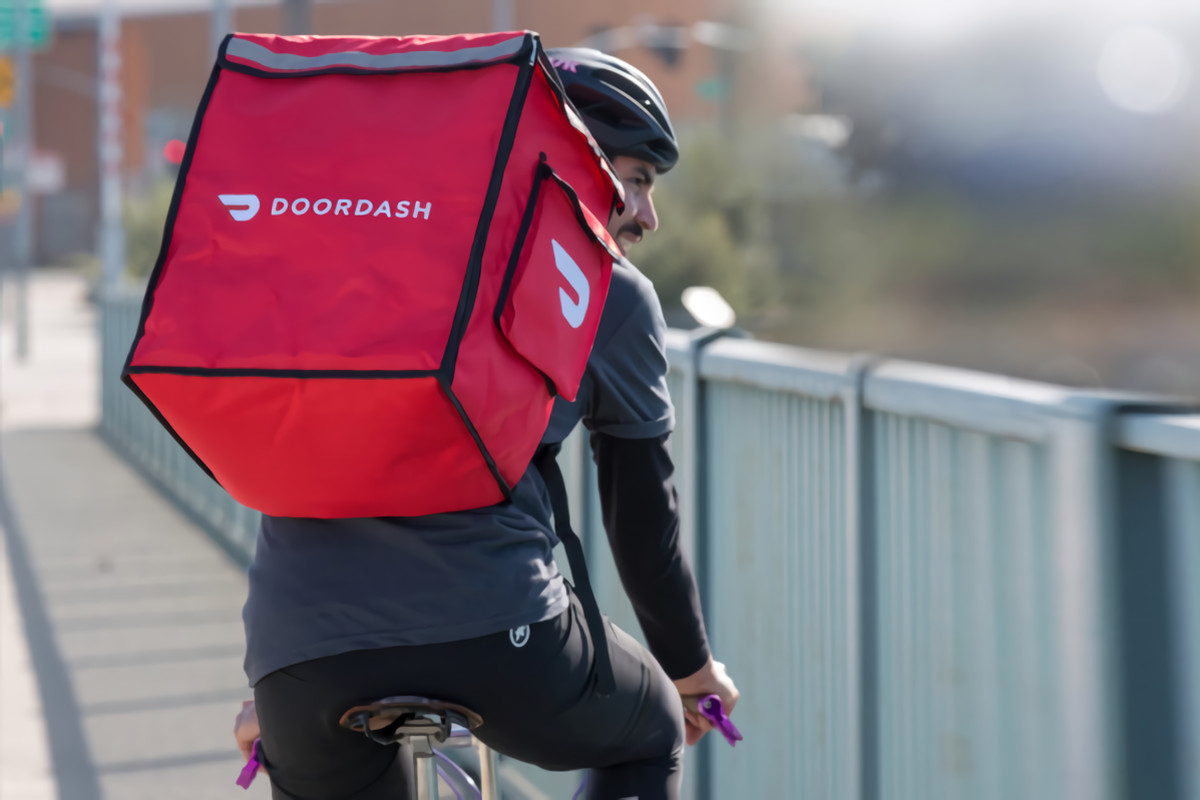
    In the world of grocery delivery services, competition is heating up as two major players, DoorDash and Uber Eats, expand their alliances with top Australian supermarkets. Woolworths, the country’s largest supermarket, has recently joined DoorDash’s delivery platform. This news was quickly followed by the announcement that Uber Eats has expanded its service with Coles and secured an exclusivity agreement.

    The Shift Towards Third-Party Delivery Services

    These developments come in the wake of the dissolution of Menulog, a food delivery brand that ended all its operations in Australia on November 26 after two decades of service. Despite this, Woolworths persists in providing deliveries via its own label, Milkrun, which currently serves over 500 suburbs in Australia’s largest cities, utilizing the brand’s Metro stores.

    Simon Rossi, DoorDash’s VP of Apac, happily welcomed Woolworths to the platform. He expressed that Woolworths’ impending arrival on their platform signifies their commitment to enhancing customer choice, convenience, and value.

    Expansion of Uber Eats and Coles Partnership

    Coles, previously partnered with DoorDash, announced its plans to enhance its product range on Uber Eats by 50%, offering up to 17,000 products. The companies revealed their intention to enter an exclusive partnership by December 26.

    Lucas Groeneveld, Uber Eats’ regional GM of retail across Apac, noted that for many Australians, having their Coles shopping delivered through the Uber Eats app has become an integral part of their daily lives.

    DoorDash Completes Australian Market Penetration

    For DoorDash, Woolworths represents the last of Australia’s top four brands to join its service. Coles, Aldi, and IGA are all current partners, though Coles plans to leave the service on December 26. In the meantime, Woolworths continues to deliver with Uber Eats.

    Amitabh Mall, Woolworths group MD, spoke on the importance of providing customers with fast, flexible options for their grocery needs. He affirmed that the partnership with DoorDash will enable them to leverage their extensive store network to reach more customers on platforms they use every day.

    Jonathan Torr, Coles’ executive GM of e-commerce, lauded the move as “another way of helping our customers get what they need, wherever they need it”.

    Questions & Answers

    Q: What is the significance of Woolworths joining DoorDash?
    A: Woolworths is Australia’s largest supermarket, and its addition to DoorDash’s platform signifies the company’s commitment to expanding customer choice, convenience, and value.

    Q: What changes are taking place in Coles’ partnership with Uber Eats?
    A: Coles is expanding its product range on Uber Eats by 50%, offering up to 17,000 products. The companies also plan to enter an exclusive partnership by December 26.

    Q: How is Woolworths responding to consumer demand for flexible grocery options?
    A: Woolworths continues to invest in a variety of on-demand options, including its own label, Milkrun, and partnerships with third-party delivery services like Uber Eats and DoorDash.
  • Alibaba Leverages Ai To Expand Cloud Business, Despite Falling Short Of Revenue Projections

    Alibaba Leverages Ai To Expand Cloud Business, Despite Falling Short Of Revenue Projections

    Alibaba, the Chinese multinational, has highlighted the significance of artificial intelligence (AI) in its plans to broaden its cloud computing business. This comes as the company experienced robust quarterly development in the sector, although its broader operations fell short of revenue projections.

    The Market Reaction

    Alibaba’s shares listed in the U.S. rose by 8% at the opening of the New York market on Friday after the results were announced.

    The revenue for Alibaba’s cloud division experienced a surge of 26% to a total of 33.40 billion yuan (equivalent to US$4.67 billion). This significant increase outpaced the anticipated rise of 18.4%. Yet, the weaker-than-expected progress in its e-commerce business overshadowed this achievement, with the total revenue falling short of estimates by 2%.

    Alibaba’s Position in AI

    Alibaba has emerged as one of the most competitive players in China’s AI sector, frequently introducing updates.

    In the past year, the company has invested over 100 billion yuan in AI infrastructure and product research and development, according to Group CEO, Eddie Wu.

    Wu stated that their investments in AI are beginning to bear fruit. He sees a clear trajectory for AI to power Alibaba’s robust growth in the future.

    Overall Performance and Revenue

    The overall revenue for the company for the quarter ending on June 30 was 247.65 billion yuan. This fell short of the average estimate of 252.92 billion yuan as calculated by LSEG.

    Alibaba reported its revenue from its China E-commerce Group for the first time, which includes platforms like Taobao and Tmall, its new instant commerce business, a food delivery app called Ele.me, and a travel agency called Fliggy. The group reported a revenue growth of 10%.

    On the other hand, Alibaba’s operational income saw a decrease of 3% year on year. The adjusted earnings before interest, tax and amortization dropped 14%, primarily due to investments in the instant commerce sector.

    Response from Rivals and Analysts

    The business rivals of Alibaba, PDD Holdings and Meituan, which are currently vying for market share in the instant retail space, issued warnings that rising investments could impact profits in the upcoming quarters.

    Analysts and executives from both companies have noted that competition has been escalating over the period.

    Analyst Angelo Zino from CFRA commented that while the shift towards quick commerce and AI investments had brought about meaningful operational changes, profitability was affected by growth initiatives such as user acquisition and technology infrastructure expenditure.

    Future Plans for Alibaba

    Alibaba plans to utilize its quick commerce business to broaden its overall e-commerce consumer base. The company aims to target a 30 trillion yuan addressable market. Jiang Fan, the CEO at Alibaba’s e-commerce business group, has projected that the quick commerce segment could contribute 1 trillion yuan in yearly incremental gross merchandise volume over the following three years.

    The revenue from international commerce saw a rise of 19%, propelled by expansion in crucial markets like Europe and the Middle East.

    Alibaba also announced its repurchase of shares in its logistics unit Cainiao from Fosun International. The transaction amounted to $349.8 million.

    Questions & Answers

    What is Alibaba’s recent investment in AI?
    Alibaba has invested over 100 billion yuan in AI infrastructure and product research and development in the past year.

    What is the expected contribution of the quick commerce segment to Alibaba’s revenues?
    The quick commerce segment is projected to contribute 1 trillion yuan in annualized incremental gross merchandise volume over the next three years.

    What was Alibaba’s recent significant transaction?
    Alibaba repurchased shares in its logistics unit Cainiao from Fosun International, amounting to $349.8 million.

  • Uber Eats leaving Hong Kong at the end of 2021

    Uber Eats leaving Hong Kong at the end of 2021

    Food delivery giant Uber Eats revealed on Tuesday it would wind down its Hong Kong operations by year’s end after seeing slower-than-expected growth.

    “Uber Eats has unfortunately not grown as expected in Hong Kong,” the company said in response to a Post inquiry. “This decision has been made independent of the global pandemic, and is in line with our broader strategy on Uber Eats.”

    One of the city’s three main food delivery platforms – along with Deliveroo and Foodpanda – Uber Eats launched in Hong Kong in October 2016 and has seen a sharp rise in orders throughout the coronavirus pandemic over the past two years.

    “After five years of partnering with restaurants and delivery people in Hong Kong, we have made the difficult decision to discontinue Uber Eats in Hong Kong on December 31, 2021,” the company said earlier in the day.

    Uber Eats said its priority was now to support its employees, restaurant partners, delivery people, and customers as it moved towards shutting down, but added it was “more committed than ever” to growing its ride-hailing services in the city.

    “We will keep investing and serve more riders and drivers in coming years by bringing the very best technology to Hong Kong,” the company, which operates in a legal grey area in the city, said.

    The spokesman said the company would continue providing support to customers and partners until the end of January.

    Uber Eats employs 5,000 delivery workers, some of whom signed up after losing their jobs amid the pandemic, and its service covers 16 of the city’s 18 districts.

    In July, Uber Eats launched a campaign in support of the small and medium-sized restaurants that use its platform, snagging celebrity endorsements from singers Alfred Hui and Joyce Cheng.

    In recent months, with almost no local transmission of the coronavirus, Hong Kong’s restaurant industry, along with other businesses such as hotels, have seen signs of recovery, and bookings are healthy for the year-end holiday season.

    Although social-distancing restrictions limiting the number of people permitted at venues such as bars and restaurants remain in place, about a third of the city’s 16,000 restaurants can now seat up to six per table, as long as diners have received at least one dose of a vaccine and use the government’s “Leave Home Safe” risk-exposure app.

    The latest data from SevenRooms, a booking platform used at more than 350 of Hong Kong’s high-end restaurants, showed people were dining out and spending more this year when compared with two years ago, before the pandemic hit.

    Earlier this month, Foodpanda couriers, upset with a cut to their delivery fees and other issues, went on strike for two days.

    The strike ended after the company agreed to make changes to its mobile app and fee calculation system as well as look into other demands

  • Zomato takes over Uber Eats in India

    Zomato takes over Uber Eats in India

    Local food-delivery app Zomato has purchased Uber Eats in India.

    “We are proud to have pioneered restaurant discovery and to have created a leading food-delivery business across more than 500 cities in India,” said Zomato CEO Deepinder Goyal. “This acquisition significantly strengthens our position in the category.”

    The purchase was made via an all-stock transaction, which awards Uber 9.99 percent ownership of Zomato.

    “India remains an exceptionally important market to Uber and we will continue to invest in growing our local Uber Rides business, which is already the clear category leader,” said Uber CEO Dara Khosrowshahi. “We have been very impressed by Zomato’s ability to grow rapidly in a capital-efficient manner and we wish them continued success.”

    Uber Eats in India has discontinued operations and is now directing restaurants, delivery partners, and users of the Uber Eats apps to the Zomato platform.

  • Subway strikes delivery deal with Uber Eats In New Zealand

    Subway strikes delivery deal with Uber Eats In New Zealand

    Subway has struck a deal with Uber Eats to offer delivery from more than 100 restaurants in select New Zealand cities. Chris Churchmichael, country director for Subway New Zealand, said the agreement would allow Subway restaurants to tap into the rapidly growing delivery market in New Zealand, at breakfast, lunch, dinner and anytime in between.

    “We know Kiwis want freshly-made and nutritious delivery choices, however, having their favorite Subway foot long meal delivered hasn’t been an option until now,” Churchmichael said.

    Church Michael said all the Subway favorites like meatball and pork riblet will be available for delivery along with fresh new choices like spicy buffalo chicken with blue cheese dressing and smashed falafel with tsatziki.

    “Searches for ‘nutritious’ options in the app are increasing and Subway is the perfect partner to help us respond to this demand and provide a greater selection of delicious meals to eaters whether they are at work, home or even the park,” said Andy Bowie, Uber Eats country manager for New Zealand.

    Subway recently unveiled a brand refresh to modernize its offerings and a new website that highlights key supplier stories and educates customers about the chain’s fresh ingredients.

    According to Subway, its new “Real Fresh” website aims to give guests a look behind the scenes at some local growers and suppliers who support the business from all over New Zealand.

    Ben Miles, senior manager for brand marketing at Subway, said the sandwich chain is a strong supporter of Kiwi produce. Some of their supply partners include local business Yarrows, which has supplied Subway New Zealand with their dough for more than 20 years and NZ brand Tegel, which has partnered with Subway since the brand opened its first restaurant in the country in 1995 and now supplies restaurants with a range of chicken and turkey products.

    “We estimate we’re one of the largest national purchasers of fresh produce in New Zealand and we’re committed to supporting farmers, growers and producers around the nation,” Miles said.

    “We wanted to shine a light on the incredible work they do, bringing the fresh factor to our restaurants multiple times a week.”

    Miles said many of the company’s customers are unaware that their fresh vegetables are sliced and prepared in-restaurant before serving, so this information is also shared on the site.

    “We also know it’s important to our guests that each ingredient in their sub is of the highest quality – for both freshness and taste,” he said. “We’ve been making considerable changes to our menu and we’re committed to ensuring as many of our ingredients as possible are locally sourced.”

    The Real Fresh website was recently awarded a Gold Ava Digital Award, an international competition reorganizing excellence in website design and creative.