Tag: ebay

  • eBay sales struggle to emulate Amazon’s growth

    eBay sales struggle to emulate Amazon’s growth

    At first glance, eBay’s final quarter numbers look relatively subdued – with growth across every line sequentially worse than the prior quarter.

    However, digging beneath the headlines reveals a slightly better picture, if only because the strength of the dollar has deflated sales. On a currency neutral basis, gross merchandise volume increased by 5 per cent, and net revenue jumped by 6 per cent. While these numbers are not ultimately reflected in the accounts, they show that eBay’s underlying performance is not quite as bad as it first seems.

    All that noted, when put into a wider context the gains remain fairly unspectacular. Indeed, eBay’s growth remains well below that of total eCommerce sales growth across the markets it serves. As well as losing market share, its performance is also anemic when contrasted to that of online peers such as Amazon – which had a stellar holiday season. This is especially so in the sale of physical products from the marketplace (which excludes the more buoyant StubHub part of the business) where revenue rose by just 1.1 per cent over the prior year.

    As much as eBay did enough to meet market expectations, the results are disappointing in that they show the various improvements the company is making are not, as of yet, generating significant traction with consumers. This includes the use of more structured data to make listings easier to find and view, and an increase in the number of full-priced products available from the site.

    As sensible as these steps are, they are really about correcting deficiencies rather than putting eBay on an innovative footing.

    eBay needs to go much further in revamping the whole online experience in order to allow it to compete more effectively with rivals. This includes trying to create some stickiness around the brand and proposition, in the way that Amazon has done by creating a whole ecosystem of products and services. Admittedly, this is a very tough ask, but it is the direction in which eBay needs to travel if it is to win back market share.

    In looking at ways to improve, eBay needs to focus its attention on younger shoppers, among whom brand perception and site usage have weakened. From Conlumino’s data, younger demographics – while active digital consumers – do not have the affinity with eBay that the generation before them did, or that older consumers do. In this regard, eBay has lost out to players like Etsy which these consumers believe to be more authentic, and more likely to offer innovative and interesting products.

    Looking ahead, there is no overly negative forecast for eBay: the company is addressing its issues and is making steady progress that will continue to aid results. However, it is one of the slower players in the fast-paced digital arena and to date there are very few visible signs it will move into the fast lane in its new fiscal year.

    -Neil Saunders

  • Cross-border eCommerce ‘set to skyrocket’ in China

    Cross-border eCommerce ‘set to skyrocket’ in China

    Cross-border eCommerce (CBEC) is set to skyrocket in China according to a new report from international think tank Fung Global Retail & Technology.

    To capitalise on this, international retailers need to complement their existing expansion strategy with online sales platforms, says Fung Global MD Deborah Weinswig.

    Cross-border eCommerce is the most efficient platform to reach increasingly affluent and sophisticated Chinese shoppers seeking products from overseas, says the report, The International Retailers’ Guide to Cross-Border E-Commerce in China.

    With Chinese authorities relaxing the rules, online purchases of overseas products are expected to increase to US$285 billion in value in 2018, up from US$136 billion last year.

    As well as authenticity being less of a concern, eCommerce purchases attract less taxes so are cheaper for consumers, writes Weinswig. As a result, it is projected that a quarter of the population will shop on foreign sites or through third parties in 2020, up from 15 per cent this year.

    “We expect CBEC will drive the next leg of eCommerce growth as Chinese eCommerce companies and international retailers launch globalised versions of their portals. By selling through CBEC, international retailers can reach Chinese shoppers regardless of whether or not they have a physical presence in China.”

    China is already the largest eCommerce market in the world, with the use of CBEC via such marketplaces as JD Worldwide and Tmall Global being attributed to the continuing rise of the upper middle class with its growing use of the internet and belief that international brands are of higher quality.

    Regulations formalised

    Most shoppers seek items related to wellbeing such as cosmetics and organic foods, expensive or hard to find domestically, says the report. Many foreign eCommerce companies have launched Chinese websites, and since late 2014 authorities have been formalising regulations including tax reforms and expediting customs clearances.

    Japanese companies in particular are targeting Chinese CBEC shoppers, using mobile apps such as Rakuten and China’s Wandou.

    Choosing the right platform is crucial, writes Weinswig. Options include…

    • Online marketplaces such as Alibaba’s Tmall Global, a third-party eCommerce platform that lets brands open a storefront. International distributors using this platform include Macy’s, Metro, Shiseido and Uniqlo.
    • Online direct sales such as Amazon.cn, Jumei Global Store, Kaola.com (for smaller brands) and Vipshop. Distributors buy from the retailers to resell to consumers.
    • Hybrid eCommerce platforms such as JD Worldwide that combine elements of an online marketplace and online direct sales. JD Worldwide partners include eBay, Lotte, Rakuten and Unilever.
    • Overseas shopping platforms.

    “To succeed in the Chinese market, international retailers are advised to have a strategic plan for CBEC that complements their China strategy,” writes Weinswig. “International retailers will need to decide which cross-border channels to sell on, driven by considerations of each platform’s targeted clientele and product category, costs, track record and suite of value-added services.”

    Fung Global Retail & Technology is based in Hong Kong, London and New York.

  • Lessons from eBay’s personalised marketing

    Lessons from eBay’s personalised marketing

    All retailers can take lessons from eBay’s personalised customer marketing campaigns.

    For the modern-day marketer, the concept of the right message to the right person at the right time may seem like an over-used cliche; a pipe-dream, considering the mountain of tasks and campaigns.

    As customers and channels expand, this challenge will only continue to grow unless one can invest (not just financially but intelligently) in marketing automation solutions that will support a customer experience that blends a parallel between business driven marketing (i.e. brand led) with customer driven marketing (i.e. customer led).

    Customer-driven marketing has continuously demonstrated higher engagement rates as recipients are receiving messages that are relevant to their own interactions. This strategy is not new though, with eBay being one of the best examples of a retailer’s excellent use of marketing automation with personalisation.

    For many years now, eBay (which most of us have probably used at some point) have run thousands of customer-driven campaigns every single day. These campaigns run automatically, with relevant content for each individual customer based on their individual interaction. eBay is one of my favorite examples of a personalised customer experience; the e-tailer curates information to your needs, such as serving you listings of a similar product, or sending you listings of items you’ve been watching for. What eBay has done perfectly is to focus on the key stages in its customer lifecycle that it needs to manage. At these specific customer touch-points, it makes sure the experience is as relevant for each customer as possible.

    In 2016, Software as a Service has evolved to make this personalised customer experience easily achievable through three key steps:

    1. Mine the machine: data is king and sits at the epicenter of marketing automation. Data collection is essential for marketers, but which data is the most relevant for your business? Begin by thinking of the customer experience you want to achieve, the criteria that is needed and then the data required to fulfill this criteria. If it doesn’t already exist, how can you get this data?
    2. Predict the potential: data without context is meaningless, but contextualising data must lead to a conclusion: in most cases, an understanding of the customer and how to drive success. What have you learnt from this data and how will these conclusions drive customer impactful actions? What can you anticipate from this data analysis and how can you manage your objectives based on this? The data analysis should also be clear on the stages in the customer lifecycle to focus on.
    3. Evolve the execution: having understood the data, the customer and the stages in the customer lifecycle to focus on, it’s time to act. Which campaigns should you send and how should you manage content? Can a 1-2-many message work or should it be 1-2-1? Furthermore, which are the most relevant channels for this execution? A personalised omni-channel customer experience can be utopian but which channels are your customers expecting engagement on?

    When implemented with marketing automation, engagement rates for relevant customer driven campaigns can be 10 times those of regular newsletters. By implementing these across the customer lifecycle, particularly at the most critical stages, marketers can ensure that they are providing customers with an experience that is most likely to drive conversions. Conversions are not necessarily purchases but may mean positive brand interactions.

    In a more recent case, Spotify not only created a weekly data-driven personalised playlist through its Discover Weekly, but ran automated campaigns based on customer affinity. So if you can’t get enough of Justin Bieber, and he releases a new remix of Sorry, you’ll be the first to know.

    The right message sent to the right person at the right time, but a time-consuming task that can only be achieved efficiently by leveraging marketing technology.

  • eBay Korea Partners With GS25 to Offer Online-Offline Services

    eBay Korea Partners With GS25 to Offer Online-Offline Services

    eBay Korea has joined forces with nationwide convenience store chain GS25 to offer consumers a combined online-offline sales service.

    The partnership will see the launch of the “Smile Box” service, in which deliveries are made to an unmanned box for single-person households and female customers. The service is available 24 hours a day, and customers will be able to receive their deliveries ordered online from Gmarket, Auction and G9 at their nearest GS25 store.

    The service will begin in August with a trial installation of Smile Boxes across 50 GS25 stores in Seoul, with the plan to gradually expand it nationwide. The boxes will be installed in areas with a high number of deliveries (determined through analysis of Gmarket and Auction delivery information) that have a large concentration of single-person households.

    This “customer-centric endeavour is the future for online and mobile shopping,” said an eBay Korea representative. “We hope to build an enhanced, more convenient shopping environment for our customers.”

  • China online payments tightened

    Service providers and their millions of users are affected by a significant regulatory change to China online payments announced by the Chinese Central Bank.

    From July 1, third-party online payment service providers must ensure that all user accounts bear the real name of the account holder. In addition, accounts will be categorised into three types based on security requirements, capped with maximum annual payments.

    The policy was created with an aim of preventing large deposits of money into third-party payment accounts unprotected from bank deposit insurance.

    China’s third-party mobile payments market reached RMB9.31 trillion (US$1.4 trillion) last year, up 57.3 per cent from 2014. Analysts expect the industry will continue to grow at a fast rate in the coming years, reaching RMB52.11 trillion by 2018.
    Mobile payments have become a useful tool for companies in their China market strategy. The two largest third-party online payment platforms in China are Alipay and WeChat.

    Dominant player

    Dominating with roughly half of the market, Alipay is a subsidiary of Alibaba Holding Group, serving Alibaba’s B2B eCommerce network similar to how PayPal works with Amazon and eBay. Alipay co-operates with Visa and around 65 banks, including the Bank of China, China Construction Bank, the Agricultural Bank of China, and the Industrial and Commercial Bank of China.

    As well as being the primary payment method for Alibaba.com and Taobao, it serves more than 500,000 external merchants, covering online retail, gaming, communications, air tickets, commercial services and utility bill payments.

    Its international version, Alipay Global processes payments in RMB and automatically converts them to the merchant’s currency of choice. It supports 12 currencies, with exchange rates decided by either the Bank of China or China Construction Bank. Alipay Global’s transaction fee is 2 to 3 per cent.

    Account procedure

    To set up a service account with Alipay China, a company must first register an account, providing company information for verification. Once approved, an application can be made and a QR code issued.

    Applicants must provide a business licence, ID card information and public bank account details. If the applicant is not the company’s legal representative, a power of attorney must be provided.

    WeChat Payment was launched by Tencent Holdings in 2013. It is different to Alipay in that it serves as both a payment platform and an instant messaging service. It also differs from Tencent’s TenPay, which is similar to Alipay. WeChat Pay can be used to pay in stores, on websites, WeChat shops and third-party apps, with its payment procedure easier and for both customer and company alike.

    Paying through WeChat has revolutionised how retailers and customers interact, with a huge number of customers depending on its social media and instant messenger service.

    To set up a service account, a company first needs to apply for an official WeChat account, specifying reasons for the application and supplying the category or type of company.

    Applicants need to supply the full name of the contact person, phone number and email address; the website address of the company (not necessary for non-IT companies); full company name; description of the product; customer service number; and company bank account information.

    For non-financial entities such as Alibaba and Tencent to provide third-party online and mobile payment services in China, a payment business licence must first be obtained. Regulations stipulate that the business scope, qualifications and contribution ratio of foreign-invested institutions applying for the licence will be decided by the People’s Bank of China and State Council separately.

    Pile of documents

    Meanwhile, Apple Pay has entered the China market, partnering with China UnionPay and nearly 20 Chinese banks. In its first two days, more than three million bank cards were linked to its service, which uses Near-Field Communication (NFC) contactless payments as opposed to QR codes, which are used by Alipay and WeChat Pay.

    Apple Pay, along with Edenred and Sodexo, is among the few foreign-invested companies with a Chinese payment business licence.

    Applicants for the licence must be companies established in the China and must submit a pile of documents to a local branch of the People’s Bank of China – a written application specifying the name, domicile, registered capital and organisational structure of the applicant business, payment business being sought, a copy of the company’s business licence, articles of association, verification certification, financial and accounting reports audited by an accounting firm, feasibility study report, acceptance materials on anti-laundering measures, certification on technical safety testing and authentication, resumes of senior management personnel, certification that the applicant and senior management personnel are free of criminal records, relevant materials of major capital contributors, and an authenticity statement regarding the application materials.

    Entry into China’s lucrative third-party online payments can unlock huge market potential, but the requirements are strict and the application process and approval is by no means easy.

    In comparison, the process for obtaining an online payment QR code is relatively straightforward, but the recent restrictions imposed on payment account types and security checks might change both the way third-party online payment platforms work as well as consumer behaviour.

    • From China Briefing, published by Dezan Shira & Associates. Dezan Shira is a specialist foreign direct investment practice providing corporate establishment, business advisory, tax advisory and compliance, accounting, payroll, due diligence and financial review services to multinationals investing in China, Hong Kong, India, Vietnam, Singapore and other ASEAN countries.
  • Gucci America follows Michael Kors out of IACC

    Gucci America follows Michael Kors out of IACC

    Gucci America has become the second brand to quit the International Anti-Counterfeiting Coalition(IACC) since the US-based group allowed Chinese eCommerce giant Alibaba to become a member last month.

    Describing Alibaba as “our most dangerous and damaging adversary”, Michael Kors left the IACC just after the Washington, DC group let Alibaba on board.

    Gucci, along with other Kering Group brands like Balenciaga, is suing Alibaba in New York, accusing it of knowingly encouraging and profiting from the sale of counterfeit goods on its eCommerce platforms. Alibaba has dismissed the suit as “wasteful litigation”.

    “The IACC stands by its decision and is committed to lean into the future and lead a coalition of the willing,” IACC president Robert Barchiesi says. “Whether it’s payment processors or online marketplaces, the choice is clear, they must be an integral part of the solution.”

    Alibaba’s membership is in a special category without voting rights, originally created when eBay asked to join the coalition, which it has not done as yet.

    Alibaba says its membership will allow it to work more closely and effectively with brands to enforce intellectual property rights.
    There are more than 250 members of the IACC including Apple, Chanel and Cisco Systems.

    Meanwhile, Alibaba Group boss Jack Ma has been confirmed as the IACC’s spring conference speaker.

  • How big brands can make online marketplaces work

    How big brands can make online marketplaces work

    Online marketplaces, those giant shopping sites like eBay and Amazon Marketplace, can be a mixed blessing for brands and merchants.

    Marketplaces offer retailers broad exposure to millions of consumers, as well as delivery, payment and other solutions. Still, most marketplaces leave merchants wanting in one very important aspect: brand control. While the platforms provide virtual shelf space for listing products, merchants are generally limited to one-size-fits-all templates for their online storefronts—thus restricting their ability to set themselves apart from rivals with brand-building presentations and content.

    Not all marketplaces are created equal, however. In China, where marketplaces are overwhelmingly favored by online shoppers, e-commerce leader Alibaba Group has been returning branding power to merchants through the company’s Tmall.com B2C marketplace.

    Tmall, which positions itself as China’s top online destination for domestic and foreign branded merchandise, has developed a suite of tools that allows merchants to customize their Tmall.com storefronts with the logos, fonts and colors for which they’re known the world over, as well as with videos, interactive features and other content. Moreover, merchants can combine these tools with Alibaba’s trove of data on shopping behavior to tailor their storefronts to individual consumers visiting their e-shops at any given moment.

    This approach gives merchants far more than a place on the internet to list and sell products. It offers them the ability to present their brands as effectively as they do on their company-run websites, boosting their opportunity to reach consumers among Alibaba’s 400-million-plus active buyers and build lasting customer relationships. Merchants “have total control,” said Paul Fu, the San Mateo, California-based head of Alibaba’s User Experience Design team.

    This is a significant departure from the “one webpage to serve them all” marketplace model. Tmall offers as many as 55,000 different storefront templates across about 30 different business sectors for merchants to choose from. Another 3,000 templates exist for product pages, and there are a thousand designs for marketing material such as e-mails and SMS alerts, according to Fu. If these packaged solutions don’t satisfy certain merchants, they can design their own right down to the page breaks and <p> tags, and then upload the code to Tmall.

    Major international brands have used this enhanced flexibility to build unique and engaging Tmall storefronts. For example, GoPro, the U.S.-based maker of wearable video cameras, produced a series of videos that appear on its storefront showing GoPro cameras being used in extreme situations, such as geologists staring into the mouth of a volcano or snowboarders doing double backflips as they race down a mountain.

    The Tmall storefronts of other household names such as Starbucks, L’Oreal, Maserati and Zara also offer fully branded experiences that experiences that mirror the look and feel of their corporate e-commerce sites, including multipage navigation according to product category and even full brand histories. Still others take the experience a step further in an attempt to boost the time consumers spend on their pages. Case in point: L’Oreal in the past has given consumers easy-to-follow guides and tips for using its beauty products.

    L’Oreal engaged consumers with hair-coloring tips posted on the company’s Tmall storefront.

    Fu says that Tmall storefronts are based on so-called “responsive” design, which means they look as good on mobile devices as they do on the web. But customization options for Tmall storefronts go even deeper.

    Using consumer data collected by Tmall, merchants can present not just personalized product recommendations based on shopping history to storefront visitors, they can also offer different homepages tailored to particular types of shoppers. For example, German personal-care brand Nivea displays three different storefronts on Tmall depending on whether a shopper is a first-time visitor, new buyer or loyal fan. First-time visitors are shown low-cost products that may tempt them to experiment with the brand. Fans, meanwhile, see sets of higher-value products bundled together as a way to boost their total purchase.

    Three different customers, three different mobile presentations. First-time visitors, new buyers and loyal fans all see products tailored specifically to them when they visit Nivea’s Tmall site.

    By making it possible for merchants to tag and manage their customers by attributes and personalize storefronts for each visitor, individual customers are exposed to highly relevant content, which drives higher conversion rates. Fu said after Nivea implemented personalized storefronts, “the data showed that the browsing conversion rate was improved by 70 percent and transactions increased by 150 percent—more than double the previous number of purchases,” he said. Browsing conversion is the rate at which shoppers click through to find out more about a product.

    Fu says Alibaba analyzes buyers based on five different behaviors: attention, interest, decision, action and sharing, all of which are part of the Tmall shopping cycle. A certain product may draw the attention of a shopper, which prompts him or her to click through to the seller’s store where they can learn more about the item. Then they decide whether or not to bookmark it or add it to their shopping cart; a purchase constitutes action. Sharing comes after, once a consumer tells a friend about their purchase or leaves a review on a merchant’s Tmall store.

    “We provide this capability for the seller to do these kinds of very sophisticated analyses,” Fu said. “Later, because we opened up this technology and data [to merchants], the seller can come up with their own model to do the analysis.”

    Still more tools are to come. Merchants currently log into a content-management system of sorts that lets them set up and manage their storefronts, including text, photos and slide show placement. They can also choose the products they want displayed as recommendations when a shopper is viewing, say, hand cream or razors or a sweater. Up next is a tool that will allow merchants to create banner advertisements on the fly, rather than turning to a designer to handle what is often a time-consuming task. That’s expected this quarter.

    Tmall also helps merchants synch their online stores with their bricks-and-mortar outlets. Fu said the goal is to make sure all points of sale are linked up, including mobile, desktop and offline. One key advantage for merchants to this so-called “omnichannel” approach is the ability to manage inventory across physical and virtual sales channels. Another is the ability to know a buyer’s location so that the nearest warehouse is used for shipping, which speeds up delivery.

    “All areas of the ecosystem are working together for merchants,” Fu said. “Before they had to figure this out on their own. But now we’ve come up with a system, and built the right tools to help them.”

    * Originally published by Alizila.com – the independent, but Alibaba Group-funded website of news about the Chinese eCommerce giant.

  • US e-commerce giant eBay plans to open office in Indonesia

    US e-commerce giant eBay plans to open office in Indonesia

    According to information on eBay’s Linkedin link, the head will also be representative and spokesperson for the company.

    eBay already has an existing joint venture company named PT MetraPlasa with a unit of state-owned telecommunication operator PT Telekomunikasi Indonesia Tbk (Telkom). In 2012, eBay and Telkom partnered to increase e-commerce business in Indonesia through Plasa.com, now known as Blanja.com.

    One of the primary objectives of eBay’s new head will be to find local products that can be sold in the global market and to support Indonesian retail exporters.

    Telkom expects the partnership with eBay will enable small and medium enterprises (SME) in Indonesia to tap the global market.

    Blanja.com, a trading site that is in the same space as the likes of Tokopedia, Lazada, Blibli, has more than one million products listed of which 90 per cent would be locally made and sourced.

    This site operates several categories: fashion & accessories, health & beauty, gadgets, toys, home, computer, movies, music, automotive, photography, sports equipment, travel and food.

    The US-based eBay, set up in 1995, currently has branches in more than 30 countries. The site implements consumer to consumer (C2C) and business to consumer (B2C) trade. It can be accessed freely by buyers. However, the seller should pay to put their products on eBay.

    EBay’s move comes at a time when the Indonesian government is planning to launch a roadmap for e-commerce business in February to boost foreign direct investment.

    The government is warming up to the idea of allowing foreign ownership of up to 100 per cent for marketplace platforms with assets of over Rp10 billion.

    At present, Indonesia does not allow foreign ownership in local (business to customer (B2C) retail e-commerce companies, but this restriction does not apply to online marketplaces that mediate between buyers and sellers (C2C).

  • Where eBay Is Delving into Groceries

    Where eBay Is Delving into Groceries

    eBay is getting into groceries – in Korea, that is. It will offer perishables such as vegetables, meat and dairy through Korea’s Gmarket and IAC platforms.

    The Partnership Program Director for eBay Korea Ju Cheol Lee said, “We’ve aligned with a top Korean retail brand and put the final touches to the platform, giving our customers an easy and efficient experience when buying these goods on eBay.”

    According to the company announcement, “Korean shoppers, particularly single households and double-income families, are increasingly looking to buy small bundles of fresh produce online and have it delivered the same day. With this in mind, eBay Korea has partnered with Homeplus, one of the largest retail chains in Korea with more than 100 branches, to create a new offering called Homeplus Pavilion.”

    eBay said the partnership signals a shift to meet evolving consumer demands and a tie-in with a successful and established offline retail brand.

    “The new arrangement will mean more than 30,000 items can be ordered from Gmarket-IAC and supplied to homes the same day via Homeplus’ logistics system and arsenal of cold storage trucks. The service currently encompasses 88 stores nationwide but will expand over time.”

    In the US, marketplaces are trying to get into the groceries business – Amazon Fresh, in the case of Amazon, is competing with other services including those from grocery store chains. Amazon is also working to expand delivery of meals from local restaurants.

    But would US consumers ever consider purchasing perishable food like meat and dairy via eBay?

  • Qoo10 parent raises $82m

    Qoo10 parent raises $82m

    Singapore-based Giosis, the parent company of Pan-Asian eCommerce platform Qoo10, has raised US$82.1 million in new funding led by Singapore Press Holdings.

    Other investors in the mix included eBay, Saban Capital Group, UVM 2 Venture Investments LP, Brookside Capital and Oak Investment Partners.

    Qoo10 operates six online eCommerce marketplaces across Asia – in Singapore, Japan, Indonesia, Malaysia, Hong Kong and China. Qoo10 has 17.6 million registered users across the region and combined, turned over US$408 million in 2014. Of the six markets in which the company operates, Qoo10 Singapore is the best performer with 1.8 million registered users as of June 2015 and US$182 million in gross merchandise volume in 2014.

    “Through this Series A investment, Giosis will deploy the new funds to accelerate Qoo10’s technology growth and service development, while investing in additional infrastructure and talent acquisition,” the company said in a statement.

    “The new funds will also help Qoo10 strengthen its position as a leading Pan-Asian platform in its key markets Singapore, Japan and Indonesia, and accelerate its expansion in its other rapidly growing Asian markets Malaysia, Hong Kong and China.”

    As the lead investor in this Series A round, SPH will also partner with Qoo10 to explore strategic collaborations on the e-commerce platform across various content, marketplaces, retail, advertising and classifieds opportunities.

    Alan Chan, SPH CEO, said Qoo10 is the number one ranked eCommerce website in Singapore and its parent company Giosis has established itself as a market leader in the region’s e-commerce space.

    “The investment in Qoo10 will enhance our portfolio of digital assets and open up opportunities for future marketing collaborations. With the region’s eCommerce market poised to grow, this investment puts us in a good position to tap on the industry’s growth and be an active player in this space.”

    A joint venture between Gmarket Inc founder Ku Young Bae and eBay, Qoo10 was founded in 2010 with US$20 million seed capital, after Gmarket was acquired by eBay in 2009 for US$1.2 billion.

    Ku Young Bae, CEO of Qoo10, said: “From the beginning Qoo10 has strived to be a hyperlocal eCommerce platform which enables local merchants, big and small, to sell their products to a local and regional customer base across Asia.  Today, 90 per cent of our staff and merchants are local, in order to provide consumers with a seamless shopping experience in a specialised marketplace. With this new funding, we aim to further strengthen our position as the leading Pan-Asian marketplace.”

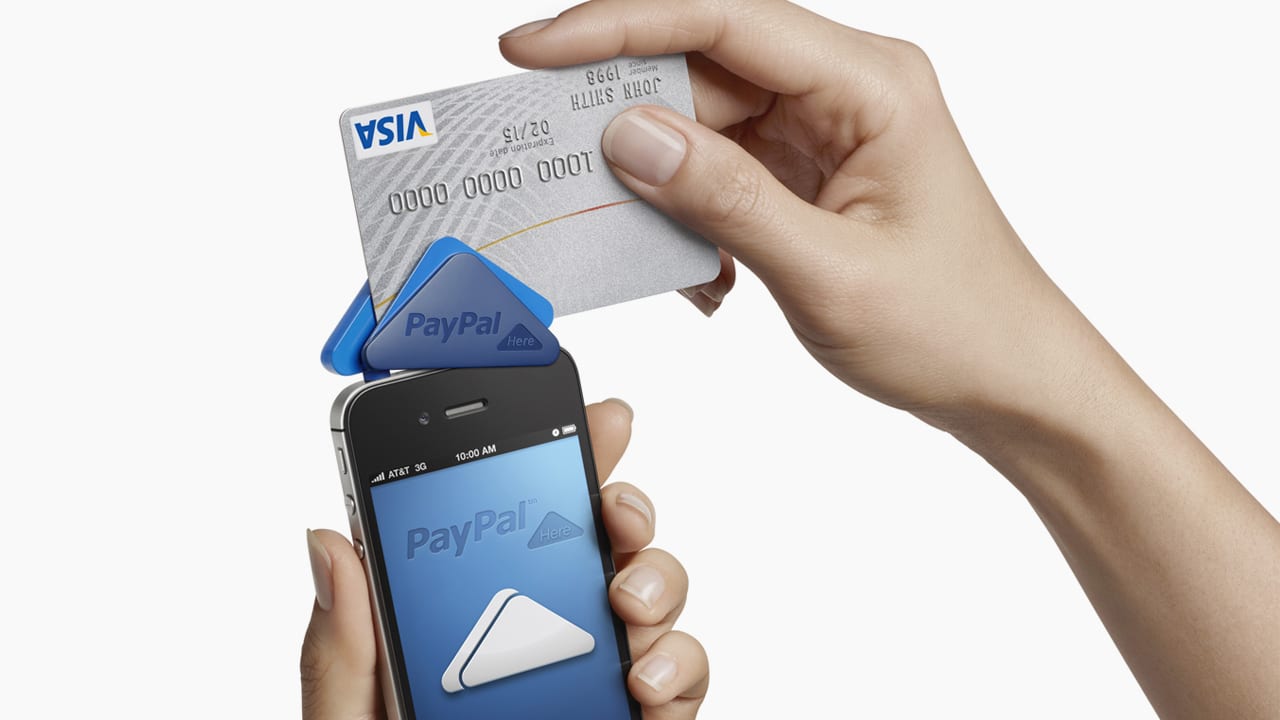
  • PayPal completes eBay split

    PayPal completes eBay split

    Having finalised its split from eBay, PayPal is now an independent public company trading on the Nasdaq  as PYPL.

    Dan Schulman, president and CEO of PayPal, said the business would be focussing on enabling digital payments on a “technology agnostic platform that creates value for our consumers and merchants online, in apps, and increasingly in stores.”

    “As the world’s open, digital payments platform and most trusted and popular digital wallet, we are excited to celebrate our listing day and embark on our next chapter,” said Schulman.

    “Mobile technology is transforming payments, making it easier, safer and more affordable for people to move and manage their money than ever before. As an independent company, we see a tremendous opportunity for PayPal to expand our role as a champion for consumers and partner to merchants, and to help shape the industry as money becomes digital at an increasingly rapid pace.”

    PayPal previously was listed on the Nasdaq under the same ticker symbol, PYPL, before it was acquired by eBay in 2002 for $1.5 billion. “We’d like to thank our friends at eBay for their tremendous support and partnership over the past 12-plus years,” said Schulman.

    In 2014, PayPal processed $235 billion in total payment volume and generated more than $8 billion in revenues. Also last year, PayPal processed $46 billion in mobile payment volume. The company serves more than 169 million active customer accounts in 203 markets around the world.

  • Thailand heads eBay in SE Asia

    Thailand heads eBay in SE Asia

    Thailand has maintained in its position as eBay’s largest market in Southeast Asia thanks to the appreciation of the US dollar and the variety of Thai products, says the world’s largest e-marketplace.

    The California-based e-commerce operator is gearing up to encourage Thai small and medium-sized exporters to use its marketplace to expand export opportunities, said Ekachai Rukachantarakul, head of eBay Marketing (Thailand).

    The company is facing stiff competition from global e-commerce players such as China’s Alibaba.

    Mr Ekachai said Thailand was eBay’s largest online retailer in Southeast Asia in terms of sellers and trade value. It established a presence in Thailand in 2009.

    An internal report revealed that online shopping makes up just 1% of retail sales in Southeast Asia compared with 8% in China and more than 10% in the US and Britain.

    In addition, e-commerce in the Asean region accounts for less than 1% of the global market.

    However, Mr Ekachai said eBay expected Asean’s e-commerce to grow by 25% in the coming years, up from average growth of 15% in the past four years.

    A report by digital marketing research firm eMarketer estimated that the global business-to-consumer e-commerce market could increase from an expected US$1.7 trillion in 2015 to $2.3 trillion by 2018.

    Most of eBay’s 157 million active buyers are in the US, Australia, Britain and Germany.

    “Thailand also has the 10 best sellers or retail exporters with revenue of more than $1 million per year, the highest in the region,” Mr Ekachai said.

    The best-selling products from Thailand are jewellery and gemstones, auto parts, clothes and shoes.

    Mr Ekachai said eBay would join forces with successful retailers to encourage other companies to use its marketplace.

    “We found 13% of Thai retailers joining eBay’s marketplace could generate sales revenue of $10,000 a year,” he said.

    Globally, eBay.com has 25 million sellers. In the first quarter of 2015, its revenue reached $2.1 billion. Its gross merchandise value was $20 billion. It earns commission from transactions.

  • Singaporean retailers thrive on on-line market

    Singaporean retailers thrive on on-line market

    A research by eBay exhibits that Singapore’s tech savvy retail exporters, who use the corporate’s on-line market place, promote to a mean 41 worldwide markets.

    eBay defines retail exporters as these sellers on its website who garner US$10,000 in gross sales to international clients (that’s consumers outdoors of Singapore).

    In accordance with an eBay spokesman, Singaporean retail exporters have been experiencing strong progress on the again of a revitalised US greenback. In South-east Asia, Singapore is ranked second when it comes to attain behind Thailand. Apparently, Singapore’s rating is 5 locations greater than US retail exporters.

    Jason Lee, director, eBay South-east Asia, famous that the US is the highest commerce hall for Singaporean retail exporters.

  • Magento companions with Razorfish in Higher China

    Magento companions with Razorfish in Higher China

    Magento, an e-commerce platform owned by eBay’s Enterprise division, on Thursday stated it has partnered with Razorfish in Larger China to function a gateway for retailer progress within the booming Asia-Pacific market.

    As a part of the brand new partnership, Magento will present Razorfish in Higher China with market improvement instruments and assets to construct Magento Enterprise Version storefronts for retailers in search of to swiftly seize shopper gross sales and capitalize on the huge market alternative.

    Magento offers e-commerce software program and platform options worldwide. It provides merchandise comparable to Enterprise Version, Group Version in addition to e-commerce answer for small companies. Magento’s Enterprise Version is an e-commerce answer for giant companies which helps retailers to drive extra visitors to their shops, convert browsers into consumers, and increase on-line income.

    “Social commerce has quick grow to be the spine of brand name constructing in Higher China. China is now main the world in social commerce, ours is a area getting used as a check marketplace for main international manufacturers creating leading edge social commerce options,” stated Alex Misseri, SVP APAC, Head of Retail & Commerce, Razorfish. “Magento’s open structure, flexibility and modular strategy to customization provides the differentiated shopper experiences that manufacturers search for when establishing commerce operations in Higher China.”

    On-line purchasing in China is rising quicker than anybody initially anticipated. Forrester’s newest on-line retail forecast for China tasks that the nation’s on-line market (B2C and C2C) will move USD670 billion by 2018.

    Digital Dopamine, Razorfish’s 2015 International Digital Advertising Report, exhibits that ecommerce is an plain powerhouse in Larger China. The overwhelming majority of Chinese language shoppers would like to do all their buying on-line. Shopper choice to buy on-line in China is nearly double that of US counterparts. The research exhibits 82 % of Chinese language buyers want they might make all their purchases on-line, in comparison with simply 49 % of these within the US.

    Magento boasts the most important open commerce ecosystem of greater than four,300 Magento licensed professionals and 260 confirmed Answer Companions worldwide. Powering greater than 240,000 websites globally, it stays the preferred platform available on the market based on a 2015 international commerce share report by Hivemind. eBay Enterprise, together with Magento, was additionally acknowledged because the main ecommerce platform for the 2015 Web Retailer Prime 500

  • As PayPal split looms, eBay plans to think small

    As PayPal split looms, eBay plans to think small

    EBay plans to grow by thinking small as it prepares for life apart from PayPal.

    The company says it is focusing on expanding the number of small- to mid-size businesses and individuals who buy and sell items on its popular online marketplace. That comes as it attempts to address investor concerns about how eBay will fare later this year after it spins off its PayPal payments division, which has long been EBay’s fastest growing segment.

    EBay’s first-quarter earnings may have mitigated investors’ concern somewhat. The results beat expectations and revenue, excluding the impact of the stronger dollar, grew in both segments. A stronger dollar cuts into revenue generated overseas when it’s translated back into dollars.