Tag: ecg

  • Garmin brings the ECG app to more smartwatches

    Garmin brings the ECG app to more smartwatches

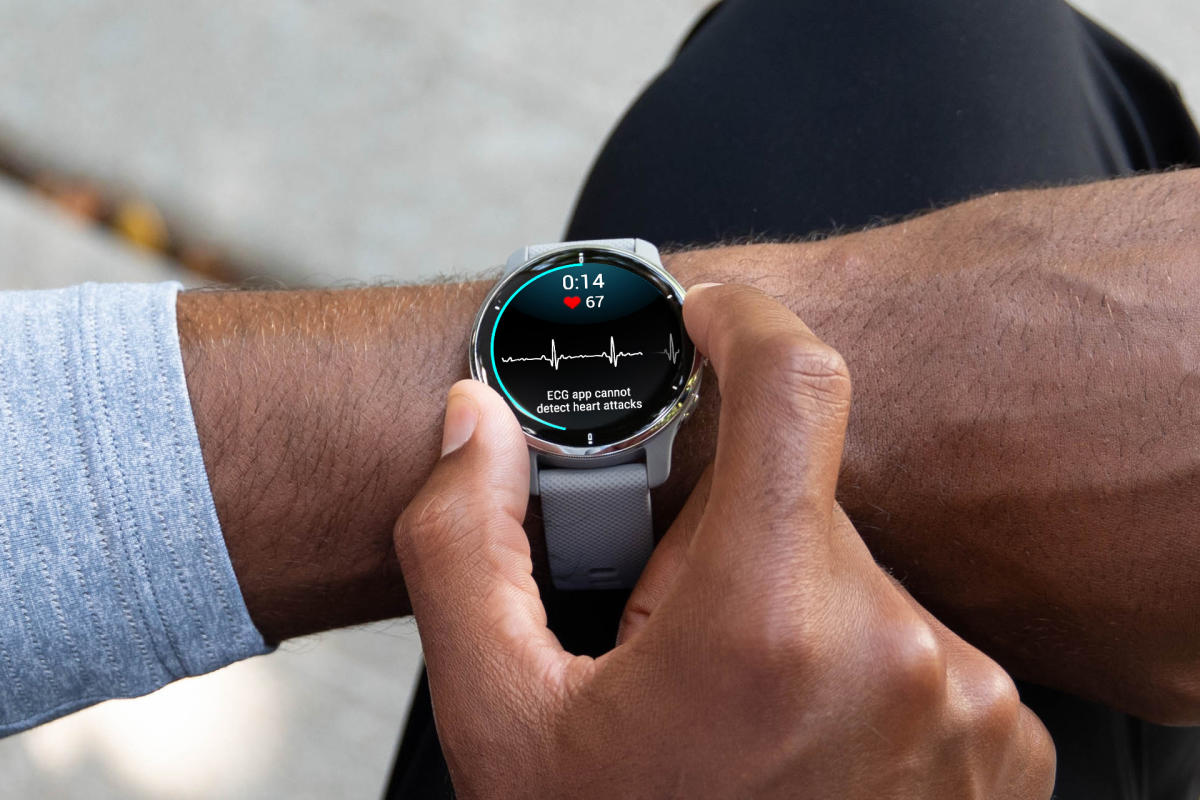
    Garmin’s smartwatches are pretty popular in the United States and Europe, so the multinational company is trying to keep them updated. One of the features that most of Garmin’s smartwatches have been lacking in comparison with the competition is ECG support.

    The ability to measure atrial fibrillation was only available on Garmin Venu 2 Plus, but that’s about to change. The company has just confirmed that the ECG app is coming to more Garmin smartwatches, so if you own any mode from the list below, look for an update that will bring this new feature.

    In a post on Twitter, Garmin revealed that the ECG app is now available for epix Pro, Venu 3, and Fenix 7 Pro smartwatches. Yes, there are a bunch of other Garmin smartwatches that have yet to get the app, but the company told Android Central that “it intends to continue to expand its portfolio of products supporting the ECG app and launch it in new regions in-line with necessary regulatory approval.

  • Apple Watch’s ECG became finally available in Europe

    Apple Watch’s ECG became finally available in Europe

    The Apple Watch is the world’s most popular line of smartwatches right now, holding about 50% of the global market. When Apple announced the Apple Watch Series 4 last year, there was one feature that stood above all. It wasn’t the larger display or the Digital Crown with tactile feedback.

    Instead, it was the addition of ECG (electrocardiogram) capabilities without any additional hardware needed (besides the Apple Watch itself, of course). The feature allows the user to quickly and easily take an ECG and then, if need be, send the results to their doctor. Even without having the results looked at by a specialist, the device’s own algorithms would alert the user if they notice something out of the ordinary. Since then, reports are showing up regularly about how the Apple Watch helped one person or another notice an issue with their heart that was later confirmed by a cardiologist. This allowed proper measures to be taken a lot sooner than if the patient had waited until the problems became obvious.

    Unfortunately, despite the Apple Watch being loved all around the world, the ECG functionality was limited only to the United States. Not anymore!

    Select European countries and Hong Kong are getting ECG

    Apple’s watchOS 5.2 is now available for all Apple Watch models and adds a couple of features for users in 19 European countries and Hong Kong. The more important one is ECG, which comes only to the Apple Watch Series 4. Here’s the full list of European countries that are getting the new feature:

    Austria, Belgium, Denmark, Finland, France, Germany, Greece, Hungary, Ireland, Italy, Luxembourg, Netherlands, Norway, Portugal, Romania, Spain, Sweden, Switzerland, the UK.

    Despite the ECG app and the Irregular Rhythm Notification (more on it below) being cleared for use in the European Economic Area, according to Apple, there are several countries that are part of the EEA and won’t be getting these features yet: Bulgaria, Croatia, Czech Republic, Estonia, Iceland, Latvia, Lithuania, Poland, Slovakia, Slovenia.

    The reason for that is unknown. It could be due to additional regulatory approval needed or, alternatively, those are just markets Apple isn’t as interested in right now.

    A more notable country that’s also missing from the expansion list, although not in Europe, is Canada. It was expected to be one of the first countries besides the US to get the ECG app, but it appears that Canadians will have to wait at least until the second wave of expansion.

    ECG on a smartwatch, how does that work?

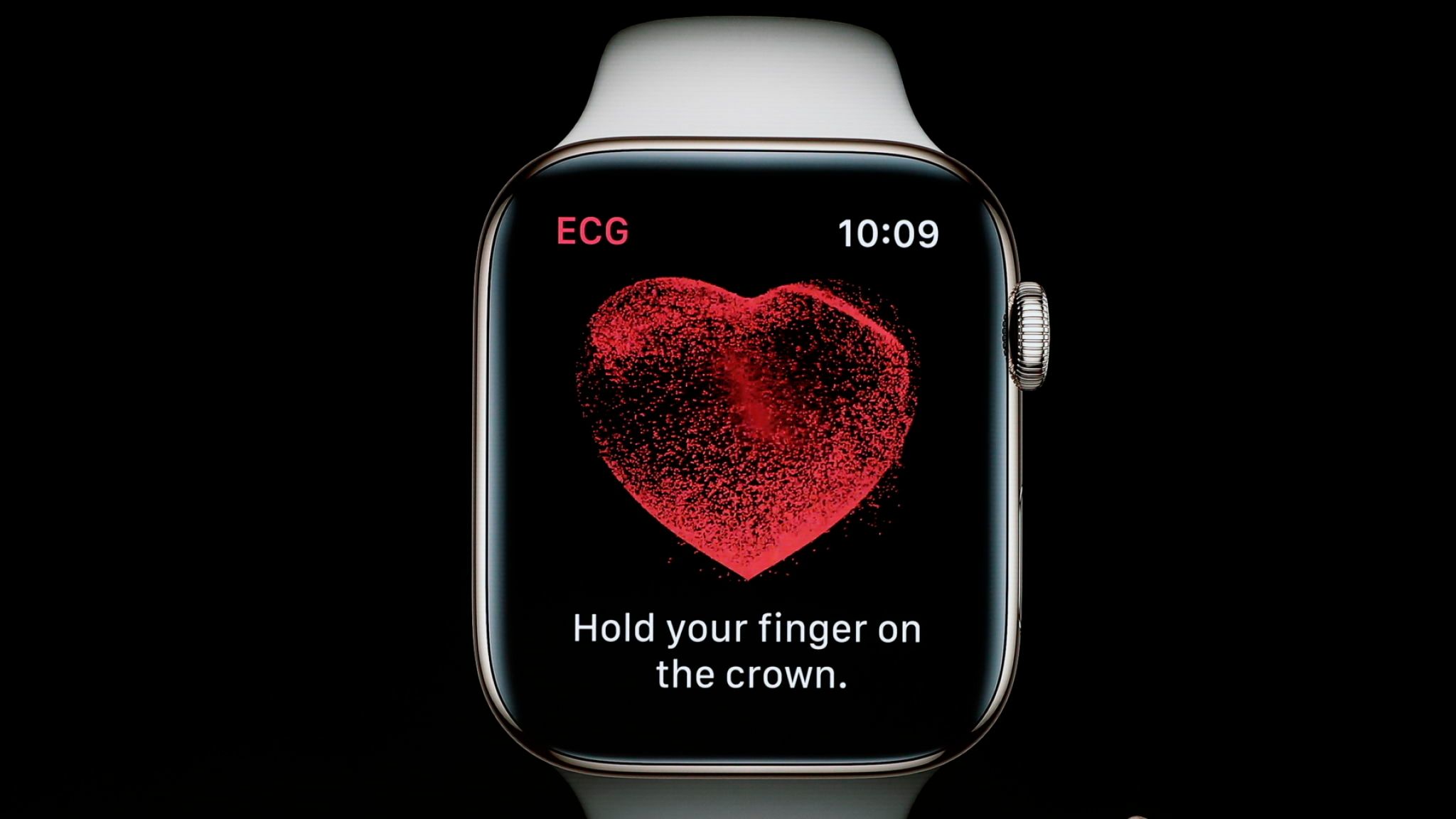
    For those of you that are just hearing about the Apple Watch’s ECG, here’s a quick rundown. Electrodes inside the Apple Watch Series 4 measure the electrical impulses your heart is releasing when beating. To do that, the user must touch the Digital Crown (the rotating bit on the side of the watch) in order to close the circuit, creating an effect similar to a single-lead electrocardiogram.
    After 30 seconds of measuring your rhythm, the ECG app will classify it as either AFib or sinus rhythm. If you get AFib as a result, you might want to get a consultation from your general practitioner or cardiologist. Of course, the results won’t be nearly as accurate as those taken by professional medical equipment, but the Apple Watch feature is far from a gimmick. Medical trials have shown that the wearable device is classifying the different heart rhythms with very high accuracy.
    The watchOS 5.2 update is also bringing a health-related feature to older Apple Watches as well. Called Irregular Rhythm Notification, this feature is coming to Apple Watch Series 1 and newer models. It checks the user’s heart rhythm on regular intervals using the optical sensors of the device and sends a notification if five irregular rhythms are detected over the span of at least 65 minutes.

    Sinus rhythm notification on the left (in Spanish) and an irregular heart rhythm warning on the right (in Italian

    To start using the new features, users have to enable them from the Health app on their iPhones. Obviously, the Apple Watch must be updated to watchOS 5.2, but to do that the iPhone itself must be updated to iOS 12.2.
  • Apple Watch saves lives says Studies

    Apple Watch saves lives says Studies

    A large study sponsored by Apple has revealed that the Apple Watch can detect an irregular heartbeat. 400,000 Apple Watch users were invited to take part in the study and the results were presented today in New Orleans at a meeting of the American College of Cardiology. 2,000 participants, or .5% of those wearing the smartwatch, received a notification about an irregular pulse. The 2,000 were sent a patch for their Apple Watch that included an electrocardiogram (ECG) sensor to help detect atrial fibrillation (AFib).

    AFib, which is an irregular heartbeat, can lead to strokes, blood clots, heart failure and other serious issues. AFib contributes to 130,000 deaths a year in the U.S. The Apple Watch series 4 already includes an ECG monitor right out of the box, but the study was completed before this new variant of the timepiece was released. Returning to the study, about 33% of the 2,000 study participants who were flagged with an irregular pulse were told that they had AFib, according to the ECG patch that they were sent.

    57% of the Apple Watch wearers in the study sought medical help when they received a warning about an irregular pulse. That number might surprise consumers since it means that 43% of Apple Watch wearers in the study ignored the warning. Dr. Mitesh Patel, an assistant professor of medicine at the Perelman School of Medicine, noted that while the Apple Watch is good at detecting warning signs of heart disease, the watch needs to be combined with something that will motivate users to act on these warnings. In other words, receiving a warning without following up on it could prove fatal to the user.

    When an Apple Watch wearer in the study received a notification of an irregular heart beat, the notification would ask the participant to schedule a telemedicine appointment with one of the doctors associated with the study. At that point, the ECG patch would be sent to those receiving the notification, and was used to record the rhythm of their heart for up to one week.

    Only 57% of study participants receiving a irregular pulse notification sought medical help

    The researchers behind the study said that Doctors need to be careful when using data from consumer devices when treating patients. On the other hand, a Boston cardiologist named Dr. Deepak Bhatt said that the study was very important because more people will be wearing wearable devices in the future.

    “Atrial fibrillation is just the beginning, as this study opens the door to further research into wearable technologies and how they might be used to prevent disease before it strikes.”-Lloyd Minor, dean, Stanford School of Medicine.

    “The performance and accuracy we observed in this study provides important information as we seek to understand the potential impact of wearable technology on the health system.”- Dr. Marco Perez, co-principal investigator and associate professor of cardiovascular medicine, Stanford Medicine

    Apple plans on making a big push into healthcare, and the Apple Watch is at the vanguard of this decision. While the series 4 model includes an ECG monitor along with the heart rate monitor that all Apple Watch models have, the company is working on a way for the Apple Watch to show a user’s blood glucose reading without a needle stick. This reading is used by diabetics to determine how much insulin they need to inject to bring their blood sugars down to a normal level. Currently, diabetics need to draw blood and place a drop of it on a test strip inserted into a glucometer to get a reading. This test is done several times a day.

    If Apple succeeds in producing a non-invasive blood glucose test for the Apple Watch, this alone could help Apple stay on top of the smartwatch market.