Tag: Echo

  • Facebook’s First transpacific subsea cable Echo and Bifrost

    Facebook’s First transpacific subsea cable Echo and Bifrost

    Advancing connectivity between the Asia-Pacific and North America regions, Facebook is set to build two new subsea cables — Echo and Bifrost — with leading regional and global partners.

    These subsea cables will connect Singapore, Indonesia, and North America, making it the first transpacific cables through a new diverse route crossing the Java Sea. Moreover, it will increase the overall transpacific capacity by 70 percent and deliver increased internet capacity as well as network redundancy and reliability.

    The demand for 4G, 5G, and broadband access is rapidly increasing within the Asia-Pacific region. Thus, Echo and Bifrost will support further growth by ensuring a widely accessible internet for people and businesses.

    According to Facebook Vice President of Network Investments, Kevin Salvadori, Echo is being built in partnership with Alphabet’s Google and Indonesian telecommunications’ company XL Axiata while Bifrost is being done in collaboration with Telin, a subsidiary of Indonesia’s Telkom, and Singaporean conglomerate Keppel. These two are set to be completed between 2023-2024.

    “These new projects add to our foundational regional investments in infrastructure and partnerships to improve connectivity to help close the digital divide and strengthen economies,” the American technology conglomerate declared on its statement.

    As of the moment, the two new ventures are still subject to regulatory approvals.

  • Qualcomm’s new line of chips will make smart speakers better than ever

    Qualcomm’s new line of chips will make smart speakers better than ever

    Qualcomm, manufacturer of the popular Snapdragon chips that power billions of devices, is now aiming to dominate another segment of smart products: speakers and displays with voice assistant support. To do that, the company announced today a new family of chips called the QCD400 Series Smart Audio SoCs. The new chips are designed specifically for the needs of smart speakers like the Google HomePod and Home mini, Amazon’s Echo lineup and others. That is why Qualcomm has focused on two main aspects: sound reproduction and voice recognition.

    The QCS400 line promises “truly superior audio performance” that should come not only from Qualcomm’s own technologies, but support for Dolby Atmos and DTS:X as well. The chips will be capable of supporting up to 32 audio channels.

    To make your communication with the voice assistant better, Qualcomm is once again putting AI to use. The AI should help with voice recognition so you can expect fewer misheard words and phrases in the future. The new chips should also allow the device to better separate voices from background noises or music and detect trigger words easier.

    Besides those main capabilities, Qualcomm is also looking to improve a couple more things that are also quite important.The first one is an improvement in power consumption which will come handy for portable Bluetooth speakers and other battery-powered devices. Devices with the new chips are expected to have a significantly longer standby time during which voice wakeup will be available.

    And finally, the new chips will ensure that your smart device is always well connected. Whether that is to the internet via Wi-Fi or to your phone through Bluetooth, Qualcomm has made improvements in any aspect of the smart speaker connectivity.

    The QCD400 chips are four in total, two of them are for audio only. The least powerful is the dual-core QCS 403, followed by a quad-core QCS404. The two chips that come with video capabilities have the Adreno 306 GPU and support HDMI. Only the highest tier chip, the QCS407 supports 32 channel audio, while the rest top up at 12 channels.

    If you’re a frequent user of smart speakers these new developments are good news for you. And if not, well, you’re probably concerned about the fact that soon these pesky always-listening devices will be able to hear you even better. Like them or not, it seems they’re here to stay!

  • Amazon’s first-gen Echo well priced for Launch

    Amazon’s first-gen Echo well priced for Launch

    Smart speakers have become a global phenomenon less than five years after the limited release of Amazon’s original Echo, with an estimated installed base of 66 million units in the US alone as of December 2018, and around 100 million devices in use worldwide, according to a slightly older market report. Naturally, there are now more options than ever for smart speaker buyers, ranging from the ultra-affordable Echo Dot and Google Home Mini to premium Echo Show models with screens.

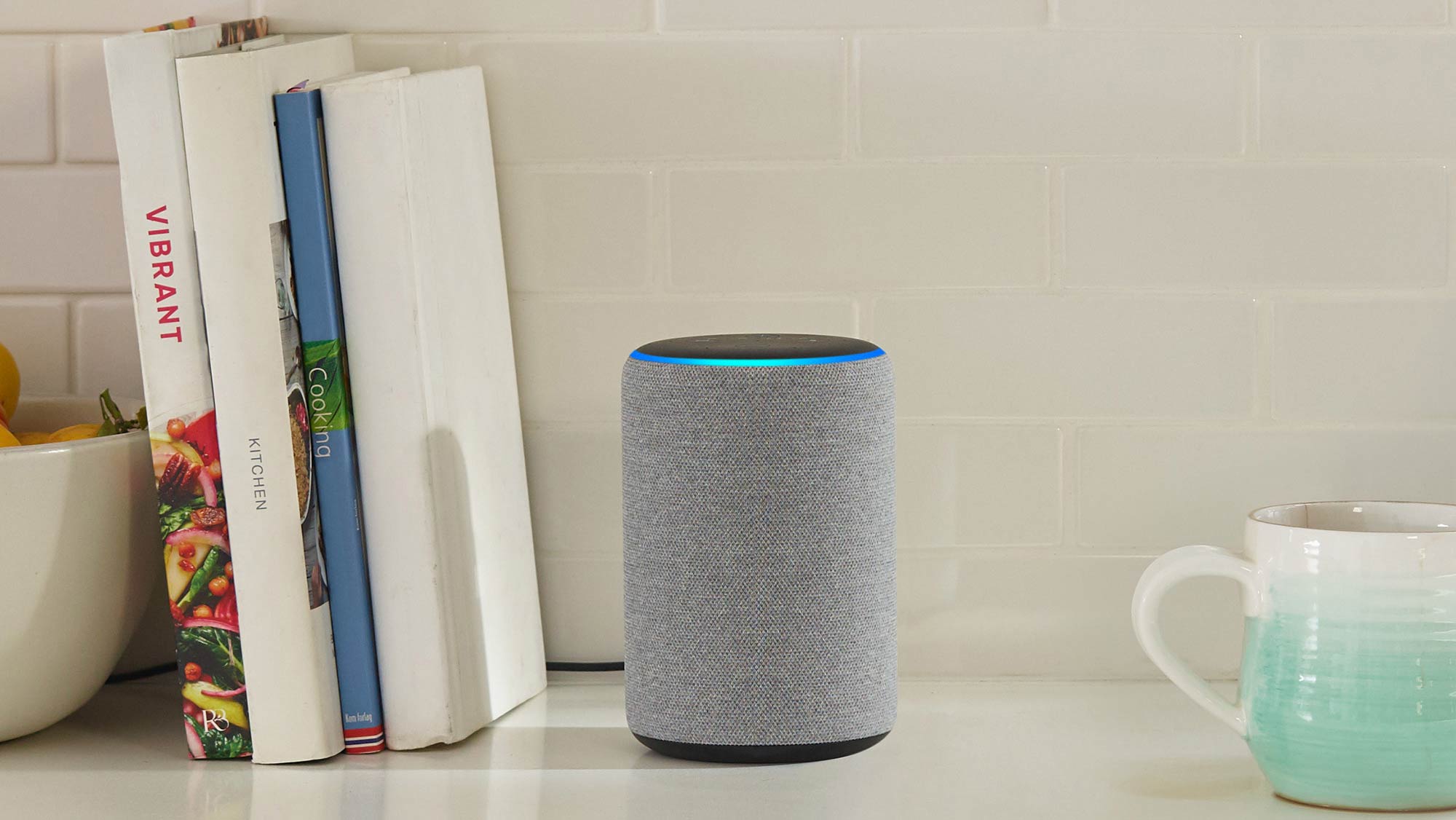
    But if you can find it, the first-generation Amazon Echo is still a pretty great choice, fetching a significantly lower price than back in the day. We’ve seen this tall and handsome cylinder cost as little as $30 in refurbished condition with a 90-day warranty included last month, and although the newest deal may not look quite as irresistible at first glance, it’s actually better in a way.

    That’s because AT&T appears to sell brand-new Echo units at $50 apiece right now, no doubt throwing in a standard one-year manufacturer warranty. That’s a whopping $129 off the smart speaker’s original list price, as well as $50 less than what the second-gen Echo usually fetches. It’s also pretty much on par with the typical price of a third-gen Echo Dot, which obviously packs significantly less power in a diminutive body.

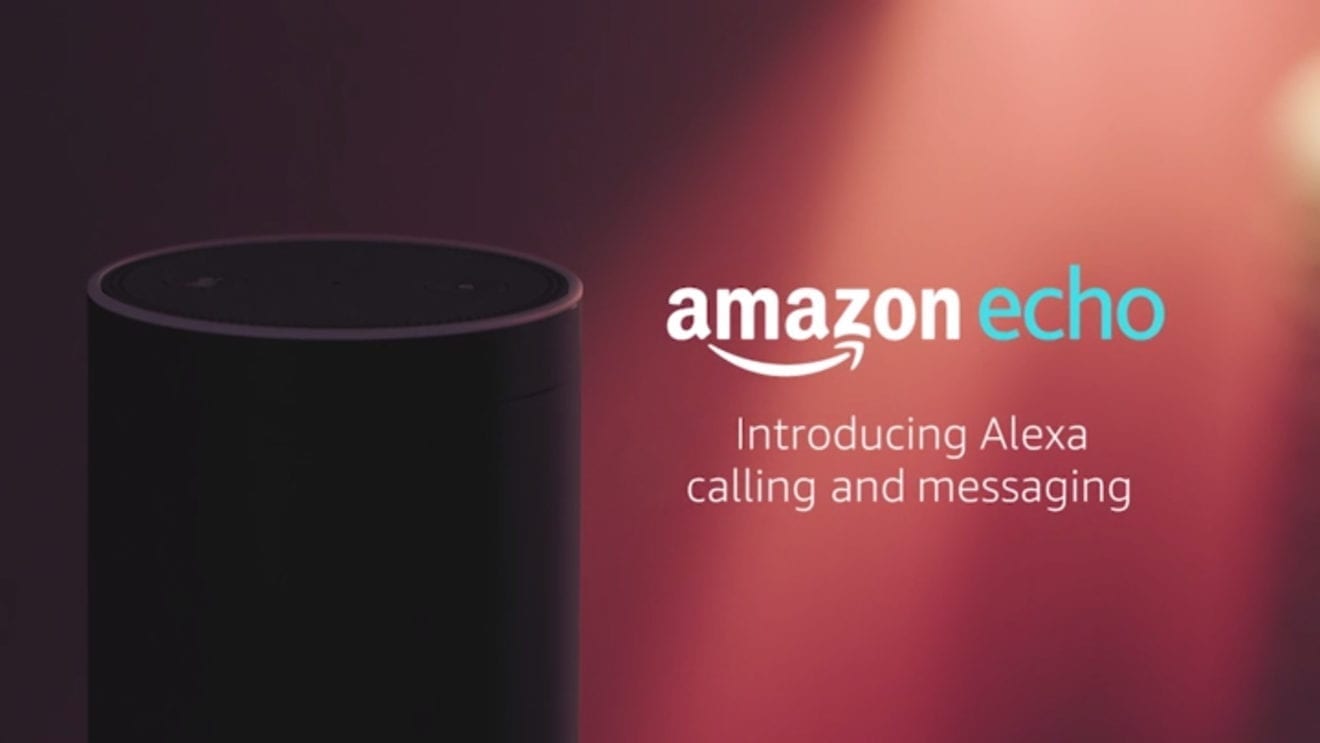
    Despite its advanced age, the OG “regular” Amazon Echo is largely capable of the same things as all the new Alexa-controlled smart speakers, including hands-free music streaming, smart home management (with compatible accessories), setting alarms, timers, and reminders, reading the news, answering the most diverse and complex questions, and even making voice calls, as well as sending and receiving messages. There are also loads of new Alexa skills added every day, all of which are supported on the full range of Echo devices.

  • Amazon Australia unveils new Echo product

    Amazon Australia unveils new Echo product

    A week after showcasing Alexa to over 10 thousand local industry members, Amazon has moved to further expand its voice capabilities in Australia, making its latest Echo product available for pre-order.

    Echo Spot differs to Amazon’s other Echo products in that it has a small screen, enabling the voice assistant to display corresponding graphics to its various functions.

    It comes as Amazon embarks on a national marketing push for Alexa in Australia, including outdoor and digital assets.

    Pre-orders begin on 26 April and will set customers back $199, more expensive than the $149 base echo product, but less expensive than the $229 Echo Plus.

    The Spot features many of the same features that Amazon’s other Echo products do, including access to the 15,000 local ‘skills’ (applications) available through Amazon and other third parties.

    “Echo Spot combines the popular small design of Echo Dot with the added benefit of a display, and the features you love about Alexa into a stylish and compact device,” said Sylvia Ding, Alexa Australia and New Zealand Country Manager. “See the weather, watch video news briefings, glance at your alarm clock, make video calls, and more—we think customers in Australia will find lots of places for Echo Spot in their homes.”

    Amazon is hoping that Alexa will be a cornerstone of its Australian ambitions, helping to complete the closed loop model that’s made it so successful in its other markets such as the United States.

    Yesterday in the states Amazon chief Jeff Bezos took the company’s next step towards increasing Amazon’s presence in American living rooms, inking a deal with Best Buy to retail Amazon’s range of smart TVs in stores.

  • Amazon posts largest profit in its history on sales

    Amazon posts largest profit in its history on sales

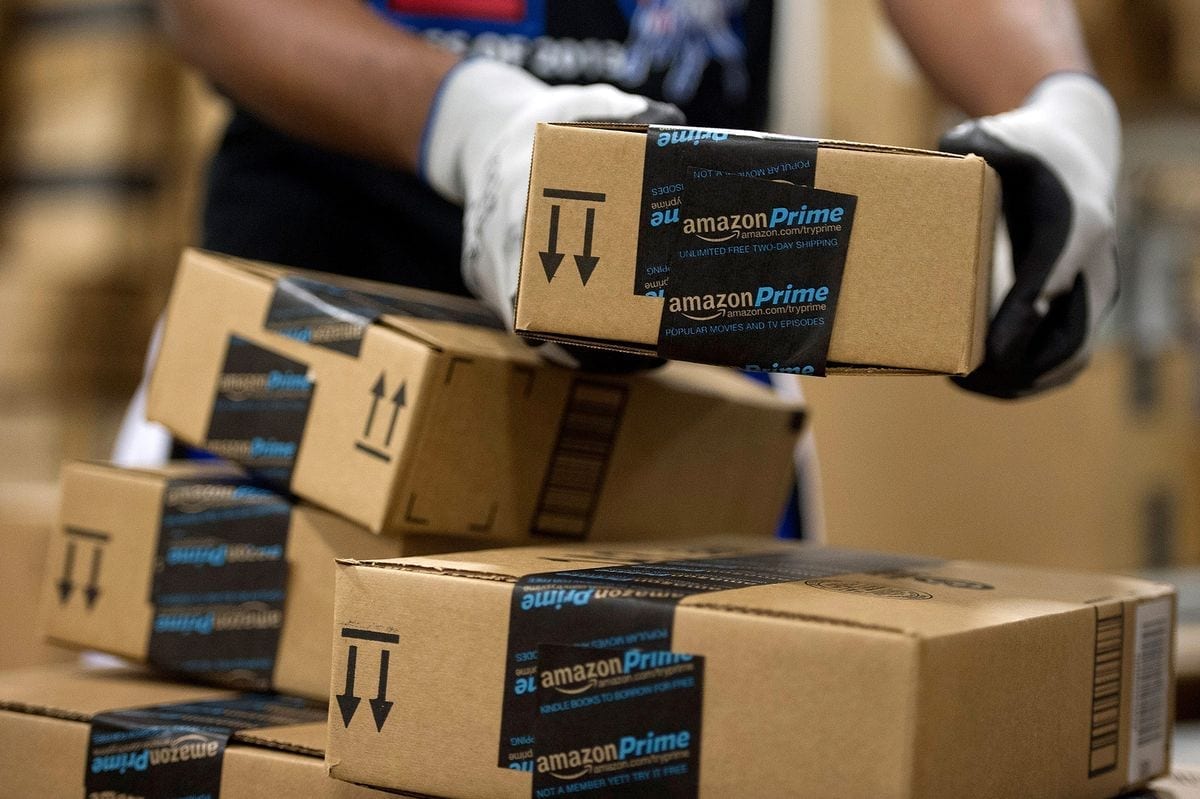
    Amazon’s quarterly profit reached a record US$1.86 billion in the three months to December 31, fuelled by millions of new customers to its Prime fast-shipping club.

    There was also a provisional $789 million boost to its bottom line from the US government’s tax bill which was passed in December.

    “This was another blow-out quarter for Amazon,” said GBH Insights analyst Daniel Ives. “The retail strength was eye-popping as the company had a banner holiday season and looked to capture roughly 50 per cent of all e-commerce holiday season sales.”

    “Our 2017 projections for Alexa were very optimistic, and we far exceeded them,” said founder and CEO Jeff Bezos.

    Neil Saunders, MD of GlobalData Retail, said that with 38.2 per cent sales growth in the final quarter, Amazon was one of the clear winners over the holiday season.

    “Admittedly this number is flattered by the inclusion of Whole Foods revenue, but even when this is stripped out, Amazon still increased sales by an impressive 27.9 per cent. Given this is above the trajectory of recent growth, it is safe to say that Amazon shows no signs of slowing down.”

    Saunders said the figures clearly show Amazon’s primary growth opportunities now lie in services.

    “Prime and subscription revenue, for example, increased by 46 per cent over the prior year. This is an impressive uplift and demonstrates Amazon is pulling more and more consumers into its ecosystem of content and services.”

    Allied with the increase in Prime membership is the rise in sales of Echo devices.

    “Our data show these were popular gifting and self-purchase items over the holiday period. Amazon now has a clear edge over other smart device manufacturers. This, and the fact Prime offers far more benefits and services than rivals, means Amazon should be able to withstand increasing competition from Apple, Google, and others as they launch and upgrade their smart speakers and connected home products

    Growth from services, as well as the addition of Whole Foods, is helping to strengthen Amazon’s bottom line. This quarter, net income increased by a stellar 147.8 per cent while operating profit rose by a very respectable 69.5 per cent.

    “This is in spite of increased investment and higher losses from the international operation. Notably, the better profit outcome also masks the pressure on margins from increased delivery and fulfillment costs: these rose by 56.9 per cent over the prior year and as a proportion of product sales rose to 21.7 per cent from 18.7 per cent in the same period last year.

    “Although Prime revenue offsets some of the fulfillment costs, this income is also used to fund content production, and various other benefits members enjoy. As such, we believe Prime makes only a small contribution to covering Amazon’s fulfillment costs. However, over the longer term, we believe this contribution may increase as Amazon starts to raise the price of membership.”

    Saunders said that while Amazon has grown sharply, it is still nowhere near its potential. “There are categories, like home and apparel, where it is underpenetrated and with tweaks to its proposition should be able to make further gains. There are markets around the world, like Australia, where Amazon is just getting started and has significant scope to boost sales. There are areas, like healthcare, that it is seeking to disrupt in the future. And there is Whole Foods, where some progress has been made – but which has yet to feel the full force of Amazon’s innovative approach.

    “In other words, Amazon has a lot more runway to grow.”