Tag: Eco

  • WiseTech Global Expands Horizons with Strategic Acquisition of E2open for Enhanced Supply Chain Solutions

    WiseTech Global Expands Horizons with Strategic Acquisition of E2open for Enhanced Supply Chain Solutions

    The tides of retail in Asia are shifting as brands become increasingly aware of the impact of sustainability on consumer behavior. With a growing number of shoppers favoring eco-friendly products, businesses are adapting their strategies to meet these new expectations.

    In recent years, the Asian retail landscape has seen a significant transformation. Consumers, especially Millennials and Gen Z, are now more inclined to choose products that boast sustainable packaging or ethical sourcing. As a result, brands across the region are rethinking their approaches to production, marketing, and even logistics. This isn’t just a passing trend; it’s a movement that’s redefining what it means to be a responsible retailer.

    A recent survey revealed that nearly 60% of consumers in urban areas prioritize sustainability when making purchasing decisions. This shift is prompting retailers to innovate; they’re now emphasizing green products, introducing recyclable materials, and highlighting transparency in their supply chains. Amid this change, some brands are even taking their green commitments to a playful extreme—imagine a tote bag promoting eco-friendliness that ironically comes in a plastic wrapper!

    Asia’s Retail Players Embrace Sustainability

    Notably, major retail players are not sitting idle. Leading companies such as Alibaba and Uniqlo are accelerating their sustainability initiatives. Alibaba recently launched a green logistics program aimed at reducing carbon emissions across its delivery network. Meanwhile, Uniqlo has pledged to ensure 100% of its cotton comes from sustainable sources by 2025. These efforts not only cater to consumer demand but also position these brands as pioneers in the sustainable retail revolution.

    Small and medium enterprises (SMEs) are also joining the sustainability movement. Many are leveraging eco-certifications to differentiate themselves in a crowded market. For instance, brands are exploring innovative materials such as biodegradable fabrics or recycled plastics, appealing to the conscious consumer while carving out a niche for themselves. This creates a win-win scenario, where customers feel good about their purchases and retailers gain a competitive edge.

    Consumer Engagement and Education

    To further engage shoppers, brands are increasingly focusing on education. Retailers are utilizing in-store experiences, workshops, and digital platforms to inform consumers about sustainable practices and the importance of making responsible choices. This two-way communication fosters a deeper connection between consumers and brands, making sustainability not just a marketing gimmick, but a shared commitment.

    As the region’s retail landscape continues to evolve, the commitment to sustainability is poised to influence everything from product design to marketing strategies. The notion of environmental responsibility is no longer just an add-on; it’s becoming the cornerstone of modern retail in Asia.

    Questions & Answers

    How are consumers in Asia influencing retail sustainability?
    Consumers, especially younger generations, are prioritizing eco-friendly products, pushing retailers to rethink their practices and embrace sustainability in various aspects of their operations.

    What actions are major retailers in Asia taking?
    Companies like Alibaba and Uniqlo are leading the charge by launching initiatives aimed at reducing their environmental impact, such as green logistics programs and sustainable sourcing commitments.

    How are smaller businesses adapting to the push for sustainability?
    Small and medium enterprises are leveraging eco-certifications and innovative materials to attract environmentally conscious consumers, thus creating distinct market opportunities while promoting sustainability.

  • Transforming Old Smartphones into Micro Data Centers: A Smart Solution for Cities and Oceans

    Transforming Old Smartphones into Micro Data Centers: A Smart Solution for Cities and Oceans

    In a groundbreaking initiative, researchers from the University of Tartu Institute of Computer Science have developed an innovative and sustainable approach to tackling electronic waste by transforming outdated smartphones into miniature data centers. This method not only provides an eco-friendly alternative but also reimagines the potential use of these often-discarded devices.

    A Surprising Data Solution to E-Waste

    With over 1.2 billion smartphones produced each year—most of which are tossed aside within just a few years—this new solution offers a cost-effective and practical alternative to both landfills and the energy-intensive processes of traditional recycling. By removing the original batteries and utilizing external power sources, the researchers have significantly reduced environmental risks while ensuring that the devices can operate continuously.

    Innovative Prototyping and Testing

    The project features a prototype composed of four interconnected smartphones encased in 3D-printed housings. Remarkably, these devices have been tested in a variety of challenging conditions, including underwater scenarios, where they autonomously gathered and processed data on marine life. It’s a testament to the surprising resilience and adaptability of technology that many might consider obsolete.

    Affordable and Scalable for Future Cities

    Each repurposed smartphone comes at a modest cost of approximately EUR 8, presenting an affordable option for smart city infrastructures and environmental monitoring systems. This initiative not only facilitates a significant reduction in electronic waste but also emphasizes the immense potential of older devices in fostering sustainable, decentralized networks for data processing. Imagine a future where your old smartphone could help monitor river pollution or track wildlife in real-time—what a twist on the planned obsolescence narrative!

    Questions & Answers

    How does repurposing smartphones contribute to reducing electronic waste?
    Repurposing smartphones minimizes the volume of discarded electronics that typically end up in landfills, while also providing an eco-friendly alternative to energy-intensive recycling.

    What are the costs associated with transforming smartphones into data centers?
    The conversion of each smartphone into a miniature data center costs about EUR 8, making it an accessible option for various applications in smart city projects.

    What are some practical applications for these repurposed devices?
    These converted smartphones can be used for environmental monitoring, such as tracking marine life data or monitoring air quality, integrating seamlessly into modern smart city infrastructures.

  • Ecostore is New Zealand’s most valuable and trusted brand

    Ecostore is New Zealand’s most valuable and trusted brand

    Skincare brand ecostore has been crowned New Zealand’s most authentic brand according to research conducted by branding agency, Principals, and analytics firm The Navigators.

    The Brand Alpha 2019 Top 20 Most Authentic Brands report graded brands on four key drivers of authenticity – visibility, value, vitality, and virtue.

    “We are thrilled that consumers have chosen ecostore as the most authentic brand in the New Zealand market,” Jemma Whiten, ecostore’s director of marketing and digital, said in a statement.

    “We believe authenticity is key to growing a purpose-led brand in a highly competitive marketplace. Our purpose is to make the world a safer place, one person, one home at a time.

    “This sits firmly at the centre of our brand’s vision and informs every business decision.”

    Electric car manufacturer Tesla led the report in 2018, but after a year of negative press for both the brand and its founder, Elon Musk, the business saw the largest drop in the survey – falling from first to sixth place.

    Scooter brand Lime took second place, while clothing company Icebreaker rounded out the top three.

    Despite not having launched a single store in the country, furniture retailer Ikea was named in fourth place.

    Principals’ founder and planning director Wayde Bull noted that the results confirm the fragile nature of brand leadership in modern times.

    “Just three of last year’s top five brands retain their op tier status; ecostore, Icebreaker and Lewis Road Creamery,” Bull said.

    “Two new upstart brands, Lime and Ikea, join the top five, proving that perceived creativity and momentum now drive market cut-through as much as deep familiarity and a long and steady track record.

    “For Ikea to debut in the top five without yet being open for business locally demonstrates the critical importance of novelty and category-breaking thinking to cut through jaded customers today.”

    Bull noted that ecostore’s rise can be explained due to its growing visibility and sense of “winning momentum”, while maintaining its lead on virtue factors.

    “It’s a brand that feels in tune with our times, having a strong ethical strance, strong declared beliefs and a sense that it cares about more than just making money,” Bull said.

    “It’s a brand that enables caring Kiwis to act upon their environmental concerns in a practical, everyday way.”

  • Ford India Will Continue To Sell Diesel Cars

    Ford India Will Continue To Sell Diesel Cars

    Maruti Suzuki’s move to phase-out all diesel models within a year has certainly raised eyebrows. Tata Motors also in the past has said that it will only convert its 1.5-litre and above displacement diesel engines to BS6 and the low displacement diesel engines won’t make it beyond the timeline. There were several speculations about other carmakers as well. However, Ford India has stated that it will go ahead with diesel models in India and won’t pull the plug on any model. The American carmaker will be ready with BS6 powertrains well ahead of the April 1, 2020 deadline.

    Speaking with PTI, Vinay Rana, Executive Director, Ford India said, “We will continue to offer the power of choice to consumers and will not stop diesel models. Ford will also be fully ready with its range of BS-VI compliant diesel powertrains ahead of April 2020 implementation.” Raina believes that customers of Utility Vehicles traditionally prefer diesel engines. He added, “For instance, over 65 per cent of the consumers today buy EcoSport diesel variants compared to petrol. Despite government lifting subsidies on diesel over the years, we have seen the demand for diesel stay and expect the same to continue in 2020 and beyond.” However, he said that the company is expecting the prices of passenger vehicles in the industry to increase by up to 8 to 10 per cent.

    He also pointed out that Ford has launched its first CNG vehicle- the Aspire to support any possible shift from diesel and will continue to launch petrol versions of the models to complement diesel cars. “Ford – with the introduction of EcoSport in 2013 – was among the first to bring petrol engines into the consideration set of UV buyers. To complement the diesel technology, we will continue to deepen the portfolio of petrol engines and offer more BS-VI compliant petrol engines options to our consumers,” Raina added.

    Ford has also tied up with Mahindra to develop a new C-segment SUV for India and other developing markets. The new SUV will be developed on Mahindra’s platform and it will also supply the powertrain to Ford.

  • Pomelo Fashion leads with Purpose, first permanent line where sustainability meets tech

    Pomelo Fashion leads with Purpose, first permanent line where sustainability meets tech

    Fast fashion omni-channel retailer Pomelo became the first Southeast Asian online fashion brand to launch a permanent sustainable line, Purpose. Following the successful launch of its first standalone Purpose collection in 2018, the brand will launch three collections this year featuring pieces crafted entirely from ethically sourced fabrics, including organic cotton from the Better Cotton Initiative, and natural color dyes.

    From production to packaging, the Purpose line intentionally incorporates eco-friendly practices. Purpose pieces are made exclusively in factories that have undergone an independent audit by Pomelo to ensure that its products are made in humane and safer working conditions. Customers will also receive their Purpose products in packaging that uses 60% less plastic.

    Commenting on the importance of building a sustainable fashion future, David Jou, CEO of Pomelo Fashion says, “Pomelo’s Purpose collection is so named because it provides us with a meaningful opportunity to lead the way by bringing sustainable materials and processes to the fashion industry and the increasingly eco-conscious consumers in the region.” To this end, the Purpose collection is made from organic fabrics and colors, and will also incorporate cruelty-free materials such as vegan suede and recycled shell buttons.

    CLOSING THE LOOP

    To round out its sustainable offerings, Pomelo will also provide a free clothes pickup service that customers can access by scanning the QR codes stitched into their Purpose products with the Pomelo app on iOS and Android. Clothes can also be dropped off at collection boxes in Pomelo’s offline stores. All collected clothes are then redistributed to underprivileged partner communities in Thailand, Singapore and Indonesia.

  • Adidas Test to Sell Shoes Made of Ocean Plastic was So Successful

    Adidas Test to Sell Shoes Made of Ocean Plastic was So Successful

    Adidas has spent the last four years curbing ocean pollution by recycling plastic beach waste into shoes – and because their customers have been so eager for the product, the company is kicking it up a notch. Adidas produced more than five million pairs of recycled plastic waste shoes in 2018, and they plan to incorporate the waste into at least 11 million this year.

    The upcycled plastic waste is made into a yarn which has since become a key component of the upper material of Adidas footwear. In addition to shoes, the company has also used it to make the first ever football jerseys made from recycled materials.

    The sporting goods manufacturer first started making the shoes in collaboration with environmental group Parley for the Oceans back in 2015. They developed the slick kicks using plastic waste intercepted on beaches, such as the Maldives, before it can reach the oceans. The Parley shoes are recreated from editions of their UltraBoost shoe, and a new version of their Adidas Originals shoe.

    And, in 2016, Adidas stores stopped using plastic bags.

    “We also continue to improve our environmental performance during the manufacturing,” said Gil Steyaert, who is responsible for global operations. “This includes the use of sustainable materials, the reduction of CO2 emissions and waste prevention.

    “In 2018 alone, we saved more than 40 tons of plastic waste in our offices, retail stores, warehouses and distribution centers worldwide and replaced it with more sustainable solutions.”

    Additionally, Adidas is committed to using only recycled polyester in every product and application where a solution exists by 2024. As a founding member of the Better Cotton Initiative, Adidas meanwhile sources only sustainably produced cotton.

    Recently, Adidas signed the Climate Protection Charter for the Fashion Industry at the UN Climate Change Conference in Katowice, Poland—and agreed to reduce greenhouse gas emissions by 30% before 2030.

  • Kiwis confused about sustainability talks

    Kiwis confused about sustainability talks

    Despite the growing support for sustainable business practices in New Zealand, most Kiwis say the way businesses talk about their social and environmental commitments is confusing.

    That is the finding of the latest Colmar Brunton “Better Futures” survey, which asked 1000 consumers about their attitudes and behaviours around sustainability and environmental record.

    Eight-three per cent of respondents said the way businesses talked about their social and environmental commitments was confusing, which is 11 per cent more than the previous survey found.

    At the same time, there is still too much “greenwashing”, or companies jumping on the bandwagon to gain consumer support, without really being sustainable.

    “Those are two aspects of the same issue,” Francesca Lipscombe, New Zealand Ecolabelling Trust general manager, said.

    “On the one hand, companies get away with unsupported claims which may not breach the Fair Trading Act but they’re still misleading and unhelpful.

    “On the other hand, companies who are genuinely doing the right thing don’t promote their good works enough.”

    According to the survey, only two brands got more than 1 per cent recognition as being sustainable brand leaders: the Malcolm Rands-founded ecostore, named by 5 per cent of people, and Fonterra, which scored 3 per cent awareness.

    “New Zealand organisations do a much better job of communicating their sustainability efforts internally than they do of letting the public know,” Lipscombe said.

    At the same time, there is ample opportunity for sustainable brands to communicate their actions to consumers, since 86 per cent of Kiwis surveyed said it was important to work for a socially and environmentally responsible company, up from 72 per cent in 2018.

    “Even more tellingly, 90 per cent of respondents – up from 83 per cent last year – said they would stop buying a company’s products or services if they heard about the company being irresponsible or unethical,” said Lipscombe.

    Another strong finding from the survey was the emergence of plastic waste as the issue consumers are most concerned about.

    Nearly three-quarters (72 per cent) rated it the number one problem, compared with 63 per cent last year.

    The survey also found eight out of 10 Kiwis had dispensed with single-use plastic supermarket bags in favour of reusable options – a huge jump on last year’s figure – 30 per cent, while 85 per cent agreed that reducing disposable packaging in general was the right thing to do.

  • Amorepacific adopts a new eco-friendly packaging

    Amorepacific adopts a new eco-friendly packaging

    Nowadays, products purchased online are typically delivered in a big box with bubble wrap for protection. But once the package is safely delivered, the packaging becomes nothing more than waste. Amorepacific, however, has chosen to make use of eco-friendly packaging, adopting paper materials instead of bubble wrap.

    What seems like a small and insignificant change is the result of hard work, with an eye to the environment.

    The company’s new paper packaging, which was piled up among workers and automatic packaging devices at a logistics centre in Osan, Gyeonggi Province, consists of eco-friendly shock-absorbing packing material called ‘geami’ and ‘papillon’.

    When the product is wrapped with geami and the remaining space is stuffed with papillon, it can withstand most external shocks.

    It took months of research and testing before such materials were put into use. Furthermore, paper packaging is two or three times more expensive than bubble wrap, and its use extends the time required for packaging.

    Despite all of the disadvantages of the new materials, paper packaging was chosen because its value to the environment cannot be calculated and converted into money, the company says.

    Amorepacific needed a pre-emptive response as the problem of over-packing and using plastic is becoming a serious social problem, and as the number of consumers considering the environment increased. The remaining problem was how consumers would react to such change. As expected, some customers complained that they were sent garbage.

    Soon enough, however, the mood turned with positive comments regarding the new packaging surfacing online.

    Amorepacific continues to change to contribute to the environment. It no longer uses vinyl tape on its packages, replacing it instead with paper tape.

    The company has stopped using colour-coated boxes, and also uses smaller and slimmer boxes when possible. Product containers also went through major changes to become more eco-friendly.

    It was a difficult process as many consumers buy cosmetics because of the packaging.

    Since aesthetic standards cannot be ignored, Amorepacific changed the design of containers to reduce the amount of plastic used, made transparent containers for easy recycling, and used paper to make dual-structure containers.

    In addition, last year Amorepacific used paper that was certified with Forest Stewardship Council (FSC), which is given to paper produced in a sustainable way, on boxes for 500 different products.

    Although the company’s packaging materials research team is having difficulty developing new designs, it is continuously developing cosmetics containers that maximise aesthetic effects and at the same time reflect eco-friendly elements without affecting product preservation.

  • Pocket Greens introduces a brand new travelling farm

    Pocket Greens introduces a brand new travelling farm

    Pocket Greens has introduced Singapore’s first-ever travelling farm, stopping at three locations for three months each – Bougainvillea Park, Raffles Place Park and Dhoby Ghaut Green.

    The urban farming consultancy says people do not need to own a plot of land to have a garden. Its “express gardening” concept enables people to grow microgreens and other green vegetables, even in HDB homes.

    The Travelling Farm (TTF) is housed in a yellow 20-foot container fitted out as a shop for plants and gardening equipment. It also provides craft activities and mini gardening lessons that can also be accessed online.

    Visitors can also sample drinks and snacks made from the farm’s produce, such as a salad of microgreens like sunflower and cranberry hibiscus shoots.

    Founder Eng Ting Ting says the aim is to reach out to different groups of people. The farm adapts to its locale. While it stocks more flora-like air-purifying plants for CBD office workers, it has more herbs and plants like chilli while in the residential area of Bougainvillea Park.

    The TTF’s roving set-up is made possible by a Ministry of Trade and Industry scheme, which has granted it use of park space for 36 months.

  • Eco Expo Asia, Building and Hardware Fair Open Today

    Eco Expo Asia, Building and Hardware Fair Open Today

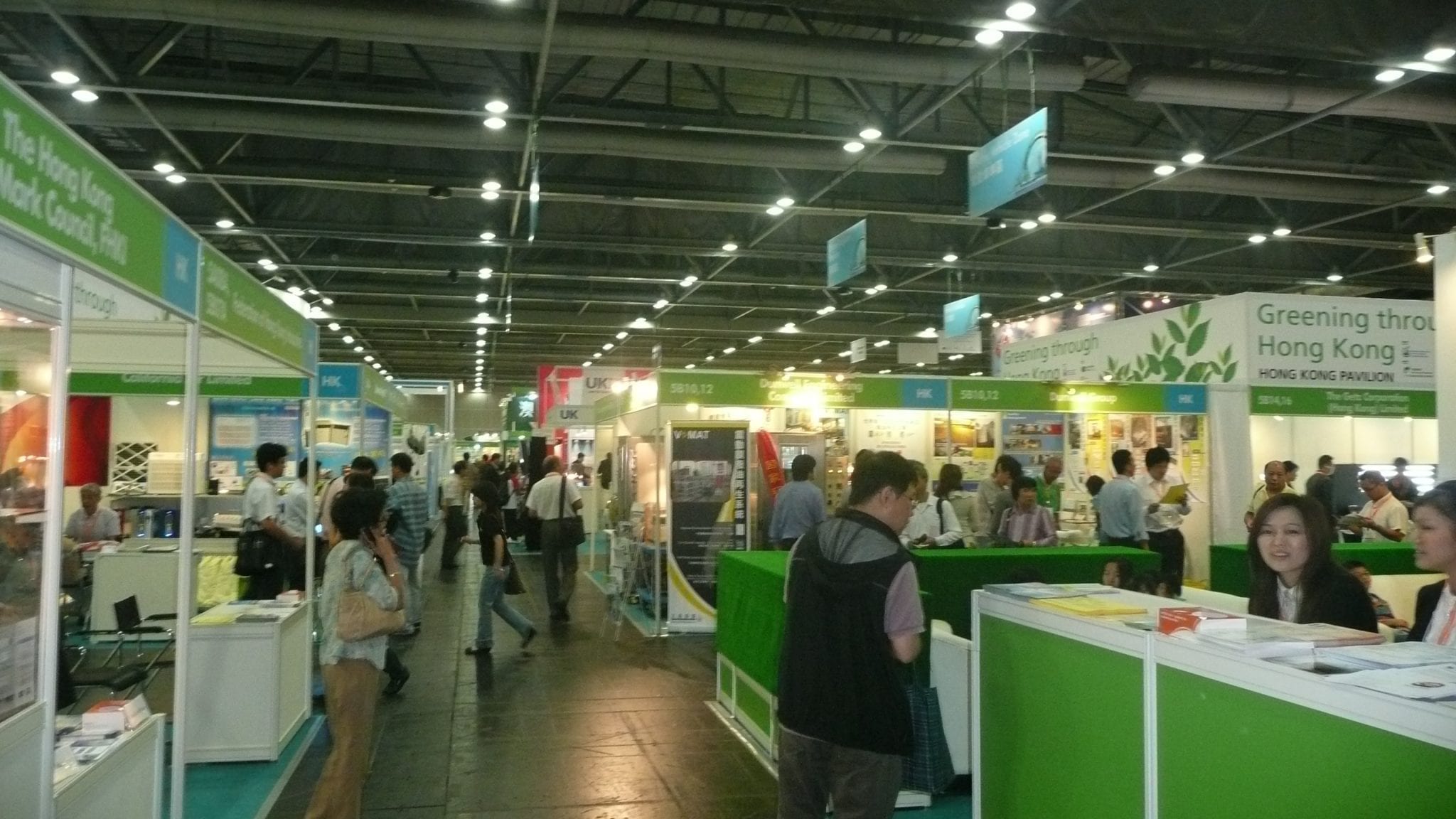
    The 11th editions of Eco Expo Asia and the HKTDC Hong Kong International Building and Hardware Fair opened today at the AsiaWorld-Expo. The opening ceremony of Eco Expo Asia was officiated by Wong Kam-sing, Secretary for the Environment of the Hong Kong Special Administrative Region (HKSAR) Government. Featuring more than 460 exhibitors, the two fairs run for four days (26-29 October). Nearly 90 buying missions were organised, comprising more than 4,000 corporate buyers from 30 countries and regions. Eco Expo Asia will open its doors to the public free of charge on the last day (29 October) to give visitors a better understanding of green industries.

    Eco Expo Asia spotlights climate change solutions

    The Eco Expo Asia is jointly organised by the Hong Kong Trade Development Council (HKTDC) and Messe Frankfurt (HK) Ltd, and co-organised by the Environment Bureau of the HKSAR Government.

    Speaking at the opening of Eco Expo Asia, Mr Wong said, “The Hong Kong SAR Government attaches great importance to combating climate change, and actions are being taken on various fronts to reduce greenhouse gas emissions with a view to reducing the territory’s carbon intensity between 50% and 60% by 2020, using 2005 as the base. We are on track to meet the said target.”

    Margaret Fong, Executive Director of the HKTDC, said, “For more than a decade, Eco Expo Asia has spotlighted exciting technologies for a cleaner and greener future. This year, with reference to the 2015 Paris Agreement on climate change, we have adopted ‘Green Solutions for a Changing Climate’ as the theme. This new focus aims to raise awareness of climate change solutions that will help governments and companies achieve their sustainability goals.”

    This year’s Eco Expo Asia has attracted more than 320 exhibitors from 19 countries and regions and features 12 overseas pavilions and group participations. The expo has nine product zones, spotlighting such topics as Green Transportation Experience, Waste Management and Recycling, Energy Efficiency and Energy, and Green Building Solution and Service as well as the newly-introduced Eco Home Tech zone. Industries, projects and technologies from various countries and regions are showcased, including a number of new green concepts:

    – Hong Kong EV Power Ltd. has brought its Smart Ceiling EV Charger, which can be installed at parking spaces without adjacent walls or columns. The charger is compatible with all EVs on the market.

    – Fortune Dragon Motors Ltd is featuring two pure electric commercial vans (models D11 and D12) that it distributes. The vans are compatible with European and Japanese charging standards and have a maximum range per charge of over 200 kilometres. The D12 model is available for visitors to test drive and test ride at the fair.

    – Eco-Green Group Ltd is exhibiting the Singapore-developed PlanterCell(R) SW-Tank, a high-strength, lightweight and innovative modular storm water storage tank. Made with recycled materials, the system provides a huge capacity for storm water collection and storage to prevent flooding.

    – China Water Industry Group Ltd is displaying its beverage bottle separation and crushing system. The recycled and assorted glass is crushed and processed into eco-friendly colour cullets, which can be used for wall, floor tiles, outdoor building and garden decorations.

    New Eco Home Tech zone

    The new Eco Home Tech zone is presented as a household setting that allows visitors to experience the green living concepts first-hand. An array of innovative green technologies, such as eco-friendly furniture and energy-efficient solutions are featured. Product highlights include the “ButterPly” Eco-friendly Plywood Furniture Series” brought by Upscaling Operations, which is easy to assemble with no screws or tools required; BAFCO Hong Kong Ltd’s Haiku(R) residential ceiling fan, which is equipped with the SenseME(TM) smart technology that monitors room conditions such as movement, temperature and humidity and adjusts fan speed automatically; and Ecopia (Hong Kong) Ltd’s compact household food waste processing system that can fit under the sink. With the use of micro-organisms to break down food waste into water and carbon dioxide, it helps minimise the accumulation of food waste at a cost of just HK$10 per day.

    Eco Asia Conference gathers industry leaders

    The fair’s signature event, the Eco Asia Conference, invites government officials and industry leaders from different countries and regions to discuss key green policies, sustainable developments and industry opportunities. Speakers this year include Yang Tiesheng, Deputy Head, Energy Conservation and Resources Utilisation Department, Ministry of Industry & Information Technology of the People’s Republic of China; and Enoch Lam, Director of Water Supplies, Water Supplies Department of the HKSAR Government.

    Other green topics, including Waste Management & Recycling, Air and Water Quality, Energy Efficiency and Energy, and Green Buildings are also in the spotlight. International industry leaders including Julius de Jong, Managing Director, Orgaworld Asia BV from the Netherlands; Murali Mohan Baggu, Group Manager, Power System Operations and Control Group, National Renewable Energy Laboratory of the United States; and Jan Zak, DGNB Senior Auditor and Member of the DGNB Technical Committee, ikl GmbH from Germany will offer insights into these hot topics.

    The inaugural Green Transportation Forum is also launched this year, comprising six seminars focusing on the development of the EV industry with topics covering the development trends of EVs, charging systems, technology advancement of solar energy vehicles, and more.

    Public Day to promote green living

    The public can take part in Eco Expo Asia for free on the last day (29 October), to experience the joy of green living through a range of fun activities. Mr Wong will also share his insights with secondary school students during the Dialogue with Secretary for the Environment session. Visitors may also join green workshops to learn how to make eco enzymes and practise permaculture. At the public day forum, representatives from the Hong Kong Observatory will discuss the impact of climate change. Furthermore, a renowned ecological educational consultant will offer tips on eco-photography while the Hong Kong Chinese Orchestra will introduce its “Eco Huqins Series” and stage live performances. “Green Mart” offers environmentally friendly products for sale, including DoDo Island’s handbags made with upcycled vintage fabrics from Chinese wedding gowns and Japanese kimonos.

    Building and Hardware Fair showcases innovative exhibits

    The HKTDC Hong Kong International Building and Hardware Fair features more than 140 exhibitors, including new participants from Australia and Malaysia. Shangyu District of Zhejiang Province’s Shaoxing City, well-known as a building industry cluster on the mainland, hosts a pavilion at the fair. The seven fair zones include BIM & Building Technology spotlighting software systems and solutions, and Green Building Materials showcasing various green architectural supplies, as well as Building & Decorative Hardware, Indoor Decorative Materials, and Coating & Chemicals zones.

    Various innovative products on show the Building and Hardware Fair include:

    – VHSoft Technologies Company Ltd’s VHSmart(TM) Mobile Construction management system, a multi-function application that can be used to monitor project progress and for material tracking.

    – BLJ Building Materials Ltd’s Buteline Plumbing System, a drinking water plumbing system from New Zealand that can be installed without soldering. The tough and durable fittings are free of lead and toxic chemicals and are able to prevent the build-up of scale.

    – Talent Forest Ltd’s Far-Infrared Carbon Nano-fibres Heated Wood Flooring, which allows for remote-controlled temperature control via a smart device. The temperature can be adjusted within 5 to 20 minutes and the system will power off while preserving heat after reaching the target temperature.

    The inaugural HKTDC Hong Kong International Outdoor and Tech Light Expo will be held concurrently with the Eco Expo Asia and HKTDC Hong Kong International Building and Hardware Fair at the AsiaWorld-Expo. The fair has attracted about 380 exhibitors from the Chinese mainland, Hong Kong, Korea, Malaysia and Taiwan featuring an array of exhibits in Outdoor Lighting, Professional and Industrial Lighting, Advertising Lighting, as well as Lighting Accessories, Parts & Components. As the lighting and building industries are closely related, the parallel fairs create a strong synergistic effect, creating more business opportunities for both exhibitors and buyers.


  • Logistic Operators Become More Green Globally

    Logistic Operators Become More Green Globally

    A combination of external and internal pressures are continuing to drive a ‘greening up’ of logistics operations in Asia and worldwide. Increasingly, though, companies are implementing such developments as part of an overall corporate business strategy rather than a standalone area of activity.

    Some of the key trends in that context were outlined by John Manners-Bell, chief executive of UK-based global logistics industry research and analysis company Transport Intelligence, who spoke on the subject of ethics and sustainability in the supply chain at a recent conference, The Future of Logistics, in London, and is now writing a book on that subject.

    One of the key points to emerge from the conference session which discussed those issues, Manners-Bell told Asia Cargo News earlier in September, was that ethical and environmental logistics practices were now increasingly part of wider corporate sustainability/social responsibility programmes being implemented by companies as an integrated element of their overall business development.

    Another key point to emerge from the conference, he continued, was that ethical behaviour and commitment to environmentally-sustainable practices need not be at the expense of profitability. “In fact, best practices in logistics and supply chain management bring together ethics, sustainability and bottom line performance in a holistic approach,” he argued.

    Expanding on that point, Manners-Bell suggested that going back a decade or so, most manufacturers, retailers and logistics providers still tended to view the development of greener supply chain and other operations as something “nice to have” or a potential additional competitive advantage but basically separate to the actual business of making money.

    “Now, companies increasingly see that they need to get all those elements right in order to prosper. For example, if you are a multinational consumer electronics manufacturer or retailer and one of your suppliers in China is found to be mistreating its workers or releasing large quantities of toxic chemicals into the environment, that could have a huge negative image on the global image of your brand,” he said.

    Commenting specifically on supply chain trends in that context, Manners-Bell confirmed that logistics providers were now focusing both on developments designed to improve the environmental performance of operations for customers and their own internal “green” credentials.

    “Logistics providers are being pushed by their customers to make their supply chains more environmentally friendly, but many are also large corporations in their own right and therefore have a responsibility of their own to operate in a sustainable way,” he said.

    One recent example of the first of those trends saw major Asian region and global logistics provider DHL announce in June that it had launched DHL Carbon Calculator, “a new online application which delivers live data-based emissions calculation for almost all shipment sizes and modes of transport for local, national and international deliveries.”

    Kathrin Brost, vice president, green strategy and customer intelligence at DHL Global Forwarding, which tested the Carbon Calculator together with customers, explained that the calculation was carried out online based on intelligent algorithms.

    “While many other computational tools provide only a rough estimate of the transport emissions and the route, the Carbon Calculator taps into real logistics data,” she said. “That data includes the route to the nearest airport or harbour, the main leg by air or sea and the ‘last mile’ in the destination country.”

    More recently, at the beginning of this month, French global logistics provider Geodis highlighted the ‘environmental’ credentials of a new rail transport operation it had just introduced between Wuhan in central China and the city of Lyon in France for Marseille-based designer jeans manufacturer Kaporal.

    Vincent Allal, head of Kaporal supply chain, claimed the new service enabled that company to reduce its transport time, costs and environmental footprint. “Rail transport is a real alternative to air travel that was previously not considered. The transit is relatively short, we have halved our bill on this transaction and we are very sensitive to the low environmental impact of this solution,” he added.

    One of the latest instances of a logistics provider “internal” green development saw Samskip, which operates one of Europe’s largest multimodal container logistics systems, report in August that subsidiary frigoCare had completed the installation of what it claimed was the largest solar panel system in the Dutch port of Rotterdam, a major European gateway for Asian deepsea container traffic, as part of its “sustainability strategy.”

    That initiative, undertaken in partnership with Dutch renewable energy company Zon Exploitatie Nederland (ZEN), comprised the installation of some 3,100 solar panels on the roof of frigoCare’s 14,000 pallet-capacity cold store in that port. The installation covers an area of 7,500 square metres and is said to be capable of generating 750,000kWh of electricity a year.

    “The new solar panel installation is owned by ZEN, while the roof’s surface is provided by frigoCare,” explained Samskip. “In turn, frigoCare benefits from access to a cheaper, and ‘greener’, energy supply. Under the agreement between frigoCare and ZEN, the solar panels will meet around 30% of this requirement. Any excess power will go back into the local electricity grid.”

    FrigoCare managing director Jan Bouman added: “When we upgraded our cold store, which is primarily used to store frozen fish, we wanted to make it as environmentally-friendly as possible. The partnership with ZEN has enabled us to reduce our annual carbon emissions by around 325 tonnes a year.”

  • Henrik Fisker launches new electric car company

    Henrik Fisker launches new electric car company

    Henrik Fisker, whose previous automotive venture collapsed in 2013 owing U.S. taxpayers $139 million, said on Tuesday he plans to launch a new electric car company next year to compete with Tesla.

    Fisker declined to say who is funding his new California-based venture, called Fisker Inc, and a new battery subsidiary, Fisker Nanotech.

    The Danish automotive designer’s previous venture, Fisker Automotive, once was a rival to Tesla Motors Inc (TSLA.O) in the nascent market for electric luxury cars. Founded in 2007, Fisker Automotive built fewer than 2,000 cars through 2012 while burning through $1.4 billion in private investments and taxpayer-funded loans from the U.S. Department of Energy. Fisker left the company in March 2013, before it filed for bankruptcy protection.

    In 2014, Fisker was purchased out of bankruptcy by Chinese auto parts maker Wanxiang Group Corp (000559.SZ), and renamed Karma Automotive. Wanxiang also acquired bankrupt U.S. battery maker A123. It relaunched the Fisker Karma gasoline-electric hybrid sports car in August as the Karma Revero.

    In an interview, Fisker said his new company plans a battery-powered model aimed at the Tesla Model S, which is priced at about $65,000. He did not specify when production would begin.

    A second smaller Fisker electric car will follow, Fisker said, and will target the upcoming Tesla Model 3, which is expected to start at about $35,000.

    Fisker said his new electric cars will be powered by a long-range battery that uses graphene to extend its range and life and reduce charging time. The company is targeting a 400-mile driving range between charges, Fisker said.

    Fisker said his new venture is not connected with Wanxiang.

  • Telstra to launch mobile broadband capability for ESOs

    Telstra to launch mobile broadband capability for ESOs

    Telstra plans to introduce a national public safety mobile broadband capability for emergency services organizations (ESOs) this summer.

    Alex Stefan, Telstra’s national general manager public safety and security, said the technology behind Telstra LANES Emergency allows ESOs to communicate with each other, and it could also provide governments with significant cost savings.

    “Preserving the safety, security, and prosperity of Australian communities is an essential role provided by our emergency services and Telstra is committed to providing innovative solutions and capabilities to support them,” he said in a statement.

    Telstra developed the LANES Emergency solution in collaboration with Ericsson primarily to help ESOs increase their network capability, coverage and reach, without building their own private network but by offering them priority access on Telstra’s LTE network.

    Telstra LANES Emergency will be available in two forms – Telstra LANES Emergency Priority, which will provide access to Telstra’s LTE spectrum; and Telstra LANES Emergency Tailored, which will consist of customer-owned dedicated spectrum and access to Telstra’s LTE spectrum or enhancements to Telstra’s LTE network.

    “Through LANES we can offer Emergency Services priority data access on our 4G network or on a dedicated and partitioned spectrum for their exclusive use. On the wireless highway it is like offering Emergency Services their very own express lane,” explained Stefan.

    A recent report from the Australian Productivity Commission indicated that a commercial public safety solution like LANES has the potential to save ESOs $4 billion over 20 years over the cost of running their own systems, and provides them with access to more easily updated technology and innovations.

    “Telstra will be initially providing access to up to 160MHz of Telstra LTE spectrum, including our 700-MHz band, for use by ESOs under this new offering,” Stefan said.

  • New Bukit Bintang mall for Kuala Lumpur

    New Bukit Bintang mall for Kuala Lumpur

    Retail, entertainment and hospitality brands will feature in a planned City Centre development including a Bukit Bintang mall in Kuala Lumpur.

    “The mall will transform the retail landscape in Kuala Lumpur, catering to all shopping needs with the introduction of home-grown and new-to-market international brands,” says Eco World Development, which is part of the joint venture planning the $400 million project.

    Other signatories to the heads-of-terms agreement signed in Kuala Lumpur are BBCC Development,Mitsui Fudosan (Asia) and Zepp Hall Network. Eco World Development says the project will have an estimated gross development cost (GDC) of RM1.6 billion (US$400 million) and cover 19.4 acres (7.8ha) of mixed residential and commercial development, with UDA Holdings and the Employees Provident Fund (EPF) also as partners.

    Under the agreement, the retail mall will be owned and run through a joint-venture company, Mall JVCo.

    Phase one of the project will be a 45-storey block of strata offices and two blocks of serviced residences, comprising of 680 units, with construction to begin in the third quarter of this year.

    Mitsui Fudosan will jointly develop a 1.4 million sqft (126,000 sqm) lifestyle retail mall, while Zepp Hall is investing in a 2000-seat event hall, the first of its kind outside Japan. Zepp Hall is a subsidiary of Sony Music Entertainment (Japan), and its core business is running venues. Its concert hall will be in the Entertainment Block in BBCC, next to the mall.

    The project is expected to also get underway in the third quarter, and take eight to 10 years to develop. The Mall JVCo is proposed to be equally owned by Mitsui Fudosan Asia and the shareholders of BBCC.

    “This substantial investment by Mitsui Fudosan Asia represents the largest retail investment to date by the group outside Japan,” says Eco World.

    The mall will be developed under the Mitsui Shopping Park LaLaport brand, a regional mall concept conceived by Mitsui Fudosan more than 35 years ago. The concept has evolved from “a place where people gather” to “a place where people interact”.

    BBCC also signed a MoU with Ascott, a member of Singapore’s CapitaLand and the largest international serviced-residence owner-operator in the world, with more than 45,000 units in 290 properties, spanning 100 cities in 27 countries.