Tag: economic growth

  • World Bank Urges Thailand to Lift 12% AI Adoption Rate for 2037 Goal

    World Bank Urges Thailand to Lift 12% AI Adoption Rate for 2037 Goal

    Thailand must lift its corporate artificial intelligence adoption beyond the current 12 per cent rate to hit high-income status by 2037, according to the World Bank.

    Only about one in eight Thai businesses currently deploys AI tools, despite recent data centre investments and an established electronics manufacturing base. Speaking at the Bangkok Business Summit, World Bank vice-president for East Asia and Pacific Carlos Felipe Jaramillo warned that commercial adoption remains too concentrated among large corporations in the capital.

    Closing the SME technology gap

    Small, medium and micro-enterprises outside Bangkok account for the bulk of employment but lag in digital capabilities. The multilateral lender presented its “Building Thailand’s Future Today” report at the summit, hosted by the Joint Standing Committee on Commerce, Industry and Banking, setting out reforms for enterprise competitiveness.

    Thailand spends roughly 1 per cent of gross domestic product on research and development. Across the East Asia-Pacific region, that average sits at 2.5 per cent. World Bank senior economist Katherine Stapleton said closing that divide requires redirecting state R&D incentives toward smaller firms rather than limiting innovation programmes to top-tier conglomerates.

    RetailNews Asia notes that enterprise technology providers across Southeast Asia face a similar bottleneck: high digital consumer penetration alongside sluggish software uptake inside merchant supply chains. While Bangkok ranks among the region’s most connected consumer markets, commercial software integration across provincial retail and logistics networks remains sparse.

    Raising growth targets

    Meeting the government’s 2037 high-income target will require annual real GDP growth to jump to 5.4 per cent per person. Thai economic expansion has averaged 2.2 per cent per person since the pandemic.

    Exports generate roughly 70 per cent of Thailand’s gross domestic product, yet foreign direct investment continues to generate weak spillover gains for local suppliers. The World Bank argues that upgrading domestic software capabilities and fostering regional commercial hubs will determine whether the economy escapes middle-income stagnation.

    The Joint Standing Committee and state planning agencies are now reviewing corporate tax breaks and startup development programmes ahead of the next fiscal policy cycle.
  • Bank of Korea Projected to Lift 2026 Economic Growth Estimate Past 3%

    Bank of Korea Projected to Lift 2026 Economic Growth Estimate Past 3%

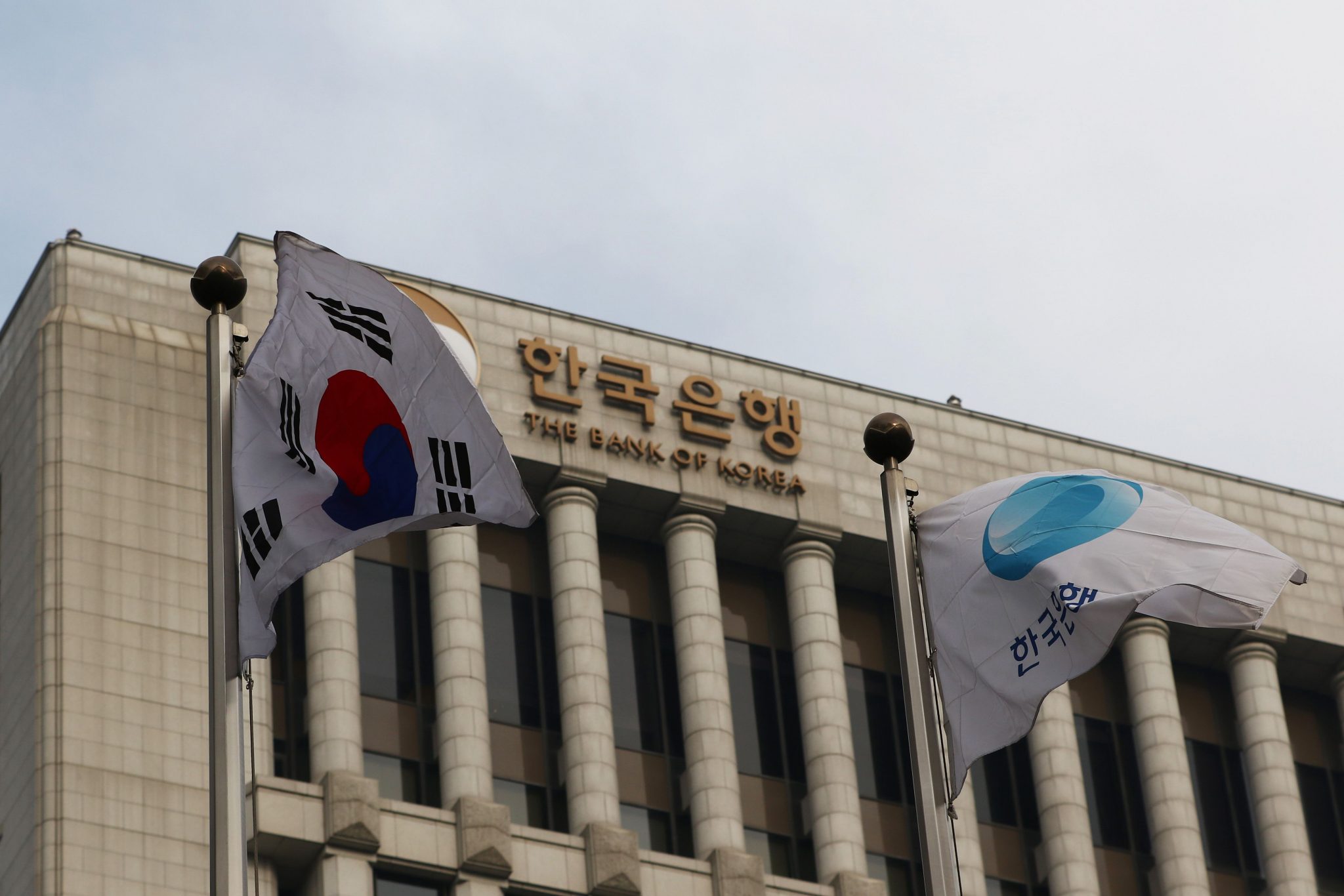
    The Bank of Korea is expected to raise South Korea’s 2026 economic growth forecast above 3 per cent from 2.6 per cent.

    Surging semiconductor exports and recovering domestic consumption are driving private analyst projections as high as 3.4 per cent. Economic forecasters surveyed by Yonhap News Agency anticipate the central bank will adjust its outlook upward during its upcoming revision cycle, reflecting stronger factory output and higher state spending supported by rising tax receipts.

    Semiconductor Supercycle Drives Upward Revisions

    Nomura Securities posted the highest forecast among respondents at 3.4 per cent. Park Jeong-woo, an economist at Nomura, noted that exponential growth in artificial intelligence inference workloads continues to outpace chip production, suggesting supply constraints could extend beyond 2027.

    Korea Investment & Securities analyst Ahn Jae-kyun projected 3.2 per cent annual growth, pointing to a combination of heavy technology exports and a rebound in local consumer demand. Other respondents placed their 2026 projections between 3.1 per cent and 3.2 per cent. Projections for 2027 moderated, landing between 2.2 per cent and 2.8 per cent across the surveyed institutions.

    Some analysts urged caution regarding the duration of the current technology cycle. Joo Won, deputy director of economic research at Hyundai Research Institute, noted that chip exports dipped in August compared to the prior month, suggesting the export boom may reach its peak between late 2026 and early 2027.

    Surplus Records and Consumer Price Pressures

    South Korea’s current account surplus for the first six months of 2026 has already surpassed the 2025 full-year record of $191 billion. Economists expect the central bank to sharply increase its previous $250 billion annual surplus projection published in May.

    For consumer-facing businesses across the region, a stronger macroeconomic baseline in South Korea provides welcome support for retail footfall and high-ticket consumer electronics, though imported inflation limits purchasing power. Central banks across East Asia face similar cross-currents as artificial intelligence hardware spending lifts headline industrial figures while currency volatility keeps domestic borrowing costs elevated.

    Economists expect the Bank of Korea to hold its 2026 consumer price inflation projection at 2.7 per cent, with elevated oil prices and the won-dollar exchange rate serving as the main hurdles to earlier interest rate cuts.

  • Malaysia’s 2018 economic growth expected to remain above 5%

    Malaysia’s 2018 economic growth expected to remain above 5%

    Malaysia’s first quarter (1Q18) gross domestic product (GDP) growth came in at 5.4% year on year, lower than the consensus projection but AmBank Research is maintaining its 5.5% GDP growth for this year as it expects private consumption and the services sectors to continue to support growth together with other areas of business activities.

    “Apart from private consumption and services, we noticed that most of the other economic segments showed some loss of growth momentum. Still, our current 5.5% GDP growth for the full year remains, as we expect private consumption and services sectors will continue to support growth together with other areas of business activities,” it said in a report.

    “With the announcement of the Goods & Services Tax removal, added with the potential reintroduction of fuel and electricity subsidies as well as the review of toll roads, these suggest that the underlying inflation will pick up gradually.

    “While our base case for OPR (Overnight Policy Rate) remains with a total of one rate hike by Bank Negara Malaysia (BNM) that took place in January with the OPR now at 3.25%, the probability for a second rate hike in September 2018 remains at a low 45%,” said AmBank.

    However, Kenanga Research has revised its 2018 GDP growth forecast to 5.1% in 2018 from 5.5% (2017: 5.9%), as it said the change in government will likely put a damper on private investment due to policy uncertainty and disrupted public spending, which pose downside risks to its GDP forecast going forward.

    “The only upside to growth could possibly be derives from higher private consumption following the government’s decision to scrap the Goods and Services Tax (setting its rate at zero from June 1) and take its time to implement the sales and services tax. External factors may also weigh on growth mainly the expectation that exports would continue to slow on the back of the slowing global demand for consumer electronics especially mobile devices.”

    Nonetheless, it said there could be offsetting factors if the government takes an aggressive approach to review major infrastructure projects. It then can prioritise or strategically delay projects that have high import content as it did in the 1990s. Less import could help boost net exports and support GDP growth.

    Kenanga expects monetary policy to remain accommodative. It said although the central bank has left interest rates unchanged since it raised the OPR in January, the outlook for monetary policy may have turned considerably uncertain following the change in government.

    “The biggest risk to the monetary policy outlook is that a post-election sharp decline in investment would exacerbate an economic slowdown. This may prompt BNM to loosen its monetary policy and cut interest rates. For now we are maintaining our view that the OPR will remain on hold until the end of the year.”

  • Malaysian economic growth slowed in Q4

    Malaysian economic growth slowed in Q4

    Malaysia’s economy grew more slowly in the last quarter of 2017 than the blistering pace set in July-September, a Reuters poll showed, as exports increased at a slower rate.

    The median forecast in the poll of 12 economists was for annual growth of 5.7% in October-December, compared with the previous period’s 6.2% – the fastest rate since the second quarter of 2014.

    Forecasts for the fourth quarter ranged from 5.2% to 6.1%.

    “The best is behind us,” ING said in a note today about Malaysia’s growth pace, noting that a high base effect has been impacting growth rates in several Asian economies.

    Whatever Malaysia’s fourth quarter number, 2017 have brought Malaysia its fastest full-year growth since 2014’s 6%.

    Growth in each of 2017’s first three quarters topped 5.5%.

    Brian Tan, a Singapore-based economist with Nomura, said the fourth quarter brought a “slowdown in exports which looked quite sharp, but we suspect it was due to the ringgit appreciation during the period”.

    In October-December, exports rose 12.4% from a year earlier, down from increases of more than 20% in each of the first three quarters. The peak increase, in July-September, was 22.1%.

    Malaysia reports its trade figures in ringgit.

    During 2017, the currency strengthened more than 10% against the dollar.

    Industrial production rose 2.9% annually in December, down from 5% a month earlier.

    Growth in Southeast Asia’s third-largest economy beat expectations in the third quarter, helped by private sector spending.

    In October, the government revised up its 2017 full-year growth projection to 5.2-5.7%, up from 4.3% to 4.8%.

    Malaysia’s economy grew 4.2% in 2016.

    Robust private consumption is expected to have propped up fourth quarter growth, with higher motor vehicle and retail sales and strong consumer sentiment, HSBC said in a note.

    The volume index of wholesale and retail trade rose 6.8% in the fourth quarter, according to data released last week by Malaysia’s statistics department.

    Strong growth figures over the past three quarters and rising inflation rates prompted Bank Negara Malaysia in January to raise its key interest rate by 25 basis points to 3.25%. It was the first hike in three and a half years.

    ING, which forecasts 5.5% annual growth for 2017’s fourth quarter, has pencilled in one more 25 basis point rate hike, for the third quarter of this year.

  • Hong Kong’s economic growth to ease in third-quarter on China slowdown

    Hong Kong’s economic growth to ease in third-quarter on China slowdown

    Hong Kong’s economic growth is expected to slow in the third quarter from the second, with weak exports, sluggish retail sales and falling tourist arrivals, continuing to take a toll on the Asian financial centre.

    The once vibrant city is also grappling with a slowdown in China, while its outlook has been hurt by rising tensions with Beijing that could threaten stability and impede policymaking.

    The economy was expected to grow 0.3 percent for the third quarter from the second, according to the median estimate of economists in a Reuters poll. From a year earlier, growth was forecast at 1.6 percent.

    The government is due to release gross domestic product data on Friday at 0830 GMT.

    Gross domestic product grew a seasonally-adjusted 1.6 percent in the second quarter from the first, and 1.7 percent from a year earlier, the government said in August.

    Hong Kong’s retail sales fell for the 19th straight month in September as China’s economic slowdown and a strong local currency crimped business activity and tourism.

    “We think retail sales and tourism have not yet recovered. There are still downside risks,” said Young Sun Kwon, a Hong Kong-based economist at Nomura.

    Another potential risk is the impact of cooling measures imposed by the government this month to rein in property prices, which are among the most expensive in the world.

    The government said it would raise stamp duties on home purchases to 15 percent, across the board, effective Nov. 5.

    Economists said it was still too early to tell how effective the measures would be as there were other factors involved, such as the U.S. presidential election and China’s economic performance.

    Hong Kong, once the busiest port in the world, is also heavily dependent on trade, and its exports and imports are predominantly re-exports to and from mainland China.

    The Trade Development Council has cut its forecast for the city’s exports this year from flat to a 4 percent decline.

    Slower economic growth could pile further pressure on Hong Kong leader Leung Chun-ying ahead of an election next year and amid rising tensions with the central government in China over concerns of increased meddling by Beijing in the city’s affairs.

    The former British colony’s economy is now more vulnerable as it struggles with weaker retail sales and a slump in cash-rich mainland Chinese streaming across the border on shopping sprees.