
Tag: efficient

  • Coca-Cola Europacific Partners Teams Up with Visy for Sustainable, Efficient Freight Transport Deal

    Coca-Cola Europacific Partners Teams Up with Visy for Sustainable, Efficient Freight Transport Deal

    Coca-Cola Europacific Partners (CCEP) in the Australia Pacific region has formed a strategic partnership with Visy to oversee freight transport on select national transit paths.

    Partnership Details

    Within the framework of Visy’s national fleet network, CCEP is set to reap the benefits of dependable capacity, operational adaptability, and state-of-the-art transport facilities. This includes access to Volvo FH600 prime movers and high-capacity 36-pallet trailer configurations.

    These uniquely configured trailers enable CCEP to transport 6% more goods per journey compared to the standard 34-pallet configurations, thus reducing the total number of road trips. The incorporation of Euro 6 engines is anticipated to decrease CCEP’s freight fuel consumption by 5%.

    Tim Chapman from CCEP Australia Pacific stated the importance of having the right partners across their supply chain, given the company’s role in manufacturing and moving some of Australia’s favorite beverages on a daily basis. He noted that Visy Logistics provides the necessary scale and linehaul ability to support this, while also granting access to higher-capacity equipment for a more efficient and sustainable supply chain.

    The partnership agreement includes plans for dedicated CCEP branding to be displayed on select Visy Logistics trailers as they transport goods interstate.
    Partnership Goals

    The collaboration aims to ensure stable, efficient product distribution for the beverage distributor, while also addressing corporate supply chain sustainability goals through the use of modernized freight equipment.

    Wayne Boxshall, president of Visy Logistics Australia, spoke about the partnership reflecting the robustness of their transport capabilities and their consistent delivery of high-quality results for their clientele.

    Visy made headlines earlier this year with the announcement of its investment in a new packaging hub in Devonport, which will supply cardboard packaging throughout Tasmania.

    Questions & Answers

    What benefits will CCEP gain from its strategic partnership with Visy?
    CCEP will gain reliable capacity, operational flexibility, and access to modern transport facilities, including high-capacity trailers and Euro 6 engines, which are expected to decrease CCEP’s freight fuel consumption by 5%.

    How will the partnership affect product distribution?
    The partnership aims to ensure consistent, efficient product distribution for CCEP, while addressing corporate supply chain sustainability targets through modernised freight equipment.

    What future plans does the partnership include?
    The agreement includes plans for dedicated CCEP branding to be displayed on select Visy Logistics trailers as they transport goods interstate.

  • Korean Air Takes Flight with A350F: New Era of Eco-Friendly and Efficient Cargo Transport Unveiled

    Korean Air Takes Flight with A350F: New Era of Eco-Friendly and Efficient Cargo Transport Unveiled

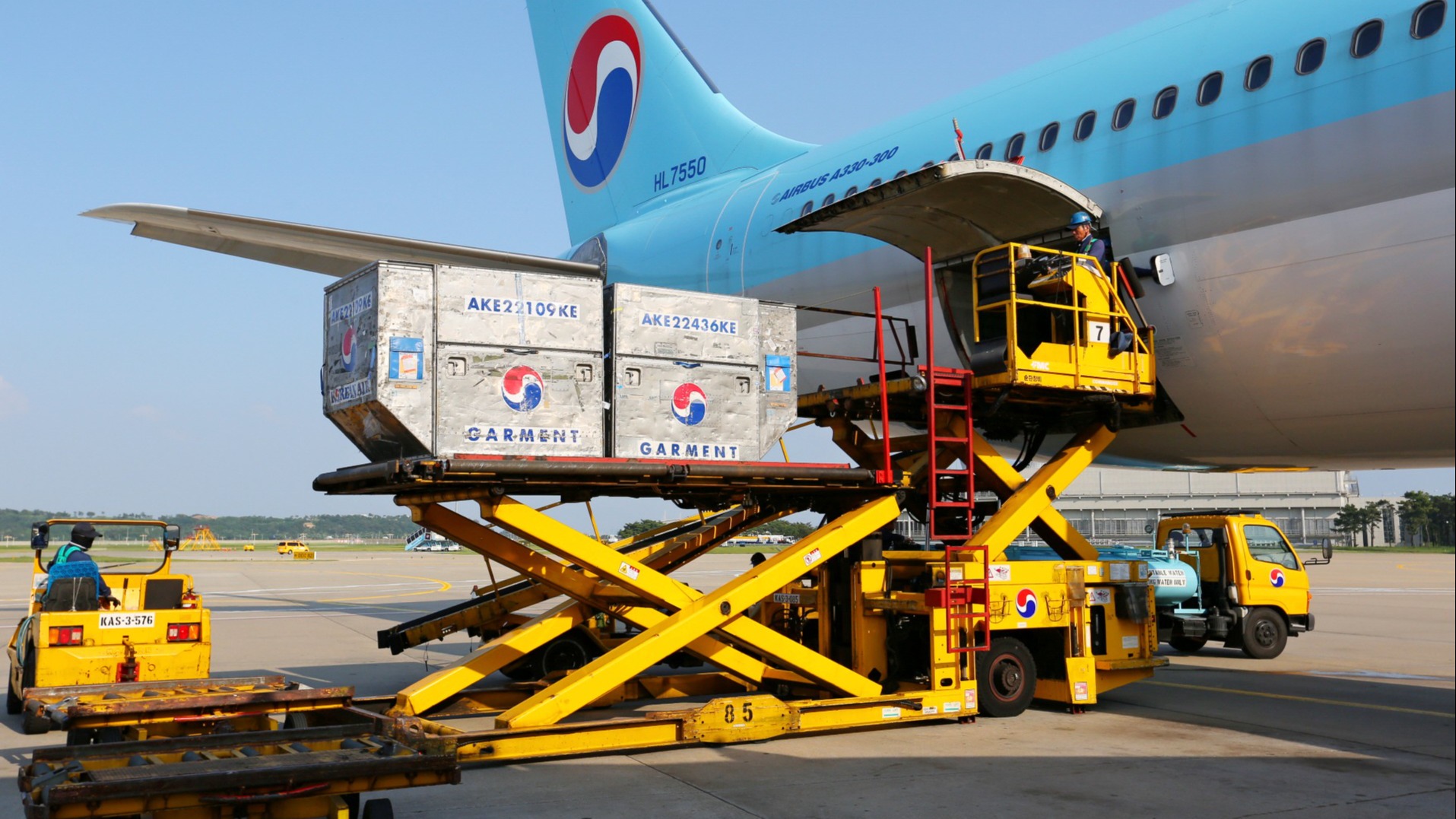
    Korean Air has joined the ranks of customers for the world’s only newly designed large freighter, the A350F, by modifying seven of its current A350-1000 passenger aircraft orders to the freighter model.

    Endorsement from a Major Cargo Operator

    Korean Air is a leading global cargo operator, making its choice to incorporate the A350F into its fleet a significant endorsement of the freighter’s unique capabilities. The A350F is set to provide Korean Air with the most efficient solution in the large freighter segment.

    The A350F’s Unique Features

    The A350F stands out with the industry’s largest main deck cargo door, its fuselage length and capacity optimally designed for standard pallets and containers. More than 70% of its airframe boasts advanced materials, resulting in a take-off weight that is 46 tonnes lighter than its nearest competitor. Indeed, the A350F is the only freighter aircraft that completely complies with the International Civil Aviation Organization’s (ICAO) forthcoming CO₂ emissions standards, set to take effect in 2027.

    Technological Advancements and Payload Capacity

    The A350F, which is currently under development, can carry an impressive payload of up to 111 tonnes and can fly up to 4,700 nautical miles or 8,700 kilometers. It’s equipped with the latest Rolls-Royce Trent XWB-97 engines, which will enable the aircraft to reduce its fuel consumption and carbon emissions by up to 40% compared to previous generation aircraft with similar payload-range capabilities.

    A350 Family’s Growing Popularity

    As of the end of September 2025, the newest generation A350 family had secured 1,445 orders from 63 global customers. This includes 65 orders for the brand-new A350F from 10 cargo carriers and one leasing company.

    Korean Air’s total order of A350 aircraft now stands at 33, which includes 20 A350-1000s, seven A350Fs, and six A350-900s. The first two of these have already been delivered.

    Questions & Answers

    What is significant about Korean Air’s decision to incorporate the A350F into its fleet?
    Korean Air is a major global cargo operator. Its decision to include the A350F in its fleet is seen as a significant endorsement of the aircraft’s unique capabilities.

    What sets the A350F apart from other freighter aircraft?
    The A350F has the industry’s largest main deck cargo door and has a fuselage length and capacity designed to optimize standard pallets and containers. The airframe uses advanced materials in more than 70% of its construction, making the aircraft lighter and more efficient.

    What can be expected from the A350F in terms of its payload and emissions?
    The A350F can carry a payload of up to 111 tonnes and fly up to 4,700 nautical miles or 8,700 kilometers. Powered by the latest Rolls-Royce Trent XWB-97 engines, the aircraft is expected to reduce fuel consumption and carbon emissions by up to 40%, meeting the ICAO’s enhanced CO₂ emissions standards due in 2027.