Tag: eggs

  • Cracking Into Global Markets: Vietnam’s First Shipment of Ready-to-Eat Eggs Lands in Japan

    Cracking Into Global Markets: Vietnam’s First Shipment of Ready-to-Eat Eggs Lands in Japan

    Vietnam has made significant strides in its food export sector with its first shipment of ready-to-eat poultry eggs to Japan. The delivery was facilitated by Vinh Thanh Dat Food (VFood) on Thursday, following an extensive collaboration with a Japanese partner. The endeavor is notable as Japan is renowned for having some of the world’s most rigorous food safety standards.

    Years of Collaboration Lead to a Successful Shipment

    The partners invested nearly two years in product development, tailoring the ready-to-eat eggs to the specific tastes of Japanese consumers while ensuring they adhered to the country’s stringent food safety regulations. This meticulous process involved comprehensive research, product refining, and assistance from Japanese experts.

    This shipment represents more than just a successful export; it symbolizes VFood’s determination to elevate the worth of Vietnamese eggs. Further, it opens doors for other processed egg products to penetrate demanding international markets and solidify their presence.

    Addressing Oversupply through Increased Exports

    Presently, the poultry egg market in Vietnam is grappling with an oversupply due to a surge in farm expansions when egg prices were high. This expansion has led to production exceeding demand, thereby resulting in a drop in egg prices. Thus, venturing into new export markets is seen as a viable solution to manage the surplus stock, enhance poultry farmers’ earnings, and in turn, instill greater confidence in them to sustain production.

    In the long run, increasing exports can help farmers standardize and upgrade their production processes. Simultaneously, it could serve as a catalyst for growth in Vietnam’s poultry egg sector.

    Questions & Answers

    What is significant about the recent shipment of ready-to-eat eggs from Vietnam to Japan?
    This shipment marks the first time that Vietnam has exported ready-to-eat eggs to Japan, a country known for its strict food safety standards.

    How did VFood prepare for this milestone shipment?
    VFood collaborated with a Japanese partner and invested nearly two years in product research, development, and refinement to ensure the eggs met Japanese consumers’ tastes and the country’s food safety regulations.

    What are the potential benefits of expanding egg exports for Vietnam’s poultry sector?
    Expanding exports can help manage the current oversupply of eggs in the Vietnamese market, improve poultry farmers’ incomes, and encourage them to maintain production. In the long term, it can aid in standardizing and upgrading production processes and boosting the overall poultry egg sector.

  • Kinder Bueno rolls out new chocolate eggs for Easter

    Kinder Bueno rolls out new chocolate eggs for Easter

    Confectionary giant Ferrero has rolled out a new Kinder Bueno chocolate range for Easter.

    The company described its new range as “addictive as they sound” and “filled with zero regrets”.

    “What’s more important than winning your family’s easter egg hunt?” said the chocolatier. “We make sure you arrive with the ultimate chocolate advantage to entice more action in the hunt”.

    The Easter chocolate range features:

    • Kinder Bueno Eggs: A milk hazelnut filling surrounded with crispy wafer and coated in chocolate.
    • Kinder Easter Hollow Figures 35g: Available in six spring figures.
    • Kinder Joy 20g.
    • Kinder Mini Eggs 100g.

    The new Kinder Bueno Easter Range is available at Coles, Metcash, and Target.

  • Easter 2019 trading hours Unveiled

    Easter 2019 trading hours Unveiled

    The Australian Retailers Association expects shoppers to turn out in force to buy Easter-related food and gifts this week.

    According to the ARA, most Easter sales do not occur until the week before Good Friday, which this year falls on April 19.

    Although the Easter trading period is shorter than the Christmas period, it is still recognised as a busy event for retailers, ARA executive director Russell Zimmerman said.

    “As Easter is celebrated widely, many Australians will be heading to retail outlets to buy fresh produce to cater for Easter lunches and feed their friends and families,” Zimmerman said.

    The ARA predicts that sales of traditional Easter items, including hot cross, buns, seafood, fresh produce, liquor and chocolate will increase during this time.

    Bryan Skepper, Sydney Fish Market general manager, said he expects 50,000 people to visit the iconic market on Good Friday and estimates over 650 tonnes of seafood will be sold during the day.

    Skepper said the fish market will open its doors for extended trading hours on Good Friday. It will open at 5am on April 19 and will close at 5pm.

    Steve Plarre, CEO of Ferguson Plarre Bakehouses, said hot cross buns, unsurprisingly, are top-sellers during the Easter period.

    He said the last few years have seen a rise in the sale of their raspberry and white chocolate and apple and cinnamon varieties.

    Restrictions on trading during the Easter period, which begins on Good Friday and lasts until Easter Monday, vary by state. The National Retail Association has provided the following information on trading restrictions:

    ACT

    There are no trading restrictions any day from April 19-22.

    Northern Territory

    Trading hours are not regulated in the Northern Territory, however, individual restrictions may apply to certain shopping centres based on centre management.

    Trading hours for the sale of liquor products are regulated.

    NSW

    Shops are closed on Good Friday, April 19, and Easter Sunday, April 21, except for small shops and exempt shops, and shops in exempt areas.

    There are no trading restrictions on Saturday, April 20, or Monday, April 22.

    Queensland

    Independent retail shops are closed on Good Friday except if they are a predominantly food and/or grocery store, which can trade unrestricted. There are no restrictions from April 20-22.

    Non-exempt shops must not open on Good Friday. Trading may be permitted for non-exempt shops in certain areas of Queensland on the other public holidays during the Easter period.

    Tasmania

    Shops are closed on Good Friday, April 19, but are open from April 20-22.

    South Australia

    Shops in the CBD tourist precinct are closed on Good Friday, April 19. Trading is permitted on Saturday, April 20, until 5pm, and between 11am and 5pm on Sunday, April 21, and Monday, April 22.

    Shops in the Greater Adelaide Shopping District are closed on Good Friday, April 19, and Easter Sunday, April 21. Trading is permitted on Saturday, April 20, until 5pm, and between 11am and 5pm on Monday, April 22.

    Shops in Proclaimed Shopping Districts, excluding shops selling hardware, building materials, furniture floor coverings and motor vehicle parts and accessories, are closed from April 19-22.

    Trading is permitted for the exempted categories listed above on Saturday, April 20, until 5pm, and between 9am and 5pm on Sunday, April 21, and Monday, April 22. These shops are closed on Good Friday, April 19.

    Victoria

    Shops are closed on Good Friday, April 19, except for exempt shops. There are no restrictions on trading from April 20-22.

    WA

    Shops are closed in the Perth metro area on Good Friday, April 19, and trade is permitted on Saturday, April 20, between 8am to 5pm. On Sunday, April 21, trade is permitted between 11am to 5pm, and on Monday, April 22, trade is permitted between 8am to 6pm.

    Outside of the Perth metro area, shops are closed on April 19-22, except for Saturday, April 20, when trade is permitted between 8am and 5pm.

  • Hawaii’s Eggs ’n Things first opening at Plaza Singapura

    Hawaii’s Eggs ’n Things first opening at Plaza Singapura

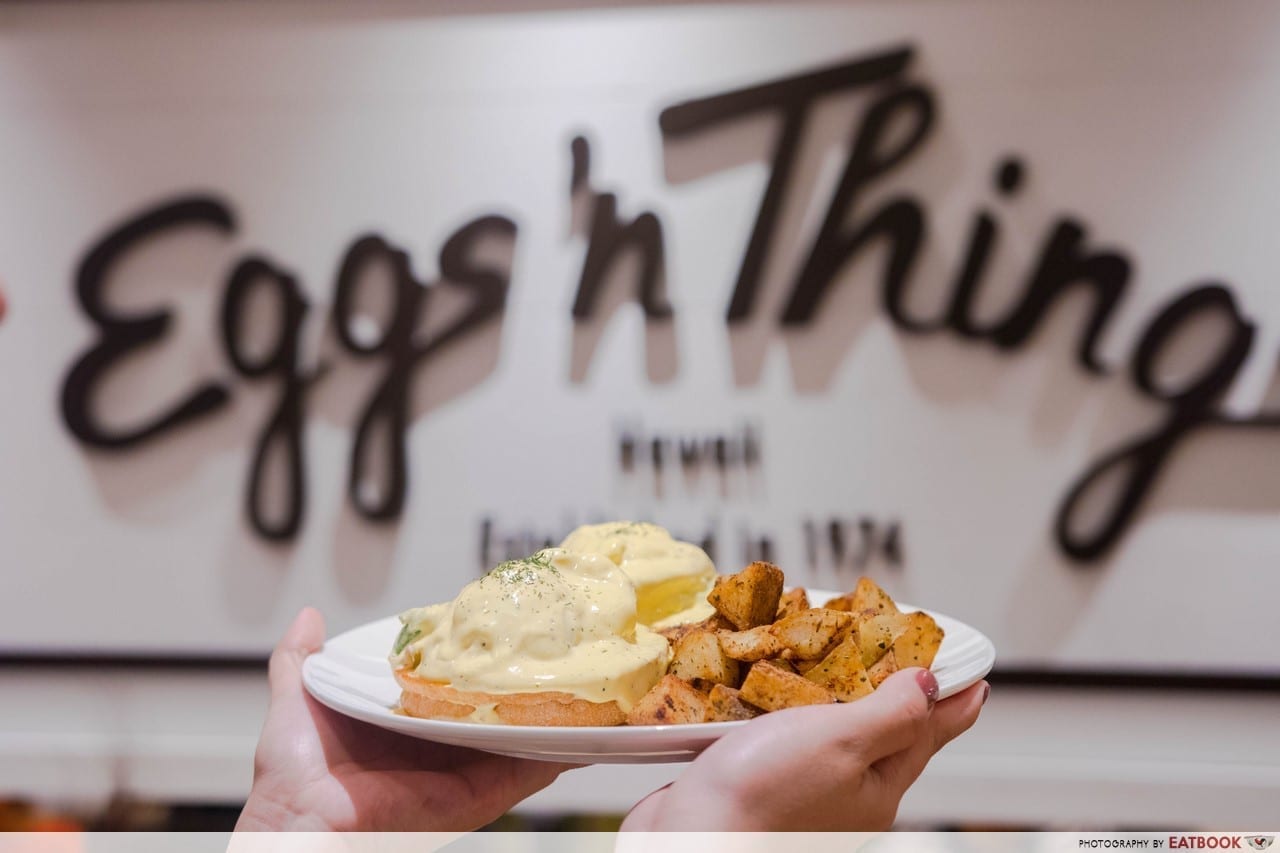
    Hawaiian cafe brand Eggs ’n Things has introduced its breakfast-style menu to Singapore with an outlet at Plaza Singapura.

    As well egg dishes, the casual eatery offers pancakes, crepes and waffles.

    Singapore is the second stop for the brand, launched in Waikiki in 1974. It has 19 outlets in Japan, where its Harajuku store in Tokyo still attracts queues.

    The Singapore cafe emphasises its use of freshly baked bread, organic and locally sourced beef and chicken, and house-made sauces without added flavouring or preservatives.

    Pancakes and waffles are served with an optional tower of whipped cream, the cheese omelette comes with spinach, bacon and roasted potatoes, while the Hawaiian Loco Moco dish comprises rice, a hamburger patty doused in gravy, and two fried eggs.

    Drinks include milkshakes, organic cold-pressed fruit juices, smoothies, free-trade organic tea, and coffee made from a blend of Brazilian, Indonesian and Mexican beans.

  • Egg prices drop over dioxin fear

    Egg prices drop over dioxin fear

    Retail egg prices have dropped NT$3 per 600 grams, the Poultry Association of the Republic of China said on Monday, demanding that the government provide compensation for the “innocent” egg farmers.

    Deputy Director of the Council of Agriculture’s (COA) Livestock Department Wang Chung-shu (王忠恕) said that the COA is closely monitoring egg prices, and that if they were to drop out of a reasonable price range, the council will initiate measures to counteract the drop, for instance by making mass purchases, or by implementing strategic export controls.

    An egg containing more than twice the minimum allowable level of dioxin contamination was discovered at a retail store in Miaoli last week.

    Health authorities immediately sealed off three major egg farms that had supplied the retail shop, Ho-chen store (合成), over the past three months: Chun Yi (駿億), Hung Chang (鴻彰) and Tsai Yuan (財源).

    Approximately 6,785 kilograms of eggs wholesaled from the three farms have been confiscated so far.

    The Food and Drug Administration (FDA) discovered that aside from the three egg farms that were immediately sealed off in Changhua, a further six egg farms had supplied the retail shop in Miaoli, the administration’s Director General Wu Shou-mei (吳秀梅) said on Sunday.

    Investigators have begun a probe into the six egg farms, Wu said, but refused to reveal their names.

    Wu also defended the FDA on Sunday against a midstream egg wholesaler’s criticism that the administration’s decision to seal off the store before identifying the source of the contamination was “reckless, thoughtless, and even defamation.”

    Wu argued that the FDA acted in the public interest and to ensure public food safety, with all moves that were made following appropriate legal procedures.

    However, while the three major egg farms in Changhua have been sealed off for seven days starting last Friday, the six additional farms will not be sealed off because there are no official records showing that the they have supplied the Ho-chen retail store.

    Animal Feed in Question

    The FDA, the COA and the Environmental Protection Administration launched a joint investigation into the source of the dioxin contamination last week, the results of which should be available by this Friday.

    While authorities have yet to rule out water and air as possible causes of the pollution, animal feed has been widely considered as the most likely source of the contamination.

    According to Wang Chung-shu, the council collected samples from eight animal feed manufacturers used by the nine egg farms in question on Monday.

    Wang added that there are currently no laws limiting the legal amount of dioxin residue in animal feed and that the council will discuss establishing such regulations.


  • Australian egg farmers have sent the first shipment of eggs to South Korea

    Australian egg farmers have sent the first shipment of eggs to South Korea

    Australian egg farmers have sent the first shipment of eggs to South Korea, to help ease a major shortage caused by an Avian influenza outbreak.

    Approximately 30 million birds have been culled to stem the spread of the disease, causing a shortfall of around 15 million dozen eggs each week.

    Prices of eggs and other poultry products have soared as a result, with retail egg prices rising by around 21.5 per cent to $2.50 (2,207 KRW) for 10 eggs.

    But at the farm gate, farmers have raised the price of eggs they are selling by 50 per cent to $1.75 (1,551 KRW).

    The outbreak is the first in seven months, caused by a highly contagious new strain, H5N6.

    Huge shipments of white eggs are already arriving from the USA, but Koreans have a preference for brown eggs, and that is where Australian farmers are stepping in.

    It is estimated around $20 million worth of eggs will be sent to South Korea, aided by a recently inked export agreement approved by South Korea, which permits the sale of Australian eggs.

    Industry body, the Australian Egg Corporation Limited managing director Rowan McMonnies said the urgency of the situation had help negotiations between the Australian Department of Agriculture and Water Resources and the South Korean government.

    “South Koreans are some of the biggest egg consumers in the world,” Mr McMonnies said.

    In comparison, Australians east around 227 eggs per person annually, the British consume 182 and South African eat 150 each per year.”

    All tariffs on imported eggs have been suspended until at least 30 June 2017.

    The first shipment of eggs left Australia by air last week, and further shipments will be sent by sea in the coming months.

    Mr McMonnies said the export of eggs to South Korea would not impact domestic supplies.

    “The Australian egg market is very large and Australian egg farmers are always seeking to balance supply and demand.

    “If anything this represents an opportunity for the expansion of the industry.”

  • Korea lifts import duties on eggs

    Korea lifts import duties on eggs

    The government will waive duties on imports of eight types of egg-related products, including fresh and powdered eggs, as the shortage in Korea is deepening after a widespread outbreak of avian influenza, which has led to the culling of nearly 30 million birds.

    The Korean government doesn’t import fresh eggs, but said Tuesday it would do so to alleviate the shortage. This is the first time in 18 years, which was when the country imported a small volume of fresh eggs from Thailand, that the Korean government imported fresh eggs from abroad, an official at the Ministry of Agriculture, Food and Rural Affairs said.

    “The data showed that we had very few occasions of importing fresh eggs from abroad in the past and even though they were imported, they were not for the public to buy at stores, but rather they were for other reasons such as medical research purposes,” said an official at the Ministry of Strategy and Finance. “This will be the first time for the government to allow importing large volume of fresh eggs.”

    The duty exemption will last until June. 30, the Finance Ministry said Tuesday. Currently, the import tariff on egg products ranges from 8 percent to 30 percent, but it will be suspended for six months.

    “The government has decided to remove tariffs on eggs to deal with soaring prices and shortage of them in the country due to AI,” said Kim Young-noh, a director at the Finance Ministry.

    The Finance Ministry said it will expedite inspections to have fresh eggs arrive as early as possible, or before the Lunar New Year holiday, when demand for eggs and poultry products tends to be higher.

    A total of 98,000 tons of egg-related products can be imported without tariffs, and among them 35,000 tons, or about 700 million, will be fresh eggs. The 700 million eggs can meet Koreans’ daily consumption for about 20 days.

    About 30.3 million birds have been slaughtered as of Tuesday, 50 days after the virus started to spread in the country. By type, layer chickens were affected the most. Nearly 22.45 million birds that were killed were layer chickens, which is about 32.1 percent of the layer chickens raised in the country.

    “About 30 percent of layer chickens are killed due to AI and the supply and demand problem will last at least six months from now [since the number of chickens for laying purposes needs to grow], said an official at the Agriculture Ministry.

    The average retail price for a tray of 30 eggs jumped 47.2 percent from 5,604 won ($4.66) a month ago to 8,251 won as of Tuesday due to the outbreak of the AI, according to data compiled by the Korea Agro-Fisheries & Food Trade Corporation (aT).

    The highest price reported to aT for a tray of 30 eggs was 9,700 won, which is 39 percent higher than the highest prices last month, which was when the shortage began after the country was hit by the virus on Nov. 16.

    Meanwhile, the government also has decided to distribute 7,200 tons of reserve fishery products to stabilize the heated market ahead of the Lunar New Year.

    The Ministry of Oceans and Fisheries said it will distribute its fishery products until Jan. 26 and local retailers, including traditional markets, will sell such goods 10 to 30 percent cheaper than retail prices.