Tag: ele

  • Hema now delivering 24 hours a day

    Hema now delivering 24 hours a day

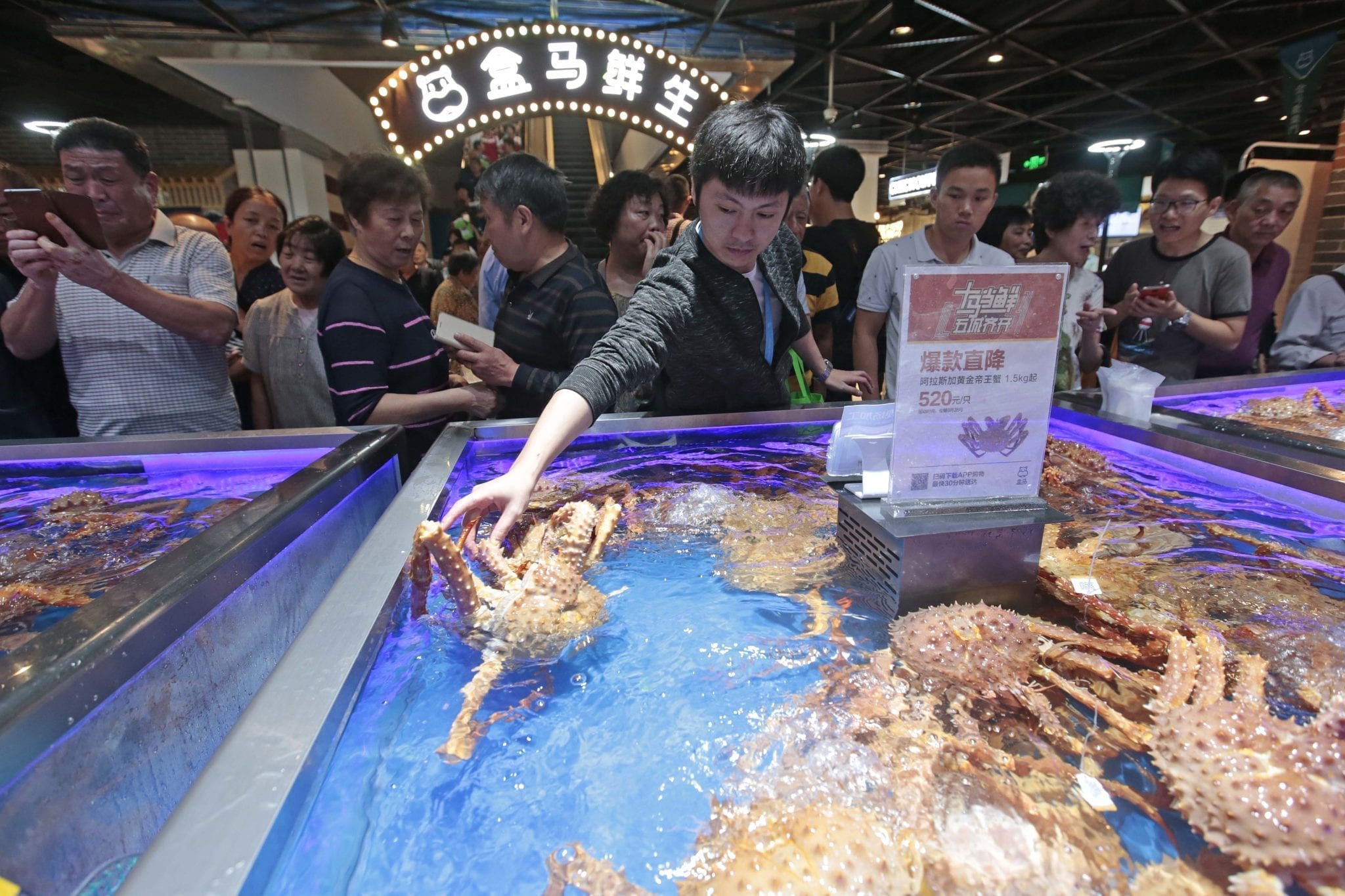
    Alibaba’s Hema supermarkets have launched 24-hour delivery services in a move to bolster the brand’s “New Retail” services.

    Initially the round-the-clock service is limited to the 25 Hema stores in Beijing and Shanghai. Consumers who live within 3km of a Hema store will be able to shop via the mobile app and order items for delivery between 10pm and 7am, when the bricks-and-mortar store is closed.

    Most items in store can be delivered with the exception of some fresh produce. Cooked meals will be available for delivery until 1am.

    “We found that New Retail doesn’t only merge online with offline, but also connects day and night,” says Hema chief executive Hou Yi. “There are definitely consumer demands that are specific to night time.”

    More than 80 million Taobao and T-mall users visit the sites between midnight and 4am, says Alibaba.

    Meanwhile, Alibaba has taken full ownership of the Ele.me online delivery service.
  • Alibaba buys Ele for US$9.5 billion

    Alibaba buys Ele for US$9.5 billion

    Alibaba has bought the Chinese food delivery business Ele.me for US$9.5 billion.

    The new deal will enable Alibaba to take over its daily operations and network of delivery drivers. Ele.me is China’s largest online delivery and services platforms.

    Alibaba, which already held a 43 per cent stake in the delivery business, hopes the move will bolster its offline retail infrastructure, furthering founder Jack Ma’s New Retail ambitions.

    Alibaba Group CEO Daniel Zhang said the move into online food delivery will create more value for China’s 1.3 billion consumers.

    “Ele.me can leverage Alibaba’s infrastructure in commerce and find new synergies with Alibaba’s diverse businesses to add further momentum to the New Retail initiative,” Zhang said.

    Alibaba said in a statement it flagged an expansion of Eli.Me’s product horizons beyond its traditional food-focused base, with possible synergies with Alibaba’s existing local services platform Koubei. It also said it will give Eli.me access to its extensive product offering under the New Retail strategy.

    “This acquisition shows that we have built Ele.me into one of China’s most valuable internet businesses. Our customers, merchants and partners will benefit from our further integration into the Alibaba family. We share the same strategic vision that New Retail has a bright future and being part of Alibaba’s ecosystem will take Ele.me’s growth to a new level,” Ele.Me founder Zhang Xuhao said.

    The food delivery Ele.me founder will take the position as chairman of the business post-acquisition and will also be appointed as a special adviser to Alibaba’s CEO on its New Retail strategy. Alibaba vice president Wang Lei, a company veteran of 15 years, will become the CEO of Ele.me.

  • Alibaba to lead $1b round into Chinese food delivery startup

    Alibaba to lead $1b round into Chinese food delivery startup

    Alibaba and its finance affiliate, Ant Financial, are in talks to lead a round of at least US$1 billion into Ele.me, one of China’s leading food delivery startups, according to anonymous sources that spoke to us.

    The fresh boost in capital will value Ele.me at US$5.5 billion to US$6 billion, and will help the startup battle against Meituan-Dianping, a competing service backed by Tencent, citing people familiar with the matter.

    “We do not comment on market speculation,” an Alibaba spokesman told us. Ant Financial declined to comment.

    China’s food delivery industry reached a heyday of activity in 2015, the year that food delivery startup Meituan and daily deals service Dianping merged into one entity. That year, both startups employed cash-burning subsidies to win market share.

    The industry quickly became a proxy war between Alibaba and Tencent, with the former backing Meituan and the latter investing in Dianping. However, after making peace over Meituan-Dianping, the fight has reignited – this time between Ele.me and Meituan-Dianping.

    Both are cornerstones of Tencent and Alibaba’s empires. In particular, the two startups fit into Tencent and Ant Financial’s mobile payment strategy, where online services, peer-to-peer payments, and purchases at brick-and-mortar retailers are conducted through the phone. By investing in Meituan-Dianping and Ele.me, both tech giants can embed their digital wallets inside the food delivery apps – and gather transaction data about customers.