Tag: electric cars

  • Electric Cars Expected To Be Launched In India In 2021

    Electric Cars Expected To Be Launched In India In 2021

    Electric cars are the future, and the year 2021 will offer the slightest glimpse of the electric vehicle (EV) revolution. Though EVs represent a very small percentage of global car sales, several automakers have already made massive investments in electric mobility foreseeing the demand it could create in the coming years. As India is moving towards e-mobility, there has been substantial investment in electric vehicles (EVs) by domestic and global auto majors. The models like the Tata Nexon EV and MG ZS EV have received a decent amount of success in the Indian EV market. Other automakers too are planning to enter into the electric vehicle space in India. On that note, we list down the EVs that are expected to go on sale in the Indian market this year.

    Tesla Model 3:

    Tesla is all set to roll out its first electric car, the Model S, in the country this year. The EV maker will set up India headquarters in Mumbai’s Lower Parel location while the production base will be established in Karnataka. The American EV maker will start its sales operations with the Model 3 which is the most affordable offering in its line-up. The Tesla Model 3 will come to India as a completely built unit (CBU) model. The car is rumored to be priced somewhere ₹ 55 lakh in the country. The Tesla Model 3 has a range of up to 500 kilometers and a top speed of 162 kmph. It can even do 0-100 kmph in 3.1 seconds.

    Volvo XC40 Recharge:

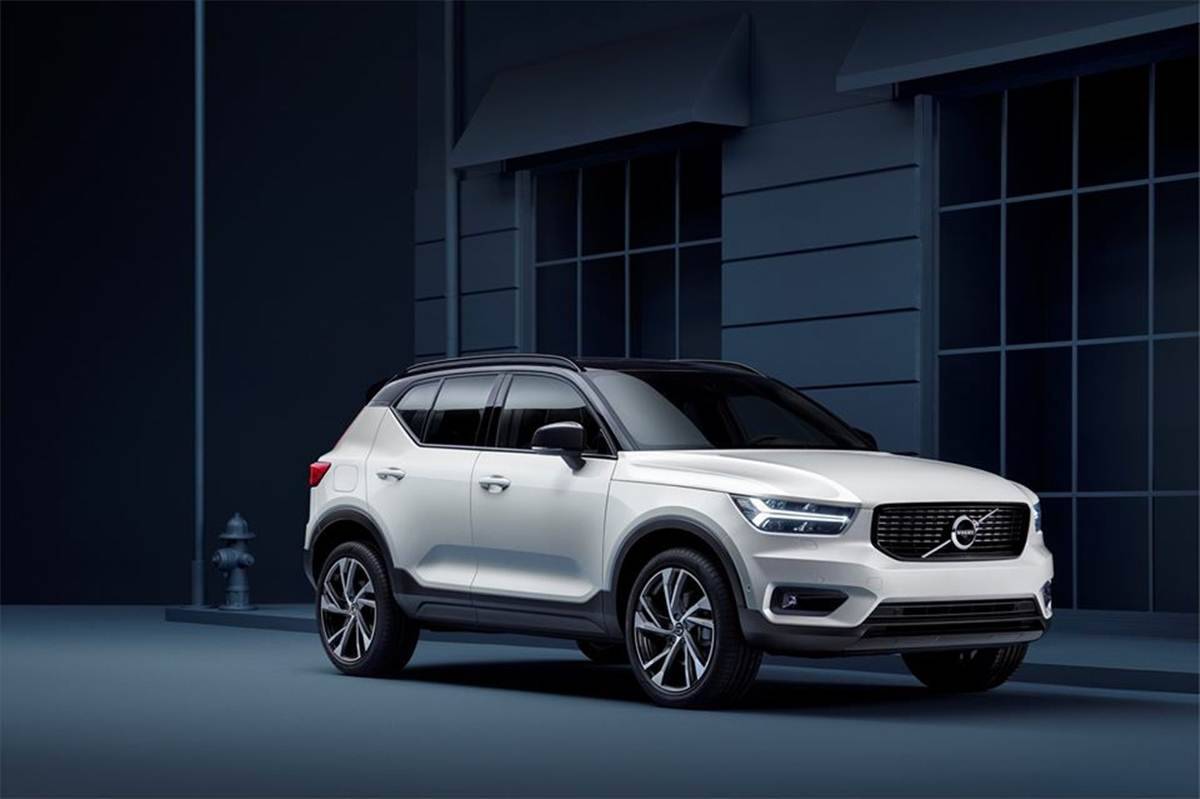
    Volvo Car India revealed the new XC40 Recharge electric SUV in the country a couple of months ago. It will be the first all-electric offering from a Chinese-owned Swedish carmaker. The company will start accepting pre-bookings for the electric SUV next month, while deliveries will commence in October 2021. The Volvo XC40 Recharge will come to India as a completely built unit (CBU) model. The electric SUV comes with a dual-motor powertrain with 150 kW electric motors on each axle that converts to 402 bhp and 660 Nm of peak torque. The electric motors are powered by a 78 kWh battery pack that offers an approximate range of up to 418 km. It can achieve 0-100 kmph in 4.9 seconds.

    Audi e-Tron:

    Audi India has confirmed the arrival of the e-Tron alongside the e-Tron Sportback in the country this year. It will be the German carmaker’s first all-electric offering in India. The electric SUV was previously slated to go on sale last year, which was delayed due to the COVID-19 pandemic. Both the Audi e-Tron and the e-Tron Sportback share the same underpinnings, but the latter gets the coupe-like sloping roofline and a redesigned rear profile. Both the EVs come with two electric motors that develop 355 bhp and 561 Nm of peak torque. In the boost mode, the power output increases up to 408 bhp and 664 Nm. The EVs use a 95 kWh battery pack that offers a range of about 452 km on a single charge and can be fully charged in eight and a half hours using a regular charger.

    Mahindra eKUV100:

    Mahindra is all set to launch the eKUV100 in the Indian market in the coming months. The Indian carmaker has already announced prices of the EV at the 2020 Auto Expo, which costs ₹ 8.25 lakh (ex-showroom, India). While the eKUV100 will be targeted at fleet operators, the EV will also be offered for private buyers. Visually, the car looks identical to its petrol counterpart. However, we expect minimal changes on the production-spec version including possibly a revised grille, along with reworked headlamps and taillights. The Mahindra eKUV100 will use a 40 kW electric that belts out about 53 bhp and 120 Nm of peak torque. A single-speed transmission will be sending power to the front wheels. The car will come with a 15.9 kWh lithium-ion battery and is expected to offer a range of 120 km on a single charge.

    Porsche Taycan:

    The all-new Porsche Taycan electric sports car will be introduced in India this year. It is the first fully-electric sedan from the Stuttgart-based luxury carmaker, which will be based on the Porsche Mission E Concept that was showcased in 2015. The new Porsche Taycan will sport two permanently excited synchronous electric motors that can churn out a maximum of 600 bhp and will a range of over 500 km thanks to its high voltage lithium-ion batteries. The EV will get 800-volt chargers with fast charging capability, which can offer a 400 km range in 15 minutes of charge time. The carmaker claims that the EV can sprint from 0-100 kmph in under 3.5 seconds.

    Tata Altroz EV:

    The Altroz EV will be the next electric vehicle from the Indian automaker’s stable, which was showcased at the 2019 Geneve Motor Show. The fully electric version of the premium hatchback is expected to go on sale in India this year. Like its ICE derivative, the EV version will also be built on the all-new Agile Light Flexible Advanced (ALFA) Architecture. Tata Motors has already confirmed that all its future electric vehicles will use the Ziptron powertrain technology. So, the Altroz EV will get a Lithium-ion battery with IP67 certification.

    Mercedes-Benz EQS:

    It was last month that Mercedes-Benz revealed the EQS electric sedan in the global market. The electric sedan has been listed on the official India website, suggesting it could be launched in our market later this year. The luxury electric sedan will be available in two trims – EQS 450+ and EQS 580 4MATIC. The EQS 450+ is the base variant that features a single electric motor on the rear axle for a total of 328 bhp and 568 Nm of peak torque. The EQS 580 4MATIC is an all-wheel-drive (AWD) range-topping trim and gets an electric motor on both front and rear axles. Total output in combination here is 516 bhp and a whopping 855 Nm of peak torque, good for a 4.1 seconds sprint to 100 kmph from a standstill.
  • Volvo To Produce Only Electric Vehicles By 2030

    Volvo To Produce Only Electric Vehicles By 2030

    Chinese-owned Swedish automaker Volvo said Tuesday it will produce only electric vehicles by 2030 and sell them all exclusively online. Volvo is among a growing crop of companies planning to ditch fossil fuel vehicles in the next few years, as demand for zero-emission cars rises and governments put pressure on firms to cut pollution. Indian-owned Jaguar said last month it would produce only electric vehicles from 2025, while US auto giant Ford said it would aim to have an all-electric fleet in Europe by 2030.

    “The company intends to only sell fully electric cars and phase out any car in its global portfolio with an internal combustion engine, including hybrids,” Volvo said in a statement. The company said half of its cars should be electric in 2025, with online sales accounting for half of its volume.

    China’s Geely Holding bought a struggling Volvo Cars in 2010 from Ford and has since helped it enjoy a renaissance as a maker of high-quality vehicles. However, last month Geely Auto said it would not go ahead with a planned merger with Volvo but the two companies would instead reinforce their collaboration on electric vehicles. Volvo is due later Tuesday to unveil its second all-electric vehicle, a C40 SUV, and is readying a smaller model especially suited for European road conditions.

    The company says its move to online sales will provide more transparency on pricing and options for its customers. “If you ask people it is quite a big irritation that you don’t have a clear picture of the price,” company boss Hakan Samuelsson said.

  • Indonesia Governement to Slash Taxes on Electric Cars

    Indonesia Governement to Slash Taxes on Electric Cars

    Indonesia plans to scrap some taxes on electric cars as part of efforts to realize the country’s vision of low-emission models making up at least a fifth of all vehicles produced in the archipelago by 2025.

    Depending on the model, electric vehicles are currently subject to up to 40 percent luxury tax and up to 40 percent import tax.

    Prestige Image Motorcars, the importer of Tesla electric cars, is currently selling the Tesla Model X 75D sports utility vehicle for $200,000 in Indonesia – at almost double its price in the United States, due to the added taxes.

    This severely limits the adoption of electric vehicles in Indonesia, restricting it to a niche market, but the government is adamant that it wants to change this.

    “The luxury tax on electric vehicles will be zero percent and import tax will be 5 percent. But [it is not yet final], as we are still discussing it,” Industry Minister Airlangga Hartanto said on Monday (26/02).

    Lower-priced electric vehicles are expected to increase demand and encourage more people to purchase them. This may in turn convince automakers to establish production facilities here.

    Airlangga said the government is currently formulating a roadmap to encourage the local industry to produce more low-emission vehicles, including electric cars.

    “We have completed a stage where we produce cheap and energy-efficient cars. Now we need to move fast to build hybrid cars and electric vehicles,” Airlangga said.

    The minister said the government has set a target requiring 20 percent of all vehicles produced in Indonesia to be hybrid or electric by 2025.

  • VW considers setting up commercial vehicles venture in China

    VW considers setting up commercial vehicles venture in China

    Volkswagen may expand cooperation with China’s Anhui Jianghuai Automobile (JAC) beyond electric cars to jointly develop and build commercial vehicles in the world’s largest autos market.

    The German group and JAC announced in June they were to set up a joint venture to develop and build zero-emission passenger cars as Volkswagen (VW) is pushing efforts to achieve the Beijing government’s production and sales quotas for new-energy vehicles.

    On Monday VW said it was looking along with its commercial vehicles division at deepening the cooperation with JAC to include the design, technology, product quality and development of multi-function vehicles.

    The venture would affect combustion engined and alternative-energy powered vehicles, would be owned equally by JAC and VW and would be based in JAC’s home town of Hefei, VW said.

    “VW Commercial Vehicles has a growing number of loyal customers in China,” executive Joern Hasenfuss said. “But there are significantly more opportunities,” he said without elaborating.

    Under the tie-up, VW and JAC could jointly tap growing demand for light pick-up trucks in China while the German group would also save customs duties by building its multi-van and Caddy vehicles at JAC facilities, analysts said.

    It’s also the latest evidence of VW’s foreign expansion not being confined to its passenger car operations.

    In September VW’s commercial vehicles arm started building the Amarok pick-up truck in Ecuador with local partner FISUM after starting production of the box-type Caddy model at a new multi-brand facility in Algeria two months earlier.

  • Daimler, BAIC agree to make electric cars in China

    Daimler, BAIC agree to make electric cars in China

    Daimler and its Chinese joint venture partner BAIC Motor Corporation agreed to upgrade the Mercedes-Benz factory in Beijing to make electric cars, the German carmaker said on Thursday.

    At a signing ceremony in Berlin attended by German Chancellor Angela Merkel and Chinese Premier Li Keqiang, Daimler signed a framework agreement to upgrade production facilities at Beijing Benz Automotive (BBAC), to make New Energy Vehicles, a label for so-called low-emission vehicles which include hybrid and pure battery electric cars.

    “China today is already the world’s largest market for NEVs, and Daimler is committed to contributing to the further development of electric mobility in this country,” Hubertus Troska, Daimler’s board member in charge of China, said.

    Daimler also agreed to acquire a minority stake in Beijing Electric Vehicle (BJEV), a subsidiary of the BAIC Group, to enhance collaboration on developing so-called new energy vehicles. Daimler declined to provide a figure for the scale or value of the stake.

    BJEV was established in 2009 by the BAIC Group and other shareholders as a development platform for New Energy Vehicles.

    It focuses on research and development, production, and sales and services for New Energy Vehicles and core NEV components. To date, the company’s product portfolio covers five major series of electric vehicles.

    The German government’s agenda to the Germany-China summit in Berlin also showed that Volkswagen was due to sign a contract with Anhui Jianghuai Automobile Co about production, research and development of electric cars in China.