Tag: electric vehicle

  • Chinese Telecoms Firm ZTE Preparing Electric Vehicle Product Line

    Chinese Telecoms Firm ZTE Preparing Electric Vehicle Product Line

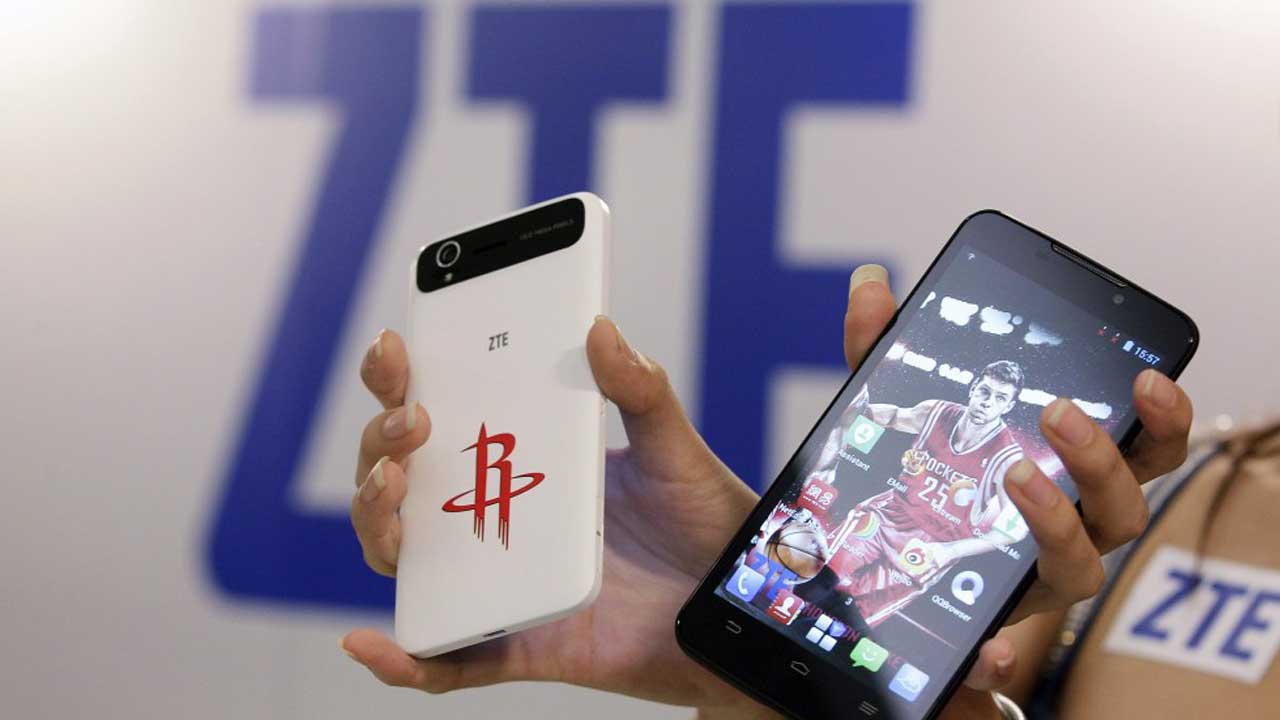
    Telecoms equipment maker ZTE Corp is joining a number of Chinese technology companies entering the electric vehicle market as it looks to build a team for a new product line, a company spokeswoman told Reuters.

    The Shenzhen-based company did not say whether the product line will supply parts for partner companies, or whether the company would be producing its own branded vehicles.

    Chinese technology firms have been stepping up their focus on electric vehicles (EVs) in the world’s biggest car market, as Beijing promotes greener vehicles as a means of reducing air pollution.

    Earlier this month Reuters reported that ZTE’s rival Huawei Technologies Co Ltd is planning to make EVs under its own brand and could launch some models this year.

    A Huawei spokesman denied it had EV ambitions of its own, beyond supplying technology to partners.

    Asian technology companies, including Baidu, have announced plans to make their own cars, while Shenzhen-based dronemaker DJI is building an engineering team to work on self-driving technologies.

    Sales of new energy vehicles (NEVs), including pure battery electric vehicles as well as plug-in hybrid and hydrogen fuel cell vehicles, are expected to make up 20% of China’s overall annual auto sales by 2025.

    Industry forecasts put China’s NEV sales at 1.8 million units this year, up from about 1.3 million in 2020.

  • Toyota Sells Electric Vehicle Technology To Chinese Startup Singulato

    Toyota Sells Electric Vehicle Technology To Chinese Startup Singulato

    Toyota Motor Corp has agreed to sell electric car technology to Singulato, its first deal with a Chinese electric vehicle startup, allowing the fledgling firm to speed up development of a planned mini EV.

    In return, Toyota will have preferential rights to purchase green-car credits that Singulato will generate under China’s new quota system for all-electric and plug-in hybrid vehicles.

    It will also gain a bird’s-eye view into how Chinese EV startups operate and the strategies they pursue in a fast-changing marketplace, said Singulato Chief Executive Shen Haiyin and two sources at the Japanese automaker.

    “With electrification, autonomous driving and car-sharing shaking up the industry, old ways need to be re-examined,” one of the Toyota sources said, declining to be identified as he was not authorized to speak on the matter.

    “We have a century’s lead in automotive technology, but we also need to be humble enough to learn from newcomers.”

    Singulato will acquire a license to use the design of Toyota’s eQ – a battery electric microcar. The deal is due to be announced on Tuesday at the Shanghai auto show, where Singulato will unveil a concept car based on the eQ.

    Singulato plans to redesign the car, tailoring it to local tastes to come up with a model by early 2021 that is more affordable and offers a longer driving range.

    “This deal gives us a way to save on time and costs to develop a reliable car and focus on what we excel in,” Shen told Reuters.

    Financial terms are not expected to be disclosed. A Singulato source said the startup agreed to pay “several tens of millions of dollars” for eQ’s design.

    Toyota said it was taking various measures to accelerate its business in China, a key market, but it would not comment on specific steps.

    The agreement is a vote of confidence by Toyota in Singulato’s prospects, said Shen. Founded in 2014 and backed by Intel Corp and Japanese trading house Itochu Corp, Singulato is one of at least 50 Chinese EV startups seeking to survive in a competitive market.

    It plans to sell its first self-developed battery electric car called the iS6 this year, competing with models from rival startups like Nio and WM Motor as well as those from global automakers.

    Singulato’s version of the eQ will be a so-called connected car offering young buyers a host of entertainment, safety and navigation features. The car, which will be called the iC3, will also feature some self-driving technology.

    Toyota sold about 100 eQ cars in 2012 and then discontinued it due to concerns over the limits of EVs, including their high price tags, short driving range and long charge time. But Singulato believes technological advances, especially in batteries, have made the car much more marketable.

    Shen said the iC3 should be able to go as far as 250-300 km (160-190 miles) on a single full charge and will be priced around 100,000 yuan ($15,000). Singulato aims to sell 200,000 units over five years.

    According to the two Toyota sources, the deal is part of efforts to share more technology with China as the Japanese automaker seeks more growth in the world’s largest auto market by beefing up manufacturing capacity and distribution channels.

    The green-car credits will also come in handy.

    Keen to combat smog, jump-start its own auto industry and lower reliance on imported oil, China is aggressively pursuing the adoption of electric cars. Under a production quota system taking effect this year, automakers are required to produce and sell a certain number of new-energy vehicles in proportion to their overall sales volume.

    A carmaker that fails to achieve its quotas will have to acquire NEV points from an automaker with surplus credits or face penalties.

    Toyota has said that initially it won’t be able to meet its quotas without buying credits from others. It has also agreed to produce and help sell a car for GAC Motor, a joint venture partner, to generate credits.

    According to the Toyota sources, the deal with Singulato has already yielded intriguing glimpses into the thinking of Chinese EV startups and their non-traditional approach to engineering.

    One such example was Singulato’s idea to look at linking headlights with satellite, cellular network location data and the driver’s planned trip. That could help turn the headlights along the driver’s route for enhanced visibility and driving safety.

    It might not something Toyota would consider but as an idea, “it was eye-opening,” one of the sources said.

  • 2018 sales of EV doubled in Korea

    2018 sales of EV doubled in Korea

    Hyundai Motor Executive Vice Chairman Chung Eui-sun laid out a plan to develop 44 electric vehicle models (EVs) and sell 1.67 million of the cars by 2025 during his New Year’s message held at the beginning of this year. The goal was a dramatic increase on the 38 models he planned to have by 2025 at the start of 2018. The revised goal is rooted in the fact that EVs are growing at an unprecedented pace in the global auto industry.

    According to U.S. market research firm S&P Global Platts, the number of electric cars sold worldwide exceeded 2 million in 2018 including plug-in hybrids, double the 1 million sold in 2017.

    This achievement came seven years after Tesla rolled out its Model S, opening the era of EVs, and more than two decades since Toyota released the world’s first hybrid, the Prius.

    Among the total number of EV cars sold, battery-electric vehicles sold 1.45 million units last year, followed by plug-in hybrids at 550,000 units.

    The most popular model was Tesla’s Model 3, which started mass production last year. Unlike the Model S and X, which cost over 100 million won ($88,850), the Model 3 was released as a more affordable model with a price tag around 50 to 60 million won. It sold 146,846 units, taking the top spot.

    Four Chinese companies ranked high in the top 10. The EC Series from Beijing Automotive Group ranked second. BYD’s eco-friendly plug-in hybrid, the e5, and JAC Motor’s iEV E/S were also on the list. Among Japanese cars, Nissan’s Leaf placed third while Toyota’s Prius Prime was ninth and Mitsubishi Outlander plug-in hybrid placed 10th.

    Hyundai and Kia both made it to the top 10 list of automakers for the first time. Combined, the two sold 90,860 units last year, taking the eighth spot.

    Tesla sold the most cars, at 245,240, followed by China’s BYD at 229,338. German brands, traditionally strong players in the vehicle market, had BMW at fifth and Volkswagen at ninth.

    Industry analysts project the market for electric cars will expand at an even faster speed. Deloitte, a global consulting firm, expects 4 million EVs to be sold in 2020 and 14 million in 2025. By 2030 it expects EV sales to hit 21 million.

    Considering that 98 million cars are sold worldwide annually, within 20 years one of every five cars purchased will be an EV.

    Experts say that while the United States and China have led the growth of the EV market, that is likely to change in the future.

    Deloitte forecast that cost reductions from technology development will pull down the price of EVs to be on a par with diesel cars by 2022. This means the product sector will gain price competitiveness, no longer relying on government subsidies.

    The market will also get more competitive. Toyota and Volkswagen are both planning to release new electric cars in the near future, with Volkswagen aiming to make 25 percent of the cars it produces EVs by 2025. Its investment in electric cars is already worth 20 billion euros ($2.25 billion).

    According to consulting firm AlixPartners, Volkswagen Group is planning to release 55 EV models by 2022. This accounts for half of all EV models slated for release by then.

    “Government subsidies played a big role in enabling Chinese firms to sell large numbers of EVs, but its finances have hit the limit,” said Kwon Yong-ju, a professor from Kookmin University’s department of automotive & transportation design.

    “With European companies having accumulated technology and capital while waiting for the commercialization of EVs, the future could be quite different from now.”

    “Major countries, like the United States and Europe, have tightened regulations toward environmental pollution more than before,” said Koh Tae-bong, head of research center at Hi Investment & Securities. “For car companies, it is inevitable that they will expand the amount of electric cars they make.”

  • DHL Expands Green Fleet With New Electric Delivery Vans

    DHL Expands Green Fleet With New Electric Delivery Vans

    DHL Express is rolling out a new fleet of 63 electric delivery vans in the United States as part of the German company’s goal to reduce logistics-related emissions to zero by 2050. Thirty battery-powered NGEN-1000 vehicles from Workhorse Group will be deployed in San Francisco with the remainder in other unspecified markets around the country later this year.

    The new vehicles have a range of 100 miles and 1,008 cubic feet of cargo capacity.

    DHL said its delivery fleet in the United States already includes electric, hybrid-electric, compressed natural gas and clean diesel-powered vehicles. The company has set a target of operating 70% of first- and last-mile delivery services with what it considers “clean transport” modes by 2025.

    “This year alone, nearly 30% of our new vehicles will be alternative fuel,” said Greg Hewitt, CEO of DHL Express U.S. in Plantation, Fla. “We’re excited about the technologies that continue to emerge in this area and how they are benefiting the logistics industry.”

    Workhorse Group launched commercial production of the NGEN-1000 and three smaller-capacity electric cargo vans in October 2018.

  • Mercedes EV to launch in Korea

    Mercedes EV to launch in Korea

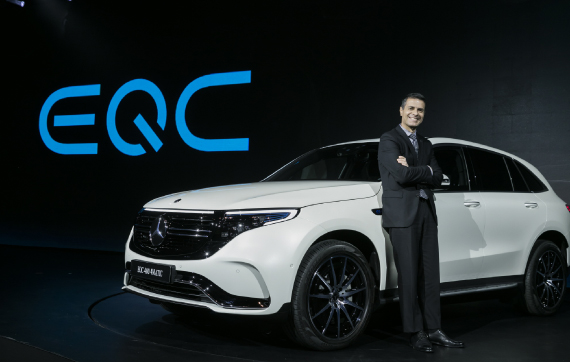
    Mercedes-Benz Korea is setting its sights on the local eco-friendly auto market with the introduction of an all-electric vehicle (EV) along with hybrid offerings this year. The Korean unit of the German brand announced Thursday that it will be introducing 14 new models to the local market this year including the EQC, the first model under its electric EQ brand, as well as four plug-in hybrid EVs at a New Year’s press conference at the Hotel Shilla in central Seoul.

    “2019 will be the year of the EQ,” said Dimitris Psillakis, CEO of Mercedes-Benz Korea. “We will do our utmost to provide the best products and services in the upcoming era of future mobility.”

    The premium electric SUV EQC, unveiled globally last September, is the German automaker’s current flagship EV. The promised hybrid models will range from SUVs to sedans, according to the automaker.

    Along with its entry into the local EV market, the German brand announced that it is also preparing its charging infrastructure.

    Mercedes-Benz Korea said EQC buyers will have access to its combined charging network, which will offer a wide range of charging stations nationwide. EQC drivers will also have access to a one-on-one concierge service that will recommend the nearest charging station to drivers.

    Mercedes-Benz Korea’s push into eco-friendly vehicles comes as it was embroiled in controversy last year regarding its vehicles’ emissions certifications.

    Last month, the automaker said it will appeal a court decision after it was found guilty of violating environmental and customs laws regarding the emissions certification process. The company was fined 2.81 billion won ($2.5 million) and an employee in charge of certifications was handed an eight-month sentence.

    Regarding the legal action, Psillakis promised that the company is following up on the newest regulations.

    “We have a very different changing and toughening regulatory environment around us,” said Psillakis. “We place processes to safeguard so that we can adapt to the new regulations as fast as possible.”

    The company also addressed concerns surrounding recall plans for its vehicles equipped with faulty Takata airbags, saying that it is planning a mass recall in the second quarter of this year of around 30,000 vehicles.

    The German automaker was the best-selling imported brand last year, selling 70,798 vehicles in the country.

    With last year’s sales, the Korean market is the fifth-largest market for the brand after China, the United States, Germany and Britain.

  • Nissan Leaf approved for vehicle-to-grid use in Germany

    Nissan Leaf approved for vehicle-to-grid use in Germany

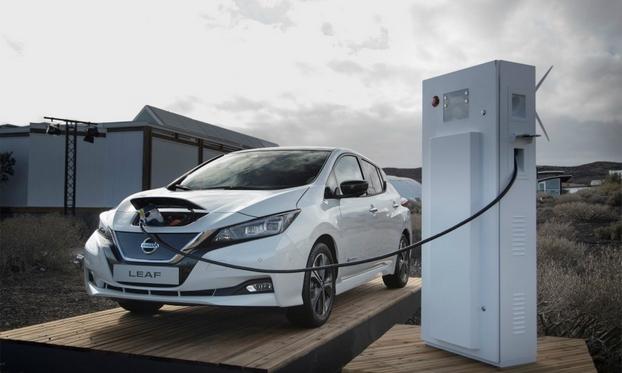
    Nissan’s Leaf is the first electric vehicle to secure regulatory approval as an energy backstop for Germany’s electricity grid. So-called vehicle-to-grid (V2G) technology is a connection between the EV and the grid through which power can flow from the grid to the vehicle and vice-versa, potentially enabling car owners to sell energy to the network. This would allow utilities to use EVs as a backstop if demand rises.

    Nissan said it would initially target corporate clients with fleets of more than 60 electric vehicles, adding that services based on V2G technology would be offered in Germany starting next year.

    “We strongly believe in an emission-free future,” said Guillaume Pelletreau, Vice President and Managing Director, Nissan Center Europe. “Leaf batteries could make an important contribution to energy transition in Germany and a sustainable future.”

    The initiative was also supported by Daimler-backed The Mobility House, local utility Enervie and German transmission system operator Amprion, which is co-owned by RWE and infrastructure investors including Munich Re, Swiss Life and Talanx.

    Nissan is relying on the CHAdeMO charging standard, which has been jointly developed by several Japanese companies as a competitor to Tesla’s supercharger system and the European-backed Combined Charging System (CCS).

    That puts Nissan at odds with European automakers, including BMW and Volkswagen, who are pushing to have the CCS, which is also capable of V2G services, established.

    “Nissan is ahead for now but other technologies, including Tesla’s supercharger can theoretically do the same thing,” said Thomas Raffeiner, chief executive and founder of The Mobility House.

    Nissan has so far sold about 370,000 electric vehicles and, along with top shareholder Renault, has been very active in exploring how car batteries can be integrated into the wider power system.

    While a mass uptake of EVs is expected to put a major strain on the power grid and require billions of euros in infrastructure investments, car batteries have already proven that they can become part of the network.

  • Global Electric Vehicle Market to Reach 10.8 Million Units by 2026

    Global Electric Vehicle Market to Reach 10.8 Million Units by 2026

    Increasing global concerns regarding the negative effect of climate change along with alarming pollution levels recorded in the major cities have created a demand for electric vehicles. A major factor behind the growth of electric vehicles is the support provided by various governmental agencies to encourage the sale of these vehicles.

    Furthermore, the well-established road infrastructure network has further aided the market for these vehicles, with charging points available more frequently on the civilian roads. Today, electric vehicles have transformed from an experimental mode of vehicle to a necessity, with automakers worldwide putting in efforts to make EVs available in all the economic ranges. This is evident from the meteoric rise in its sales over the last five years, with over 2 million electric vehicles on the road at present, as compared to a few thousands back in 2012.

    With number of initiatives and product developments taking place, it won’t be long before EVs occupy a significant share of the global automotive market. The market in terms of volume is estimated to witness growth at a CAGR of 28.3% over the period of 2017 to 2026. The report is a compilation of various segmentations including market breakdown by propulsion type, component type, vehicle type, and different geographical regions.

    The report provides a detailed market analysis and forecast with respect to different propulsion types in the electric vehicles market which are Battery Electric Vehicle and Plug-in Hybrid Electric Vehicle (PHEV). On the basis of component, the electric vehicles market is segmented into battery, motor, and regenerative brake. While highlighting the key driving and restraining forces for this market, the report also provides a detailed study of the different vehicles that are analyzed, which include passenger and commercial vehicles.

    The report addresses the following key questions about the global electric vehicles market:
    • What is the global electric vehicles market size in terms of volume in the period 2017-2026?
    • Which is the dominant propulsion type by volume for the global electric vehicles market?
    • Which is the dominant vehicle by propulsion type in terms of volume in 2016?
    • What is the revenue generated by the different components in the global electric vehicles market in the period 2017-2026?
    • What is the revenue generated by the different components for different propulsion type in the global electric vehicles market in the period 2017-2026?
    • Which vehicle type will lead by volume in the global electric vehicles market by the end of the forecast period?
    • What are the different factors driving the market forward in the forecast period?
    • What are the major factors challenging the growth of global electric vehicles market?
    • Which type of new strategies are being adopted by the existing market players to make a mark in the industry?
    • Which region will lead the global electric vehicles market by the end of the forecast period?

    The report includes an exhaustive analysis of the geographical split into North America (the U.S and Canada), Europe (Germany, the U.K, France, Netherlands, and Norway), and Asia-Pacific (China, Japan, and South Korea). Analysis of each of the geographical regions details the individual push and pull forces in addition to the key players from that particular region.

    The report examines the role of the leading market players involved in the industry. The company profiles section includes highlights of significant information about the key companies involved, along with their financial positions, key strategies & developmental activities of recent years (2014-2017).

    Some of the key players are Tesla Inc. (U.S.), BYD Company Limited (China), Volkswagen AG (Germany), Nissan Motor Corporation (Japan), and Mitsubishi Motors Corporation (Japan). EV components manufacturers such as Samsung SDI (South Korea), Automotive Energy Supply Corporation (Japan), LG Chem. (South Korea), Panasonic Corporation (Japan), and Continental AG (Germany).

    Executive Summary
    The automobile industry is one of the fastest-growing industries in the manufacturing sector. Intense global competition along with consumer preference driven innovation have been crucial factors driving the industry.

    However, the growing demand of and subsequent increase in the number of vehicles have contributed majorly to the depletion of non-renewable resources and deterioration of the earth’s atmosphere. A steep rise in the conventional fuel vehicle sales along with global population and urbanization has brought with it some serious concerns such as global warming and alarming pollution levels. There are innumerable issues that are plaguing the planet and the natural resources (especially fossil fuels) are declining at a rapid pace.

    This has consequently led the governments, environmental agencies, and automobile manufacturers to develop modes of transport that run on alternate means. Electric vehicles are considered the most desirable option of all the alternative forms of vehicles. The support of the governments of various nations and revolutionary developments by the automakers can be credited for the growing prominence of Electric Vehicles in the automobile industry.

    Several countries have pledged to ban the sale of gasoline-powered vehicles within the next two decades, with many others to follow. The Electric Vehicle Initiative launched in 2010 by some of the major countries across the globe is one of the many initiatives undertaken that are accelerating the growth rate of the market for EVs on a global scale.

    The report defines and estimates the market size in terms of volume and the section on electric vehicle components market size has been provided in terms of value. The global electric vehicles market is estimated to reach 10,761.42 thousand units by 2026. The market is driven by a number of factors such as stringent governmental regulations in terms of emissions and fuel economy, growing demand for fuel efficient vehicles, and governmental initiatives such as tax benefits and subsidies to promote the sales of electric vehicles. However, there are certain challenges which are inhibiting the overall growth for the global electric vehicles market such as high initial cost and time required to charge the electric vehicles.

    The global electric vehicles market has been fundamentally benefiting from the changing paradigms in governmental regulations and increasing environmental awareness among the consumers. BEVs held the highest market share in 2016 in terms of volume and is expected to grow at a higher growth rate as compared to PHEV.

    BEVs produce no pollution when being driven, as there is no gasoline interaction which means tailpipe pollution is zero. Factors such as improved charging infrastructure, governmental initiatives, and increased range are expected to propel the market growth for BEVs.

    Battery held the maximum share in the market and accounted for 68.8% share in 2016. Battery is the most important component of an electric vehicle and is used to power the main propulsion system.

    While a battery serves as the primary source of power in Battery Electric Vehicles (BEVs), it works in tandem with a combustion engine in PHEVs and other conventional hybrids. The battery makes up substantial cost of an electric vehicle owing to its high price.

    The electric passenger cars held the highest share in the market in 2016 in terms of volume and is also expected to grow at a higher rate as compared to commercial vehicles. Factors such as governmental initiatives, urbanization, and increasing disposable income is responsible for such a gigantic share of electric passenger cars. A major factor expected to play the key role in the development of passenger electric vehicles is the development of adequate road infrastructure for easing the adoption of these vehicles.

    This report also covers the global electric vehicles market, by geography and consequently provides the volume of the key regions which include North America, Europe, and Asia-Pacific (APAC). APAC dominated the global electric vehicles market by volume in 2016.

    The APAC automotive electric vehicles market is mainly dominated by the South Asian countries comprising of some of the biggest automotive producers in the world. The automotive market in the APAC region is growing rapidly, and the development of electric vehicles is gaining attention due to a collective effort from the government and manufacturers to initiate reforms and develop technologies which will promote the sale of these vehicles and make them economically efficient to use.

    Some of the key players in the electric vehicles market are Tesla Inc. (U.S.), BYD Company Limited (China), Volkswagen AG (Germany), Nissan Motor Corporation (Japan), and Mitsubishi Motors Corporation (Japan). EV components manufacturers such as Samsung SDI (South Korea), Automotive Energy Supply Corporation (Japan), LG Chem.

    (South Korea), Panasonic Corporation (Japan), and Continental AG (Germany). These companies are aiming for an increased number of product launches and collaborations to expand their operations and prevent new companies from becoming potential future competitors.
  • China may roll back electric vehicle quotas as industry pushes back

    China may roll back electric vehicle quotas as industry pushes back

    China is considering easing proposed quotas aimed at producing more electric vehicles, as Beijing gets pushback from the automotive industry over the scale and pace of the plans.

    If adopted, proposed changes under discussion could see a target of new energy vehicles (NEV) making up 8 percent of sales next year pushed to 2019, two auto executives said.

    The changes would lower targets from a draft policy released in September requiring 8 percent of automakers’ sales to be battery electric or plug-in hybrid vehicles by 2018, rising to 10 percent in 2019 and 12 percent in 2020.

    Any loosening of NEV targets would mark a pull back by Beijing, which has faced opposition to the planned targets as it looks to drive its domestic carmakers to overtake global rivals in the ‘green’ vehicle sector.

    Automakers and industry bodies have said the targets are too tough and could hurt manufacturers’ interests. New energy vehicles last year accounted for just 1.8 percent of sales in the world’s biggest autos market, according to Reuters calculations based on official data.

    “It’s normal to make revisions as it’s a draft plan,” An Jin, chairman of Anhui Jianghuai Automobile Group (JAC Motor) , said on the sidelines of the National People’s Congress in Beijing.

    He said he was aware of talks to revise the quota targets, but said nothing was set in stone. “JAC hasn’t been told what revisions might be made to the draft, but I think it is possible the draft will be changed after the discussions,” he said.

    “Whether the whole market can hit this quota by 2018 depends a lot on the strength of government policy. If it’s strong then we should be able to surpass the targets,” An said, “(But) if you consider China’s infrastructure and the transformation of China’s auto sector, then perhaps the pace will have to slow.”

    TWO PERCENT CUT
    Two executives familiar with the plans told Reuters the government was considering options for lowering the requirements.

    One idea was to reduce the quota requirement by 2 percent each year, cutting the 2018 requirement to 6 percent, said a China-based government relations official at a major global automaker. It would then be 8 percent in 2019 and 10 percent in 2020.

    Another option would be to push back each target by a year, with the 8 percent quota starting from 2019, an executive at a Japanese car maker said.

    Both asked not to be named due to the sensitivity of the matter and because the draft was still under consideration.

    The overall policy includes quotas for plug-in cars, targets for average fuel economy requirements, and a credit trading system to promote green energy cars while penalizing petrol cars.

    The two people said the quota stand-off was tied to a disagreement between the Ministry of Industry and Information Technology (MIIT) and China’s top state planner, the National Development and Reform Commission (NDRC).

    MIIT, which regulates manufacturers, supports a more flexible credit trading system favoured by automakers. The NDRC is more aggressive in promoting a transition to electric vehicles, pushing the introduction of the stricter quotas.

    An NDRC spokesman said the body played a “small role” when the draft was open to public for discussion. MIIT did not immediately respond to Reuters’ requests for comment.

    China has strongly supported and subsidized electric vehicles, but is gradually swapping out incentives for hard targets automakers must meet. The central government cut subsidies 20 percent this year, a first reduction towards eliminating them by 2020.