Tag: electro

  • Judge says Apple and one of its executives lied during Epic Games trial in 2021

    Judge says Apple and one of its executives lied during Epic Games trial in 2021

    Remember Judge Yvonne Gonzalez Rogers? She was the judge who made the ruling in Apple’s 2021 legal battle against Epic Games that resulted from Apple’s decision to boot Epic and its popular Fortnite game from the App Store. Apple said that Epic included a link inside the App Store version of Fortnite that would allow users to buy in-app items for the game directly from Epic. This prevented Apple from taking the 30% cut it would usually take from the cost of paid apps and in-app purchases.

    Today, Judge Gonzales Rogers said in a court document that Apple “willfully” violated an injunction that she imposed on the company in 2021. She also wrote that Alex Roman, Apple’s Vice President of Finance “outright lied to the court” about the timing related to a decision made by Apple to place a 27% fee on some App Store purchases. The judge turned over the matter to U.S. attorneys who will now investigate whether Roman and Apple will be charged with criminal contempt.

    In a short but sweet response, Apple said, “We strongly disagree with the decision. We will comply with the court’s order and we will appeal.”

    Wednesday, Rogers ruled that Apple was in contempt and accused the tech giant of trying to violate the rulings she made in the 2021 case. The judge explained that after her decision in 2021, purchases made off-app by iPhone users would be expected not to have any commission or cut for Apple. But all Apple did in 2024 was reduce the cut it would receive from 30% to 27%.

    “In stark contrast to Apple’s initial in-court testimony, contemporaneous business documents reveal that Apple knew exactly what it was doing and at every turn chose the most anti-competitive option. To hide the truth, Vice-President of Finance, Alex Roman, outright lied under oath.”

    The judge also said that Apple never presented documentation about a meeting held in June 2023 that Apple CEO Tim Cook attended. Apple never told the court about this meeting until this year by hiding it from the court, according to Judge Gonzales Rogers. The judge ordered Apple to immediately stop charging commissions on purchases made for iPhone apps obtained through web links inside an app. As previously noted, that’s exactly what Epic did with its Fortnite app that kicked off all of this drama.

    “It’s a huge victory for developers, and it means all developers can offer their own payment service side-by-side with Apple’s payment service. This forces Apple to compete. This is what we wanted all along.”

    Additionally, Apple will be responsible for Epic’s attorney fees related to this issue. Judge Gonzalez Rogers had no sympathy for the company. “This is an injunction, not a negotiation. There are no do-overs once a party willfully disregards a court order,” the judge wrote.
  • Hyundai Races To Electric As Tesla Takes Off

    Hyundai Races To Electric As Tesla Takes Off

    Hyundai Motor, an early backer of hydrogen cars, has watched the electric rise of Tesla, including on its home turf. Now’s it’s going on the offensive in the battery-powered market led by its U.S. rival. The South Korean company plans to introduce two production lines dedicated to electric vehicles (EVs), one next year and another in 2024, according to an internal union newsletter seen by Reuters.

    Euisun Chung, leader of the Hyundai Motor Group conglomerate that also includes Kia Motors, has also held a series of meetings since May with his counterparts at Samsung, LG, and SK Group, which make batteries and electronic parts.

    The purpose of the talks, which were publicly announced, was for Hyundai to try to secure batteries at a time of tight supply as the race for EVs intensifies, according to several industry sources. Those manufacturers also supply the likes of Tesla, Volkswagen, and GM.

    Hyundai told Reuters it was collaborating with Korean battery suppliers “to scale up” its electric car production efficiently. It declined to comment on any plans to introduce dedicated production lines.

    The moves indicate the carmaker is moving aggressively to expand its electric capacity, days after Chung announced on July 14 that Hyundai Motor Group aimed to sell 1 million battery EVs a year and grab a global market share of over 10% by 2025.

    There’s some way to go; Hyundai Motor Group sold 86,434 battery EVs last year, according to data from industry consultant LMC Automotive. That was above the 73,278 sold by Volkswagen Group but behind the 367,500 delivered by Tesla.

    Hyundai, the world’s No.5 automaker together with Kia Motors, said its agility allowed it to lead the charge into EVs. “We are certain Hyundai is never going to fall behind,” it added.

    A senior Hyundai insider, who declined to be identified because of the sensitivity of the issue, said the company had not been concerned about Tesla when the Silicon Valley company was producing high-end cars.

    But it became more worried when Tesla brought out a cheaper Model 3 in 2017, according to the insider who described it as a “strategic victory”. No traditional automaker has been successful yet in catching up with Tesla, which retains an edge in battery and software technology.

    Hyundai could also face a roadblock from its powerful union, which is worried about job security as EVs require fewer components and workers than gasoline vehicles; at Hyundai, this is partly because the automaker makes a number of key components for conventional cars in-house, while many EV parts are outsourced at present.

    The union is pushing for the company to assemble key EV components, like battery packs and motors, in-house to offset any reduction in the workforce.

    “We are not opposed to EV business. Kodak went bankrupt because it stuck to film even as the industry was shifting to digital photography,” union spokesman Kwon Oh-kook said.

    “We just want to protect the jobs of our members,” he said. Hyundai said automakers and unions needed to accelerate change to remain viable in the long term.

    Back in 2010, Hyundai Motor Co made 230 electric cars for the government, but they ended up being mothballed at a research center outside Seoul due to a lack of charging infrastructure, according to Lee Hyun-soon, R&D chief at the time.

    In a 2014 book Lee, who developed South Korea’s first gasoline engines, said such electric vehicles were “not realistic”, also citing high battery costs, and that hydrogen cars – a rival clean technology – offered a “bright” future.

    Along with Toyota and Nikola, Hyundai was one of a few automakers to have backed hydrogen cars. It launched the industry’s first mass-produced hydrogen car, Tucson Fuel Cell, in 2013 and the NEXO in 2018.

    However the technology has not taken off; 7,707 hydrogen fuel cell cars were sold globally last year, compared with 1.68 million battery EVs, according to LMC Automotive.

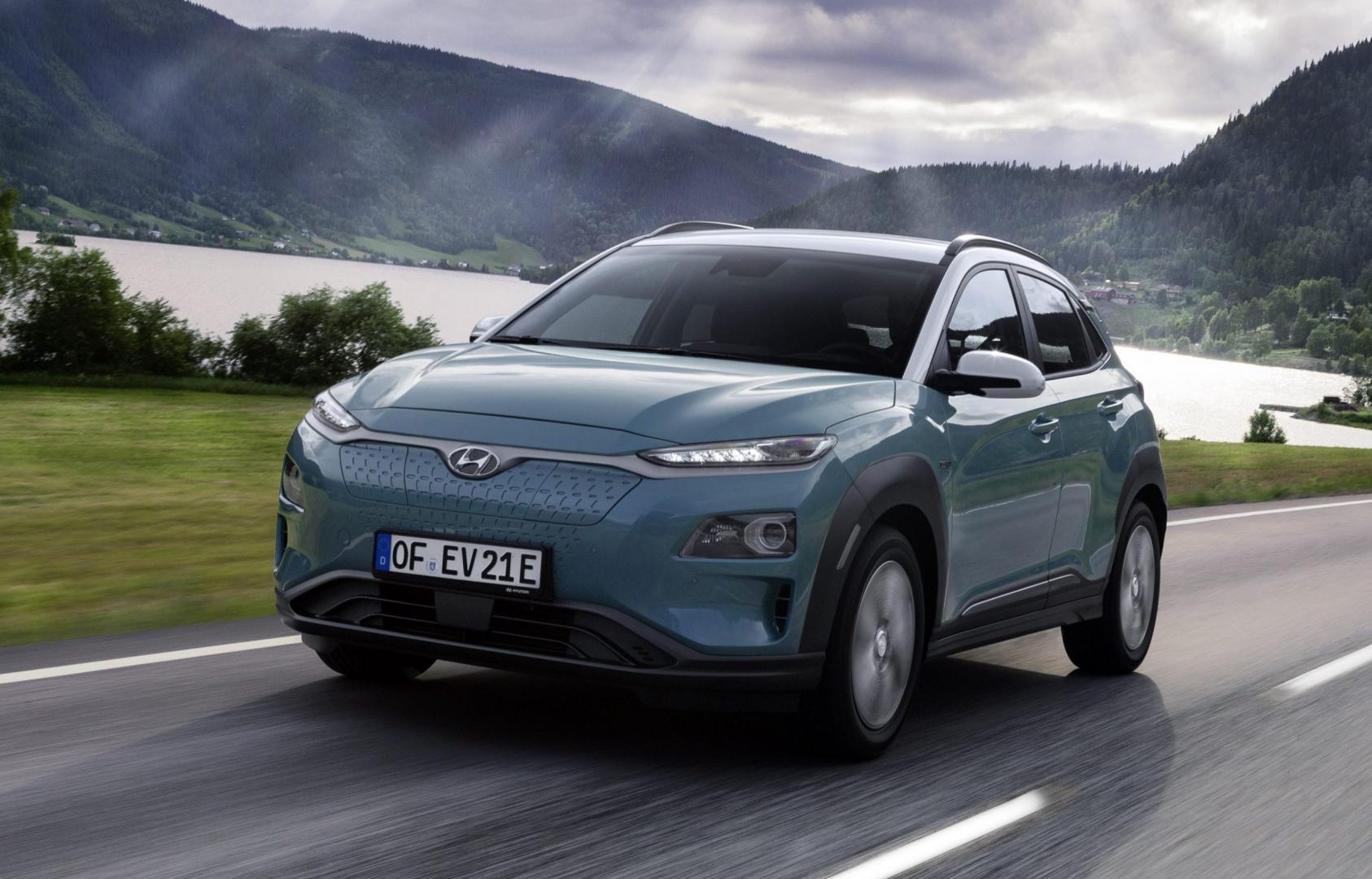
    In Hyundai’s home market, Tesla had its best month in June, with its Model 3 beating Hyundai’s Kona EV, as well as premium models from BMW and Audi.

    “Hyundai did not expect Tesla to dominate the EV market so quickly,” another person familiar with the company’s thinking told Reuters.

    Hyundai Motor has a market capitalization of about 25.3 trillion won ($21.2 billion) – less than a tenth of that of Tesla, now the world’s most valuable automaker.

    While Hyundai promotes its hydrogen cars with K-pop boyband BTS, it only plans to introduce up to two hydrogen models by 2025, and 23 battery-powered models.

    Peter Hasenkamp, vice president at electric startup Lucid, who previously worked at Tesla and Ford, said established carmakers faced historical “inertia” to make the EV transition.

    “Part of the reason we’re based in Silicon Valley is to leverage both software and electrical engineering expertise,” Hasenkamp said.

    “You’ve got a couple of generations for the big car companies to learn really how to do t