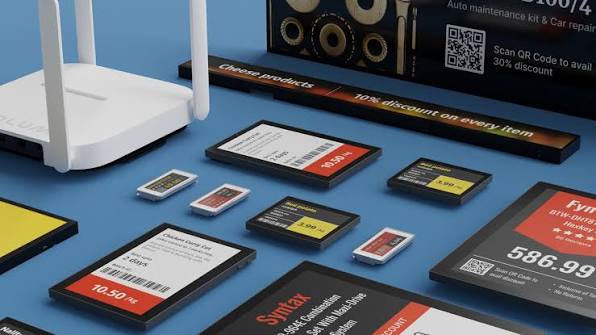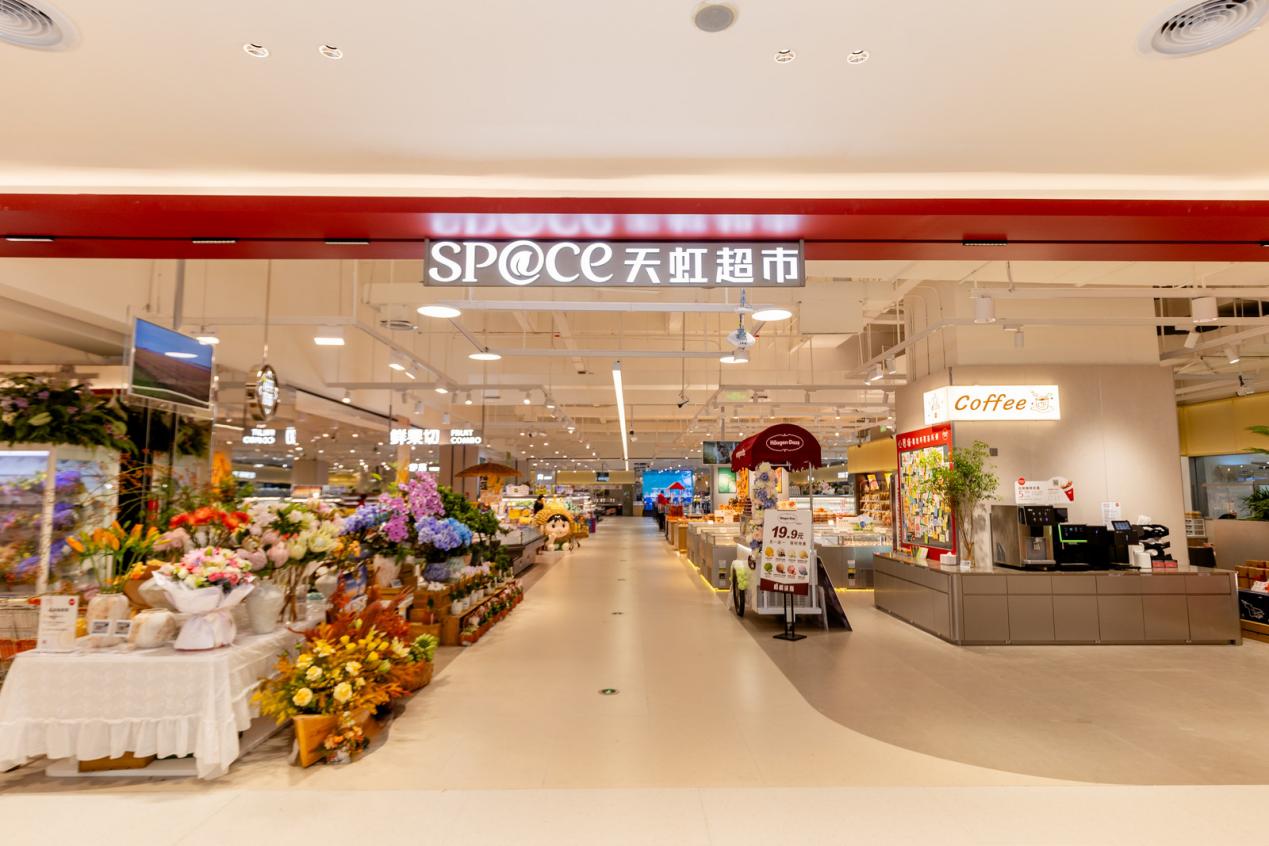
Rainbow opened its upgraded Shahe sp@ce supermarket in Shenzhen on September 8, deploying more than 17,000 connected IoT devices across the trading floor. The project turns a 17-year-old site in Nanshan District into Rainbow’s first operational store digital twin, linking physical shelf monitoring directly to automated inventory orders and home-delivery packing.
The retailer developed the system with electronic shelf label supplier Hanshow and its own technology arm, Lingzhi Digital Technology. Hanshow Nebular Ultra electronic labels provide centimeter-level shelf positioning and tap-to-read product provenance for customers, while automated cameras and robotics track out-of-stock items along the aisles. Lingzhi’s proprietary Bailingniao retail artificial intelligence model processes the visual data to adjust replenishment orders and assign tasks to store clerks.
Smart Carts and Micro-Fulfilment at Shahe
Shoppers navigating the nine food and lifestyle zones use Hanshow NexConnect smart carts fitted with Lingzhi’s AI assistant for in-store mapping, item lookups and self-checkout. The store also houses a dedicated micro-fulfilment center built to assemble and dispatch online grocery deliveries directly from the back room.
Our goal with sp@ce 3.0 is to create a better everyday shopping experience built on quality, freshness, transparency and trust. As Rainbow’s first Store Digital Twin-enabled store, the Shahe sp@ce supermarket brings digital visibility into day-to-day operations, helping our teams respond faster and more accurately, while allowing store employees to spend more time on the service and experiences that matter to customers.
How the Model Cuts Labour and Inventory Friction
Chinese supermarket chains have spent five years testing automated checkout and camera-based shelf scanning, but most systems remain isolated experiments that alert staff without solving stocking bottlenecks. Rainbow is attempting to connect real-time shelf telemetry directly to supply forecasts, removing manual inventory counts entirely from daily shopfloor routines.
For suppliers and distributors, the shift to automated replenishment leaves little room for negotiated shelf space or delayed delivery windows. If a supplier fails to restock within the algorithm’s timetable, the system flags the gap immediately. The risk sits in hardware maintenance across thousands of sensor endpoints, where battery depletion or sensor misalignments can distort automated ordering across an entire product category.
The Trajectory of Rainbow’s Digital Formats
Rainbow has spent several years reformatting its traditional department stores and community retail centers across China into mixed-use lifestyle hubs. The Shahe project follows Hanshow’s earlier shelf-monitoring rollouts and the launch of its xPilot retail platform in June 2026.
Operators across southern China will now watch whether the sensor-dense model delivers measurable margin gains or simply inflates store fit-out capital expenditure ahead of Rainbow’s planned rollouts to other sp@ce locations.