Tag: electronics retail

  • Vietnam Retailers Pull Chinese Smartphone Brands over Disputed Maps

    Vietnam Retailers Pull Chinese Smartphone Brands over Disputed Maps

    Electronics retailers across Vietnam pulled smartphone models made by several Chinese brands from display counters on November 4, responding to reports that preinstalled weather applications featured maps violating Vietnamese sovereignty.

    Store employees took down showroom devices from Huawei, Oppo, Xiaomi, Honor, Tecno, Nubia and Meizu after an internal directive ordered branch staff to clear display tables and immediately halt trade-in intake across the targeted product lines.

    Showrooms Empty Display Tables

    Two electronics retail chains confirmed that removals took place during the afternoon of November 4. Staff cleared brand kiosks, locked inventory away from consumer access, and halted second-hand trade-in operations for all listed models pending formal guidance from corporate headquarters.

    Mobile phone importing executive Hoang Tung linked the action to weather applications bundled onto the handsets. Users opening the preloaded forecast tools encountered mapping displays that run counter to official Vietnamese territorial claims.

    Smartphones distributed within mainland China run domestic services such as Baidu Maps. Export units sent to markets like Vietnam adopt Google Maps for general navigation, but consumer technology analysts note that manufacturers often leave their native forecast software in place because Google does not supply an integrated weather-mapping equivalent.

    Software Patches and Hardware Checks

    Engineering teams began writing software fixes on the afternoon of November 4. Developers completed code adjustments within hours, submitting the revised packages to app platforms for security clearance and over-the-air distribution.

    Xiaomi and Honor released their updated software packages on November 5, clearing both brands to restore handsets to retail sales floors across the country.

    Oppo pushed back against suggestions of non-compliance. Company representatives stated that internal audits turned up no sovereign mapping errors, explaining that Oppo weather software relies on data feeds from The Weather Channel without local mapping alterations. Retail chains removed the company’s devices purely as a temporary operational safeguard while store teams checked display inventory.

    Commercial Exposure for Retail Chains

    Halting showroom sales strikes at the highest-volume tier of Vietnam’s mobile retail market. Chinese hardware vendors account for a dominant share of budget and mid-tier sales across tier-two and tier-three provincial retail networks.

    A disruption in showroom displays immediately pushes foot traffic toward rivals. Floor space reallocations penalise brands on shelf share, while the suspension of used-device intake cuts off the secondary trade-in pipeline that feeds retail upgrade financing.

    Sovereignty Rules Dictate Distribution

    Vietnamese authorities enforce strict zero-tolerance policies on imported goods, media and digital applications containing contested South China Sea boundaries. Regulatory agencies previously banned films, confiscated imported automobiles with hardwired dashboard navigation, and ordered publishers to pulp educational materials featuring non-compliant maps.

    Hardware distributors operate under direct commercial liability if preloaded software violates territorial guidelines. Local retail chains responded swiftly to the circulating internal memo precisely to avoid administrative penalties, regulatory audits, or potential retail license suspensions.

    Retail showroom managers expect remaining inventory to return to display counters within two days, as app marketplaces clear the remaining software updates for distribution to consumer handsets.

  • Home Credit Rolls Out Installment Financing for Apple iPhone 18 in Philippines

    Home Credit Rolls Out Installment Financing for Apple iPhone 18 in Philippines

    Home Credit Philippines launched installment plans for Apple’s iPhone 18 Pro and Pro Max on October 2. Daily payments start from 137 pesos.

    The financing scheme covers terms up to 24 months with zero down payment and zero interest rates for eligible buyers. It applies across authorized retail partner networks.

    Terms for Flagship Handset Upgrades

    Pre-orders opened at 12:01 a.m. On October 2 through authorized Apple resellers and physical partner storefronts. General retail availability starts nationwide on October 16.

    Buyers can access the program directly in stores or secure loan pre-approvals through the lender’s mobile application on Google Play, App Store, and Huawei App Gallery. The campaign operates under Philippine trade permit FTEB-242751.

    “A new iPhone launch is always one of the most anticipated moments for Filipino consumers. For many, however, upgrading also comes with the important consideration of how the purchase fits into their monthly budget,” said Puneet Suneja, Chief Sales Officer of Home Credit Philippines.

    Shifting Premium Device Affordability

    Point-of-sale financing drives sales volume for premium smartphone distribution across Southeast Asian retail corridors. High retail ticket prices push middle-income shoppers toward micro-loans rather than cash purchases or traditional credit card lines.

    For independent electronics retailers, integrating instant non-bank credit lines protects footfall against carrier-contract bundles. Retailers avoid carrying customer credit risk on their own balance sheets. This captures store conversions during competitive product launch windows.

    Balance Sheet Exposure and Underwriting

    Extended 24-month zero-interest terms require strict portfolio underwriting to keep non-performing loan ratios stable across long repayment cycles. Financing uncollateralized hardware exposes non-bank lenders to depreciation risk if borrowers default early.

    Home Credit manages this exposure through credit scoring algorithms embedded in its mobile loan application. Regulatory oversight from the Securities and Exchange Commission and Bangko Sentral ng Pilipinas sets capital adequacy standards for the lender’s consumer credit portfolio.

    Retail Expansion Pipeline

    Consumer lenders across the archipelago continue targeting electronics retail partnerships to expand point-of-sale distribution. The October rollout establishes the financing structure ahead of fourth-quarter holiday spending across regional shopping centers.

    Partner store networks nationwide will handle direct unit distribution when customer handovers begin at 12:01 a.m. On October 16.

  • India Consumer Durables Market Eyes 50,000 Crore Rupee Localisation Prize

    India Consumer Durables Market Eyes 50,000 Crore Rupee Localisation Prize

    Indian appliance makers face a 50,000 crore rupee domestic component opportunity as the national consumer durables market heads toward 3.25 lakh crore rupees by 2030. Annual retail demand across white goods is expanding at 8 to 10 per cent. Boston Consulting Group and the Confederation of Indian Industry outline the shift in a joint sector assessment, showing that captured domestic value addition can lift from 50 to 55 per cent today up to 70 per cent within four years.

    Failure to deepen supply networks will leave billions of dollars in component procurement exposed to overseas vendor bases. Localisation rates currently show wide divergence across product lines, running between 25 per cent and 70 per cent depending on technical complexity. Televisions and air conditioners sit at the bottom of domestic component sourcing, while refrigerators and washing machines source higher proportions within national borders.

    The Component Choke Point

    Assembly lines in India have multiplied rapidly, but critical sub-assemblies remain reliant on foreign suppliers. Display panels for flat screens, inverter compressors for split air conditioners, specialised insulation chemicals for refrigeration and precision motors for laundry equipment require heavy upfront capital. Manufacturers struggle to bridge gaps in proprietary technology access and production volume needed to match East Asian factory gate costs.

    Suppliers building domestic capacity require clear volume commitments from major appliance brands before installing expensive tooling. Without guaranteed off-take agreements, domestic tier-one and tier-two suppliers face margin erosion against subsidised imported parts. RetailNews Asia sees this bottleneck directly impacting product pricing on showroom floors across major metropolitan retail chains.

    Closing the Regional Penetration Gap

    Indian household ownership of large appliances sits between 20 and 90 percentage points below regional Asian averages. Urbanisation, electrification and smaller nuclear family setups continue to fuel baseline purchases across tier-two and tier-three cities. Broadened consumer credit and non-banking finance options have turned discretionary appliance purchases into monthly instalment payments for entry-level buyers.

    Premiumisation trends are also lifting average selling prices in major retail outlets. Consumers replacing decade-old cooling and refrigeration equipment increasingly opt for connected, energy-efficient units. That structural upgrade cycle creates steady floor demand for durable goods retailers, insulating retail networks from short-term inflationary dips.

    Export Limits and Global Trade Shares

    India accounts for less than 1 per cent of global consumer durables trade, according to the BCG-CII findings. Outbound shipments remain restricted to immediate regional buyers across SAARC territories and parts of the United Arab Emirates. Expanding beyond regional hubs requires meeting tougher international energy efficiency norms and reliability metrics.

    Competitiveness on the export stage hinges on port logistics speed and comprehensive domestic testing laboratories. Component suppliers that establish scale exclusively for the domestic market will struggle against global contract manufacturing conglomerates. Integrating local assembly directly with global distribution channels represents the primary operational hurdle for Indian original equipment manufacturers.

    Ecosystem Infrastructure and Technology Scaling

    Capturing the targeted value shift requires advanced testing infrastructure alongside long-term corporate research partnerships. The joint study calls for broader application of artificial intelligence across plant floors to sharpen manufacturing yield rates and streamline component logistics across fragmented domestic transport corridors.

    “Capturing that opportunity will require a globally competitive ecosystem,” said BCG Managing Director and Partner Mehak Dhir, pointing to deeper component manufacturing and scale requirements. State programmes and capital expenditure cycles over the next 24 months will reveal whether domestic component makers secure the orders needed to substitute major imported assemblies by 2030.

  • DigiDirect Fined $99,000 over Misleading Online Discounts

    DigiDirect Fined $99,000 over Misleading Online Discounts

    Electronics retailer Digital Imaging Express, trading as DigiDirect, has paid a $99,000 fine after the Australian Competition and Consumer Commission investigated misleading online advertising.

    The retailer agreed to a three-year undertaking under ACCC oversight after promoting fake strikethrough discounts across products that were never sold at higher rates.

    How the Strikethrough Pricing Worked

    Investigators found listings claiming slashed prices for items that never existed on the site at those baseline figures. In one case, a mini wireless keyboard appeared for $149 beside a strikethrough price of $229. DigiDirect had never charged that higher amount.

    The watchdog determined the practice breached Australian Consumer Law through false savings claims. Digital Imaging Express then signed a section 87B court-enforceable undertaking. The agreement places the retailer under regulatory oversight for three years.

    DigiDirect’s advertising may have misled consumers into thinking they were getting a genuine discount when in reality the products were rarely advertised and almost never sold at the higher strikethrough price, and the suggested discount was illusory.

    Conditions of the Regulatory Settlement

    Beyond the $99,000 fine, the settlement forces DigiDirect to pull the listings immediately. It must also publish a corrective notice to shoppers on its website.

    ACCC deputy chair Mick Keogh said deceptive discounts distort consumer behaviour and stop shoppers from comparing prices across competitors. Buyers assume they found a bargain and stop checking elsewhere.

    Enforcement Pressure Across Digital Retail

    Online operators across the region face strict auditing over promotional pricing. E-commerce platforms rely heavily on strikethrough deals. However, automated systems that invent artificial baselines carry legal exposure under consumer protection laws.

    Marketplace sellers now face scrutiny over automated sale banners. Internal compliance teams must prove reference prices reflect actual sales history rather than supplier lists or inflated baselines.

    Consolidation and Revenue Goals

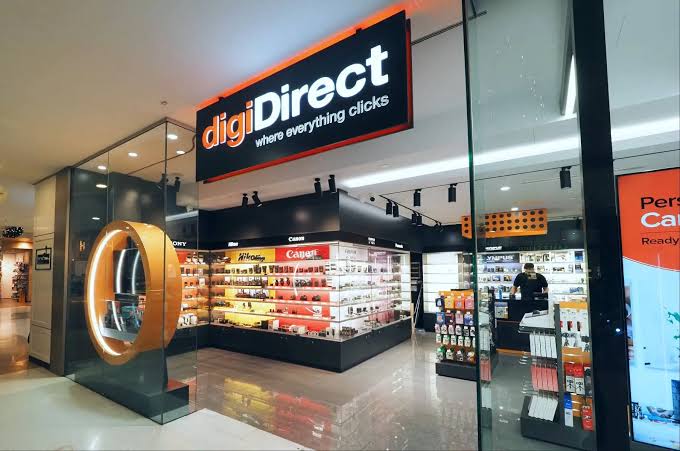
    Enforcement comes as DigiDirect pushes into wider consumer goods categories. The retailer operates an omnichannel model across its digital store and seven physical shops.

    Its parent group is chasing $500 million in annual retail revenue. That portfolio includes DigiDirect, Mwave, and recently acquired book assets Booktopia, Angus & Robertson, and James Bennett.

  • CES Asia Unveiled Expands to Seoul in Partnership with KES

    CES Asia Unveiled Expands to Seoul in Partnership with KES

    CES Asia Unveiled is expanding into Seoul through a formal partnership with the Korea Electronics Show. The tie-up connects the regional preview platform directly with South Korea’s primary trade gathering for consumer electronics, appliance manufacturers and component suppliers.

    Organisers designed the Seoul event to give domestic tech makers, retail buyers and international media an early look at product launches ahead of the main global exhibitions. South Korean conglomerates and hardware startups will gain a dedicated stage to demonstrate consumer hardware, artificial intelligence applications and smart home devices to regional distributors.

    Bringing Preview Formats to South Korea

    The Seoul expansion reflects South Korea’s position as a dominant exporter of consumer electronics and display technologies. By collaborating with the Korea Electronics Show, the platform integrates local exhibition infrastructure with international brand networks that typically anchor large-format consumer technology shows across Asia.

    Participating companies will present products across smart appliances, mobility solutions, gaming hardware and personal devices. The format focuses on direct business matchmaking, pairing device manufacturers with Asian retail operators, ecommerce platform buyers and regional supply chain partners seeking early product inventory.

    Regional Competition in Consumer Electronics

    Trade event organisers across the Asia-Pacific region continue to adjust their calendars to secure hardware debuts from top tier manufacturers. While previous editions of regional technology shows concentrated heavily in Shanghai and Tokyo, trade bodies are increasingly setting up multi-city formats across key consumer markets in Northeast Asia.

    For South Korean electronics suppliers and regional distributors, the joint event provides immediate access to product roadmaps without requiring travel outside the domestic market. Registration timelines and exhibition schedules for the joint Seoul show will open through official trade channels as participating brands finalize their regional product lineups.