Retail News CRM

Tag: Elevenia

  • 11street Thailand eyes top spot

    11street Thailand eyes top spot

    Korean-owned 11street may be exiting Indonesia, but the e-commerce platform remains bullish about its opportunities in Thailand.

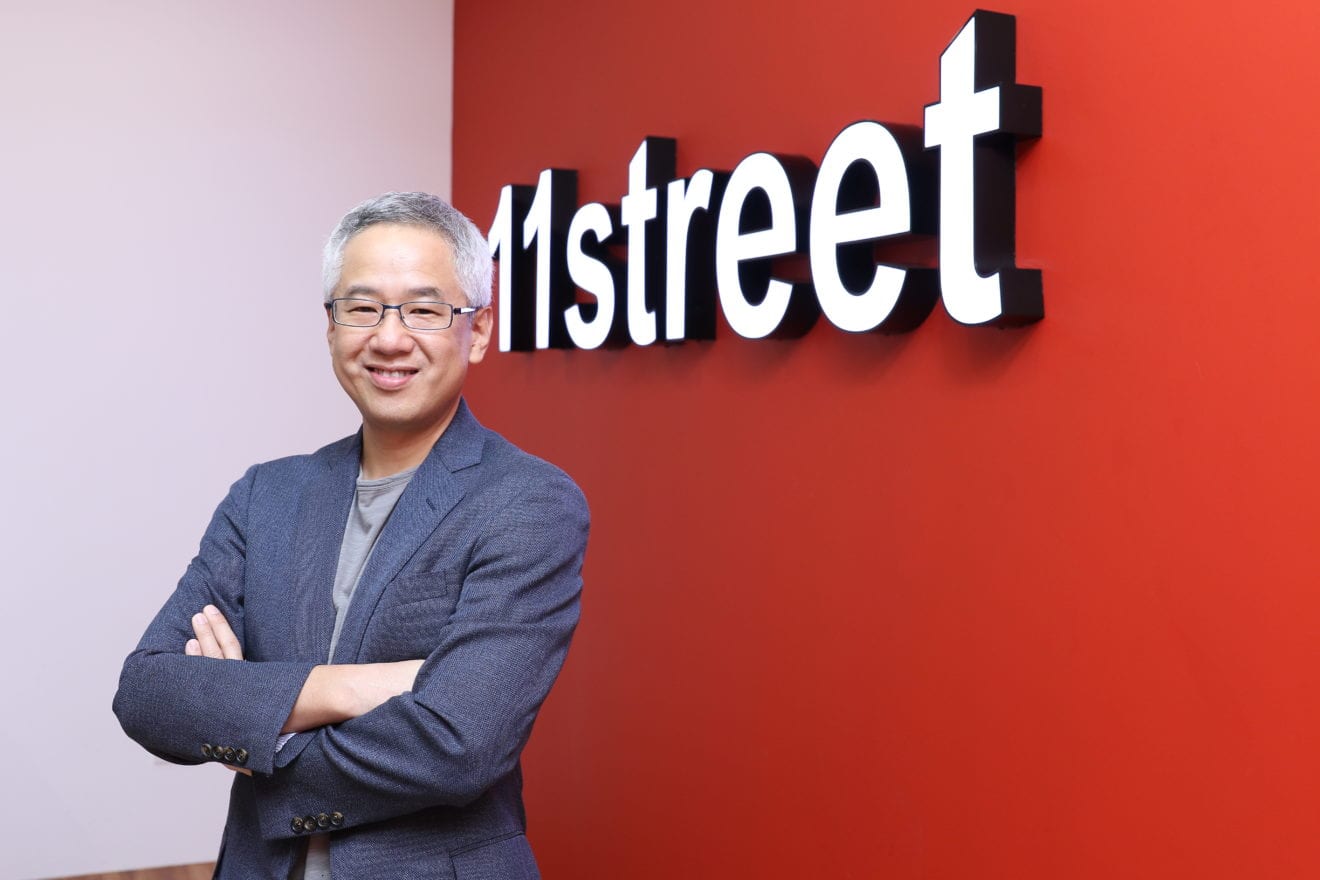
    Yun Chang-sung, 11street Thailand VP of sales, says the company is working towards being the largest e-commerce player in the nation by 2022.

    A week ago, 11street parent SK Planet, a subsidiary of SK Telecom, announced it was selling its half stake in Indonesian website Elevenia to fellow Korean corporation Lotte, with whom it is in discussions over an e-commerce joint venture at home.

    “SK Planet decided it was best to close down money-losing operations overseas to focus on propping up the domestic business,” wrote Pulse News. “After Indonesia, the next to go could be Malaysia among the three overseas markets including Thailand and Turkey.”

    First, 11street Malaysia dismissed such speculation, saying it was committed to the long term., 11Street Malaysia is operated by Celcom Planet, a joint venture between Celcom Axiata Berhad and SK Planet.

    11street Thailand says it has more than 580,000 shoppers buying from 18,000 sellers on its platform, just seven months after its launch.

    “We have become number two in the market in just a few months, and we are sure we can become number one in less than five years,” Yun said.

    He said Thailand’s e-commerce size is comparatively small at present, relative to mature markets like South Korea and the US.

    “Competition in Thailand is not that aggressive compared with other countries such as South Korea,” he said. “There are great opportunities to grow. The more dynamic logistics and payment industries in Thailand also contribute to the growth of e-commerce.”

    Thai and international brands including as Nestle, Samsung, Mahajak, Cotton USA, Watsons, FBT and Grand Sport list goods on 11street Thailand.

  • SK Planet and Samsung sign for online partnership

    SK Planet and Samsung sign for online partnership

    Samsung Electronics Southeast Asia and Oceania has signed a memorandum of understanding with global platform innovator SK Planet on an eCommerce partnership in Southeast Asia.

    Signed in Singapore, the deal aims to promote Samsung’s brand presence and provide increased convenience and access to the Korean company’s products in Southeast Asia through online shopping sites 11street Malaysia, 11street Thailand and Elevenia in Indonesia.

    This follows Samsung and SK Planet collaborating in the South Korean domestic market.

    During the past four years, SK Planet has grown in overseas markets by leveraging its expertise from 11street Korea. SK Planet has launched its eCommerce platform into new markets every year, beginning in 2013 with Turkey’s N11.com, where it became market leader in two and a half years, followed by Elevenia in Indonesia, 11street Malaysia and, this month, 11street Thailand.

    “Our official launch was a great success with more than 3000 partners, customers and media joining,” says 11street Thailand CEO Hong Cheol Jeon. ‘This collaboration with Samsung will help to strengthen our partnership in Thailand and enhance our customers’ online shopping experience.”

    Samsung has an official shop-in-shop page on 11street, complemented by delivery and installation by authorised distributors. The page lets consumers search, browse and buy Samsung products easily, as well as access online-only products, pre-sale offerings and promotional discounts.

  • Tough battle brews in Indonesian eCommerce

    Tough battle brews in Indonesian eCommerce

    Three Indonesian eCommerce platforms are about to be launched – by Astra Graphia, CT Corp and a joint venture formed by the Salim and Lotte Groups.

    This comes after forays into eCommerce in the past 12 months by such Indonesian conglomerates Lippo Group (MatahariMall and Venturra Capital), Sinar Mas Group (SMDV) MNC Group (BrandOutlet) and MAP Group (eMall), reports E27, which says Indonesia’s eCommerce market is predicted to grow to US$130 billion by 2020.

    Salim Group has signed an agreement with South Korea’s retail giant Lotte Group to form a joint venture for eCommerce business. Launching next year, it is the second such collaboration followingElevenia.
    Lotte Group’s portfolio in Indonesia includes a department store, 41 retail stores and 31 fast-food franchise outlets. Salim Group owns businesses in the F&B, infrastructure, logistics, telco, media and real estate sectors. It also has 11,000 Indomaret minimart outlets.
    “We expect ourselves to champion the market as soon as we walk into it, says CT Corp founder Chairul Tanjung, who has yet to reveal a launch date for the group’s online venture.

    CT Corp owns hypermarket chain Carrefour, the department store chain Metro, hotels and theme parks managed by TransStudio, media companies Detik and TransTV, and fashion and F&B outlets.

    Its new eCommerce platform will be a separate business entity from the group’s TransRetail subsidiary, which covers its retail businesses.
    Meanwhile, a subsidiary of Astra International specialising in office equipment and services, Astra Graphia has spent about IDR50 billion (US$3.6 million) on developing its Axiqoe platform.
    “The online shop will display thousands of items, initially for business-to-business,” says Astra Graphia’s chief of finance Panji Nurfirman.

  • Indonesia’s Elevenia marketplace gets $50 million from existing investors

    Indonesia’s Elevenia marketplace gets $50 million from existing investors

    Elevenia just raised another $50 million from its existing investors. The ecommerce marketplace is a joint venture of South Korean company SK Planet and Indonesian telco XL Axiata.

    Elevenia launched in Indonesia in early 2014 with an initial capital of $18.3 million from each partner. It has since received multiple capital injections from its parents, bringing Elevenia’s total funds – including the latest round – to about $110 million.
    The company claims to have clocked $95 million in revenue in 2015. It also says it has about 20,000 daily transactions and four million products listed from 30,000 sellers, with 40 million visitors.

    That’s double the figures it released around its first anniversary in early 2015. At that time, Elevenia announced 20 million visitors a month, 18,000 sellers, and two million product listings. It did not release revenue figures for 2014.

    Elevenia has been a steady yet somewhat quiet presence in Indonesia’s crowded ecommerce landscape. It competes alongside companies like Lazada, Bukalapak, Tokopedia, Qoo10, Rakuten, Blanja, Blibli and MatahariMall.

    With fresh funds at hand, it plans to grow its team, increase its marketing efforts, improve its product and services, and move to a new office, the company said in a statement.

  • Indonesian Online Marketplace Elevenia Sees Strong Growth in Transactions

    Indonesian Online Marketplace Elevenia Sees Strong Growth in Transactions

    Indonesia as an e-commerce paradise in just two years’ time may seem an idle dream to those who still struggle with connectivity as a massive burden in their lives. It is, however, an emerging reality for some of the people behind Indonesia’s growing online market ecosystem.

    Meet Jungsung Lee, chief executive of Indonesian online marketplace Elevenia. Hailing from South Korea, he prefers to be called James and is one of those who have thrown off any doubts about Indonesia’s potential.

    His company is already starting to tap the country’s huge e-commerce potential, he said in an interview.

    While he acknowledged that Internet infrastructure is still far from ideal, there are methods to tackle the problem.

    Elevenia, registered as a business entity as XL Planet, opened for business in March last year as a joint venture between mobile provider XL Axiata and South Korea’s online marketplace, SK Planet.

    It began modestly, with around 500,000 products and 6,000 sellers.

    In just a year, the online marketplace had almost a million registered members, two million products and more than 20,000 sellers.

    Elevenia.co.id had 20 million visitors in February — 5 million of which were unique visits.

    The online marketplace posted Rp 250 billion ($19.45 million) in total transaction value last year and in the first two months of this year had booked Rp 60 billion.

    “It has exceeded [my plan]. We achieved more than our business target so our shareholders are so happy with us,” he said, noting that the investors now plan an additional capital injection within the next two years.

    Initial investments from XL and SK Planet last year amounted to $18.3 million and another $24.2 million was injected earlier this year.

    Calm, focused and friendly, Lee is clearly investor-friendly. At first glance he looks like any other businessman in his 40s but his nature manages to radiate a sense of security and optimism amid the hustle and bustle of an online business community populated by employees in their mid-20s.

    Jokingly, one of his employees said his calmness is the product of months of training. Korean businessmen are not accustomed to talking with the press and dealing with informal work atmospheres, yet Lee has been able to keep his cool.

    The Korean set out to explain the principles he believes are needed for success in the online world.

    “The first thing is trust. The second is good products, then good prices and convenience. For the Indonesian market, trust is very important; it is the customers’ basic demand,” he said.

    Many Indonesians remain hesitant to use online shops due to a lack of information. Potential customers think that fraud and crime are easily concealed in an apparently anonymous digital world.

    That is not the case with Elevenia, Lee said.

    “We use a system called escrow,” a formal account which holds funds prior to completion of a transaction, allowing Elevenia to guarantee a safe transaction for both buyer and seller.

    Elevenia also has some unique traits. For instance, customers can directly ask Elevenia to find a certain product, local or otherwise.

    “If there is something the customer can’t find, they can inform us, then we will get the product. [Especially] products from Korea. We have the experience, we have good channels. From Korea, we can get anything,” said Lee.

    To further the trust factor, the company has set limits on trading. It will not sell counterfeit goods, drugs or other illegal items.

    The growing business of Elevenia is a glimpse of Indonesia’s blossoming e-commerce industry.

    A survey conducted by the Indonesian Internet Providers Association (APJII) and University of Indonesia shows that online shopping is catching on fast with younger Indonesians.

    Samuel A Pangerapan, chairman of APJII, said the survey showed that there were 88.1 million Internet users in Indonesia in 2014. A huge portion — 49 percent — are young, around 18 to 25 years old, with 51 percent of them women.

    They use the Internet for various reasons, from networking through social networking applications to searching for information and exchanging messages, downloading and sharing videos.

    Internet users’ behavior has shifted, Samuel stated, from only using the Internet to interact — like exchanging stories from blogs, chatting through messaging services or talking directly through video chat — to more complex behavior like trading.

    In its latest report, APJII said many Indonesian Internet users have started to use the Internet for shopping. Around 11 percent of users purchased goods online in 2014, double the number a year earlier. The vast majority — 85 percent — browse the Internet with their phones, although many also use laptops, tablets and PCs.

    To meet this multiple gadget lifestyle, Elevenia has made sure it can be accessed from website, mobile web and mobile application.

    According to Lee, being in every digital space was critical, since competition is beginning to intensify as companies recognize Indonesia’s e-commerce potential.

    The number of popular e-commerce sites in Indonesia is growing each year. Local sites with a similar business model to Elevenia include Tokopedia, BukaLapak, Quoo10, Lazada and Rakuten, and new ones keep coming.

    “We welcome the competition,” said Lee. “At the moment, this market is really in its early stage. It’s not mature, that’s why at this moment I don’t think the other players are our competitors. At this moment, they are our cooperators.”

    Elevenia is keen to work with other e-commerce players in Indonesia to build an ideal ecosystem.