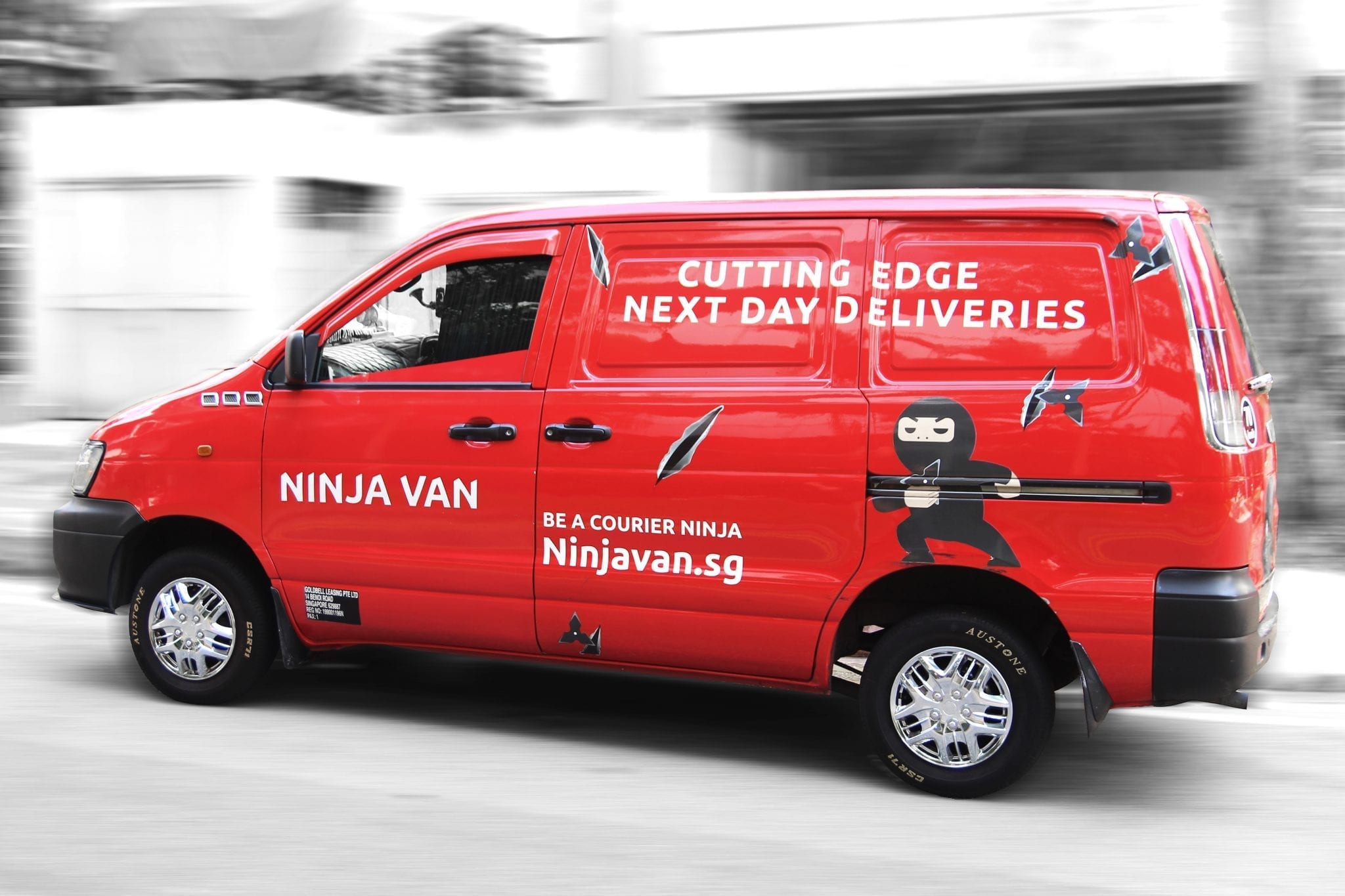
Ninja Van, a Singaporean logistics startup and new ASEAN unicorn, is set to drive a broad strategy in Vietnam to benefit from the country’s strong e-logistics market growth.
After successfully raising $578 million in Series E funding, Ninja Van has officially become an ASEAN “unicorn,”.Dzung Phan, president of Ninja Van, said while revealing the startup’s expansion plans for Vietnam and his assessment of its e-logistics market.
Why did Ninja Van choose Vietnam as a key investment market?
We believe Vietnam is ready for a new phase of growth in e-logistics. According to Agility, Vietnam ranks 8th among the top world’s fastest-growing logistics markets and 3rd among ASEAN in 2021. Vietnam E-commerce Association (VECOM) also stated the number of postal parcels sent through express delivery services shot up by 47 percent last year.
Also, e-logistics is strongly driven by the rapid growth of e-commerce. Vietnam’s e-commerce market expanded an average of 30 percent per annum during the period 2016-2019, from $4 billion (2015) to $11.5 billion (2019). According to VECOM, the market will grow at 29 percent annually in 2020-2025, to reach $52 billion (2025).
The strong potential of Vietnam’s e-logistics market is a good foundation for our ambitious plan. A market with 600,000 sellers and 49.3 million buyers across e-commerce platforms and social networks will generate significant demand for logistics.
Leading a new unicorn in the e-logistics industry, how do you assess its competitive advantage in Vietnam?
The domestic e-logistics market is competitive with several “deep pocket” players. The market comprises three main segments: local shipping companies, international shipping companies, and e-commerce platforms with their own in-house shipping ecosystems.
Domestic enterprises only account for 20 percent of the logistics market share; the remaining 80 percent belongs to international firms with strengths in capital, technology, and experience. Local firms may be backed by international groups, including GHTK by Kerry and AhaMove by Temasek.
Although the e-logistics market is vibrant, its growth potential is not fully invested in. A survey showed that 60 percent of sellers and 80 percent of buyers are not satisfied with the current quality of express delivery services. Buyers are frustrated by late delivery or the inability to track the flow, while sellers expect more parcels to be delivered.
Is pricing a major competitive edge in the current e-logistics market?
Except for the inhouse shipping units of e-commerce platforms, domestic and international players are using price competitiveness to acquire customers quickly. Whenever there is a “newcomer”, delivery costs will drop significantly to maintain the market share and retain customers. Notable discounts were given at the entry of J&T in 2018 and Best in 2020.
The average shipping price in the Vietnam market fell continuously by 15-20 percent per year from 2017 to 2020. The trend has a negative impact on smaller domestic players, for example, GNN in 2017 suffered a sharp drop in revenue that led to its liquidation. Even international players without strong financial support cannot survive this market, with DHL e-commerce ceasing operations in Vietnam during 2021.
How does Ninja Van improve the customer experience? Ninja Van focuses on providing a quality and authentic service experience to customers, rather than on pricing alone. Parcel tracking and recovery services for lost or damaged parcels need to be improved.
Given a tech-enabled personalization of the customer experience, Ninja Van’s nationwide personal delivery service on the Grab app has stepped up during the Covid-19 pandemic. Additionally, we are strengthening our partnership with e-commerce giants including Shopee, Lazada, Tiki, and Sendo.
With more than 300,000 orders per day, Ninja Van is among the top three partners on all major platforms in Vietnam. These collaborations brought Ninja Van into the top growth 15 companies in the Asia-Pacific region in 2021 as reported by Financial Times.
To gain trust, we do all possible to help our customers succeed, such as ensuring timely pickup, prompt delivery without loss. In addition, we understand that our partners are working at a large scale, so we do our utmost to optimize our cost structure and provide an attractive rate.
As a result, we became the most active provider by offering various value-added services, such as return pickup to Lazada, bulky and super bulky delivery for Tiki, or installation services for Shopee.
With an additional $578 million in Series E, what is the level of ambition in terms of your expansion strategy?
– Ninja Van is committed to driving a broad strategy in Vietnam in particular and in ASEAN in general. This strategy will cover all three sectors: operations, technical systems, ecosystems for small and retail customers.
Specifically, Ninja Van will increase its coverage in 63 cities and provinces to reach 100 percent of the Vietnamese population. We will also prepare an automatic sorting system with a capacity of two million packages at five major cities to increase delivery speed.
We will build and improve web and mobile application platforms to enhance customer experience. We seek to enable both sellers and buyers to track parcels and make inquiries in real-time.
Notably, we will broaden our cross-border delivery with two new services: Ninja Direct, which helps Vietnamese sellers look for better sourcing with better rates in multiple countries; and Ninja Crossborder, which helps Vietnamese manufacturers reach out to buyers all over the world.
Moreover, we will complete business activities for the fourth quarter of 2021. For example, based on our big data analytics, we have opened training courses to detect anomalies and outliers to provide timely resolutions for all customers. In 2020, we created 40 different training modules for our shippers and warehouse staff to avoid recalcitrant buyer behavior on COD free delivery services.
Ninja Van will launch a promotional campaign in Vietnam “Giao thong suot, Nhan ven nguyen” (Smooth delivery, Parcel intact) to support sellers in the fourth quarter. With all staff vaccinated against Covid-19, Ninja Van will maintain its service delivery price during the pandemic to support hard-hit customers.