Tag: emergency

  • Starlink Soars into South Korea: A Game-Changer for Maritime, Aviation, and Emergency Connectivity

    Starlink Soars into South Korea: A Game-Changer for Maritime, Aviation, and Emergency Connectivity

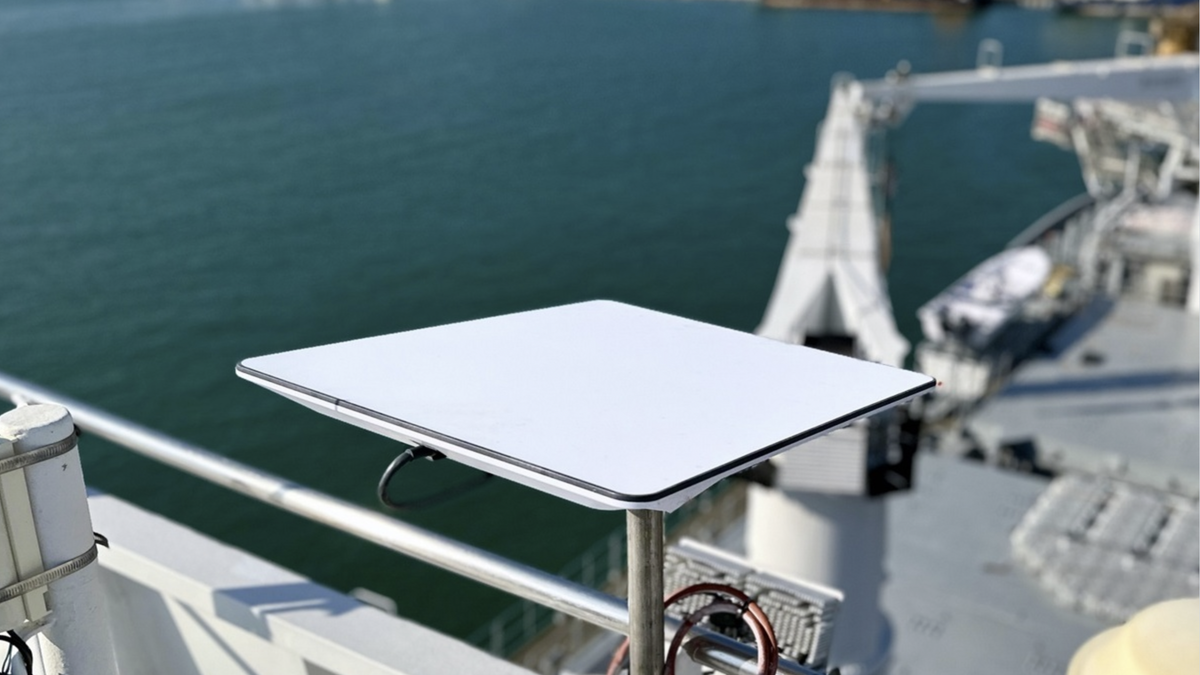
    SpaceX’s Starlink has officially extended its services to South Korea, building upon its global Low Earth Orbit (LEO) satellite system. This expansion has positioned it as a crucial facilitator of consistent connectivity for South Korea’s maritime, aviation, and emergency-response sectors.

    Starlink Korea’s Offerings

    Starlink Korea has initiated nationwide subscriptions through its official platform, providing services to both residential and enterprise customers. The residential package costs KRW 87,000 (USD 59) per month and offers unlimited data with projected download speeds of 135 Mbps and upload speeds of 40 Mbps. The pricing for customer hardware is set at KRW 550,000.

    Experts believe that Starlink’s most significant market potential in Korea is beyond residential use. Given that Korea already operates one of the world’s fastest terrestrial networks, with an LTE speed averaging 179 Mbps, LEO satellite broadband is likely to function as an additional layer in areas with limited ground-based coverage.

    The demand is anticipated to increase in the maritime, aviation, and emergency-response sectors, where traditional satellite services are expensive and provide slower performance. Despite Korea’s global rank of fifth in commercial shipping capacity, numerous vessels still encounter difficulties maintaining real-time connectivity at sea. LEO constellations, which orbit the Earth significantly closer than geostationary satellites, offer lower latency and more stable connections for ships and aircraft, thereby bolstering digital operations and mission-critical communication.

    Enterprise Services

    Starlink’s enterprise offerings aim at land-based mobile and fixed commercial users. The plans begin at KRW 90,000 per month for 50 GB and go up to KRW 755,000 for 2 TB. Data caps result in throttling to 1 Mbps download speeds and 0.5 Mbps upload speeds, although users have the option to purchase more data. These business packages incorporate prioritized bandwidth and service-level guarantees.

    Sales and technical support will be managed by local operators SK Telink and KT Sat. They will also create bespoke offerings for commercial vessels, low-cost airlines, and government agencies.

    Korea’s Strategic Direction

    The launch of Starlink also aligns well with Korea’s strategic intent to enhance disaster-resilient networks. LEO connectivity, which remains operational even when terrestrial base stations are compromised, offers a crucial backup layer for remote or mountainous areas or places with challenging infrastructure, as stated by the Electronics and Telecommunications Research Institute (ETRI).

    “This is the inception of a multi-layered communications architecture that integrates terrestrial and satellite networks,” said Song Young-geun, Head of Future Strategy at ETRI.

    Globally, Starlink operates over 7,600 satellites and caters to more than 8 million users across 115 countries, highlighting its increasing role in next-generation connectivity ecosystems.

    Questions & Answers

    What is the cost of Starlink’s residential package in Korea?

    The cost of the residential package is KRW 87,000 (USD 59) per month, which includes unlimited data with expected download speeds of up to 135 Mbps and upload speeds of up to 40 Mbps.

    Which industries are projected to benefit from increased demand for Starlink’s services in Korea?

    The maritime, aviation, and emergency-response sectors in Korea are projected to see increased demand for Starlink’s services due to their need for high-availability connectivity.

    What is the role of local operators SK Telink and KT Sat in Starlink’s operations in Korea?

    SK Telink and KT Sat will manage sales and technical support for Starlink in Korea. They will also develop tailored offerings for commercial vessels, low-cost airlines, and government agencies.

  • Homeplus Announces Closure Of 15 Outlets Amid Growing Financial Crisis And Rehabilitation Efforts

    Homeplus Announces Closure Of 15 Outlets Amid Growing Financial Crisis And Rehabilitation Efforts

    Homeplus Co, a discount store chain experiencing financial troubles, disclosed on Wednesday its plans to shut down 15 outlets due to increasing operational challenges in the business environment.

    Undergoing a court-led rehabilitation process since March this year, Homeplus has been grappling with its dipping financial health. The company’s corporate bonds value was adjusted from A3 to A3- by two local credit rating agencies, given its unsatisfactory financial state. The organization is expected to present its rehabilitation strategy to the Seoul Bankruptcy Court by the 10th of September.

    Samil PricewaterhouseCoopers, the court-assigned accounting firm, suggested conducting a merger and acquisition (M&A) auction before the court endorses the plan, as the liquidation value of Homeplus surpasses its ongoing concern value. The court has given its consent to this recommendation.

    In recent times, the company has witnessed a slump in sales due to plummeting consumer confidence, decreased transactions with suppliers and the latter’s insistence for upfront payments, thereby instigating a prospective liquidity crisis.

    Joh Joo-yun, the co-CEO, expressed his concerns in a message to the employees stating that if this situation prolongs, the company’s revival through an M&A prior to the court’s approval of the rehabilitation plan might be jeopardized.

    Joh further emphasized that the company has resorted to emergency management actions to avert the crisis. He highlighted that the issue transcends beyond a mere management problem to one that impacts the broader economy and the job security of 22,000 workers employed with Homeplus and its subcontractors.

    Joh, along with Kim Kwang-il, the vice-chairman of MBK Partners, are the two court-appointed managers. MBK Partners took over a 100 percent stake in Homeplus from the British retailer Tesco Plc in 2015, amounting to 7.2 trillion won (US$5.2 billion).

    As of Wednesday, Homeplus operates 125 outlets.

    Questions & Answers

    What is the financial state of Homeplus Co?
    The discount store chain is currently under a court-led rehabilitation program due to its poor financial health.

    What was the recommendation of Samil PricewaterhouseCoopers regarding the company’s current situation?
    The court-appointed accounting firm suggested a merger and acquisition auction before the court approves the rehabilitation plan, as the company’s liquidation value is higher than its going concern value.

    What is the impact of Homeplus’ financial troubles on its employees?
    The co-CEO, Joh Joo-yun, expressed concerns that the ongoing situation could affect the broader economy and the job security of 22,000 workers at Homeplus and its subcontractors.

  • Android’s emergency satellite service could work in over 150 countries

    Android’s emergency satellite service could work in over 150 countries

    By a show of hands, let’s see how many of you think that the iPhone was the first smartphone offering emergency services via satellite connectivity. Wow, it’s going to be interesting to tell all of you with your hands up that you’re wrong. Actually, Huawei’s Mate 50 series introduced its version of this feature one day before Apple did. And now there is talk that Huawei’s Mate 60 line, due out later this year, will offer voice and image transmissions by satellite.

    With iOS and Harmony ahead of the pack, Google is supposed to dip its toes in the satellite water with the release of Android 14. One rumor last month said that the release of Android 14 was going to bring satellite connectivity to Pixel and Galaxy handsets at first. The rumor said that the Android 14 update will add the necessary software while phone manufacturers will have to deal with the hardware requirements.

    The Team Pixel FanClub, while not affiliated with Google, said that Pixel and Galaxy models will be the first Android devices to sport the necessary hardware required for satellite connectivity to work. And on Sunday, Neïl Rahmouni, who was nominated as a Top Google Developer Online Contributor in June, posted on X that it “Looks like Google Messages may use Garmin Response for the Satellite Emergency SOS. If true it could mean that Emergency Satellite messages would be available in 150+ countries.”
    This would instantly top Apple’s Satellite connectivity service which is available in only a handful of countries at the moment. Not that it hasn’t proven its worth as Apple’s Emergency SOS via Satellite has already saved numerous lives.
    Despite having his name all over the X message proclaiming that Garmin’s service might be used by Google Messages for its satellite connectivity feature, Rahmouni believes that we shouldn’t assume that the Google-Garmin tie-up is happening until Google makes the official announcement. At this point, we don’t know when the feature is expected to launch and more importantly, which Android devices will support it.
  • Google introduces Emergency SOS feature for Wear OS

    Google introduces Emergency SOS feature for Wear OS

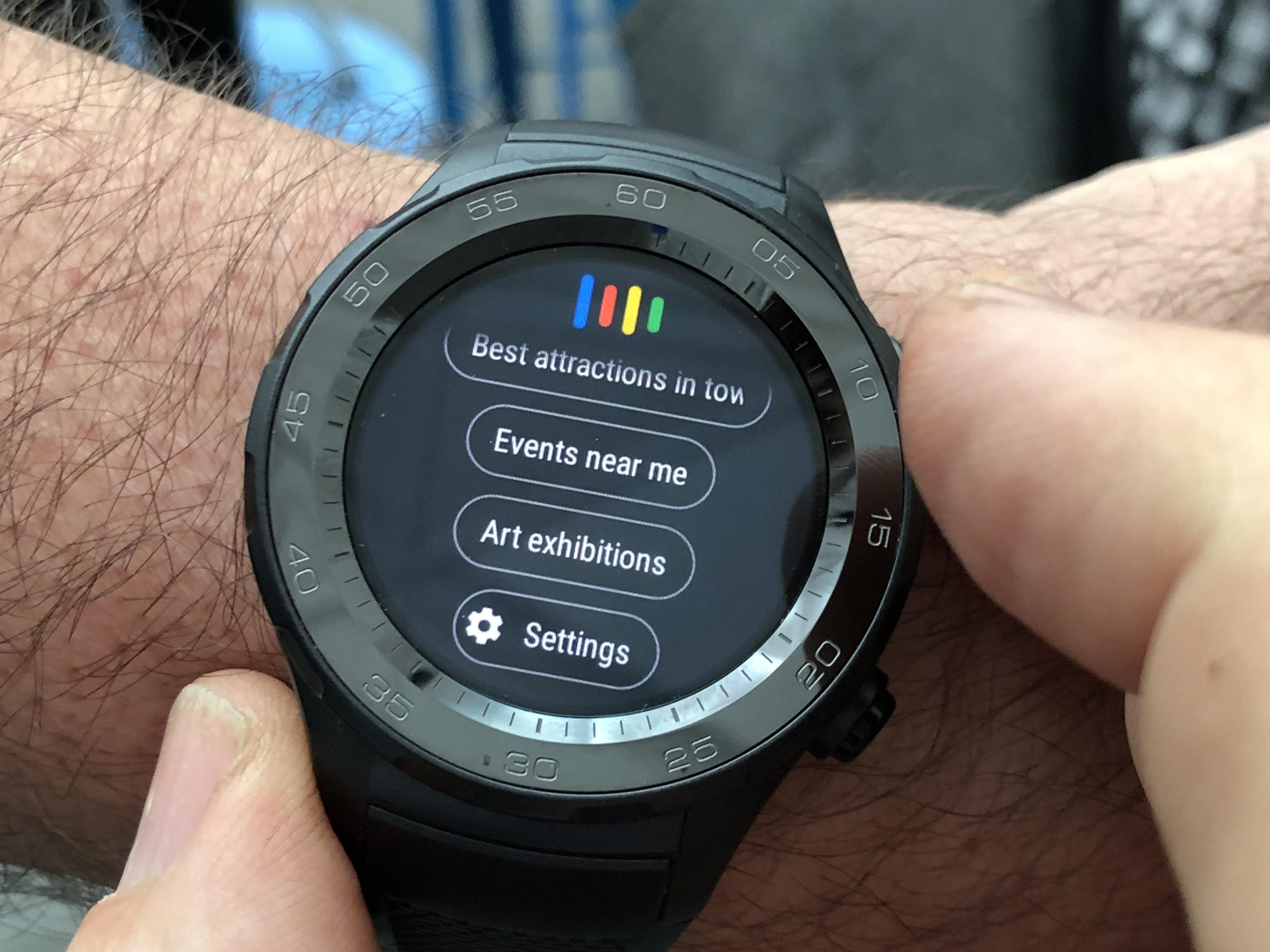
    Google will soon begin rolling out an Emergency SOS feature on Wear OS. It is going to work similarly to the one found on Android smartphones and will enable users to easily contact their relatives or the public authorities directly via their smartwatch in the case of an emergency.

    Amidst the slew of exciting hardware announcements that took place during the I/O 2022 keynote event, it is easy to see how some less flashy software tweaks could stay under the radar. Nevertheless, even if an Emergency SOS feature for Wear OS is not particularly thrilling, it is still no less important than that Pixel everyone is talking about.

    Emergency SOS in Android is by no means a new concept. Virtually every smartphone has their equivalent of such an option. The novelty lies in the fact that this feature will now be available for wearables with Wear OS as well. On Android phones, the user must press the power button 5 consecutive times to activate Emergency SOS. It’s not clear how the feature could be triggered in Wear OS, but a similar shortcut, with a voice command as an alternative method, sounds likely.

    Emergency SOS for Wear OS will function similarly to the one for Android. In order to enable it the user must begin by filling in the necessary contact details. Only once this has been done will they have the option to activate Emergency SOS. It is important to note that, as this is ultimately a smartwatch feature, in order for it to be used, the wearable must be linked with a smartphone with cellular connectivity, if the wearable does not support LTE.

    Turning Emergency SOS on will prompt users to select whom they would like to contact (either a particular contact or the emergency services directly). They will easily be able to cancel the call via a big red button on the main watch screen, and additional options will be provided once the call has ended.

    For the time being, it is unclear when exactly this feature will make its debut. Apple has already implemented a similar option in the Apple Watch. Based on Google’s track record, it could take a while before Emergency SOS makes its way to Wear OS. At the very least, we know it is coming.

  • MG Hector’s Connectivity Features Unveiled

    MG Hector’s Connectivity Features Unveiled

    MG Motor India today unveiled the cabin features of its upcoming SUV MG Hector. Touted as the company’s first internet car, the upcoming MG Hector will come with a new advanced connectivity system called i-Smart next-generation system, a complete integrated solution that combines software, hardware, connectivity, services and application. The system has been developed in collaboration with several technological partners like Cisco, Unlimit, and Microsoft among others. The iSmart connectivity system comes with advanced technology, smart application, built-in Apps, Artificial Intelligence (AI), Smart Features, Voice Assist, and Infotainment.

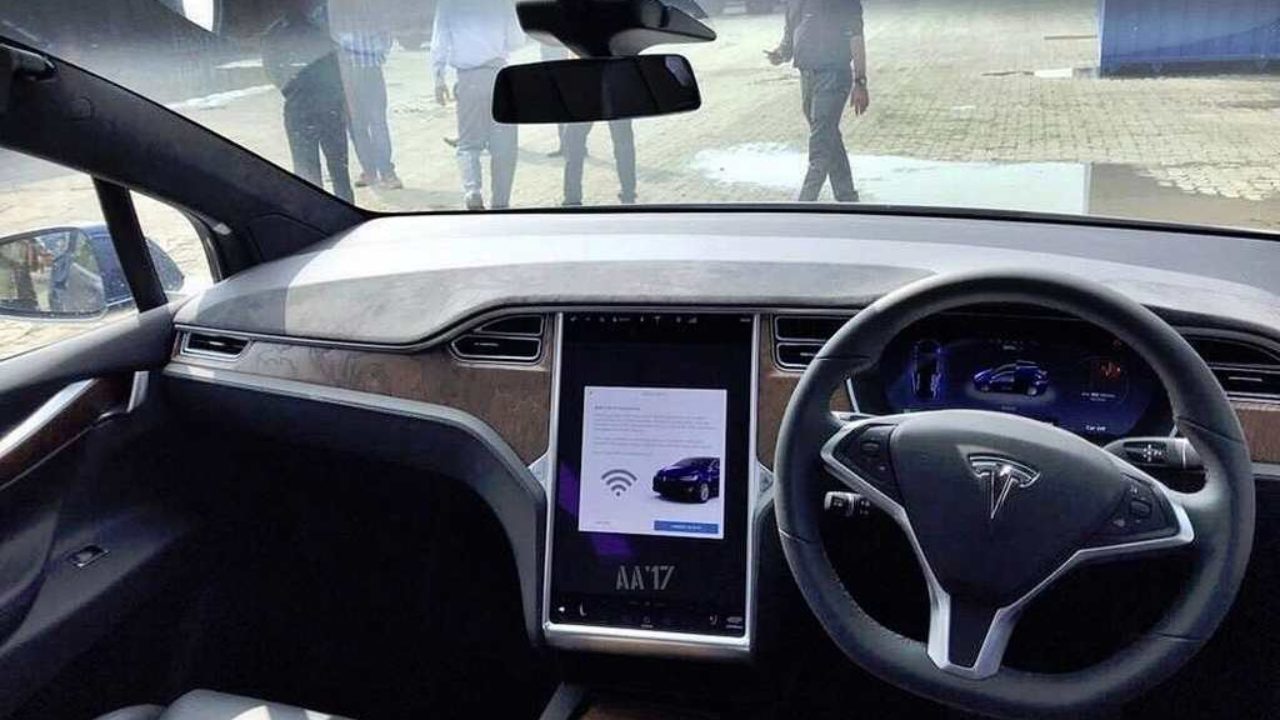
    The command centre of the system is a vertically-mounted 10.4-inch ultra large Full-HD infotainment display that comes with pre-loaded entertainment content and allows you to manage complete vehicle settings. MG says that the display screen can withstand the high temperatures of Indian weather conditions. For full-time connectivity, the system also comes with a first machine to machine embedded sim, along with the SUV Internet Protocol version 6 makes it 5G-ready, making it future-proof. The system offers features like – Real-Time Navigation, Remote Location, Geo-Fencing, Emergency Response and much more.

    Furthermore, with smart connectivity, the MG Hector will also be getting software updates via over-the-air (OTA) downloads, like firmware and features updates much like any smartphone. Also, as mentioned earlier, the car will come with pre-loaded apps like – TomTom IQ Maps, Gaana Premium, and AccuWeather app among others. In fact, MG Motor India will be offering its customer free data too for the first few years. The system itself is well-secured by Microsoft, which will be the Cloud provider for MG Motor.

    One of the key features and most important features offered in the MG Hector is its voice command system. Powered by China’s conversational AI provider Nuance, the system is designed to use voice commands to access multiple in-car functions like close or opening sunroof, control climate control, navigations and more. In fact, the system can even understand the Indian accent to make it suitable for the Indian market. Like Google Assistance, the Voice Assist system can be accessed by saying ‘Hello MG’ and is capable of handling over 100 functions. The Hector also comes with an eCall emergency response system that sends an emergency alert to MG’s customer management centre, called Pulse Hub and any registered phones, in the case of an accident. Also, in the event of the airbags being deployed, the system triggers a series of emergency response actions.

    The iSMART Next Gen is supported by the iSMART mobile App. MG iSMART App is feature-rich like none other in the Indian market. The car gets scanned each time the App is opened, and information includes location of car, tyre pressure, or if the doors are locked or not. Owner can use the remote app to directly lock or unlock doors, turn on ignition and switch on the air-conditioner.

    The all-new MG Hector is slated to be launched in second quarter of 2019. The SUV will come with premium interior and features like – with power adjustable seats, cruise control, electronic parking brake, and 360-degree camera. We also know that the SUV will come with a panoramic sunroof, which the company claims will be the largest in the segment. The SUV will come in both petrol and diesel powertrains – 1.5-litre petrol engine and a 2.0-litre diesel motor.