Tag: Emperor Watch & Jewellery

  • Emperor Watch & Jewellery profit jumps high

    Emperor Watch & Jewellery profit jumps high

    Emperor Watch & Jewellery cites “strong momentum in luxury consumption” as the reason for a massive profit boost in the first half of this year.

    Total sales surged 34.3 per cent to HK$2.454 billion (US$312.6 million), as inbound tourism arrivals from the mainland recovered and Hong Kong retail sales rose.

    Revenue from its core, home market Hong Kong was up 42.8 per cent to $1.908 billion, accounting for 77.8 per cent of total sales.

    “The improvement in consumption sentiment has supported robust demand for watches,” the company said in an announcement. Hence, revenue of the watch segment, the group’s largest revenue contributor, rose 32.1 per cent to $1.942 billion, accounting for 79.1 per cent of total revenue. Revenue from the jewellery segment increased by 43.6 per cent to $512.5 million.

    Gross profit grew 39 per cent to $677.3 million, with gross profit margin rising from 26.7 per cent to 27.6 per cent, due to stronger demand for watches.

    Group net profit more than quadrupled year on year to HK$157.2 million.

    “Given the favourable fundamentals of Hong Kong luxury watch sector, we are cautiously optimistic about our long-term business prospects albeit market volatility,” said Emperor Watch & Jewellery CEO and chairperson Cindy Yeung. “We remain committed to respond proactively to the market dynamics and leverage on our core competencies.” As at June 30, the group operated 84 stores – four more than at the end of last year – in Hong Kong, Macau, Mainland China and Singapore.

    After a successful launch in Singapore in 2013, the group now plans to expand into Malaysia. Yeung said the company will also continue to eye further expansion opportunities globally.

  • LVMH’s L Capital in PE merger deal

    LVMH’s L Capital in PE merger deal

    In a marriage of high fashion and finance, a new partnership is being formed by luxury products company LVMH with two equity firms, Catterton and Groupe Arnault.

    They have agreed to create L Catterton, combining private equity firm Catterton’s North and Latin American interests with LVMH and Groupe Arnault’s European and Asian private equity and real estate interests, now under the Singapore-based L Capital and the L Real Estate banners. Under the terms of the agreement, L Catterton will be 60 per cent owned by the partners of L Catterton and 40 per cent jointly owned by LVMH and Groupe Arnault.

    This will make L Catterton the largest global consumer-focussed investment firm with six distinct and complementary fund strategies specialising on consumer buyout and growth investments across Asia, Europe, and North and Latin America, as well as prime commercial real estate globally. After various successor funds are closed, L Catterton expects to grow its assets under management to more than $12 billion, drawing on 27 years of experience with more than 120 investment and operating professionals in 17 offices across five continents. It will be led by global co-CEOs J. Michael Chu and Scott A. Dahnke, currently managing partners at Catterton.

    “The breadth of our collective expertise will be second to none in the consumer industry,” says Chu.  “And we look forward to benefitting from the strength and global reach of the team at L Capital and L Real Estate as we continue to seek out investment opportunities with significant growth potential.”

    “The globalisation of media and technology, combined with increasingly permeable geographic borders, is driving rapid consumer growth on an unprecedented global scale,” said Dahnke.

    Catterton invests in all major consumer segments, including food and beverage, retail and restaurants, consumer products and services, consumer health, and media and marketing services. Its investments include CorePower Yoga, Kettle Foods, Nature’s Variety pet food, Noodles & Company, Outback Steakhouse, PF Chang’s, Plum Organics, Restoration Hardware, Protein Bar, Snap Kitchen, Sweaty Betty and Wellness pet food.

    L Capital invests in companies across Asia and Europe in such sectors as beauty and wellness, fashion and accessories, food and beverage, media and entertainment, and special retail. Founded in 2001 with support from LVMH and Groupe Arnault, it specialises in lifestyle brands and selective retail businesses in Europe. L Capital – Asia is Asia’s largest consumer-focussed private equity firm with headquarters in Singapore, and regional offices in Hong Kong, Melbourne, Mumbai and Shanghai. Its investments include 2XU, Asiaray Media, Bateel, Charles & Keith, Emperor Watch & Jewellery, Jones the Grocer, Marubi and Sasseur.

    L Real Estate develops mixed-use projects anchored by luxury retail. Its investments include G6 in Ginza, Tokyo, and Miami Design District.

    LVMH (Moet Hennessy Louis Vuitton) is represented in fashion and leather goods by a portfolio of brands including Celine, Donna Karan, Fendi, Givenchy, Kenzo, Loewe, Louis Vuitton and Marc Jacobs. Its wines and spirits division includes Belvedere, Chandon, Cloudy Bay, Dom Perignon, Hennessy, Krug, Moet & Chandon and Wenjun. In the perfumes and cosmetics sector it has Guerain, Parfums Christian Dior, Parfums Givenchy, Parfums Kenzo and Perfumes Loewe.

    LVMH’s retail interests include DFS, Le Bon Marche and Sephora, it has a joint venture with De Beers Diamond Jewellers, and its watches and jewellery division comprises Bulgari, Chaumet, Dior Watches, Hublot, TAG Heuer and Zenith.

    Subject to customary regulatory and certain investor approvals, the L Catterton transaction is expected to close early this year.

  • Luxury Brands Leave Hong Kong as Rental Prices Skyrocket

    Luxury Brands Leave Hong Kong as Rental Prices Skyrocket

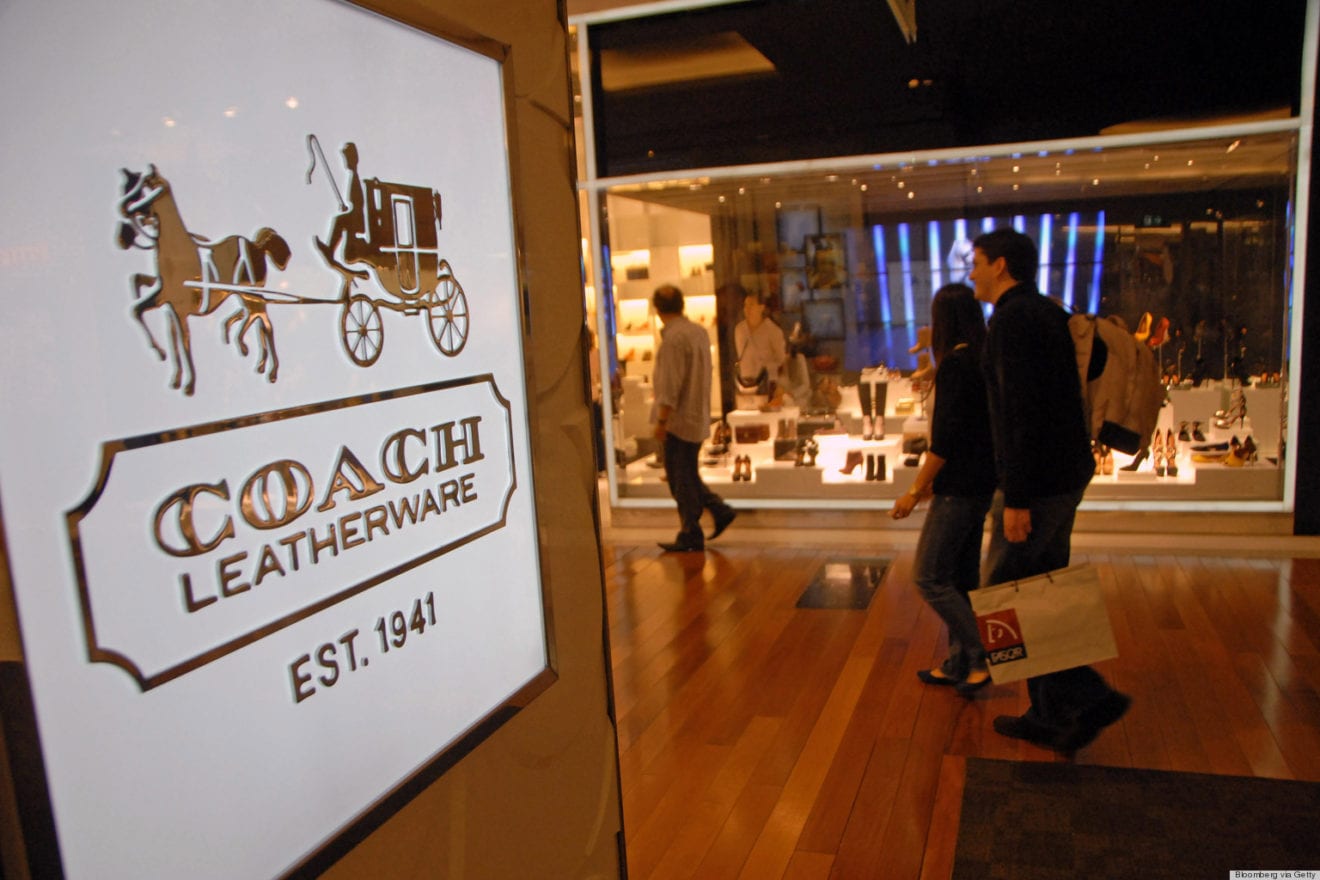
    Following TAG Heuer’s exit, luxury fashion brand Coach pulled out its flagship store in the Central District of Hong Kong on Aug. 31, two years before its lease expires.

    Women’s shoe retailer Belle International in Tseung Kwan O also closed on the same day, while Hong Kong jeweler Emperor Watch & Jewellery Limited also announced plans to terminate its store’s lease early.

    The Guangzhou-based paper said that the exodus of luxury brands from Hong Kong has raised concerns about whether the trend may spread into mainland China.

    High rental fees were one of the reasons for the closures, the report said. Store rentals in Causeway Bay in the first quarter of 2014 stood at HK$43,310 ($5,580) per square meter, making it the most expensive in the world next to New York’s Fifth Avenue shopping district.

    With its store’s closure in Central, Coach will save HK$180 million ($23 million). It had been paying rental fees of $7.2 million ($930,000) per month.

    TAG Heuer ultimately decided to close shop after negotiations for a rent reduction with its landlord fell apart.

    Hong Kong is gradually losing its appeal to mainland Chinese shoppers, who are becoming more inclined to go to Europe, the U.S., Japan and South Korea to shop.

    Total retail sales in the city in 2014 have decreased 0.2 percent from the previous year to HK$493.3 billion ($63.65 billion), its first negative growth in the retail sector since the Hong Kong government launched the individual visa scheme for mainland visitors 11 years ago.

    Between March and July, the region’s retail sales fell even further, posting a 0.4-percent decline year-on-year in June and 2.8 percent in July.

    But despite increasingly poor sales of luxury goods such as jewelry and watches in Hong Kong, medium- and low-priced goods, including food stuffs, liquor, and tobacco, have been growing steadily. According to Southern Metropolis Daily, foodstuff sales rose 7 percent year-on-year in July, an indication that shoppers visiting Hong Kong are shifting from luxury items to daily necessities.