
Tag: employment

  • Korea’s minimum wage divides Moon’s top economists

    Korea’s minimum wage divides Moon’s top economists

    Two of the Moon Jae-in administration’s top economic officials are at odds over the minimum wage increase’s impact on hiring, raising concerns among experts about the government’s future policy direction.

    “I think the minimum wage increase must have had an impact on hiring and salary,” said Kim Dong-yeon, the country’s minister of strategy and finance, in a committee meeting at the National Assembly on Wednesday. This was an about-face from his stance a month ago, when he said it was difficult to attribute stagnant new hiring to the minimum wage hike.

    “[The past few months] has not been enough time for research institutes to find any meaningful evidence on the impact of the minimum wage increase, but based on my experience and intuition, [I think] it has had an impact,” Kim said.

    Kim earlier argued that it was the ongoing restructuring of Korea’s automotive and shipbuilding sectors that slowed down employment growth.

    Kim’s remark on Wednesday came after a report released on the same day that showed a decrease in the number of new jobs created.

    According to data from Statistics Korea, the number of people who got new jobs in the wholesale, retail, accommodations and food category of the service sector, which is highly sensitive to changes in the minimum wage, fell by 88,000 compared to a year before, which is a drop of about 1.5 percent. New hires in the category have been on the decline since December last year, a month before the minimum wage increase went into effect. Total number of jobs lost in the category since then is about 447,000.

    “Kim is an applied economics expert and is well aware of the relations between the rise in minimum wage and the fall in employment, which is why he finally acknowledged its impact,” said Pyo Hak-gil, an economics professor at Seoul National University.

    But the Blue House’s top economic official doesn’t agree with the finance minister.

    “There was no fall in employment due to the minimum wage increase,” said economist Jang Ha-sung, President Moon’s chief of staff for policy, in a high-level meeting in Seoul on Tuesday. “There has been some controversy about the fall in employment, but based on the analysis by several research institutes using the statistics from March, there was no notable fall in hiring, excluding some food and beverage businesses.”

    Jang added that policy support for companies that could suffer from the new minimum wage was received well, and requests for government funding far exceeded initial projections.

    The differences in opinion between Kim and Jang, the country’s top two economic policymakers, have market watchers worried about the government’s future economic policy direction.

    “The perspectives and diagnosis of current economic conditions diverge within the government, which raises questions about its ability to come up with proper solutions,” said Yun Chang-hyun, a professor of economics at the University of Seoul.

    “The unemployment issue is not entirely the fault of the current administration, but it is true that some of its policies intended to expand jobs had the opposite effect,” said Nam Sung-il, professor of economics at Sogang University. “The government has to approach this issue with a more forward-looking perspective.”

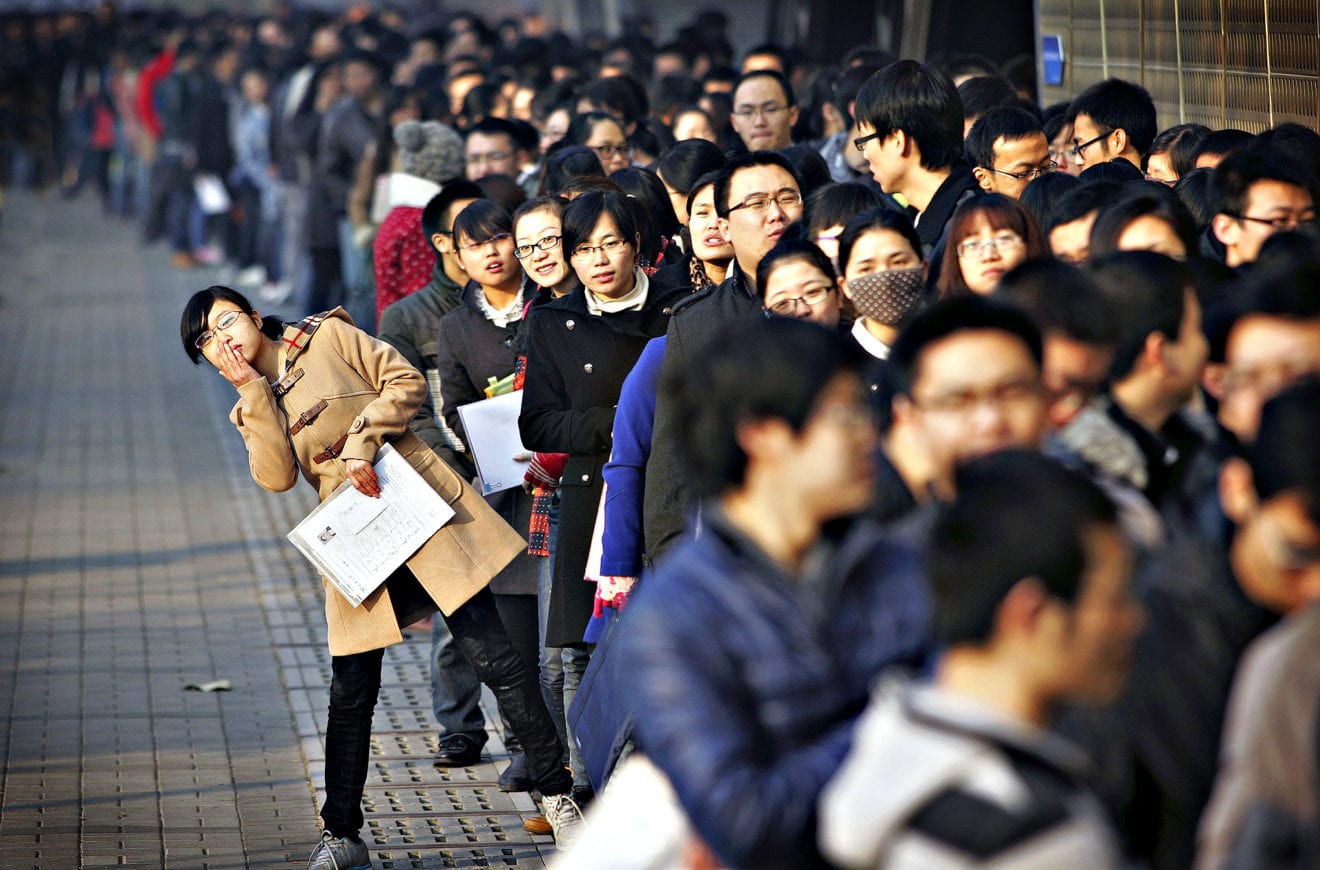
  • 50,000 malaysians expected to be laid off in 2018, says report

    50,000 malaysians expected to be laid off in 2018, says report

    MORE than 50,000 employees are expected to be laid off this year as reported.

    The English daily quoted Malaysian Employers Federation executive director Shamsuddin Bardan as saying manufacturing would be the main sector affected, followed by the services (insurance, banking and retail) and construction sectors.

    He said among the challenges facing the job market were the levy imposed on employers for the hiring of foreign workers and the Employee Insurance Scheme.

    “The increase in maternity leave days, from 60 days to 90 days, as well as the possibility of paternity leave, will also be factors.”

    The report said automation would continue to be another factor for job losses as more companies turned to robotics and information technology.

    “Multinational corporations involved in labour-intensive industries are also leaving due to higher wage costs in Malaysia,” said Shamsuddin.

    “They are moving to more attractive and lower-labour-cost nations, where there are no high social costs.”

    He said Cambodia and Laos were among the countries where wages were below US$100 (RM402.59) per month, whereas in Malaysia, they were about US$250.

    Malaysian Trades Union Congress president Abdul Halim Mansor was quoted as saying that based on information from the Labour Department, between 30,000 and 50,000 people could be retrenched this year, involving those from the finance, construction and manufacturing sectors.

  • Manager in China motivates staff by making them tear up their money

    Manager in China motivates staff by making them tear up their money

    A manager at a retail store in eastern China motivates her underperforming sales staff by forcing them to tear up their own 100-yuan bills.

    A video showing five young salespeople tearing up the notes at the command of their boss at a Gome electrical appliance store in Jinan, Shandong province drew condemnation over the weekend.

    The incident took place on the evening of March 22. The five employees were forced to tear up the cash because they did not meet their daily sales quotas of 100 deals.

    The local police department gave the manager a warning and fined her 1,000 yuan (US$688). The manager said that she had meant to teach her employees not to waste company resources.

    In the video, the manager shouts at the employees and insists that they tear up the cash if they want to keep their jobs, although it also shows staff members warning her that destroying money is illegal.

    The police department said that any deliberate destruction of yuan would result in a police warning and a fine of up to 10,000 yuan.

    The video caused widespread outrage among mainland social media users.

  • Vietnam plans to send more skilled workers abroad to curb unemployment

    Vietnam plans to send more skilled workers abroad to curb unemployment

    Vietnam’s labor ministry is outlining a new plan to send more skilled workers abroad in the next few years as the number of unemployed Vietnamese has surpassed the million mark.

    According to Deputy Minister Doan Mau Nghiep, the plan will focus on sending engineers to South Korea and health workers to Japan and Germany and also exploring new markets like Slovakia, the Czech Republic and Israel.

    “The ministry wants to find solutions for well-trained workers, who have graduated from universities or colleges but can’t find jobs,” he said. “But we have to assess whether the quality of our labor force meet the requirements of recipient countries.”

    According to official data, Vietnam had around 1.1 million unemployed workers, 2.3 percent of the workforce. Around one third were college graduates.

    Experts have said that the quality of Vietnamese labor force is generally low compared to Asian peers such as South Korea, India and Malaysia.