Retail News CRM

Tag: Engagement

  • Unlocking Retail Growth: How Payment Data Transforms Customer Engagement Strategy

    Unlocking Retail Growth: How Payment Data Transforms Customer Engagement Strategy

    In the evolving retail environment, merchants are faced with an abundance of platforms and technologies to engage with customers. This, according to Mastercard’s SVP of consumer acquisition and engagement, Johann Suchon, has given rise to a new challenge: discerning where to allocate resources for tangible growth.

    The Changing Retail Ecosystem

    With an increasingly fragmented and competitive retail landscape, brands have numerous opportunities to connect with customers through both digital and physical channels. Navigating the optimal combination of platforms, technologies, and marketing tools, however, has become a complex task. The modern retail ecosystem is far more intricate than in the past, and retailers now face the challenge of identifying the most effective tools, along with those that best facilitate the management of their offers.

    Suchon asserts that retailers must begin influencing customer purchasing decisions early in the buying journey. Payments are evolving beyond a simple transactional function, morphing into a strategic engagement channel. Through payment data, brands can significantly influence customer behavior – a capacity that far exceeds what could be achieved by leveraging solely their first-party data.

    The Transformation of Loyalty Programs

    According to Suchon, loyalty programs are currently undergoing one of their most significant transformations. The key competitive edge lies not just in acquiring customers, but also in reaching the appropriate consumers with meaningful offers. Traditional loyalty programs, which typically offer uniform benefits to members, are becoming less effective as customers increasingly demand personalized experiences.

    By enriching their data with payment information, retailers can target offers much more accurately. Retailers who have previously invested in loyalty programs are in a strong position to transition, as their first-party data can be used to tailor communications and offers more effectively than brands without loyalty programs.

    The use of payment data also presents a broader view of customer behavior, allowing retailers to gain insights into spending patterns across various industries, thus identifying opportunities that may have otherwise been missed.

    Emerging retail trends also suggest a significant shift in cross-border spending in Asia-Pacific, with approximately 70% of transactions originating from local consumers. For retailers targeting inbound tourism, this offers a substantial opportunity to connect travelers with relevant offers before and during their visit.

    Questions & Answers

    What is the current challenge for retailers in term of customer engagement?
    The current challenge for retailers is discerning where to allocate resources for tangible growth amidst an abundance of platforms and technologies.

    How can payment data be utilized in the retail sector?
    Payment data can significantly influence customer behavior and offers a broader view of customer behavior, allowing retailers to gain insights into spending patterns across various industries, thus identifying opportunities that may have otherwise been missed.

    What is the future trend in loyalty programs in the retail sector?
    Loyalty programs are currently undergoing significant transformations, with a shift towards personalized experiences. By enriching their data with payment information, retailers can target offers much more accurately. This trend is likely to continue and evolve in the future.


  • Trump’s Truth Social Teams Up with Crypto.com to Revolutionize Online Engagement through Prediction Markets

    Trump’s Truth Social Teams Up with Crypto.com to Revolutionize Online Engagement through Prediction Markets

    Donald Trump’s media company, Trump Media & Technology Group, is set to introduce a new dimension to online engagement through a partnership with Crypto.com. The alliance aims to merge social media, fintech, and prediction trading, a move that could potentially reshape the realm of online interaction.

    Expanding into Prediction Markets

    Trump Media & Technology Group, the organization responsible for the social media platform Truth Social, has recently divulged plans to venture into prediction markets. Leveraging an exclusive collaboration with Crypto.com Derivatives North America (CDNA) – a registered exchange and clearinghouse – Truth Social will pioneer a global first for social media platforms by integrating prediction markets into the user experience.

    The innovative product, dubbed “Truth Predict”, will provide a platform for users to prognosticate a broad spectrum of outcomes. Whether forecasting results of U.S elections or speculating on interest rate decisions, gold prices, inflation figures, or significant sporting events, users will be able to monitor these predictions in real time.

    Transforming Social Dialogue into Market Forecasts

    “Truth Predict will enable our committed users to delve into prediction markets with a reliable network, while also making use of our social media platform to offer entirely unique methods for discussing and comparing their forecasts,” commented Devin Nunes, Chairman and CEO of Trump Media.

    Having amassed over 3 billion dollars in financial assets and achieved a positive cash-flow in its first quarter after becoming a public entity, Trump Media appears to be well-prepared to expand its fintech objectives. Nunes emphasized that the integration epitomizes the company’s aim to “democratize information” and empower users to convert free speech into “actionable foresight.”

    Legally Compliant Approach

    The newly-developed feature will operate within a legally compliant framework courtesy of its partnership with Crypto.com’s CDNA unit. This will provide US users with lawful access to event contracts concerning politics, economics, and financial markets. CDNA’s regulated structure facilitates seamless participation for Truth Social users, effectively bridging the divide between social commentary and capital markets.

    Beta Testing and Global Expansion

    Truth Predict is set to undergo Beta testing on Truth Social ahead of a complete US launch. Upon satisfying regulatory requisites, Trump Media intends to introduce the service on a worldwide scale. If the launch proves successful, Truth Predict could signify the dawn of a new era in online user interaction, merging real-time opinion sharing, market sentiment, and financial involvement on one unified platform.

    Questions & Answers

    What is the primary objective of Trump Media’s partnership with Crypto.com?
    The main aim is to merge social media, fintech, and prediction trading, potentially redefining the online engagement landscape.

    What will the new product “Truth Predict” offer to the users?
    “Truth Predict” will enable users to forecast a wide range of outcomes and monitor these predictions in real time.

    What is the long-term plan for the launch of “Truth Predict”?
    After Beta testing on Truth Social and a full US launch, Trump Media plans to roll out the service globally, subject to regulatory compliance.

  • Couche-Tard pulls $47 billion bid for Seven & I, cites lack of engagement

    Couche-Tard pulls $47 billion bid for Seven & I, cites lack of engagement

    Alimentation Couche-Tard, a Canadian retail company, announced its withdrawal from a $47 billion acquisition bid for Seven & I Holdings on Wednesday. Couche-Tard cited the lack of a cooperative exchange from the Japanese retail company as the reason behind this move.

    A Surprise Discontinuation

    The unexpected decision brings a year-long effort by Couche-Tard, the operator of Circle K, to a halt. The goal was to create a global convenience store powerhouse by taking control of the corporation that operates 7-Eleven. According to Couche-Tard, there has been no earnest or productive interaction from 7&i that would help progress any proposal, contradicting public statements made by 7&i representatives.

    Escalating Offers

    Couche-Tard had initially elevated its offer from $38.5 billion to $47 billion in October of the previous year. It also offered to raise it further in March if the Japanese firm was willing to cooperate and disclose more financial data. The Canadian firm had agreed to a store sale strategy to alleviate some regulatory obstacles.

    Couche-Tard’s acquisition efforts had gained momentum after a competing $58 billion bid from Seven & I Holdings’ founding family failed due to a lack of financing.

    Revealing the Breakdown

    Earlier in the year, both businesses signed a non-disclosure agreement (NDA). However, Couche-Tard expressed dissatisfaction with the limited extent and substance of the permitted due diligence which included two tightly controlled management meetings. The company stated that it had no insight into whether or when it would receive any additional information.

    Couche-Tard had proposed to buy all of 7&i’s business outside of Japan and only 40% of its business within Japan. Convenience stores in Japan play a significant role as key infrastructure, providing valuable support during natural disasters. The company stated that it could not effectively proceed with the merger without further and genuine engagement from 7&i leadership and its special committee.

    Questions & Answers

    Why did Couche-Tard withdraw its bid for Seven & I Holdings?
    Couche-Tard cited a lack of constructive engagement from Seven & I Holdings as the reason for withdrawing its bid.

    How high had Couche-Tard raised its acquisition offer for Seven & I Holdings?
    Couche-Tard had increased its offer to $47 billion from the initial $38.5 billion. It also expressed willingness to raise the offer further if the Japanese company cooperated and disclosed more financial information.

    Why did Couche-Tard want to purchase only 40% of 7&i’s business in Japan?
    Convenience stores in Japan are considered as key infrastructure due to their role in providing support during natural disasters. It is likely Couche-Tard took this factor into consideration in its proposal.

  • Ocean City Elevates Hanoi Tourism Through Dynamic Visitor Engagement Initiatives

    Ocean City Elevates Hanoi Tourism Through Dynamic Visitor Engagement Initiatives

    Beyond its viral beginnings, Ocean City has blossomed into a vibrant epicenter of culture, entertainment, and lifestyle, captivating enormous crowds and reshaping the regional tourism landscape. What initially sparked social media buzz has transformed into a weekly tourist magnet, drawing in hundreds of thousands of visitors. Notably, the Anh Trai Vuot Ngan Chong Gai concert attracted a staggering 130,000 attendees in just one day, while events like the Korea Travel Festa and the Vincom 20th Anniversary Concert, hosting 30,000 and 20,000 attendees respectively, have culminated in an impressive milestone of over 12 million visitors in 2024.

    Unwavering Appeal Through Year-Round Programming

    Ocean City’s charm thrives on its year-round programming, offering a consistent slate of retail, cultural, and entertainment activities. Daily events—ranging from art performances to community gatherings—keep visitors engaged and encourage them to linger longer. The business ecosystem of Ocean City has matured significantly, demonstrating operational stability complemented by strong commercial performance. With nearly 1,000 stores scattered across themed areas such as The Venice, K-Town, Little Hong Kong, and Sake Village, the hustle and bustle are particularly vibrant on weekends and holidays. Many brands within the fashion, beauty, F&B, and entertainment sectors are delighting in revenue surpassing expectations, proving that Ocean City is as lucrative as it is picturesque.

    A Lifestyle Beyond Living: Residents Weave Community in Ocean City

    For residents like Cho Ducksang, a South Korean national who has called Vietnam home for the past nine years, Ocean City is much more than just a residence. It is a lifestyle hub that fosters relaxation, social connections, and a sense of community. “I often kick off my day with a swim, enjoy fishing on weekends, and relish vibrant nights with friends in Little Hong Kong,” Cho shared, fondly recalling memories from a BBQ festival at Sake Village filled with grilled meats and cold beers. “Even when friends arrive late from Korea, we can always find lively restaurants in Little Hong Kong. It’s where we’ve created many unforgettable evenings.” He cherishes the community events, particularly live music and street performances, which inject vitality into the area each day.

    A Destination Shaped by Experiences

    These enriching experiences fortify Ocean City’s identity, showcasing it not merely as a residential development but as an evolving urban destination where both residents and visitors contribute to its vibrant tapestry. The customer journey is crafted through consistent operations and continual enhancements, rather than relying solely on architecture.

    Thriving Future with Vincom Mega Mall

    Looking forward, Ocean City is poised to elevated its allure with the upcoming Vincom Mega Mall Ocean City set to launch in 2025. Spanning nearly 70,000 square meters, this commercial complex aims to embody the “One-Stop Shoppertainment” model in Vietnam, enhancing visitor experiences through shopping, entertainment, dining, and relaxation. With four experience pillars—Show, Shop, Food, and Fun—the mall plans to introduce several innovative features. Among these is VinPalace, Vietnam’s first theater within a shopping mall, boasting 1,600 seats and state-of-the-art production technology for shows inspired by Vietnamese folklore, representing over $13 million in investment. Moreover, northern Vietnam will welcome its first full-scale Korean-style wellness complex, Aquafield, providing a rejuvenating blend of sauna, jjimjilbang, and specialized massage services in one venue.

    The mall will house more than 150 brands, including well-known names like AEON, Mr. D.I.Y., CGV, Kidzooona, and Phuong Nam Book City. Positioned strategically at the heart of Ocean City, Vincom Mega Mall Ocean City is expected to bolster the momentum that has made Ocean City a trending destination. With its expansive scale, unique amenities, and experiential design, the mall is set to redefine contemporary urban living. “More than just a shopping destination, it promises to be a transformative journey,” remarked a Vinhomes representative, hinting that each visit might just lead you to rediscover a bit of magic.

    Questions & Answers

    What types of events can visitors expect at Ocean City? Ocean City hosts a variety of activities year-round, including concerts, art performances, and community gatherings to keep visitors engaged.

    How has the business ecosystem at Ocean City evolved? With nearly 1,000 stores operating in themed areas, the business ecosystem has matured, showcasing operational stability and robust commercial performance.

    What will Vincom Mega Mall offer that sets it apart? Vincom Mega Mall will introduce Vietnam’s first theater within a shopping mall, alongside a full-scale Korean-style wellness complex, making it a unique destination for shopping and entertainment.

  • Asian Retailers use mobile engagement to grow sales

    Asian Retailers use mobile engagement to grow sales

    Mobile devices have become an essential tool for retailers across Asia looking for more effective ways to engage their customers. Whether using a smartphone or tablet, and whether comparing products and prices, reading product reviews, or making purchases, consumers’ always-on mobile devices are now a pivotal feature of the retail experience. Mobile is now the logical centrepiece for enhanced customer engagement.

    A recent global study by Nielsen found that Asia Pacific leads the way when it comes to mobile shopping, with use above the global average for every mobile shopping activity.

    Customers are engaging more of the in-store experience on their mobile devices, with Nielsen finding that more than half of shoppers use their mobile device when shopping to compare prices or look up product information.

    Progressive retailers are embracing cross-channel engagement strategies, which extend the physical contact that customers have with the store into all possible digital touch points. 

    Two of the main ways that retailers across Asia are using mobiles to engage their customers are for promotional offers to drive sales, and for after sales support and feedback capture to continuously improve the customer experience.

    Driving sales

    Based on customer preferences and purchase history, retailers may send rich, on-brand offers to customers, refined by attributes like market segment, location or social media interaction. These can include text updates announcing upcoming sales as well as discount codes sent directly to native apps or rich messages within the phone browser. Geolocation allows timely, contextual offers to be sent to customers when they are actually in-store, prompting high, immediate redemption rates.

    Nielsen found that almost half of shoppers use their device to look for coupons or deals (44%), make better shopping decisions (42%) or make shopping trips quicker or more efficient (41%).

    Mobile messaging allows an unprecedented level of real-time contact with customers and it’s vital to maintain trust and add value when communicating this way. Giving customers the ability to opt in and out of contact, as well as setting their personal preferences ensures that contact is both welcome and relevant. 

    Customer satisfaction

    Given the general preference for rapid, easily accessed communication, SMS is a viable initial channel for customer service, lowering costs, and keeping contact concise and focused.

    More complex conversations can readily be facilitated by seamlessly pivoting from SMS into mobile web, app, phone or email, allowing customers to engage further via their preferred contact paths when it suits them. This provides immediate options for customers to feed back negative responses for action, reducing risk of social media venting, and brand impact.

    Best practice mobile engagement insights

    There are a few elements that all retailers should consider when designing effective mobile management to grow sales and improve customer service.

    1. Multi-channel communication – send messages to customers in the way that suits them, whether that’s voice, SMS, push, social media, rich messages or email, to improve the rates of delivery. Knowing that customers will almost always have their mobiles close allows retailers to provide messages on all these channels
    2. Geolocation – GPS-enabled smartphone applications allow users to share real-time location information, with relevant data and offers matching the customer’s location.
    3. Automated and integrated messages – incorporating messaging systems with other customer facing and internal technologies such as CRM, marketing and billing systems reduces the need for manual intervention, providing a range of automated, high value communications options, including: customer surveys for generating instantaneous feedback; voucher and barcode downloads; loyalty program offers; time based offers; multilingual support options; and mobile catalogues. 
    4. Consolidate and simplify communications – combining communications streams into a single platform, provides a single view of the customer engagement, regardless of their preferred medium or location, while vastly reducing cost and complexity of managing diverse communications tools.
  • Asia ahead of the digital engagement curve

    Asia ahead of the digital engagement curve

    Asian economies are more digitally engaged relative to their global peers at similar stages of development, according to Deloitte.

    The company’s second edition of its Voice of Asia series shows that Asian economies are leveraging digital technologies to help them leapfrog development hurdles, resulting in them winning the race on connectivity.

    Asia has become the center of global economic growth and by embracing digital, it will continue to lead global economic growth over the coming decade.Ric Simes, Deloitte Australia Economist explained that, “digital technologies have been synonymous with rapid and evolving change over the past four decades. While we have made significant progress, we are only at the tip of the digital iceberg when it comes to what’s possible in the future. When applied on a global scale, we can see that Asian economies and societies are at the forefront of this revolution. Asia is leading the way in how digital developments can enable individuals, businesses and governments to do things differently and, often, more efficiently.”

    As the fastest growing region in the world and a significant driver of global economic growth over the past decade, Asia is assuming the digital leadership position in the 21st century. According to the Deloitte digital engagement indices for government, business and consumers, Asian economies are ahead in digital engagement terms, with almost all Asian countries above the world average.

    Government and business engagement is high relative to the rest of the world, with individual engagement about average. The Deloitte digital engagement index scores each countries’ Networked Readiness Index (NRI) against GDP per capita, showing that every country in Asia apart from Myanmar has above average levels of digital engagement for the level of their economic development.

    Singapore and Hong Kong are world leaders, while the large population bases in countries such as China, India, Indonesia and Vietnam have considerable opportunities for the future. In middle-income countries in Asia, governments have been able to maintain strong growth agendas based on policies in areas such as trade, infrastructure and savings. Today, these countries are pursuing growth agendas with digital taking a leading role.

  • Apple to hold educative sessions at Apple Stores to increase customer engagement

    Apple to hold educative sessions at Apple Stores to increase customer engagement

    It may just be a marketing gimmick, but Apple’s latest initiative has all the elements to attract the crowd in its stores. The tech giant is planning to mobilize the mass to its stores by arranging educative sessions, dubbed “Today at Apple”, which would be organized by experienced professionals and will impart wisdom on a varied list of topics ranging from literature to coding.

    This initiative is aimed at building a better engagement between Apple enthusiasts and the brand by providing creative outlets and sessions, completely free of cost. The sessions will be held by experienced Creative Pros, who will make use of the varied products that Apple has to offer in order to educate the participants.

    Apple’s Senior Vice President of Retail, Angela Ahrendts said: “Today at Apple’ is one of the ways we’re evolving our experience to better serve local customers and entrepreneurs.”

    “We’re creating a modern-day town square, where everyone is welcome in a space where the best of Apple comes together to connect with one another, discover a new passion, or take their skill to the next level. We think it will be a fun and enlightening experience for everyone who joins,” she added.

    So if you are a photography enthusiast getting ready to sharpen your skills via six “How To” sessions at the nearest Apple store, that would cover shooting, organizing, editing and more or if you think you have elevated from all the basic stuffs, you can participate in the photo walks. If you are a coder, you can learn how to tinker around with Swift Playgrounds, which shares the same ethos that professional developers regularly apply in their day to day coding activities.

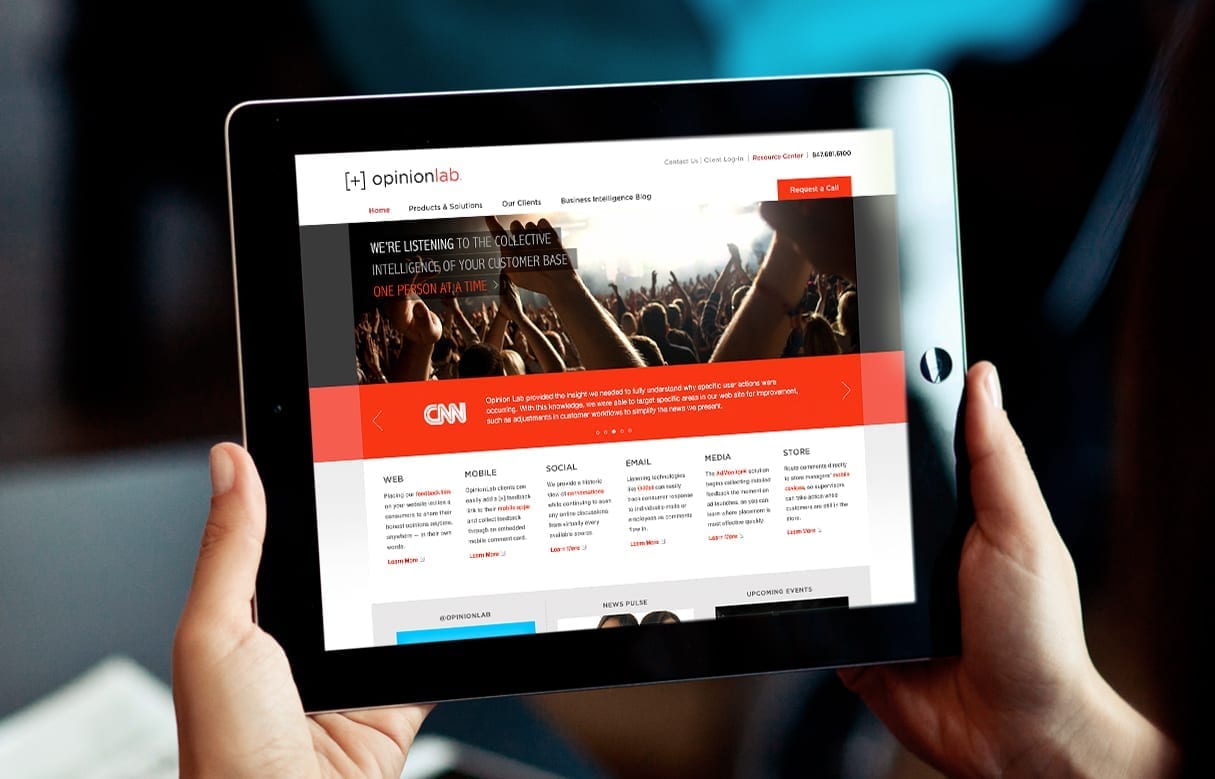
  • Verint acquires OpinionLab to push digital customer engagement

    Verint acquires OpinionLab to push digital customer engagement

    Verint Systems has extended its Customer Engagement Optimization portfolio through its acquisition of OpinionLab, a provider of continuous voice of the customer listening solutions that drive smarter, real-time digital engagement.

    OpinionLab solutions are used by global brands to optimize web and mobile customer experiences and engagement.

    Voice of the Customer (VoC) solutions are becoming a strategic imperative, helping organizations measure and enhance experiences, satisfaction and loyalty.

    As more customer engagements follow a “digital-first” approach for conducting research and performing transactions, as well as solving problems, companies need to measure their customers’ digital experiences and quickly act on those insights to enhance both the customer experience and business performance.

    Through its acquisition of OpinionLab, Verint has extended its Customer Engagement Optimization portfolio to now include the ability to measure and act on digital customer experiences in-the-moment.

    With this addition, Verint has broadened its capabilities for listening, analyzing and acting on the VoC across all channels—digital, voice, text and social.

    “Capturing, analyzing and acting on the voice of the customer are critical for any organization in any industry,” says Elan Moriah, Verint’s president, for customer engagement solutions. “With the OpinionLab combination, we’re taking voice of the customer to a new level by giving organizations a complete solution for improving the customer experience across engagement channels.”

  • Ksubaka’s PlaySpots Deliver Friso Gold Engagement Campaign

    Ksubaka’s PlaySpots Deliver Friso Gold Engagement Campaign

    Ksubaka today announced that it has successfully delivered an interactive in-store engagement campaign in CRV, WuMart and MerryMart retail stores in China for Friso Gold.

    The objectives:

    The campaign objectives were to attract in-store shoppers to a Friso Gold interactive experience and communicate to mums that Friso helps prevent heat and constipation in babies because the Friso Gold molecules are smaller and easier to digest.

    Equally as important, was to collect data through an onscreen shopper survey to verify that the Friso Gold Interactive Experience was effectively reaching the target audience and educate new potential customers about the product benefits.

    The campaign experience:

    Ksubaka designed a Friso Gold interactive experience, which was provisioned over-the-air to 231 playSpots across 37 retail stores (comprising a mix of CRV, WuMart and MerryMart) within the Ksubaka media network. The gameplay involved catching as many small Friso molecules as possible within 30 seconds, while avoiding the larger molecules falling from a competitor’s product. Shoppers caught the molecules by moving a baby back and forth on bottom of the screen. To emphasise the difference between small and large molecules, when the baby caught the Friso molecules they smiled and raised their hands in happiness and when they caught the large molecules the frowned and cried. 

    At end of the gameplay, key product messages were reiterated along with a pack shot and the shopper was offered a 1 for 1 discount by scanning a WeChat QR Code to get a coupon. The short survey was then displayed on-screen asking shoppers for a little information on their preferences.   

    The results:

    Working to a set of agreed KPIs, the Ksubaka Friso Gold 31 day campaign delivered:

    • Campaign Exposures – 4.4 million +193% on KPI
    • Shopper Impressions – 6.6 million +200% on KPI
    • Mojo engagement – 82K +64% on KPI (Mojo is a completed shopper brand engagement that ends at the reward screen)
    • Total number of surveys completed 1.3k

    “The Friso Gold campaign is an excellent example of how Ksubaka is able to drive mass consumer engagement at the point of purchase while, at the same time, giving live and meaningful insight for brands,” said Julian Corbett, CEO and founder, Ksubaka.