Tag: enterprise software

  • Zhipu AI Launches GLM-5.3-Flash After Stealth Trial on 100,000 Domestic Chips

    Zhipu AI Launches GLM-5.3-Flash After Stealth Trial on 100,000 Domestic Chips

    Beijing-based Zhipu AI launched its open-weight model GLM-5.3-Flash on Wednesday after running the system across a cluster of 100,000 domestic Chinese chips. The release followed an unannounced trial on platforms including OpenRouter and OpenCode, where the system processed 62 trillion tokens under the test alias Ox Alpha before its formal unveiling.

    Shares tied to the startup rose following the disclosure. Zhipu confirmed that the entire test deployment operated on domestic silicon rather than foreign hardware imports.

    Traffic Across Developer Marketplaces

    The stealth evaluation generated heavy traffic across international developer hubs over the past week. Users tested the then-unidentified Ox Alpha across code generation and complex task routing, driving sustained compute volume across the 100,000-chip array before Zhipu claimed ownership of the checkpoint.

    Releasing the architecture as open weights allows enterprise clients and independent software developers to download, modify, and host the model on their own infrastructure. That deployment model lowers operating expenses for commercial software firms looking to integrate natural language tools without paying continuous per-token API charges to proprietary providers.

    Domestic Compute Strategy

    Building massive cluster capacity on domestic processors addresses direct supply constraints that Chinese technology groups face under ongoing hardware export restrictions. Large tech firms across the mainland have traditionally relied on foreign graphics processors to train top-tier foundation models, but local alternatives are now taking on larger workloads.

    The performance of the 100,000-unit setup provides an operating template for other Chinese software developers seeking to decouple their deployment pipelines from foreign accelerators. Market attention now turns to downstream enterprise adoption rates and independent performance benchmarks against competing commercial models over the current quarter.

  • AI Retail Assistant Spending to Reach USD 22.4 Billion by 2036

    AI Retail Assistant Spending to Reach USD 22.4 Billion by 2036

    Global retail spending on artificial intelligence assistants will expand from USD 2.4 billion in 2026 to USD 22.4 billion by 2036, according to industry data from Fact.MR. The projected 25.0 per cent annual growth rate adds USD 20 billion in total market value over the decade, lifted from a baseline of USD 1.9 billion recorded in 2025.

    Asian retail markets represent two of the primary growth corridors over the forecast period. South Korea will expand at a 25.9 per cent compound annual rate through 2036, driven by high mobile commerce penetration and dense transaction pools inside native retail apps. Japan is projected to grow at 21.0 per cent annually, propelled by chain store operators adopting automated multilingual customer support and digital floor guidance.

    Cloud Platforms and Inventory Signals Dominate Spend

    Software platforms will account for 41.0 per cent of all retail assistant expenditure in 2026. Retailers are selecting single-platform layers to handle catalog search, guided selling journeys, and customer service escalation rather than buying point solutions.

    Cloud infrastructure will capture 51.0 per cent of deployments this year, giving store networks centralized access to generative models without the expense of hosting separate environments for each brand format. Large enterprises will generate 42.0 per cent of overall market demand, backed by dedicated governance teams and complex multi-channel data operations.

    Assistant capabilities are also shifting away from basic conversational bots toward merchandise planning. Forecasting tools will take 44.0 per cent of segment demand in 2026. Merchandising desks are connecting online search patterns with replenishment schedules to adjust inventory before store shortages occur.

    Integration Obstacles and Enterprise Rollouts

    The speed of commercial adoption faces technical friction across legacy systems. Data quality issues across fragmented product catalogs will shave an estimated 0.8 percentage points off market expansion, while internal governance reviews and legacy software integrations remain the primary bottlenecks for department store and hypermarket chains.

    Global technology providers have stepped up rollouts to meet store demand. Google Cloud launched its Conversational Commerce agent on Vertex AI in September 2025, while Microsoft introduced automated brand agents for Shopify and Copilot Studio templates in January 2026.

    The critical operational test for Asian retail operators through 2027 will center on catalog hygiene and real-time inventory synchronization across physical stores and marketplace channels.

  • Tech Mahindra Partners with Rezolve Ai to Scale Agentic Retail Commerce

    Tech Mahindra Partners with Rezolve Ai to Scale Agentic Retail Commerce

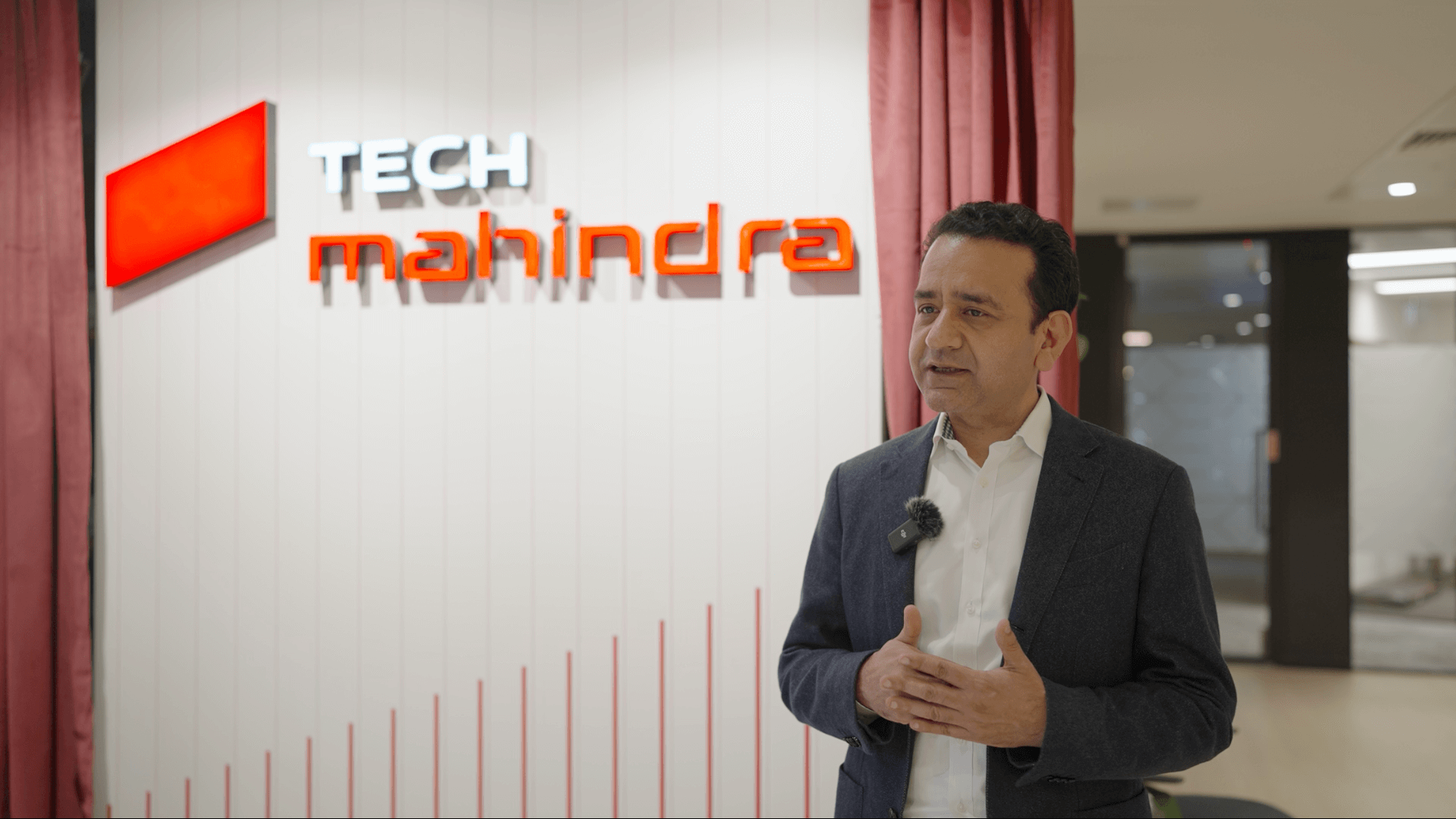
    Indian IT services major Tech Mahindra partnered with London-based Rezolve Ai to deploy automated agentic shopping technology across its network of more than 1,100 enterprise clients.

    The agreement gives Rezolve access to 146,000 systems professionals across 90 countries to take retail artificial intelligence beyond conversational chatbots and into live transaction processing.

    Integrating AI Checkout into Enterprise Systems

    Under the alliance, Rezolve Ai will supply its Brain Suite software, which includes Brain Commerce for conversational product discovery and Brain Checkout for autonomous transactions. The system runs on proprietary brainpowa models designed to eliminate hallucinations during commercial transactions, alongside TraceWare audit software that tracks automated agent decisions.

    Tech Mahindra will manage consulting, cloud infrastructure and systems engineering for retail, consumer goods and financial services clients. The combined setup allows AI agents to interpret consumer intent, recommend inventory and execute payments inside existing digital storefronts.

    Daniel M. Wagner, chairman and chief executive of Rezolve Ai, noted that Tech Mahindra’s existing enterprise relationships provide the distribution engine needed to deploy transactional AI at commercial scale.

    Enterprise Push for Transactional AI

    Systems integrators across Asia are racing to shift enterprise clients from experimental chatbots to revenue-generating commerce tools. While basic generative AI handled customer support across Asian retail platforms over the past two years, enterprise rollouts previously stalled at checkout where transaction security and inventory data errors create financial liability.

    Rezolve Ai plans to present its enterprise commerce deployment data during an investor presentation scheduled for October 6, 2026.

  • Over Half of Southeast Asian Retailers Remain Stuck in AI Pilots

    Over Half of Southeast Asian Retailers Remain Stuck in AI Pilots

    More than 56 percent of consumer goods and retail companies across Southeast Asia remain trapped in continuous testing, unable to scale artificial intelligence into commercial production.

    While 8 percent of enterprises in the region have fully deployed AI initiatives compared to a 6 percent global average, retail operators lag behind banking and technology peers.

    Why Models Fail at the Border

    Across global retail, nearly 75 percent of AI projects fail to reach production deployment. Poor data quality accounts for roughly 85 percent of those collapses, compounded by the region’s mix of modern supermarkets, social commerce platforms, and traditional corner stores.

    A demand forecasting algorithm tuned on clean transaction records in Singapore often breaks down when deployed across Indonesian point-of-sale systems or Vietnamese wholesale networks. Without standardized data definitions across borders, multi-market rollouts stall before delivering operational cost cuts.

    Another 73 percent of failed retail AI programs lacked quantifiable performance metrics before launch. Broad mandates to improve customer personalization frequently dissolve without hard targets, such as cutting category stockouts by 4.5 percent across secondary regional logistics hubs.

    Regulatory Divergence and Vendor Risks

    Multi-market operators now run AI workloads across separate cloud platforms to mitigate operational outages. More than a third of large enterprises deploy five or more models in production, driven by concerns that single-vendor disruptions could halt real-time pricing and automated purchase orders across physical storefronts.

    Singapore and Vietnam have introduced comprehensive risk-based AI regulatory frameworks, while neighboring markets develop separate data residency rules. Retailers operating across Jakarta, Bangkok, and Manila face distinct local sovereignty laws that penalize centralized data models.

    For regional retail groups that expanded through rapid store acquisitions over the past decade, technical fragmentation creates the same operational drag that previously hobbled centralized enterprise resource planning rollouts. Successful operators are shifting away from standalone software pilots, requiring field managers to redesign replenishment and supply workflows around automated tools before approving cross-border rollouts.

    Regulatory compliance deadlines in Singapore and expanding data sovereignty enforcement in Jakarta will test whether multi-market retailers can maintain cross-border automated pricing and inventory pipelines through 2027.

  • Uzbekistan Commits $100 Million to Subsidise AI Across 10,000 Businesses

    Uzbekistan Commits $100 Million to Subsidise AI Across 10,000 Businesses

    Uzbekistan will spend at least $100 million to subsidise artificial intelligence adoption across 10,000 enterprises, covering half the cost of software implementation for commercial operators. The state-backed program targets manufacturing and consumer supply sectors, extending automation subsidies from the textile trade into food processing, electrical engineering, and construction materials.

    President Shavkat Mirziyoyev announced the funding following consultations with business owners in the Khorezm region. Government data presented at the meeting showed that 54 per cent of domestic companies using modern management and AI systems saw product demand increase. A quarter of those businesses lowered production costs, while higher sales allowed 40 per cent to raise worker wages by more than 10 per cent.

    Subsidies for Factory Automation

    Under the initiative, the state will reimburse 50 per cent of what companies spend to introduce automated management systems and machine learning tools. Participating enterprises will also receive access to pre-built, open-platform software designed to eliminate the cost of developing proprietary applications from scratch.

    Hardware support will run through the Center for Digital Government Project Management, where authorities recently brought online Uzbekistan’s first supercomputer cluster. Companies building AI models for commercial products can process workloads on the facility without charge, with research and development bills settled directly by the state budget. Computing capacity at the cluster will triple next year.

    The push reflects how Central Asian governments are attempting to modernize domestic supply chains and bypass legacy enterprise systems. While Southeast Asian manufacturing hubs rely heavily on private capital and foreign software vendors to automate shop floors, Tashkent is using direct treasury subsidies to pull mid-tier producers into modern data workflows.

    Supercomputing and Regional Education

    Administrative processes are seeing similar investments. The Ministry of Digital Technologies signed an agreement with South Korea’s National Information Society Agency and UZINFOCOM to build an AI system that processes and manages citizen appeals to state bodies, starting with a feasibility study and pilot rollout.

    Across the border, Kazakhstan is focusing resources on technical labor. First Vice Minister of Artificial Intelligence and Digital Development Rostislav Konyashkin confirmed the establishment of Qazaq AI Research University under orders from President Kassym-Jomart Tokayev. The institution will embed machine learning coursework into outside degree programs and build research links with partner centers in China, Finland, and the United Arab Emirates.

    Uzbek authorities will open the enterprise application window in stages, with initial disbursements prioritized for food processors and light industrial plants preparing export shipments.