Tag: Entrepreneur

  • DBS Ramps Up Support for Social Enterprises

    DBS Ramps Up Support for Social Enterprises

    The bank disbursed S$7 million ($5.23 million) in loans to social enterprises so far this year, up fourfold from 2019.

    Much of this support has gone towards creating and preserving livelihoods, with many of the SEs using the funds to create and retain jobs that hire people from disadvantaged communities, DBS said in a statement on Thursday.

    DBS said that access to working capital was an immediate priority for many SEs when the pandemic emerged, but many of them faced challenges in getting loans as they typically lacked a borrowing history with banks or relevant credit profiles.

    The bank rolled out its SE Digital Business Loan in May this year, which covers working capital needs at preferential rates. The bank also offers the Social Enterprise Business Loan which provides unsecured loans at a preferential interest rate, and the Temporary Bridging Loan, which provides short-term relief assistance.

    In addition, DBS Foundation awarded S$2 million in grants to social enterprises (SEs) to support the deployment of social innovations. The funding includes S$1.4 million given to 13 SEs in six of the bank’s key markets (Singapore, China, Hong Kong, India, Indonesia and Taiwan) in the 2020 cycle of its DBS Foundation Social Enterprise Grant Program.

    Two were from Singapore: Ento Industries – a biotech focused on reducing food waste, and Zigway, a ASEAN-focused fintech that makes bulk buying affordable for low-income families through a monthly subscription model.

    Recipients were chosen from a record 820 applications across Asia, based on social impact, innovation, as well as the sustainability and scalability of their business models. They were also required to demonstrate a path to achieving key business and social impact milestones.

    DBS noted the increasing recognition for the role SEs play in society.

    In the world we’re living in today, companies must not only think about delivering value to shareholders, but also consider the interests of the communities they serve. This has really come to the fore amidst Covid-19, which has sparked unprecedented social and economic challenges – yet, these very issues have also heightened opportunities for social enterprises to make a difference, and helped to cement the importance of their role in society, Karen Ngui, Board Member of DBS Foundation, said in the statement.

  • Mos Thailand Found Investor, Securing Further Expansion

    Mos Thailand Found Investor, Securing Further Expansion

    Japanese hamburger-restaurant chain Mos is selling a 74.3 per cent stake in its Thailand operations to bolster its local presence.

    The Mos Thailand shares are being acquired by former Thai skincare entrepreneur Pitharn Ongkosit, who will undertake to expand the business within the territory and increase the number of outlets within the region.

    The Japanese brand will retain all remaining shares in the business.

    The brand’s original partnership failed after local operators kept just six outlets running since the firm’s 2007 launch in Thailand. The partners now aim to have 45 shops in operation within five years.

    The firm has 1321 outlets in Japan and 265 in its second-largest market, Taiwan.

  • Tommy Hilfiger in social entrepreneurs shout out

    Tommy Hilfiger in social entrepreneurs shout out

    Fashion brand Tommy Hilfiger is seeking applications from social entrepreneurs for the second year of its Fashion Frontier Challenge.

    Tommy Hilfiger’s global program aims to support entrepreneurial start-up and scale-up stage businesses developing solutions that promote inclusive and positive change in fashion.

    “The first chapter of this global initiative was an inspiring journey that put a spotlight on incredible ideas that could change the lives of people through a more positive and inclusive fashion landscape,” said Tommy Hilfiger.

    “Through the Tommy Hilfiger Fashion Frontier Challenge, we continue to mentor and support social entrepreneurs who are putting their heart and soul into addressing issues they strongly believe in. This celebrates the entrepreneurial spirit and determined optimism at the heart of our brand DNA.”

    Interested businesses are invited to submit project proposals that focus on inclusive fashion. Over a multi-stage four-month process, applicants will be narrowed down to six finalists, who will be invited to develop their project plans with the support of a team of dedicated Tommy Hilfiger subject-matter experts at the Campus of the Future in Amsterdam, the Netherlands.

  • Vietnamese logistics startup raises $5.5 mln in latest funding round

    Vietnamese logistics startup raises $5.5 mln in latest funding round

    Logivan, a web platform that helps trucks connect with potential customers, said it has raised $5.5 million in the latest funding round. The investment comes from two Asian angel investors and Indonesian venture capitalist Alpha JWC Ventures. One of the angel investors is David Su, a founding managing partner at private equity firm Matrix Partners China, who invested through his family office.

    He said: “Vietnam is the next rising star in the growing Southeast Asia region and it is well poised to experience a similar growth trajectory as we witnessed over the past years in China.

    “Vietnam’s logistics industry is highly fragmented, logistics costs make up 23 per cent of Vietnam’s GDP, with 90 per cent of trucks in Vietnam being owned by individuals. Given the success of Manbang (a Chinese truck-hailing firm), we believe that Logivan has the potential to emulate its success.”

    According to e27, an online Tech media platform for Asia, Logivan will be investing in data analysis to optimize user experience, artificial intelligence, truck-matching, and pricing algorithms to minimize empty trips and in human resources.

    Last year, Logivan raised $600,000 in April from Singapore-based Insignia Ventures Partners and $1.75 million in August from Singaporean private equity firms Ethos Partners and Insignia and Vietnamese investment fund VinaCapital Ventures.

    It has raised a total of $7.9 million to date.

    Founded in 2017 by Cambridge graduate Pham Khanh Linh, the company offers a logistics service which optimizes trucks’ routes and minimizes empty return trips.

    She came up with the idea after observing that 60-70 percent of trucks in Vietnam returned empty after dropping off their loads because they could not connect with potential customers.

    In 2018 Logivan claims to have connected more than 22,000 transportation partners with every major commercial truck type. It also has 10,000 shipping companies registered on its system.

  • Vietnam fintech startup raises $1 million from foreign venture capitalists

    Vietnam fintech startup raises $1 million from foreign venture capitalists

    Vietnamese fintech firm Finhay has raised $1 million in seed funding from Singapore’s Insignia Ventures Partners and other foreign investors. “Finhay will use the $1 million investment to expand its user base 10-fold to 100,000,” said founder and director of Finhay Nghiem Xuan Huy. Finhay was established in 2017 with capital of $100,000 as a micro-investment platform targeted at millennials. It allows customers to invest as little as VND50,000 ($2.17) in mutual funds from Finhay’s investment portfolio.

    Huy said the business model is very popular abroad, citing examples such as U.S. micro-investing apps Acorns and Stash.

    The application automatically analyzes the user’s risk appetite and suggests appropriate investment options and provides information to help improve users’ personal financial management.

    It has over 13,000 users and over VND7 billion ($303,590) worth of pooled capital.

    Insignia Ventures Partners, a venture fund which has already invested in popular transport apps Go-Jek and Traveloka of Indonesia, hopes “…[Finhay] will gradually layer on more products and services to become the Amazon of financial services in Vietnam.”

    Finhay also received seed capital from funds in Hong Kong and the U.S.

  • Vietnam’s startup potential lures international students, overseas Vietnamese

    Vietnam’s startup potential lures international students, overseas Vietnamese

    Founders of Wisepass, Base.vn and WeFit are educated overseas, drawn back to Vietnam by its startup potential. Lam Tran, 34, is a French overseas Vietnamese with over 10 years’ experience in marketing at Google Europe. He returned to Vietnam and founded Wisepass, a lifestyle app that connects users to a wide range of dining, leisure and entertainment services through paid membership packages.

    In 2018, Lam made WisePass available in Thailand and the Phillipines. “I believe to succeed businesses must lead their home market first, before thinking of expanding overseas,” said Lam.

    Having set up the business in HCMC and then expanded to Hanoi, Lam regularly flew to the capital city to attend events and promote his products. After selling 10 memberships in a day, Lam was able to show employees the direction and potential of WisePass.

    “Global expansion may sound intimidating, but after all, founders must start from the smallest things: talk to customers, selling products,” Lam said. There is no need to wait for big events, he added, “all you need to do is show up and market your product at appropriate places.”

    WisePass currently operates in three countries, with 300 partners and over 1,000 monthly active users.

    The founder of Base.vn, Pham Kim Hung, is well-known  in Vietnamese math circles. He won Gold and Silver medals at the International Mathematical Olympiad and is the author of a math textbook published in four languages. Graduating in computer science from Stanford University, Hung did not stay on to work in Silicon Valley but decided to return to Vietnam.

    In 2016, he launched Base.vn, a business management software under the Software-as-a-Service (SaaS) model, where software is leased under a subscription instead of installed. The app is built to unify corporate governance processes, from administration to human resources, task management, financial management to sales marketing.

    Base.vn currently serves over 500 enterprises, including many large organisations like VIB, VPBank, ACB, The Coffee House, McDonald’s and VinCommerce.

    Base.vn currently has the highest investment in all business-to-business startups in Vietnam.

    “After Indonesia, Singapore and Malaysia, we believe that Vietnam can become the next major technology powerhouse in the region,” Chandra Tjan, co-founder and partner of Indonesian fund Alpha JWC Venture said.

    In addition to Base.vn and WisePass, in the past few years, the Vietnamese startup community has received many other innovations: WeFit (fitness), Elsa (language learning), Logivan (van hiring), GotIt (gift delivery), and Uiza (video streaming). Most of these entrepreneurial efforts have been successful at carving their own niche in the Vietnamese startup ecosystem.

    Experts have said that with over 100 million people, Vietnam has great potential for socio-economic development, and with a rapidly growing middle class combined with quick adaption of digital developments, the ground is fertile for new ventures, especially startups.

    Apart from the economic potential, young people returning to Vietnam also have a sense of duty and obligation to their homeland, as also a realization that their efforts here can have greater positive impact on society as a whole, according to experts.

    Investment in Vietnamese startups rose to $889 million in 2018, three times that of 2017, according to a report recently released by Topica Founder Institute (TFI), a startup accelerator program in Vietnam and Thailand run by Hanoi-headquartered multinational educational technology company Topica.

  • Startups blooms in Vietnam, liked by youngster

    Startups blooms in Vietnam, liked by youngster

    An increasing number of young Vietnamese are taking the startup route, willing to take risks and wait for rewards. Pham Khanh Linh seemed to be all set on a rewarding career, finding a job at global financial firm Goldman Sachs after graduating from the Cambridge University. But she quit the job in less than a year. Instead of pursuing a corporate employee path, the 25-year-old decided to return to Vietnam and start her own business, which she did last year.

    She said her ambition is to make a difference in her country.

    “I didn’t feel like I could make a difference with a corporate job. I wanted to influence more people,” she said.

    Linh is the founder and CEO of Logivan, a logistics service which optimizes trucks’ routes and reduces their empty load return rates. She came up with the idea after observing that about 60-70 percent of truck drivers in Vietnam go back to their base with empty trunks, because they cannot be connected with potential customers.

    “I saw a big problem for the logistics sector in Vietnam, but also an opportunity to make an impact.”

    Linh is one among an increasing number of aspiring entrepreneurs in Vietnam who are seeking to make a difference with startups in a country that is encouraging young people to start their own businesses.

    Le Anh Tien is another. While many of Tien’s friends at the University of Science and Technology in the central city of Da Nang began a quest for a stable corporate career immediately after graduation, he demurred.

    Tien joined with two other partners to found Chatbot Vietnam last year, a startup which provides solutions for businesses on Facebook Messenger to answer customers’ questions and help them order a product without the need for a customer service officer.

    With 13 employees, the 28-year-old plans to expand the service to Indonesia and the Philippines next year. “There are investors who are interested, but I haven’t said yes to them. I’m waiting for someone who could offer me a million-dollar investment.”

    About 75 percent of fresh graduates in Vietnam are interested in starting their own business, according to a recent survey by Navigos Search, a leading provider of executive search services in Vietnam.

    Fifty-two percent of them have never attempted a startup before but want to in the near future, while 22 percent of them have attempted at least once, said the survey, which polled 1,600 graduates with less than two years working experience.

    Nguyen Phuong Mai, managing director of Navigos Search, said that Vietnam is seeing a young generation of entrepreneurs who are determined to pursue the startup path.

    “These young people have a strong entrepreneurship spirit. We can observe this spirit in large companies, and even in our own,” she said.

    Supporting environment

    What motivates these people to start up is the support from the government and local companies in recent years, Mai added.

    At the Youth Startups Forum 2018 in Hanoi last November, Prime Minister Nguyen Xuan Phuc said that the Vietnamese government is willing to make changes in regulations to facilitate timely funding for startups.

    “We need a breakthrough innovation in policies from government bodies to help startups succeed with their ideas,” he told the forum, which attracted 300 entrepreneurs from across the country.

    Investment funds are also ready to pour cash and back aspiring young entrepreneurs. In August, Linh’s Logivan, dubbed “Uber for trucks,” received an investment from the Vietnamese fund VinaCapital Ventures, which has set aside $100 million to invest in technology startups.

    Singapore-based Ethos Partners and Singapore-based Insignia Venture Partners have also invested in the startup, bringing the total investment that Logivan has raised in the second round to $1.75 million, after raising $600,000 for the first round in March.

    In early December, Logivan became one of four winners of Pitch@Palace Global 3.0, a platform hosted by the Duke of York to accelerate the work of international entrepreneurs.

    Linh became the only Vietnamese representative to win the Entrepreneur of the Year title in a competition of 23 entrepreneurs from countries like Australia, China, Hungary and Singapore and the U.K.

    Tien’s startup, Chatbot Vietnam, also received financial support of $30,000 last year from Amazon and Facebook in the FbStart program, which is designed to assist mobile startups in their early stage.

    Another reason why more young people, aging from 26 to 35 years old, want to open startups is a desire to make an impact in their own country, said Mai of Navigos Search.

    Although there are a high number of young people who found a startup because they want to be successful and rich, Navigos surveys show that other popular reasons are “wanting to be a boss” and “wanting to have a personal value on the market,” she said.

    Inevitable failures

    The number of Vietnamese startups successful in attracting investment has been increasing in recent years, reaching 92 in 2017, a 45 percent increase over 2016, according to the Topica Founder Institute, which organizes an annual program that trains and connects startups with potential investors.

    The total value of the deals was $291 million in 2017, up 42 percent from 2016, the institute said.

    However, challenges are unavoidable for the new companies. Mai said that with a large number of people attempting startups, venture funds can only select a small number, leaving the rest to their own devices.

    The lack of funds is a vital challenge to startups. “80-90 percent of startups fail in the early stages because they don’t have enough funding to move on to the expansion stage,” Phan Hoang Lan, head of the Financial Planning Division under the Ministry of Science and Technology’s Market Development Department, said at a forum earlier.

    Mai added that most startups also fail because young leaders, no matter how passionate, lack the skills to manage a new company as well as the capability to create a complete product that is well-received by the market.

    Tien’s knows this struggle too well. His previous startup, a service which connects laborers with potential workplaces, could not continue due to a lack of funds. Other projects have also failed because the team members weren’t on the same page.

    But the failures are not in vain.

    Tien’s goal to pursue his own dream seems to have been partly achieved when Chatbot Vietnam became one of the top five companies in the Startup Viet 2018 competition in November. It also received a prize from Grab Venture, an innovation arm of ride-hailing firm aimed at supporting Southeast Asia’s startups.

    “Every time my startup fails, I learn something which I could never have known without the failures. Starting a business helps me become more versatile and complete.”

    “If this startup fails, I’ll do another. I still have a couple of ideas left,” he said.

  • Vietnamese government will share risks with startups, PM assures

    Vietnamese government will share risks with startups, PM assures

    The Vietnamese government is willing to make changes in regulations to facilitate timely funding of startups, Prime Minister Nguyen Xuan Phuc said. Addressing at the Youth Startups Forum 2018 in Hanoi on Thursday, he acknowledged the challenges that Vietnamese startups have highlighted, saying that it is the task of authorities to find a breakthrough solution for creative entrepreneurs to start and run a business.

    He asked the Ministry of Planning and Investment, the Ministry of Science and Technology, the Ministry of Finance and the State Bank of Vietnam to create more favorable conditions for startups by making changes in the legal framework.

    “We need a breakthrough innovation in policies from government bodies to help startups succeed with their ideas,” he told the forum, which attracted 300 entrepreneurs from across the country.

    The government is willing to share a part of the risks with startups, the PM added.

    He asked relevant ministries and other agencies to report in detail next month on the solutions they have identified for the problems that industry insiders have highlighted.

    Vietnam has seen an increasing number of startups in recent years. The country’s speed of startup development ranks third among ASEAN members. But regulatory obstructions are hindering their ability to attract funds they need to establish themselves and thrive in the market, entrepreneurs said at the forum.

    Thach Le Anh, founder of Vietnam Silicon Valley, a government-backed organization aiming to stimulate the growth of startups, said that angel investors are reluctant to invest due to a lack of incentives in tax and policies. Angel investors are people who inject money into a new business in the early stage.

    The early financial support is crucial for a startup to succeed, Anh said.

    Nguyen Manh Dung, a representative of the investment fund CyberAgent Veuntures in Vietnam, also said that many investors want to invest in Vietnam’s startups, as larger markets like the U.S., Japan and China require bigger capital and fewer opportunities.

    Investors are also reluctant about later stage investments, when profits can be extracted, because of slow administration procedures, he said.

    Disbursement procedures in Vietnam could take from six months to a year while the very nature of startups is that they need to act fast, he added.

    Dung also said that divestment was one the main concerns that investors have.

    “These challenges take opportunities away from startups,” he said.

    Dam Quang Thang, CEO of AgriTech Village, a company which assists local startups in agriculture, said that although startups often use new technological solutions, they have to go through a traditional testing method, which is more time consuming than it should be.

    A representative of Vietinbank, Vietnam’s fourth-biggest listed bank by market capitalization, said tight bidding procedures and long financial checks were preventing the bank from investing in a tech startup.

    “Startups struggle to sell their products to investors as they have to go through the traditional process. There must be a better way for them to sell their new solutions,” the representative said.

    Last year, Vietnamese startups received $300 million in investments in 92 different deals, according to startup accelerator program Topica Founder Institute (TFI).

  • LG Electronics supports Ethiopian entrepreneurs

    LG Electronics supports Ethiopian entrepreneurs

    LG Electronics announced on Thursday that it has opened an entrepreneurship center for young people at an existing technical and vocational education center run jointly by LG and the Korea International Cooperation Agency (Koica) in Addis Ababa, Ethiopia.

    The existing job training center, the LG-Koica Hope TVET (Technical and Vocational Education and Training) College, was established in Addis Ababa in 2014 to help Ethiopia achieve economic growth by offering quality education to young Ethiopians and helping them acquire the foundations of financial independence.

    The new center has been named the LG Social Campus Business Incubator Center. It provides graduation candidates of LG-Koica Hope TVET with the opportunity to receive help building a business model and launching their own company. The center will offer office and co-working spaces, as well as training in law, marketing, leadership and business administration.

    “We hope that a socially-recognized company will be born in Ethiopia with the support of the LG Social Campus,” said Yoon Dae-sik, president of the government relations division at LG Electronics.

    “We will keep up with efforts to help Ethiopian youngsters step up their competitive edge and independence.”

    The Korea International Cooperation Agency is a state-run organization devoted to supporting socio-economic development in developing countries.

  • ‘In startup world, being seen as crazy is normal’: Grab co-founder

    ‘In startup world, being seen as crazy is normal’: Grab co-founder

    Startup entrepreneurs need passion and should take risks and make sacrifices to succeed, says Tan Hooi Ling, co-founder of Grab. She said passion and commitment, not money making, should drive a startup, and that it was okay to be considered crazy. The co-founder of Grab was speaking at the closing ceremony of the 2018 Startup Vietnam contest in Ho Chi Minh City on November 15,

    She traced Grab’s journey to becoming one of the major ride-sharing services in the world. It all started seven years ago when she and co-founder Anthony Tan spoke about deploying a mobile call service. But no one could imagine what the application would be like and some even called the idea crazy.

    The skepticism and protestations did not dissuade the Grab team, which continued to plow ahead on its difficult journey.”When we shared our idea, they raised their eyebrows and asked, ‘What? What exactly do you want to do? How does this work?’”

    One of the big difficulties she and her colleagues faced frequently was finding partners and building a team with a vision and belief in the future of the startup.

    “At first, not many people understood our model, so we had to look around the world for engineers, scientists.”

    Grab is now present in 235 cities in eight Southeast Asian countries. Its application has been downloaded 125 million times, meaning every fourth smartphone user is a Grab user. Its annual revenue now tops a billion dollars.

    “It was the result of a grueling seven-year journey where we tried, failed, and stood up again so many times. This is an experience most startups would encounter.”

    A new idea could be considered crazy today, but make a tremendous impact on the world tomorrow; that is the key to innovation, Tan Hooi Ling said.

    She said another lesson to be learned from Grab is to know how to stop and ask questions whenever there is trouble or a stumble, instead of continuing with the same strategy.

    After each spill, the startup needs to calmly reflect on what has happened, why the failure, what is not going in the right direction, and how to change, she said.

    After drawing lessons, the entrepreneurs must pull themselves up and continue with their journey, she said. But that perseverance should be accompanied by a passion and the courage to take risks and sacrifice time, effort, money, and energy to realize the dream.

    “Do not start a business just because you want to make more money or you will lose a lot before seeing the light. Do it when and only when your heart races every day and when you think you have to achieve it completely and at any cost.”

    “If someone says you are crazy, let it go and move on. In startup world, being seen as crazy is normal.”

  • Start-up fund to create 11,000 jobs in Korea

    Start-up fund to create 11,000 jobs in Korea

    Local banks have invested an additional 345 billion won ($303.8 million) into start-up support. Based on past results, the latest funding could yield 11,000 jobs, D.Camp said on Wednesday. In 2012, 18 local banks teamed up to create and invest 500 billion won into D.Camp, a non-profit organization that supports early-stage start-ups. They decided to pour another 345 billion won into the non-profit in April.

    A total of 320 billion won of the total is being allocated to a private investment firm, K-Growth, to create a fund specializing in local start-ups. K-Growth will pull in other investors to join the new fund, with the total size targeted at 1.6 trillion won.

    The remaining 25 billion won will be utilized by D.Camp for the running of its co-working space and for the organization of various training and meet-up sessions for start-ups.

    D.Camp analyzed the number of jobs created by start-ups that received investments from the non-profit and K-Growth in the past in order to calculate how many jobs the new investment is likely to create.

    “K-Growth’s fund will produce 10,080 new jobs, while D.Camp’s support can add 960 to that figure, so the total will come to about 11,000” in the next three years, said D.Camp head Kim Hong-il at a press event in southern Seoul.

    D.Camp began investing in and incubating early-stage start-ups in 2015. Among 121 start-ups it invested in, 86.4 percent, or 110 companies, managed to survive and expand from seed stage. This is higher than the local survival rate of 38.2 percent and the Organization for Economic Cooperation and Development’s average of 57.2 percent.

    The enterprise value of the companies increased an average of 282 percent after receiving D.Camp investment. Among the 110 surviving today, 37.3 percent weren’t generating any revenue at the time the non-profit decided to participate.

    Kim said a big factor in keeping D.Camp’s success rate high is its monthly demo day, in which start-ups compete and present their businesses in front of other start-up entrepreneurs and investment managers at D.Camp. For teams with good evaluation results, D.Camp recommends investment and support.

    “D.Camp started out as something more like a social responsibility program, but today, we see it as a long-term investment for the country’s economy,” he said. “Start-ups nowadays offer services and products that even customers didn’t know they needed. That kind of innovation is something large-sized companies can’t do.”

  • Rising costs in China make entrepreneurs look to Vietnam

    Rising costs in China make entrepreneurs look to Vietnam

    ‘People are starting to wonder if doing business in China is worth it.’ African nations have been turning to Vietnam as the business environment in China becomes increasingly more difficult. African businesses started flooding to Guangzhou City after China joined the World Trade Organization in 2001.

    Migration from Africa has risen as China “has stepped up its diplomatic links and investments with the continent,” the newspaper explained.

    In 2009, local media put the African population in Guangzhou at 100,000, including those who had overstayed their visas, it said.

    Guangzhou draws merchants who come to buy goods such as jewelry and electronics in bulk, which they ship back to their homelands.

    A part of the city has even been given the name “Little Africa.”

    But things have changed.

    The city’s African population had dropped to 10,344 in February last year, citing the municipal bureau of public security as saying, though Liang Yucheng, a professor of social sciences and humanities at Sun Yat-sen University, told the newspaper that there were still nearly 20,000 African traders in Guangzhou.

    Felly Mwamba, a leader of the Congolese community in Guangzhou, said one of the main reasons for this was rising costs, listing visa fees air tickets and other living expenses.

    “Most African trade with China is basic goods, like clothes, shoes, electrical appliances and low-end smartphones. Prices, logistics and living costs are all soaring in China,” a Kenyan trader identified as Don said.

    “Every day among the African community in Guangzhou, more and more have people started talking about going home or exploring new markets like India, Vietnam and Cambodia,” he said.

    The other reason for the falling African population in Guangzhou, as pointed out by Xinhua news agency in January, is that “police have tightened enforcement on illegal immigration.”

    Long-time African residents told that they have seen their compatriots lapse into “illegal” status after struggling with visa renewal requirements.

    Nigerians must submit criminal record checks for all work and student visas, and no African countries are eligible for 72-hour or 144-hour transit visa exemptions, unlike visitors from many other nations.

    “My friend had to go home to give fingerprints for a criminal record check. A return flight costs $2,000. By the time he got all his documents in order, his visa had expired,” said Akubakarr Sajor Barrie, director of an import-export company.

    “For a small business owner, this is really hard. People are starting to wonder if doing business in China is worth it and they’re going to countries like Turkey and Vietnam instead,” he was quoted as saying.

    Official data from the labor ministry showed the number of foreign workers in Vietnam grew by more than 12,600 in 2004 to 83,500 in 2015, and 93 percent of them are legal.

    Those foreigners come from 110 different markets, and most of them are from China, South Korea, and Taiwan.

    Vietnam was named among the top 10 destinations for expats in a ranking released in March to aim at guiding the world’s rising number of modern nomads.

    The country was placed ninth on the InterNations’ 2018 Expat Insider survey, climbing three spots from last year.

    More than four in five expats, or 81 percent, described the Vietnamese people as welcoming, and 73 percent said it was easy to settle down in the country, the survey found.

    Of the expats questioned, 56 percent said they had found it easy to make friends with locals, and 16 percent said they planned to stay forever.

  • Women empowered to become entrepreneurs

    Women empowered to become entrepreneurs

    Life was not easy for Charier Valcarcel Rosita of Tagum City, Davao del Norte. She had to give up her job in a school canteen to take care of her child and do household chores.

    Rosita thought that was all life had to offer until she became aware of her full potential as an entrepreneur.

    Her chance to do business came when she joined the first batch of the Coca-Cola 5by20 Sari-Sari Store Training and Access to Resources (STAR) program in Tagum City in 2014.

    Rosita is one of the more than 80,000 women who have benefited from the STAR program since Coca-Cola Philippines launched it in 2011. Under the program, they learned the rudiments of business, including managing capital expenditures against daily sales and other tips on how to run a sari-sari store.

    The 80,000 women whom the STAR program helped are just part of the Coca-Cola Company’s target to economically empower five million women by 2020 as part of its “5by20 global initiative.”

    The STAR program has helped a lot. We were able to establish high-volume distribution of Coca-Cola in our community. It prods us to move on despite the hardships,” Rosita said in the local dialect.

    Last Friday, Rosita joined the gathering of 5,000 women micro-entrepreneurs at the University of Southern Philippines in Davao City.

    The gathering was organized by Coca-Cola Philippines in coordination with the local government of Davao City, non-governmental organizations and the private sector.

    With the theme “We Make Change Work for Women Micro-Retailers,” Friday’s gathering highlighted the impact of the initiatives of Coca-Cola Company in helping women achieve business success.

    “Coca-Cola is helping create an enabling environment for the business success of women micro-retailers by setting up these partnerships, particularly with government agencies and micro-finance institutions that would help women overcome barriers and challenges they face in achieving economic success,” said Gilda Maquilan, sustainability manager of Coca-Cola Philippines

    “This event is an avenue to promote STAR program’s inclusivity across all Filipino women interested in micro-retail businesses such as sari-sari stores and carinderias,” she added.

    On the same day, Coca-Cola Philippines also forged a memorandum of agreement with the Congressional Spouses Foundation Inc. headed by Emily Alvarez, wife of Speaker Pantaleon Alvarez, for a partnership in recruiting the spouses of military and police personnel for the STAR program.

    “As an organization, we will continue to help empower women both inside and outside our company,” said Diego Granizo, president and general manager of Coca-Cola Philippines.

    “I am here together with my colleagues from the Coca-Cola System to demonstrate our continued commitment as your partner to grow your sari-sari store and carinderia business. We believe that if you are able to grow your business, it will enable you to help your families, and together we help in the nation building,” he added.

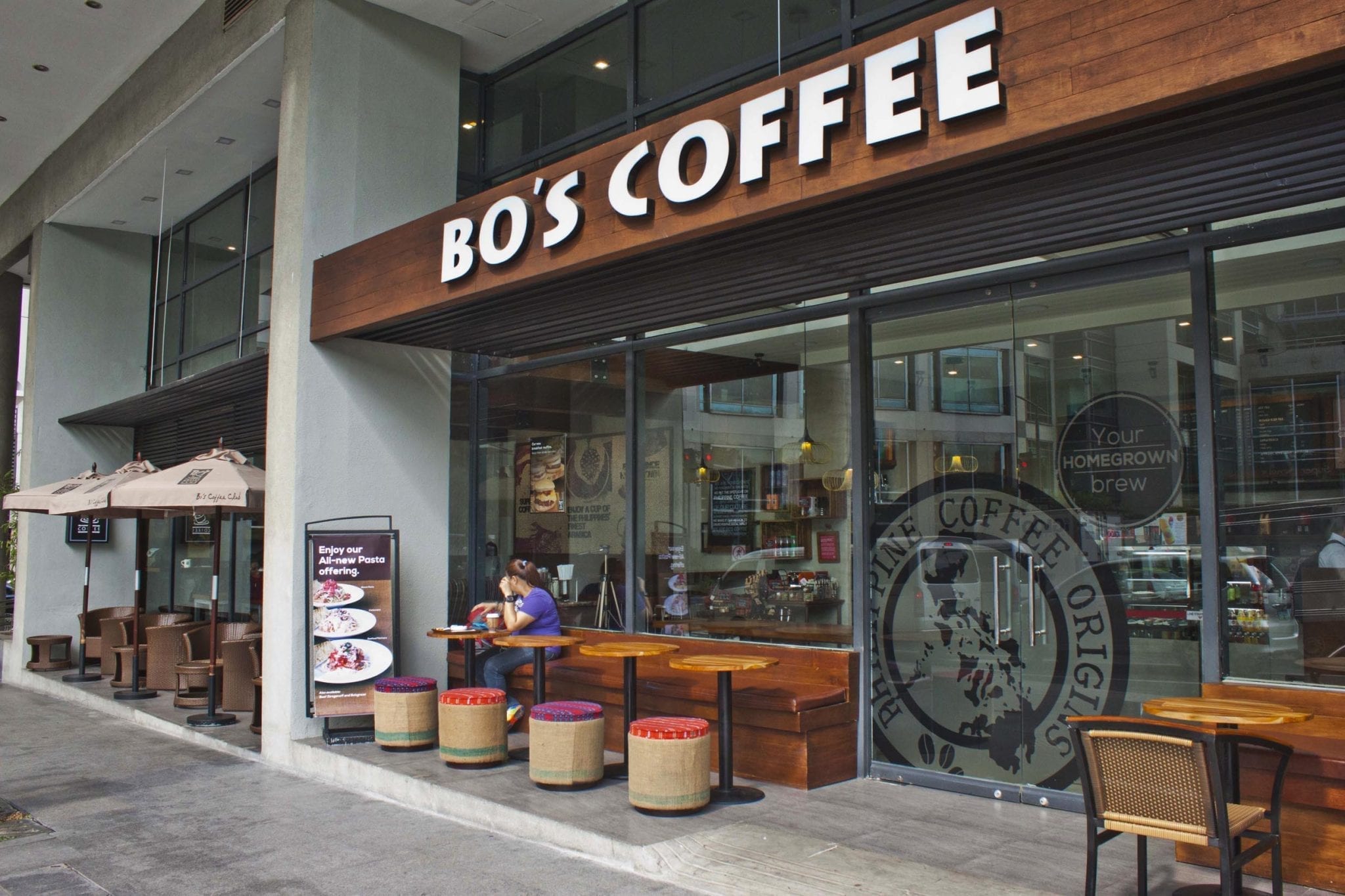
  • Bo’s Coffee founder selected as high-impact entrepreneur

    Bo’s Coffee founder selected as high-impact entrepreneur

    Having traded a law degree to start a sustainable coffee shop,  is now set to make greater impact on Philippine development.

    Endeavor chose the founder of Bo’s Coffee as the latest Filipino high-impact entrepreneur during its 64th International Selection Panel in Madrid, Spain, held from May 25 to 27.

    A global non-profit group, Endeavor aims to transform emerging economies by providing support to local entrepreneurs capable of creating high-growth businesses. The aim is to help them build companies that others can feed off, creating a healthy job-creating ecosystem similar to Silicon Valley.

    Benitez joins a select group of globally-selected, Philippine-based Endeavor entrepreneurs that include Xurpas founder and president Nix Nolledo and PSG Global Solutions founders Brian Cotter and Vivek Padmanabhan.

    “As a high-impact entrepreneur, Steve convinced panelists of his ability to build a successful business, but just as importantly, he has also supported and mentored other entrepreneurs to grow their own businesses,” said Manny Ayala, managing director of Endeavor Philippines.

    Sustainable scaling

    Benitez recounted how his appreciation for coffee began when he was a law student – he realized that he would rather be a barista than a barrister.

    After a trip to a coffee trade show in the United States, Steve decided to put up his own kiosk in 1996, with an initial capital of P150,000. Bo’s Coffee has since grown to be the largest specialty coffee store in the Visayas and Mindanao.

    The ability to scale up is a major factor in the selection process which Bo’s Coffee continued to exhibit last year, Endeavor pointed out.

    Benitez grew the business to 75 chains with 500 employees in 2015, and the company is planning to at least double in size by 2020.

    Screenshot 2016-06-17 12.42.06

    The firm’s social impact was another consideration for its selection. The panel noted that Bo’s Coffee sets an example for Philippine retail by partnering with social entrepreneurs for its nationwide distribution channel, allowing them to grow alongside the firm.

    These social entrepreneur partners practice sustainability by working with, and sourcing coffee from, local communities.

    As a newly-minted Endeavor high-impact Entrepreneur, Benitez will have access to Endeavor’s global network of over 4,000 business leaders who can help him accelerate the process of scaling up.

    The benefits also extend to free consulting services from top firms Ernst and Young and Bain Consulting, and potential access to Endeavor’s investment fund, should Benitez require it.

    “Bo’s Coffee is well-positioned for growth with plans to expand distribution in Luzon and Metro Manila. Further, Bo’s Coffee will push their message of supporting local communities and sustainability as the Philippines’ best homegrown brew,” Ayala said.

  • Shopee Holds Young Entrepreneur Program

    Shopee Holds Young Entrepreneur Program

    Singapore-based marketplace company, Shopee, has been holding Young Entrepreneur Program. The program–which has been started from March 2016–is carried out to find Indonesia’s new young business talents.

    “Some 230 students have been participating in the program,” said Chris Feng Shopee’s CEO on Wednesday in Indonesia Convention Exhibition, BSD, Tangerang.

    The student only event has been participated by 89 universities from 19 cities in Indonesia. It has been held by Shopee to encourage more youth to get involved in business or to become entrepreneurs.

    According to Chris, when starting a business young entrepreneurs are faced with three challenges, namely business knowledge, technology and capital. To face the challenges, Shopee is determined to help them by establishing Campus Competition and Shopee University.

    Shopee provides photography and digital marketing classes to enhance business knowledge. Whereas to tackle capital issue, Shopee is holding a competition with a commitment value of Rp100 billion.

    The Rp100 billion fund is used for investment of trainings and capital aid. It will also be used to help young entrepreneurs to develop online businesses.

    “We have selected three candidates to win a prize of capital aid,” Chirs said. The three candidates will be judged and the winner will be announced end of April.