Retail News CRM

Tag: equity

  • Nestlé Partners with Platinum Equity: Spins off Premium Water Business into Multibillion-Dollar Joint Venture

    Nestlé Partners with Platinum Equity: Spins off Premium Water Business into Multibillion-Dollar Joint Venture

    Nestlé has revealed plans for a significant reorganization of its worldwide water division through a new collaborative endeavor with the private equity company, Platinum Equity. This move will see both Nestlé’s water and premium beverage businesses incorporated into a new autonomous company named Peranel. The 50:50 partnership with Platinum Equity will oversee this process.

    Peranel is set to manage an assortment of high-end brands, including Perrier, S Pellegrino, Acqua Panna, Maison Perrier, Buxton, and La Vie, across more than 120 countries globally.

    Financial Aspects and Benefits of the Partnership

    From this arrangement, Nestlé is projected to receive around €3 billion (US$3.4 billion) in cash while still holding a 50% stake in the newly formed business. Nestlé has communicated that this partnership will offer increased strategic focus and operational flexibility for the water division, allowing the company to redirect its attention towards its primary growth categories.

    Emphasizing the benefits of this partnership, Nestlé’s CEO, Philipp Navratil, stated that, “By partnering with Platinum Equity, Peranel will be better positioned to execute its strategy with enhanced agility. With added focus, it will be better equipped to drive its long-term growth ambitions by bolstering this unique portfolio of international and local brands, through continued investment in innovation, premiumization, operational excellence, and sustainability.”

    The new company, Peranel, will be under the leadership of the current CEO of Nestlé’s waters and premium beverages, Muriel Lienau, along with a team of seasoned management personnel. The transaction, which assigns an enterprise value of $5.6 billion to Peranel, is anticipated to be finalized in the first half of the ensuing year.

    Steady Growth and Future Outlook

    Nestlé’s announcement of this restructuring aligns with the multinational FMCG company’s release of its first-half results. The company reported sales of CHF43.1 billion (approximately US$ 52.76 billion) for the six months ending June 30, with an organic growth of 3.7%. This growth was supported by 1.8% real internal growth and 1.9% pricing. The coffee and confectionery sectors continued to perform exceptionally well, while pet care sustained its positive momentum.

    Nestlé’s CEO, Philipp Navratil, commented on the company’s performance stating, “Emerging markets growth accelerated, and we delivered solid performance in developed markets. We are increasing and prioritizing our investment behind our leading brands and growth platforms, sharpening our portfolio focus and driving further efficiencies to reinvest. While the external environment remains uncertain, we are taking actions to accelerate consistent growth.”

    Navratil also confirmed the company’s full-year guidance, with an expectation of achieving organic sales growth of between 3 and 4 percent.

    Questions & Answers

    What is the purpose of creating the new company, Peranel?
    The formation of Peranel will allow Nestlé’s waters and premium beverages business to execute its strategy with greater agility and focus.

    Who will be leading the new company, Peranel?
    Peranel will be led by Muriel Lienau, the current CEO of Nestlé’s waters and premium beverages, and a team of seasoned management personnel.

    What are Nestlé’s growth expectations for the year?
    Nestlé expects organic sales growth of between 3 and 4 percent for the year.
  • KK Super Mart Eyes $750M IPO Boost: A New Milestone in Malaysia’s Thriving Equity Markets

    KK Super Mart Eyes $750M IPO Boost: A New Milestone in Malaysia’s Thriving Equity Markets

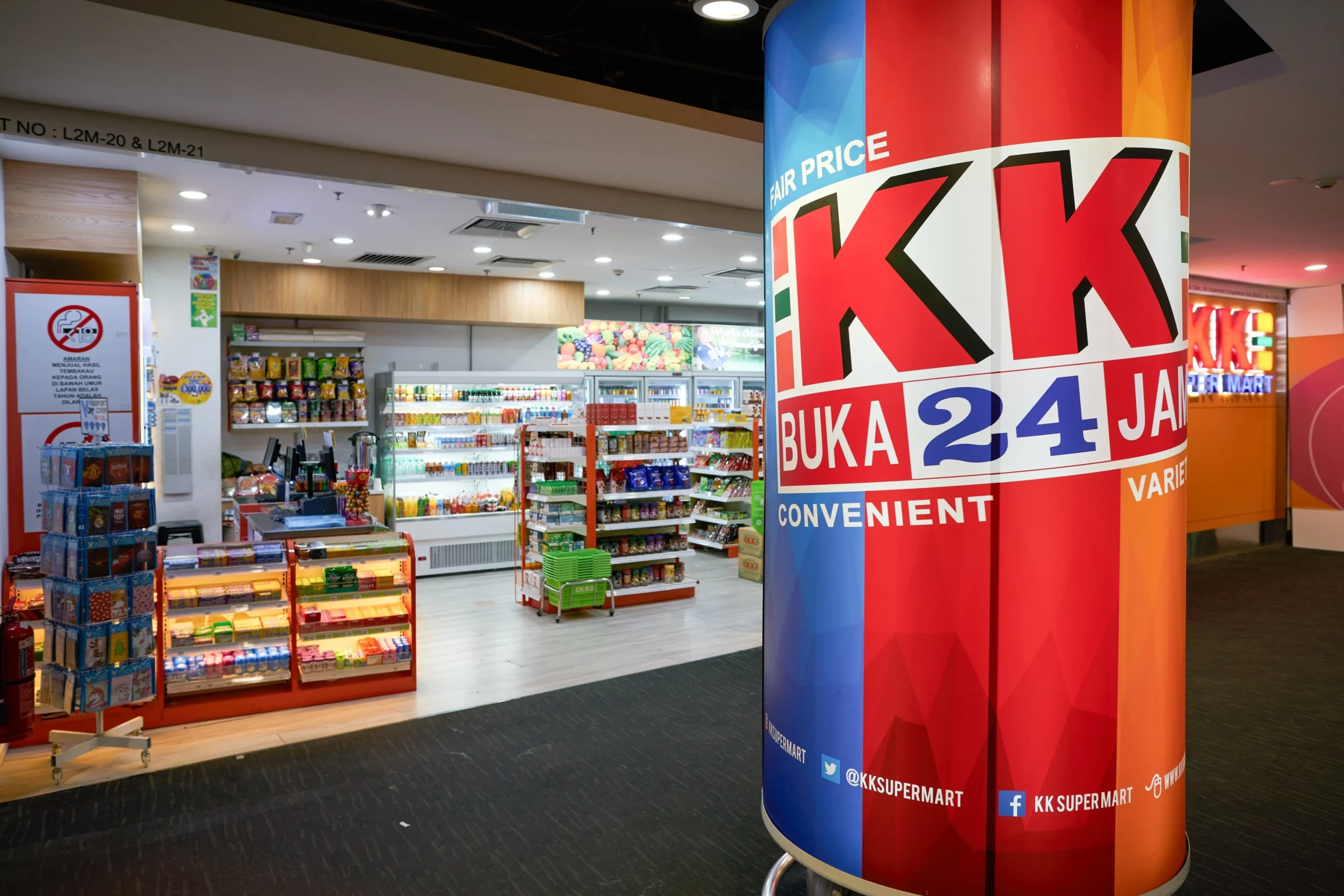
    KK Super Mart, a prominent convenience-store chain in Malaysia, is purportedly preparing for an initial public offering (IPO) that could potentially reach a staggering US$750 million in the latter half of this year.

    Company Ownership and Valuation

    The anticipated IPO is estimated to encompass over 25 percent of the company’s total valuation. A significant 95 percent stake in the business is held by the Chairman, KK Chai. The remaining 5 percent is owned by his spouse and fellow director, Loh Siew Mui. This proposed IPO is predicted to play a significant role in shaping the company’s financial future and market standing.

    KK Super Mart’s Presence and Operations

    Known to many as KK Mart, the company operates an impressive network of more than 900 stores across Malaysia, India, and Nepal. Their broad geographical presence has established them as a significant player in the retail sector in these regions.

    Malaysia’s Equity Market Resurgence

    This revelation emerges amidst a resurgence in Malaysia’s equity markets. The Kuala Lumpur Composite Index has reached its highest trading levels since 2018. Moreover, the country listed a record 60 companies in the previous year, marking the highest number in over two decades.

    Market Position and Competition

    As Malaysia’s second-largest minimarket chain, KK Super Mart holds a substantial presence in the retail industry. A successful listing could place it in direct competition with other publicly traded counterparts like 99 Speedmart, boasting over 3000 stores, and Eco-Shop Marketing with upwards of 400 outlets.

    Questions & Answers

    What is the projected value of KK Super Mart’s IPO?
    The company’s IPO is rumored to be worth up to US$750 million.

    Who holds the majority stake in KK Super Mart?
    KK Chai, the Chairman of the company, holds a commanding 95 percent stake.

    Where does KK Super Mart operate?
    KK Super Mart has a network of over 900 stores spread across Malaysia, India, and Nepal.

  • Chinese Equity Firm HSG Acquires Majority Ownership of Luxury Sneaker Giant Golden Goose

    Chinese Equity Firm HSG Acquires Majority Ownership of Luxury Sneaker Giant Golden Goose

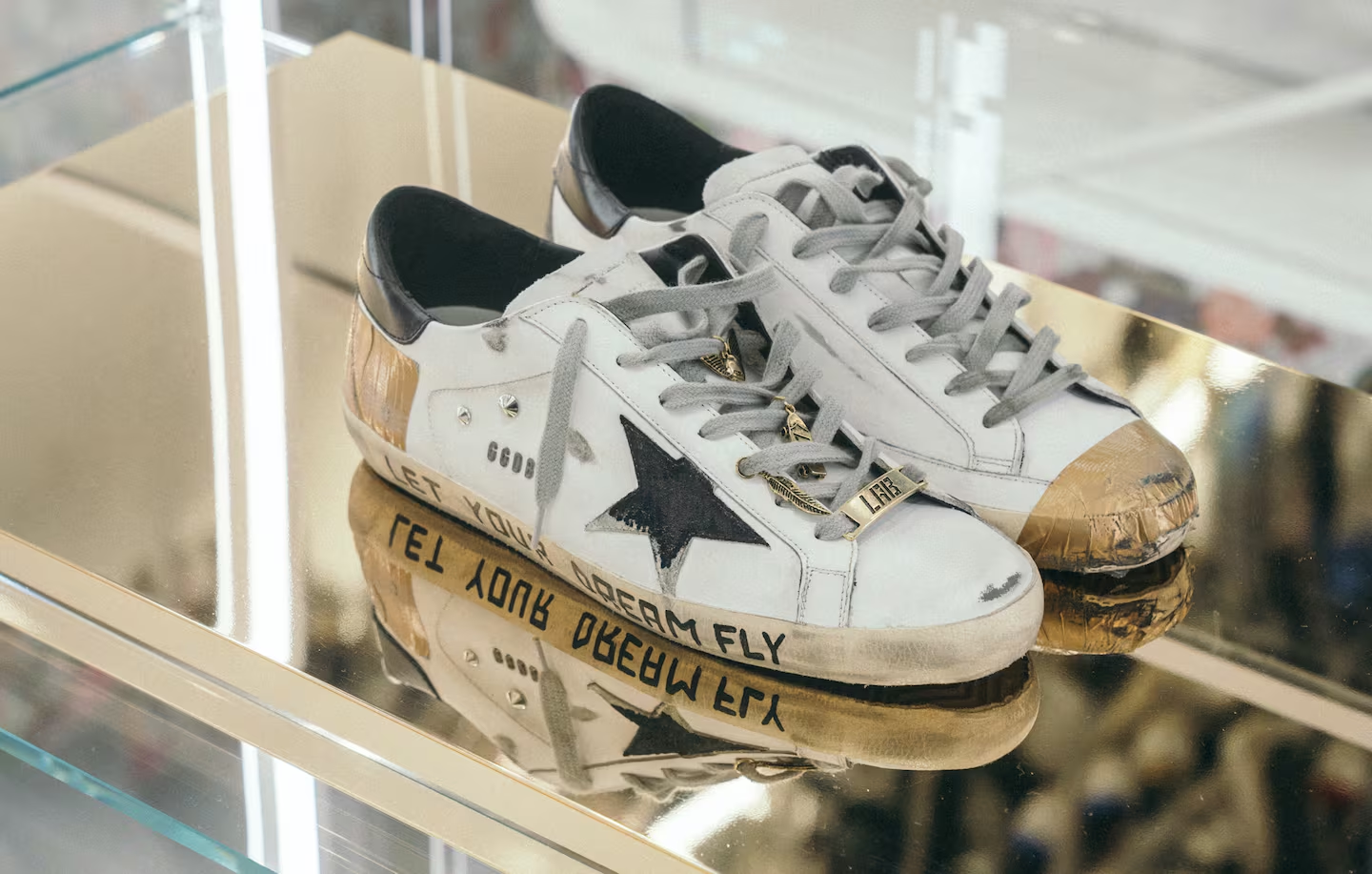
    Golden Goose, an Italian luxury sneaker manufacturer, announced on Friday that HSG, previously known as Sequoia Capital China, has become its main shareholder. The Chinese private equity firm acquired its stake from the current owner, Permira.

    Additional Investments

    Simultaneously, Temasek, Singapore’s investment firm, along with its subsidiary True Light, has purchased a minor stake in the Venice-based sneaker company. Golden Goose’s sneakers begin retailing at 500 euros a pair.

    This agreement values Golden Goose at approximately 2.5 billion euros (US$3 billion), including debt. The announcement did not disclose further financial specifics.

    Previous Ownership

    Permira, which bought Golden Goose in 2020 for 1.28 billion euros, will maintain a minor stake along with other existing shareholders, including Carlyle.

    Silvio Campara will remain the brand’s chief executive, while former Gucci CEO and current board member, Marco Bizzarri, will assume the role of non-executive chairman.

    Finalization of The Sale

    This sale concludes a process initiated by Permira in 2024. The British-owned private equity firm had attempted to publicly list Golden Goose on the Milan stock market but was compelled to withdraw the initial public offering due to market conditions.

    The transaction is anticipated to be finalized in the third quarter of next year. Earlier this year, HSG purchased a majority stake in the Stockholm-based audio equipment group, Marshall.

    In 2024, Golden Goose reported a revenue increase of 13% to 655 million euros, along with adjusted earnings before interest, tax, depreciation, and amortisation of 227 million euros.

    Questions & Answers

    Who is the new majority shareholder of Golden Goose?
    Chinese private equity firm HSG, formerly known as Sequoia Capital China, has become the majority shareholder of Golden Goose.

    Who are the minor stakeholders in Golden Goose?
    Permira, Carlyle, Singapore’s investment firm Temasek, and its subsidiary True Light hold minor stakes in Golden Goose.

    Who will lead Golden Goose after the change in ownership?
    Silvio Campara will continue as the brand’s chief executive, and Marco Bizzarri will become the non-executive chairman.

  • Allegro Funds Invests In Be Campbell: A Strategic Move To Modernise And Expand Operations

    Allegro Funds Invests In Be Campbell: A Strategic Move To Modernise And Expand Operations

    BE Campbell, an Australian pork processing company, has recently obtained an investment from Allegro Funds as part of their growth strategy. The Sydney-based, third-generation family business employs over 750 individuals and provides services to supermarkets, butchers, foodservice operators, and distributors throughout Australia.

    Investment for Expansion

    The capital acquired from Allegro Funds will be utilized to modernise BE Campbell’s processing operations, diversify its product offerings, and enhance its commercial platform. Ted Campbell, the company’s chairman, expressed that the investment is seen as an avenue to fortify the company whilst preserving its legacy and long-standing relationships within the supply chain.

    “Over the past 55 years, our business has seen consistent growth,” he said. “We are eager to continue working closely with our dedicated growers, suppliers, customers, and staff to deliver top-tier products to Australian consumers.”

    Stake Ownership

    Allegro Funds will hold the majority stake in BE Campbell. However, the Campbell family will maintain a significant but undisclosed stake and continue to participate in the company’s management.

    Jeffrey Largier, Managing Director of Allegro Funds, expressed their excitement at the prospect of the partnership with Ted Campbell, the Campbell family, and the entire BE Campbell team. According to Largier, BE Campbell’s established market position and strong track record were key attractors for the investment firm.

    Questions & Answers

    What will the investment from Allegro Funds be used for within BE Campbell?
    The investment will be used to modernise BE Campbell’s processing operations, diversify its product offerings, and expand its commercial platform.

    Who will hold the majority stake in BE Campbell post-investment?
    Allegro Funds will hold the majority stake in the company post-investment.

    Will the Campbell family remain involved in the company’s management post-investment?
    Yes, the Campbell family will retain a significant stake and continue participating in the company’s management.

  • Gong Cha secures private-equity investment to boost global expansion

    Gong Cha secures private-equity investment to boost global expansion

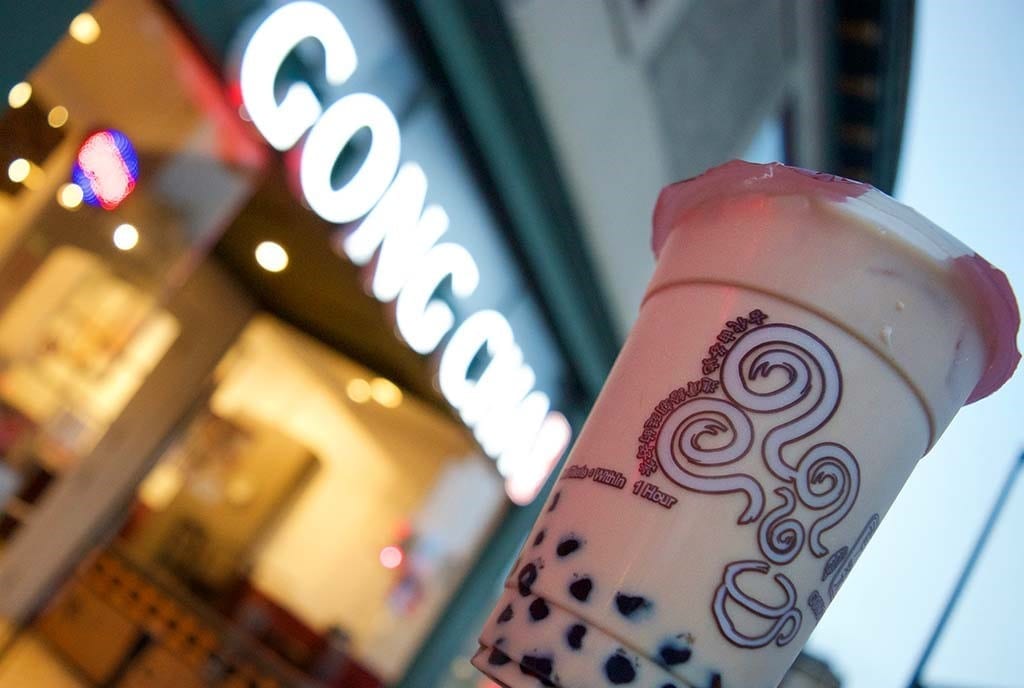
    International private equity company TA Associates will take an undisclosed stake in fast-growing bubble-tea chain Gong Cha.

    The investment is being made through TA Associates’ Hong Kong office, with settlement expected in early October. The value of the investment has not been revealed.

    Gong Cha’s South Korean operator will also participate in the capital raising.

    Gong Cha has more than 1000 stores in 17 countries, including South Korea, Japan, Taiwan, the Philippines, Malaysia, Mexico, Australia, Canada, Vietnam, the UK and the US. The company was founded in 2006 in Kaohsiung, southern Taiwan.

    Edward Sippel, an MD at TA Associates and co-head of Asia operations of TA Associates Asia Pacific, said his company’s involvement in the brand will help grow the Gong Cha brand in new and existing markets.

    “Gong Cha [is] a high-growth business that is among the world’s most-recognized tea brands. We are incredibly impressed with how successfully the management team has grown Gong Cha into such a profitable, global business. We will work closely with management in supporting the company’s franchise partners to further Gong Cha’s strong business model,” said Sippel.

    Gong Cha’s main offering, Taiwanese-style bubble tea, is sweet milk tea infused with pearl-shaped tapioca. The company also offers a variety of seasonal and specialty tea-based drinks. Through a primarily franchise model, Gong Cha reaches consumers through a variety of retail store formats, including urban and suburban stores, as well as take-out shops, mall-based stores and kiosks, often in high traffic areas such as train and metro stations.

    “We welcome TA Associates as investors in Gong Cha,” said Euiyeol Kim, CEO of the Gong Cha Group. “With its scale, large capital base and global footprint, TA is an ideal partner for Gong Cha at this stage in our growth. TA offers the truly deep global resources and experience that will help us further strengthen our market position and allow us to even more effectively build our leading global tea brand.”

    Peter Rodwell, newly appointed executive chairman of Gong Cha, said the brand’s success was the result of the management team’s persistent customer-centric focus on quality, innovation and service.

    “I am confident that with TA’s long history of building value in growing businesses, we are poised to bring Gong Cha’s quality tea products to many more consumers around the world.”

    Rodwell joins Gong Cha with more than 30 years of retail food-and-beverage and franchising, including leading McDonald’s expansion across Asia-Pacific and the Middle East.

    Michael Berk, an MD at TA Associates, said the global tea market has enjoyed steady growth over the past several years, and milk tea, including bubble tea, remains a staple beverage across Asia and increasingly around the world.

    “Globally, the tea market is estimated to be larger than that of coffee, with continued expected growth. Given these market dynamics, we believe that Gong Cha is very well-positioned to further expand the company’s presence and brand throughout the world.”

  • Starbucks launches a New $100 million equity fund

    Starbucks launches a New $100 million equity fund

    Starbucks has launched an investment fund to boost food and retail startup technology companies.

    The new entity, Valor Siren Ventures, will be managed by Valor Equity Partners, a growth-focused private equity investment firm that was among the first investors in food technology. Starbucks has contributed an initial US$100 million into the fund, which will identify and invest in companies developing technologies, products, and solutions relating to food or retail.

    “These verticals are increasingly relevant to Starbucks as it seeks to support its world-class talent with an innovation agenda accelerated by external relationships,” the company said in a statement.

    Valor Siren Ventures will seek to raise an additional $300 million in the coming months from other strategic partners and key institutional investors.

    Separately, Starbucks will also explore direct commercial arrangements with these start-ups. Starbucks president and CEO Kevin Johnson says the company is embracing new ideas and innovations that are relevant to its customers, inspiring to its partners, and meaningful to its business.

    “We believe that innovative ideas are fuel for the future, and we continue to build on this heritage inside our company across beverage, experiential retail, and our digital flywheel,” he said.

    “At the same time, and with an eye toward accelerating our innovation agenda, we are inspired by, and want to support the creative, entrepreneurial businesses of tomorrow with whom we may explore commercial relationships down the road. This new partnership with Valor presents exciting opportunities, not only for these startups, but also for Starbucks, as we build an enduring company for decades to come.”

    Over 20 years, Valor’s team has worked with companies, principally in the consumer, engineered products, and services sectors. Its investments in food and retail technology include GoPuff, Fooda and Sizzling Platter.

  • KKR invests into lifestyle products

    KKR invests into lifestyle products

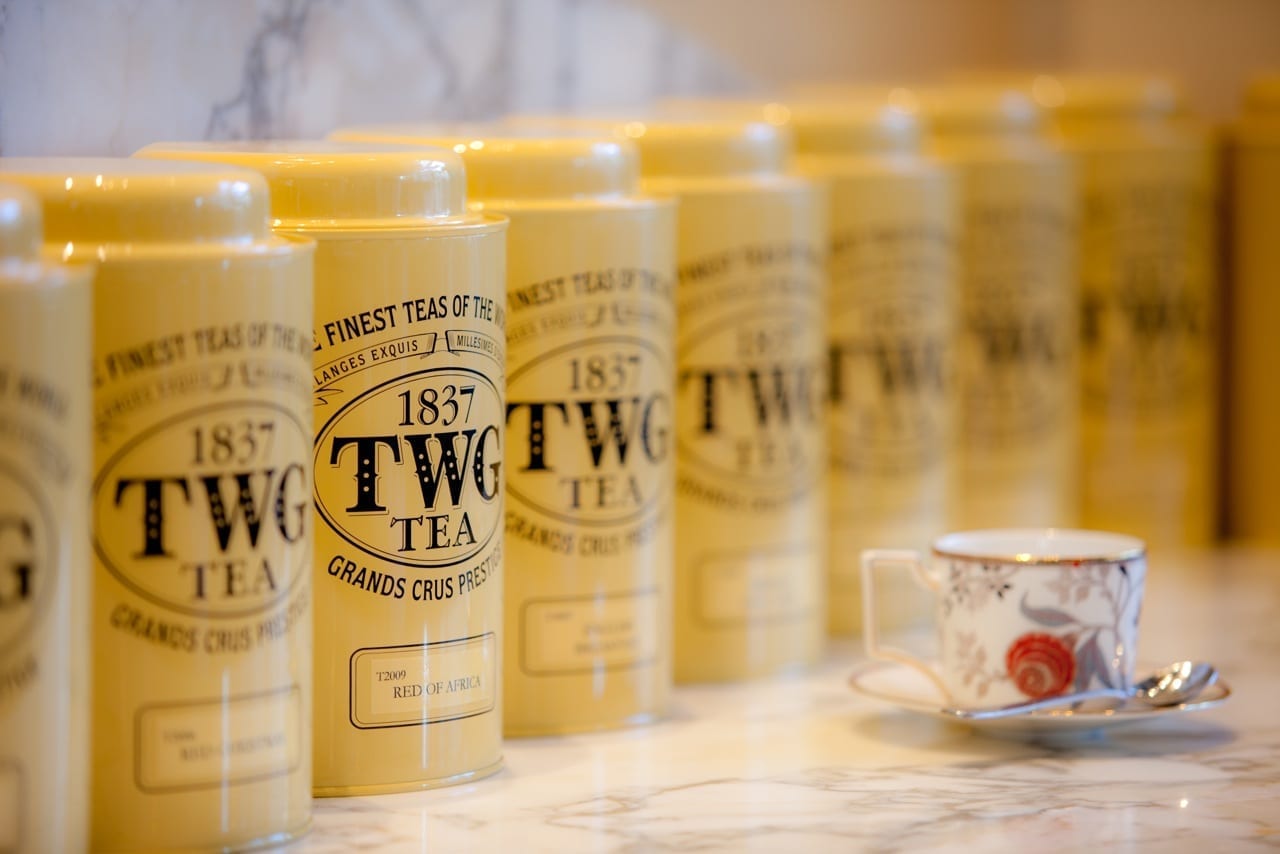
    Private Equity firm KKR has taken up a “significant stake” in massage chair and lifestyle products group V3, the owner of the OSIM and TWG Tea brands. KKR’s investment is up to S$500 million in V3, valuing V3 at an enterprise value of about S$1.7 billion. However,  Both parties declined to comment on the exact mix of equity and debt financing. KKR is making the investment from its Asian Fund III. What we know is that the investment by KKR represents more than 50 percent increase in enterprise value compared to when the group was taken private.

    Ron Sim remains the Chairman, Chief Executive and Controlling Shareholder of V3. He said: “I am extremely pleased to welcome KKR as a significant shareholder in V3. I am confident this investment will position the company for our next phase of growth, starting with the immediate expansion of TWG Tea in Japan and the US and of OSIM in China. We would also be looking into M&A opportunities that are earnings accretive.”

    KKR partner Jaka Prasetya said the investment underscores KKR’s strong belief in the continued growth of the region’s consumer sector: “We aim to provide support and capital to successful home-grown, regional companies like V3 in order to capture opportunities across Asia and beyond.”

    Headquartered in Singapore, V3 has a presence in over 100 cities in 26 countries around the world. The largest chunk of V3’s revenue comes from sales of OSIM massage chairs.

    V3’s annual revenue climbed back above the S$600 million mark last year, reversing the revenue decline owing to store closures in China in prior years. Profit also rose, Mr Sim said.

    The luxury lifestyle and wellness industry continues to be a sector of exciting growth in Asia, proliferated by rapidly rising consumer affluence throughout the region.

  • US-China talks on bilateral trade to impact Malaysia’s equity

    US-China talks on bilateral trade to impact Malaysia’s equity

    The discussion between the US and China with respect to their bilateral trade would likely be the highlight for the equity market next week, says an economist. It could also be a source of market instability, said Bank Islam Malaysia Bhd chief economist Dr Mohd Afzanizam Abdul Rashid. He said market players are currently worried about the turbulence across global markets.

    “Generally businesses have become more risk-averse as some countries especially China and Asean nations had recorded below the 50-point demarcation line in their manufacturing index.

    “In fact, the US ISM manufacturing index has shown a similar trend, falling by 5.2 points to 54.1 in December 2018.

    “Naturally, businesses would reduce their capital expenditure and labour hiring as they would become wary of demand prospects, so we can expect equity markets to remain weak in the near term,” he said.

    Mohd Afzanizam said the current support level is at 1,653.

    The FBMKLCI might test this level should the discussion not pan out favourably, he added.

    For the holiday-shortened week, the FBM KLCI was traded mostly lower, mainly affected by external factors such as US political uncertainties, mounting concerns over poor global growth and the talks on the potential interest rate hikes by the Federal Reserve.

    The local bourse and its subsidiaries were closed on Tuesday for the New Year holiday.

    On a Friday-to-Friday basis, the benchmark FBM KLCI settled 22.29 points weaker at 1,669.78.

    The FBM Emas Index depreciated 124.28 points to 11,413.02, the FBMT100 Index decreased 131.24 points to 11,323.34, the FBM 70 declined 67.72 points to 13,023.80, the FBM Emas Syariah Index erased 152.51 points to 11,356.91 but the FBM Ace edged up 34.23 points to 4,294.43.

    Sector-wise, the Finance Index lost 99.90 points to 17,241.79, the Industrial Products and Services Index eased 1.18 points to 165.63, while the Plantation Index was 16.84 points weaker at 6,880.90.

    Comparing Friday-to-Friday, the weekly turnover rose to 7.22 billion units worth RM4.79 billion from 5.70 billion units worth RM4.15 billion.

    Main Market volume increased to 5.17 billion units valued at RM4.37 billion versus 4.16 billion shares valued at RM3.85 billion.

    Warrants turnover advanced to 1.23 billion units worth RM282.94 million compared with 948.80 million units worth RM202.97 million.

    The ACE Market volume appreciated to 719.60 billion shares valued at RM127.20 million against 556.26 million shares valued at RM90.05 million.

  • Vietnamese equities lead Asia-Pacific price gains in November

    Vietnamese equities lead Asia-Pacific price gains in November

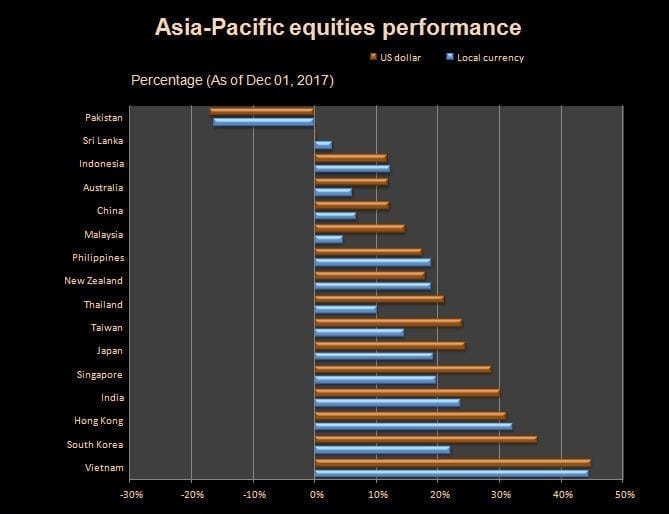
    Vietnamese shares reached decade-highs and topped Asia-Pacific with the highest price gains in November, bolstered by rising foreign interest during the month.

    Foreigners were net buyers of about $500 million of shares in the country’s stock market in November, the highest monthly purchases in at least seven years.


    Vietnam will also kick off the sale of a majority stake in Sabeco, the country’s biggest brewer, in December.Singapore-listed Jardine Cycle & Carriage Ltd’s purchases of about $900 million in Vinamilk’s shares was seen as a positive for Vietnamese markets, with government aiming to trim its stakes in more state-owned firms.

    The Vietnam index rose more than 13 percent in November.

    Hong Kong and Japanese shares rose more than 3 percent each in November.

    Sri Lankan stocks led the losers with a fall of 3.11 percent, followed by China and Taiwan shares with declines of more than 2 percent.

    South Korean, Malaysian, Thai, Philippine and Indian equities fell between 1 to 2 percent.

  • New Silkroutes Group in Joint Venture to Offer Private Equity Funds in Asia Pacific

    New Silkroutes Group in Joint Venture to Offer Private Equity Funds in Asia Pacific

    New Silkroutes Group (“NSG” or “the Group”) has formed a joint venture with three parties, including the Singapore subsidiary of China’s Nanshan Group, to develop private equity funds that will focus on healthcare and infrastructure in the Asia Pacific region, including Japan and Australia.

    The new Singapore-incorporated entity, New Silkroutes Asset Management, is 30% owned by NSG’s subsidiary New Silkroutes Capital Pte Ltd, 30% by Nanshan Group Singapore, 30% by former United Overseas Bank (“UOB”) executive Terence Ong Sea Eng, and 10% by Fuji Capital Pte Ltd.

    New Silkroutes Asset Management, which is applying for the Capital Markets Services licence from the Monetary Authority of Singapore, will initially focus on the healthcare sector in the region.

    The number of people in the middle class in Asia Pacific is expected to rise to 3.2 billion by 2030 from 525 million in 2009, according to the Organisation for Economic Cooperation and Development. This increase, together with growing affluence, is expected to drive demand for better quality medical treatment and care.

    Healthcare is an area NSG recently said it would expand into. The Group announced last month it would acquire a 51% stake in Singapore-based Healthsciences International Pte Ltd (“HSI”) for S$2.17 million. HSI’s management team has experience in developing and managing hospitals and ancillary healthcare services. It also offers primary and preventive care through its three complementary integrative healthcare clinics, and runs employee healthcare benefits programmes in Southeast Asia.

    Mr Ong will head New Silkroutes Asset Management. The veteran banker retired recently from UOB after a 34-year career, during which he ran several of the lender’s key divisions. His last position at the bank was Head of Group Global Markets and Investment Management, where he drove UOB’s global treasury and asset management businesses.

    He was also Chairman of UOB Asset Management and UOB Venture Management, and a member of several of the bank’s key committees, including its management executive committee and investment committee.

    Mr Ong was previously Deputy Chairman of the board of Simex, a futures exchange that merged with the Stock Exchange of Singapore to form the Singapore Exchange. In 2010, he was conferred the Distinguished Financial Industry Certified Professional title by the Institute of Banking and Finance Singapore. In September this year, he received the Lifetime Achievement Award from Futures & Options World, a leading news and data service for the international futures and options industry.

    “The stakeholders in this joint venture have deep expertise in their respective fields. With this collaboration, I am confident we can offer investors an attractive alternative to generate a consistent stream of income,” said Mr Ong, who was instrumental in bringing Nanshan Group Singapore into New Silkroutes Asset Management.

    “Leveraging on the networks and expertise of New Silkroutes Asset Management’s stakeholders, we will be able to source promising healthcare services companies in Asia Pacific and add value to the companies we invest in,” he added.

    Nanshan Group is a privately-held company ranked among the top 500 enterprises in China. It started with an aluminium business, which subsequently listed in Shanghai, and evolved into a conglomerate with interests in textile, finance, healthcare, real estate, tourism, education and aviation.

    Within the healthcare space, Nanshan Group has invested in and built hospitals, nursing homes and related facilities in China. In Singapore, its main focus is real estate development and aluminium trading. It acquired several industrial buildings and hotels and launched its maiden condominium project in Singapore in recent years.

    Singapore-incorporated Fuji Capital provides strategic advisory and fundraising services to companies. Its major stakeholders have investments in the financial services sector in North America. These investments include licensed entities operating in gateway cities across the US.

    “As an associate company of NSG, the new joint venture will complement our wholly owned investment management arm, New Silkroutes Capital, which is also exploring investment opportunities in healthcare, among other sectors,” said Dr Goh Jin Hian, Group CEO at NSG. “Healthcare will be another engine of growth for NSG as we believe this is an area with huge potential in Asia Pacific.”

    Based in Singapore, New Silkroutes Capital offers investment management and strategic advisory services to institutions, enterprises and high-net-worth individuals looking for professionally managed investment products. It has a joint venture in New York that can develop structured products and private-label funds.

    NSG exited the SGX Watchlist in November 2014 and is morphing into an investment holding company with businesses in investment management, energy and resources, healthcare, and infocomm technology. The Group currently gets most of its revenue from oil and gas trading.

  • AirAsia’s Indonesian affiliate plans debt-to-equity conversion

    The Indonesian affiliate of Malaysian budget carrier AirAsia Bhd is planning to convert debt into shares to meet a new government rule on equity.

    The debt will be converted into preference shares which carry no voting rights, Sunu Widyatmoko, President Director of PT Indonesia AirAsia, told Reuters in a text message.

    He declined to disclose the amount to be converted as it is pending approval from the Indonesia investment coordinating board.

    Indonesia AirAsia is among several airlines that have until Sept. 30 to meet Indonesia’s “positive equity” rule after the country’s transport ministry extended the deadline from July 31.

    The ministry previously said 13 airlines had “negative equity” – meaning assets used to secure loans were worth less than the outstanding balance of the loans. It said those airlines risked suspension if they did not turn equity positive.

    AirAsia shares jumped as much as 5.4 percent in early trade, outperforming the benchmark index which was down 0.6 percent.- Reuters