Retail News CRM

Tag: esim

  • Festive Travel Gets An Upgrade: Vietjet Provides Free eSIM to International Passengers Flying to Vietnam

    Festive Travel Gets An Upgrade: Vietjet Provides Free eSIM to International Passengers Flying to Vietnam

    Festive travel gets an upgrade: Vietjet provides Free eSIM to international passengers flying to Vietnam

    This festive season, Vietjet is enhancing the holiday experience for international travellers by offering a complimentary SkyFi eSIM on all flights to Vietnam. Passengers departing from Singapore can enjoy seamless connectivity as they travel directly to Hanoi, Ho Chi Minh City, Da Nang and Phu Quoc, making it easier to stay connected while exploring vibrant cities or relaxing on Vietnam’s scenic beaches.

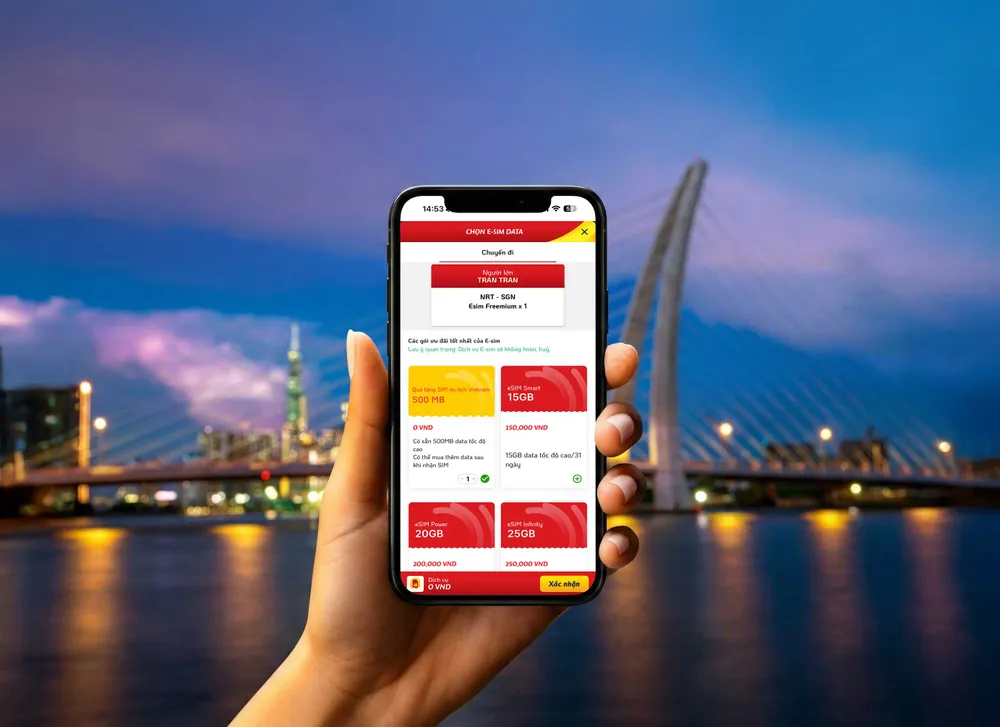
    From now until 31 December 2025 (while supplies last), travellers who book any international flight to Vietnam via www.vietjetair.com or the Vietjet Air mobile app will receive a free SkyFi eSIM loaded with 500MB of high-speed data. The eSIM is valid for 31 days from arrival in Vietnam (terms and conditions apply). Travellers simply need to select the complimentary eSIM during the add-on service step, after which the eSIM will be emailed directly for instant activation with a quick scan.

    The festive season is an ideal time to discover Vietnam’s diverse attractions, whether it is the lively energy of Ho Chi Minh City, the gentle year-end cool in Hanoi or the coastal tranquillity of Phu Quoc. The SkyFi eSIM allows travellers to stay in touch with loved ones and share their holiday moments with ease.

    Whether travellers are reuniting with family, journeying with friends or enjoying a well-deserved personal escape, Vietjet invites them to “Thank Yourself with Festive Flights”. The campaign offers passengers a chance to unwind, reconnect and celebrate the close of a hardworking year. Onboard, they can look forward to Vietjet’s modern, fuel-efficient fleet, professional crews and a selection of Vietnamese and international dishes such as pho, banh mi and other inflight services.

    Enjoy flying with Vietjet!


  • Global eSIM Growth Soars, Fueled by Travel, Business, and IoT Innovations

    Global eSIM Growth Soars, Fueled by Travel, Business, and IoT Innovations

    Global eSIM adoption is witnessing a significant surge, propelled by the rising demand for travel services, innovative enterprise solutions, and the expansion of the Internet of Things (IoT), as highlighted in GSMA Intelligence’s latest report. This development paints a dynamic picture of how technology is reshaping our connectivity landscape.

    Travel Demand Fuels eSIM Growth

    Pablo Iacopino, Head of Research and Commercial Content at GSMA Intelligence, emphasized the momentum building among mobile network operators (MNOs). They are not only enhancing global travel services but also bolstering fixed wireless access (FWA) and strengthening wearable ecosystems while seamlessly integrating eSIM technology with 5G to meet the needs of business customers. In fact, travel eSIMs are currently the most significant catalyst for adoption, with many users in 11 major markets opting to activate the service while abroad. This shift is prompting a greater number of operators to roll out global offerings, a disruptive move that challenges traditional roaming revenue models.

    Beyond Travel: eSIM Expands Its Footprint

    But the story doesn’t end there; the adoption of eSIM technology is rapidly extending into connected devices and broadband services. By mid-2025, 161 operators across 78 countries are predicted to debut their 5G FWA services, a potentially game-changing development that could see household penetration levels exceeding 10% by 2030 in advanced markets like Australia, Germany, Japan, Saudi Arabia, the UK, and the US. Temporary connectivity is also gaining traction, providing agile solutions for events, broadcasting needs, and unexpected network outages — not unlike how a superhero swoops in to save the day.

    Smartphone Market: A Slow but Steady Rise

    On the smartphone front, the journey has been less straightforward. Despite remaining below earlier expectations, the growth of eSIM usage among smartphones is on the rise. As of 2024, only about 3% of global smartphone connections were utilizing eSIMs, far below the anticipated 15% made six years ago. Interestingly, nearly half of all eSIM users are in the United States, largely aided by Apple’s strategic shift to eSIM-only iPhones.

    Investment Surge Points to Bright Future

    The investment landscape surrounding eSIM technology is also flourishing, with 2025 poised to break records. According to GSMA, just over USD 300 million in funding was raised in the first half of 2025, identifying travel, enterprise, and IoT as the main drivers of this growth. As these sectors expand, the usage of eSIMs is expected to become increasingly mainstream, fundamentally transforming global mobile connectivity in the years to come.

    Questions & Answers

    What is currently driving eSIM adoption worldwide?
    The primary driver of eSIM adoption is the demand for travel services, with many users activating eSIMs while abroad, prompting mobile operators to innovate and launch global offerings.

    How are connected devices and broadband services contributing to eSIM expansion?
    eSIM technology is rapidly expanding into connected devices and broadband services, with projections suggesting significant adoption of 5G FWA services across multiple countries by 2025.

    What does the investment landscape look like for eSIM technology?
    Investment in eSIM technology is growing robustly, with over USD 300 million raised in the first half of 2025, indicating strong interest in travel, enterprise, and IoT as key sectors.

  • Apple admits to SIM bug on iPhone 14 line

    Apple admits to SIM bug on iPhone 14 line

    Apple is admitting in an internal memo that there is a problem with the iPhone 14 series that results in a pop-up message that says, “SIM Not Supported” which is often followed by the freezing of the device. While Apple said that it is investigating the issue, it did rule out the possibility that it is a hardware problem. The company is asking its customers to make sure that they keep their software up to date.
    You can always check to see if there is a system update for your iPhone by going to Settings > General > Software Update. Meanwhile, Apple is also recommending that those who see the “SIM Not Supported” pop-up message wait a few minutes to see if the message disappears. Now here is the important thing to remember. If you do get the message about the SIM card and it doesn’t go away, do not try to restore the device.
    If you’re in this situation and the message persists, you need to head over to the nearest Apple Store or authorized service provider and arrange to have the issue fixed. Apple has already had to deal with several bugs since the release of the iPhone 14 series including one issue that made the iPhone 14 Pro models shake and grind when users recorded video on them over third-party apps like Instagram, TikTok, and Snapchat.
    Late last month Apple released iOS 16.0.2 to exterminate that bug and several others. A week ago, iOS 16.0.3 was disseminated by Apple and among the issues it fixed was one that allowed a bad actor to send an email using two double quotation marks in the “from” field instead of the first part of a valid email address. The recipient, upon opening this email in the Apple Mail app, would see the app crash and the user would also get locked out of his Apple Mail account.
    Apple is currently working on iOS 16.1 and has a beta program underway with the stable version of the build expected to be released at the end of this month. Will it contain a patch to fix the issue of the SIM pop-up screen? After all, Apple has admitted that this is a real thing and not everyone is going to feel like heading to the Apple Store or an authorized repair center to get the issue fixed.
    Additionally, with Apple reminding users to stay up to date with the software on their phones it sure sounds like the company might be working to exterminate this bug via a software update. Stay tuned.
    We should remind everyone that Apple put the kibosh on physical SIM cards with the iPhone 14 series. Instead, the 2022 iPhone models feature eSIM (embedded SIM) which is a chip that gets soldered to the phone’s motherboard. With an eSIM, switching networks is easier requiring just a phone call or a visit to a website. Up to five virtual eSIM cards can be stored on a single eSIM at a time. If your usual network is down for some reason, you can quickly switch to another one.
    You can also have the same advantage that dual-SIM phones offer; the ability to have two numbers on a single handset. One number can be for work and another for play. You’ll be able to receive phone calls and texts on both numbers all of the time while you’ll choose which number to use to make calls, send texts, or use data.

    Using an eSIM also gives the phone manufacturer more internal room to work with because the SIM card tray is no longer needed.

  • iPhone 14 might be the last iPhone with a SIM tray, Apple to go full eSIM forwards

    iPhone 14 might be the last iPhone with a SIM tray, Apple to go full eSIM forwards

    Apple is no stranger to making radical decisions with its phones. While not the first to do so (OPPO did it before it was cool), ditching the headphone jack with the release of the iPhone 7 was without a doubt a risky decision, especially back in 2016.

    Well, another hole in the iPhone is said to soon face the same fate as the headphone jack. There have been some rumors of Apple ditching the SIM card tray for a while, and now an analyst Emma Mohr-McClune has predicted the same, further cementing this statement.

    Mohr-McClune, a Technology Service Director at GlobalData, believes Apple will start slow with this initiative, beginning with the iPhone 14 that’s expected to come out this September.

    The tech giant won’t immediately force future iPhone owners to move to eSIM. Instead, it will give the option to carriers to decide what type of iPhone they want to sell—a nano/eSIM hybrid that includes the SIM card tray, or an eSIM-only version.

    We don’t believe that Apple will take the ‘big bang’ approach—getting rid of existing systems and transferring all users to eSIMs—but rather launch an eSIM-only variant of its upcoming new model—retaining the dual eSIM-plus-physical SIM slot model for the mass market and its key carrier channel. To that end, we believe telecom companies will be given the choice of whether to stock and sell a new eSIM-only iPhone variation alongside more cellular business-friendly dual eSIM/physical SIM support models.

    Following the path of logic here, it would then be natural for Apple to make the next generation, the iPhone 15, eSIM only. After all, the option is already available on today’s iPhones (since iPhone XS) and is how iPads can have 4G and 5G connectivity.Unlike when Apple ditched the headphone jack, the lack of a SIM card tray should be less of an issue for future owners. Admittedly, it would be a slight bother for people who are not as tech-savvy, but when put into perspective the pros should outweigh the cons.

    One less entry inside the phone means better rigidity, fewer ways for water and dust to get in and ruin the phone’s parts, and more space for other ones.

    A “seemingly legitimate document” discovered by the folks at 9to5Mac in December last year supports the rumor of an eSIM-only iPhone. It states that we will see one this September.

  • eSIM and its impact in an hyperconnected world

    eSIM and its impact in an hyperconnected world

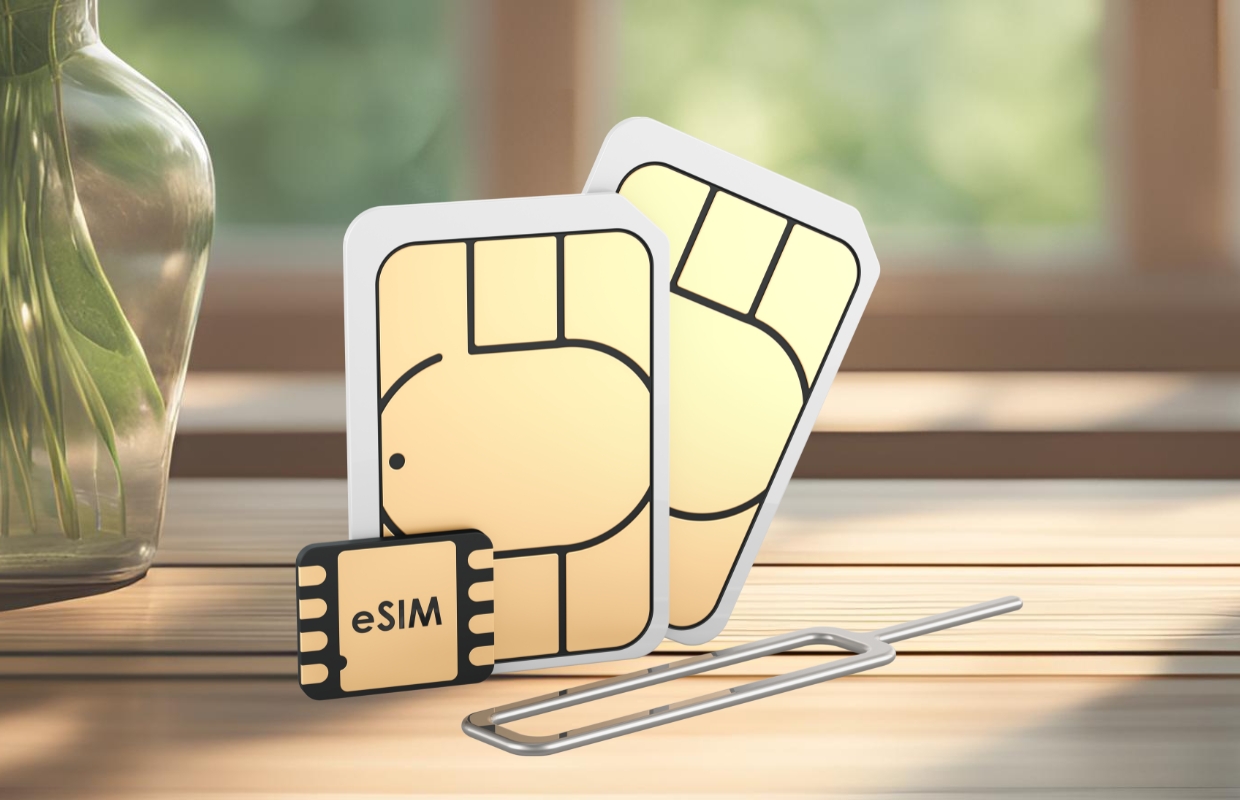
    Powered by 5G, eSIM or embedded subscriber identity module is a rising technology that is threatening to replace traditional SIM cards. With 5G revolutionizing connectivity, eSIM emerges as a seamless way to harness greater connectivity between a future of billions of IoT devices. Instead of relying on physical SIM cards, eSIM is the embedded alternative that uses remote SIM provisioning (RSP) to download a user’s profile onto a device, to provide users full control of connectivity management and the ability to switch networks as desired.

    Last year, eSIM adoption grew in the wake of the pandemic. In the coming years, this trend will continue to persist. According to recent findings from Juniper Research, the number of eSIMs embedded in connected devices will more than double from 1.2 billion this year to 3.4 billion in 2025. Of which, 94% of global eSIM installations in 2025 can be attributed to the consumer sector.

    In the consumer market, eSIM is deployed in tablets, smartphones, laptops, and wearables. Some smartphones from Apple, Google, Huawei, and Samsung are already supporting eSIM, though they continue to allow for physical SIM. Last year, Motorola released the world’s first eSIM-only smartphone.

    With IoT on the rise, connectivity is one of the important considerations when developing future-proof tech solutions. Across industries, automotive is one of the areas that fuel eSIM deployment. For instance, Tesla’s electric vehicles use eSIM to power in-car connectivity. Juniper Research predicts that other industries such as oil and gas, manufacturing, and logistics industries will also experience a hike in eSIM adoption to power connectivity, with eSIM installations growing from 28 million to 116 million by 2025.

    For many, it is becoming clear that eSIM is the future for IoT connectivity as it offers a level of flexibility not provided by traditional SIM. Since all IoT subscriptions and connectivity can be carried out through a single embedded source, this significantly simplifies SIM management for as many devices across geographies. For enterprises or governments, eSIMs can also be used for asset tracking, with each IoT device being remotely and automatically provisioned to an optimal carrier profile.

    For consumers, eSIM is the seamless management of subscriptions whereby they no longer need multiple SIM cards for different connections. In this pandemic, eSIM offers the advantage of subscribing to a connectivity service without having to physically purchase a SIM.

    For MVNOs, tech giants, and device manufacturers, eSIM is the ideal avenue to generate new revenue streams. For device manufacturers, for instance, it means the ability to create smaller products without a SIM card and an opportunity to optimize supply chain processes.

    Of course, more entrants into the mobile market is unsettling for network operators that fear disruption and stiffer competition in addition to having to build costly cellphone towers to support 5G networks. At the same time, telecom operators cannot ignore the fact that future IoT devices will be better served with eSIMs. With brands like Apple and Google, which have massive followings offering eSIM, operators are pressured to catch onto the eSIM fad to avoid being displaced.

    According to GSMA, about 175 mobile operators launched eSIM for smartphones across 69 countries by the end of last year. Amongst these operators, Vodafone Group leads in eSIM roll-out.

    In Asia, Singtel and China Unicom launched an eSIM network swap service last December to allow devices equipped with China Unicom eSIM to automatically switch profiles to Singtel’s in Singapore. In India, the three largest telecom operators Airtel, Jio, and Vi have started to offer eSIM functionality for supported devices. For operators, eSIM roll-out achieves customer churn, creating opportunities for up-selling and cross-selling services and packages.

    To stay ahead, Tata Communications is going beyond connectivity to expand competency in mobility and IoT. Last October, Tata Communications partnered with Micron for a cloud-based eSIM business. In December, the company acquired a majority equity stake in a France-headquartered eSIM technology provider. The acquisition was motivated by enterprises’ heavy reliance on mobile devices to operate and access data in the cloud and an upward trend in machine-to-machine (M2M) connections worldwide.

    According to Ecosystem, Asia-Pacific is poised to lead in IoT by 2023. With connectivity becoming more pervasive in our everyday lives, there is no doubt that eSIM will play a pivotal role in ushering in a new era in consumer and enterprise applications.
  • Hyundai Venue Subcompact SUV Launch Date Revealed

    Hyundai Venue Subcompact SUV Launch Date Revealed

    Hyundai has been teasing its new subcompact SUV – the Venue for quite some time now and we’ve even got details about the company testing the car around the country. While we already know, that the car will be revealed in India on April 17, 2019, coinciding with its public reveal at the 2019 New York Motor Show, we now have details on when the car will be launched in the country. Hyundai will launch the Venue subcompact SUV in India on May 21, 2019. The Venue will be the company’s first subcompact SUV in India and will rival the likes of the Maruti Suzuki Vitara Brezza, Tata Nexon, Ford EcoSport and even the Mahindra XUV300. While Hyundai’s entry into the subcompact SUV segment is delayed, the company is going to pack the Venue with a ton of features making it India’s first connected car.

    The Hyundai Venue will get the company’s ‘BlueLink’ connected technology and it will have 10 India-only features with a total of 33 connectivity features. Some of the features that BlueLink will offer in India are geo-fencing, speed alerts, SOS, panic notifications, destination sharing, and road-side assistance and so on. Hyundai said that it has tested its BlueLink technology rigorously in India, keeping the conditions in mind along with the needs of the customers. This also includes voice guidance and recognition in Indian-accented English which means that the software will be able to recognise spoken English from different regions in India. The Hyundai Venue will also have remote-control operated functions such as climate control, horn and headlamps on, vehicle status, engine start/stop and so on. The best thing is that Hyundai BlueLink can use your smartphone interface as a remote control.

    Hyundai BlueLink will also have a tamper-proof eSIM which will be provided by Vodafone Idea and a cloud based voice recognition platform from Global AI Company, which will offer real time traffic navigation and live local search as well. Features such as panic and medical assistance, geo-fencing and stolen vehicle notification will sit well with customers in India.

    The company has not yet revealed the engines that it will offer, but we have gotten a glimpse of what the front end of the car would look like. The leaked images revealed the upright stance of the Hyundai Venue, while the rear gets a massive ‘H’ badge in the centre with the ‘Venue’ moniker, and the very Polo-esque squared-off taillights along the lines of the Carlino concept. The tailgate also carries the ‘Turbo’ badge and ‘SX’, the latter denoting the range-topping variant.

    Under the hood, the new Hyundai Venue will be available with a 1.4-litre petrol and 1.4-litre diesel engine options. The turbo badge that was on the tailgate holds special importance, which nearly confirms the a 1.0-litre turbocharged petrol engine for the SUV, and will come paired with a 7-speed dual-clutch automatic transmission.

  • Unitel introduces eSIMs to Laos market

    Unitel introduces eSIMs to Laos market

    Vietnamese military-owned operator Viettel has announced that its subsidiary in Laos Unitel has become the first mobile operator in the market to launch eSIM technology.

    The Unitel eSIM service was introduced at the beginning of March, and Unitel is aiming to encourage at least 10,000 customers to exchange their physical SIMs for eSIMs by the end of 2020.

    With the launch, Laos became the seventh of the 10 ASEAN member states to introduce eSIM technology.

    It is also the fourth market in Southeast Asia that Viettel has introduced eSIMs to. The company and its subsidiaries were the first mobile operators to offer the technology in Myanmar, Vietnam and Cambodia.

    Meanwhile another Viettel mobile brand in Laos, Metfone, has become the first operator in the market to launch mobile credit top ups using QR code scanning rather than scratch cards.

    Viettel deputy general director Tao Duc Thang said the introduction of eSIM technology marks the beginning stages of Viettel’s goal of digitally transforming the global telecommunications landscape, and becoming a pioneer in IoT technologies.

    “Viettel has well-prepared platforms and infrastructure and has made digital transformations in its fields such as telecommunications and information technology,” he said.

    “This includes application of the latest technologies in the world for a more convenient life.”

  • VinaPhone launches eSIM technology in Vietnam

    VinaPhone launches eSIM technology in Vietnam

    Vietnam has today officially become the 25th nation in the world to launch eSIM technology.

    VinaPhone, the mobile subsidiary of state-owned operator VNPT, has held the official mass market launch of eSIM technology, Vietnamese state news agency SGGP reported.

    VinaPhone has already distributed nearly 5,000 eSIM preorders to customers.

    The company is also offering customers the ability to change to an eSIM by entering their EMEI and a one-time password, and then scanning a QR code sent from the system, and has revealed it received more than 7,000 eSIM registration requests in less than a month.

    VinaPhone deputy general director Nguyen Truong Giang told the publication the operator is now developing applications designed specifically to be integrated into eSIMs and introduce more features and utilities for users.

  • Smartwatches to dominate eSIM adoption in China

    Smartwatches to dominate eSIM adoption in China

    A new joint report by GSMA and Telecommunication Terminal Industry Forum Association (TAF) titled “eSIM in China: the road ahead” suggests that smartwatches, not smartphones, will dominate the eSIM market in China.

    The report acknowledged that eSIM smartwatches still account for a small percentage of total smartwatch ownership but hold hope that this is likely to increase in the future. To drive adoption, Chinese operators are allowing consumers to use their smartwatches as secondary devices with one mobile subscription.

    For now, Chinese phone manufacturers are not formally adopting eSIM technology for devices targeted for the China market. This is because the transition will require appropriate regulation and new manufacturing, logistical and supply chain processes. Globally, over fifty mobile operators already support eSIM functionality in smartphones.

    “In China and around the world, the huge adoption of eSIM technologies has been underpinned by the GSMA’s common and interoperable specification that is reducing fragmentation and delivering a consistent consumer experience,” GSMA CTO Alex Sinclair said.

    “From consumer electronics to automotive we are seeing a diverse array of products hitting the market utilizing the benefits of connectivity and bringing consumers choice.”

    Smartwatches not smartphones

    “China has a unique mobile market, both in terms of size and revenue growth and leadership in mobile developments and tech innovation has reached unprecedented levels. China is increasingly demonstrating its technological innovation and is emerging as a leading global market to test and implement new technologies,” said Xie Yi, Chairman of TAF.

    “Promoting the steady development of eSIM in China will help support developments in both the consumer and industrial markets. Based on the premise of national conditions, TAF has been committed to all parties in the joint industrial chain and cooperation with the GSMA, to make the best efforts to this end,” Xie added.

    The GSMA-TAF report highlights industry-wide collaboration in driving eSIM developments in China involving operators, government and regulatory bodies. China Mobile, China Telecom and China Unicom are all developing eSIM solutions and have launched cellular M2M and IoT eSIM platforms. The Chinese eSIM market is still in an early phase of development in which some proprietary solutions coexist with GSMA specifications. However, it is anticipated that there will be a transitional period as the market matures before it settles on the GSMA specification.

    Regulation as driver

    The report highlights efforts by China to set a favorable regulatory framework for eSIM deployments. These include streamlining procedures and setting clear, unified rules on eSIM requirements for consumer and industrial devices, credentials management, designation of root certificate issuing and security and cross-border interoperability – all important to accelerating the deployment of eSIM technology and its market adoption.

    The report also recommends that the government should facilitate trials of eSIM services, particularly in the nascent industrial IoT to promote an open eSIM ecosystem.

    Early adopters of eSIM

    To date over 90 mobile industry players are supporting the GSMA’s specifications for Remote SIM Provisioning of consumer devices around the world. All are aligned behind a single, defacto approach avoiding industry fragmentation and interoperability issues, driving global developments and allowing consumer choice.

    Devices to come eSIM capable include tablets, laptops, notebooks and smartphones. The automotive industry is also at the forefront of eSIM deployments and built-in connectivity is also now a specific requirement in Europe following the European Emergency Call (eCall) initiative.

  • SoftBank goes live with eSIM management platform

    SoftBank goes live with eSIM management platform

    Japan’s SoftBank has gone live with Gemalto’s On Demand Subscription (ODC) remote subscription management platform to allow customers to directly connect their eSIM-enabled secondary devices to the operator’s mobile network.

    SoftBank users will be able to take advantage of direct internet connectivity for eSIM-enabled smart watches, wearables and other secondary devices without the need to tether them to a smartphone.

    SoftBank arranged in April to adopt the Gemalto platform for both consumer and industrial IoT devices.

    Gemalto said it expects eSIM to become the default identification module for all cellular IoT devices. The vendor has to date delivered more than 50 eSIM subscription management servers for both consumer and M2M applications to mobile operators in Asia, Europe and North America.

    In the consumer space, the company has partnerships with OEMs including Samsung, Limmex, Microsoft and Lenovo. The vendor is currently the only fully GSMA security accreditation scheme-subscription management (SAS-SM) certified supplier.

  • NTT Com launches MVNO eSIM pilot in Japan

    NTT Com launches MVNO eSIM pilot in Japan

    Japan’s NTT Communications has launched the nation’s first pilot of embedded SIMs (eSIMs) for connection and remote provisioning for MVNOs.

    The operator said it has built an environment for remote SIM provisioning on its MVNO platform in Hong Kong supporting both M2M and consumer devices.

    NTT Com will now launch verification tests in Japan in light of the GSMA’s efforts to promote the standardization of eSIMs for M2M and consumer models.

    Embedded SIMs can be remotely rewritten or changed for specific purposes without needing to replace the card. This can support providing customers with access to preferred mobile networks while traveling overseas and reduce the influence of overseas communication restrictions such as permanent roaming prohibitions.

    Updates or overwrites can be sent over the air through an operator’s subscription manager server (the M2M model), or can be set up to download a profile on receiving a request from the consumer, such as after selecting a mobile service and plan (the consumer model).

    The trial will involve verification of both methods of remote provisioning, as well as the evaluation of embedded technologies that could be combined with eSIMs to enable functionalities including secure communications, NTT Com said.

  • Workz launches new eSIM operating system

    Workz launches new eSIM operating system

    UAE-based mobile solutions vendor Workz Group has entered into a value-added reseller agreement with UK telecoms software company Simulty Labs covering the provision of commercial and technical support for Workz’s eSIM operating system and remote provisioning server.

    The agreement will pave the way for distribution of eSIM across the MEA and Southeast Asia, the companies said.

    With the agreement, Workz will be able to provide regional customers with remote management capabilities of mobile connected devices through eSIM technology.

    The company is targeting the product at device manufacturers, technology enablers, mobile network operators and other businesses in the M2M, automotive, mobile devices and medical fields.

    “Our eSIM, OTA, and remote provisioning solutions allow customers to realize their IoT development strategy whether it be competitively-priced multi-IMSI SIMs, roaming data, device management, big data management or automation,” Workz CEO Brad Taylor said.

    “For rapid deployment and cost-savings, we will provide a fully secure online SaaS connected management solution. We are currently in the final stage of becoming certified under the GSMA Security Accreditation Scheme for traditional UICC SIM cards and will shortly be applying for its eSIM (embedded SIM) counterpart, in order, to give customers full confidence in our secure data management systems.”

  • SoftBank working on eSIM platform for IoT

    SoftBank working on eSIM platform for IoT

    SoftBank is developing an embedded subscriber identity module (eSIM) platform as part of its efforts to promote Internet of Things (IoT) solutions.

    The platform, which is scheduled to start operating in 2017, enables remote eSIM provisioning by connecting to carrier communication networks with the required profiles.

    When selling vehicles and other items embedded with machine-to-machine (M2M) equipment to markets abroad, until now it was necessary to prepare dedicated SIM cards with the necessary profiles to connect to the respective communication networks of overseas carriers.

    With eSIMs integrated into IoT products and M2M equipment, and by using the eSIM Platform, corporate customers will be able to remotely provision eSIMs with the profiles required for connecting to various carrier networks.

    For tablets, wearables and other consumer devices equipped with eSIMs, the eSIM Platform will also enable the remote provisioning of pre-registered contract information and other types of information, in addition to the necessary profiles for network connection.