Tag: esport

  • How e-sports apparel will help brands differentiating

    How e-sports apparel will help brands differentiating

    The popularity of sports apparel with Millennial and Gen Z consumers makes partnerships with esports teams a likely emerging trend, according to a new report.

    The recent Sportcal analysis, Sponsorship in the Apparel Sector, showed that esports apparel deals tripled last year within the industry, citing significant deals made by Adidas and Nike with a combined value of US$600 million.

    “Esports continues to defy expectations,” said Wiacek Sportcal, head of analysis and consulting at GlobalData’s Sportcal. “With brand sponsorship already a crucial part of the sports revenue, it is perhaps no surprise to see that esports has followed traditional sports in exploring the viability of kit deals.”

    He said that while Nike and Adidas make for natural partners, esports apparel opportunities are appealing beyond the traditional ‘kit suppliers’ with the likes of Louis Vuitton building partnerships in this space.

    “With nearly half the esports audience based in Asia, many brands see esports as a way of reaching this fan base. While Louis Vuitton is already present in China specifically, the ability to partner with esports engages both the younger audience and the countries’ growing middle class.”

    Wiacek concluded that developing technological solutions to engage modern audiences could prove a game-changer for the sector.

  • Tumi signs major E-sports sponsorship

    Tumi signs major E-sports sponsorship

    Tumi, the international travel and lifestyle brand, has committed to a seven-figure partnership with One Esports, which will be running events online and an invitational series in Singapore.

    One Esports is a joint venture between One Championship and Japan’s largest global advertising agency, Dentsu, which launched a live experiential business through oneesports.gg. Oneesports.gg is a Top 5 global esports site that reaches millions of visitors each month, and delivers esports news and in-depth stories on esports athletes and teams.

    “We are very excited to be entering into a partnership with One Esports,” said Adam Hershman, GM, Tumi Greater China, APAC distribution and travel retail.

    “It is an incredible time for esports and this is a truly unique and innovative partnership that opens up new possibilities for both brands.”

    Esports is one of the world’s fastest-growing industries, driven by Asian fans and participants. With more than 700 million followers globally, and more than half of those from Asia, esports’ current growth trajectory sets it on its way to becoming one of the top-earning sports leagues in the world.

    “We are looking forward to working with this new generation of athletes and the fans to perfect their journeys – while having a bit of fun along the way,” said Hershman.

    Tumi will be creating content with One Esports as well as equip athletes on the move with travel essentials. The lifestyle brand and One Esports will also collaborate on a series of events following the Invitational Series across the region.

    “Bringing together One Championship and One Esports with Tumi creates countless opportunities to engage with our fans in new and exciting ways,” said Chatri Sityodtong, chairman and CEO of One Championship.

    “I am excited to work with Tumi across all of our platforms through various markets and to continue to establish One as the largest producer of millennial live sports content in Asia and around the world.”

  • Lululemon says e-commerce investment pays off

    Lululemon says e-commerce investment pays off

    Athleisure retailer Lululemon’s investment in e-commerce — revamping its website and improving on direct-marketing efforts to draw new customers — has paid off. Lululemon has posted a 46 per cent increase in its online revenue last year, adding that it has reached an e-commerce penetration rate of 26 per cent.

    The company announced it will be investing aggressively in e-commerce in new territories and plans to open e-commerce markets in France, Japan and Germany. The retailer also said it will roll out its “order online, pick up in store” program across the US by the winter holidays this year.

    The Canada-based retailer said they will step up on their international expansion plans, saying more than half of its planned 40 to 50 store openings this year would be in overseas markets.

    Lululemon posted a 24 per cent increase in revenue to $3.3 billion for the fiscal year ending February 3 from the $2.65 billion from the previous corresponding period.

    “Lululemon has delivered one of its strongest years yet, a result of broad-based strength across the business,” said company CEO Calvin McDonald in a press release.

    “We are energised to build upon our momentum and to seize the many opportunities ahead for Lululemon around the world.”

    For the fourth quarter, Lululemon said net revenue rose 26 per cent to $1.2 billion aided by holiday sales.

    Total revenue for fiscal 2018 was $3.3 billion.

    The retailer’s profitability in Asia and Australia more than offset the operating loss in Europe. Now with the company having 21 stores in Europe, Lululemon said it was about a year and half away from breaking even in Europe.

    The company forecast the momentum would continue this year, saying they expect a net revenue to be in the range of $3.7 billion to $3.74 billion for the full fiscal 2019.

  • Razer launches country HQ in Malaysia, looks to groom next gen tech talent

    Razer launches country HQ in Malaysia, looks to groom next gen tech talent

    Shortly after it announced the construction of a new Southeast Asia headquarters, Razer has unveiled its new country headquarters in Malaysia which will house over 280 employees. The investment strengthens Malaysia as Razer’s regional center of fintech innovation, e-sports excellence and talent development.

    Razer aims to position itself as a fintech leader in Malaysia, with one of its initiatives being a partnership with property development company UOA Group to digitise and integrate its carpark payment system into the Razer Pay app. Upon completion, carpark users can settle their parking fees using the Razer Pay app without waiting in queues. It is also working with merchants in Bangsar South to accept Razer Pay

    As part of its e-sports initiatives, Razer will share its expertise in the field with the Malaysian gaming community. This includes coordinating with industry partners to drive gaming events in the country, bringing the gaming community together and looking to support Team Malaysia for esports at SEA Games 2019.

    Razer will also work with the government and industry partners to develop the next generation of tech talent in Malaysia. It will collaborate with institutes of higher learning, provide training and mentorship programs and offer exchange programs across the regional Razer offices.

    The world now demands a high level of innovative thinking and entrepreneurial mindsets, and Razer will help nurture the future technology leaders of Malaysia.

    “Razer will be investing in Malaysia as a hub for our fintech efforts in Southeast Asia,” says Min-Liang Tan, co-founder and CEO of Razer. “It is the first country in the world to be ready for Razer Pay, and we see the Razer Malaysia office as a natural springboard for our fintech efforts in the region.”

    Last year, Razer launched its e-wallet app for youth and Millennials in Malaysia and claimed to have signed up 500,000 users in less than a week. This month, Razer Pay has been expanded with major new features such as in-app coupons, instant messaging, and an enhanced e-wallet experience.

    Razer has collaborated with Malaysia’s household brands to bring exciting offers to consumers. 7-Eleven is offering RM5 coupons and Kenny Rogers Roasters will offer RM10 coupons to Razer Pay users. U Mobile will also organize weekly contests with prizes such as the Razer Phone 2. Merchants operating in Bangsar South will also start accepting Razer Pay. These merchants will also begin to offer rewards programs enabled by Razer Pay, such as coupons and flash sales to help customers save time and money.

  • Mastercard Signs partnership with League of Legends

    Mastercard Signs partnership with League of Legends

    Mastercard has announced a multi-year partnership with Riot Games to become the first global sponsor for League of Legends esports, the largest esport in the world and one of Hong Kong’s most popular esports. This first-of-its-kind global agreement signifies Mastercard’s support of the esports community and further diversifies the technology company’s world-class sports and entertainment portfolio.

    “Esports is a phenomenon that continues to grow in popularity, with fans that can rival those at any major sporting event in their enthusiasm and energy,” said Raja Rajamannar, chief marketing and communications officer, Mastercard. “Our Priceless platform is built around connecting with people through their passions. We are excited about the experiences and benefits we can bring to the world’s largest esport – both in-game and to the millions of League of Legends fans that watch and attend the tournaments each year.”

    “We’re thrilled to team up with Mastercard on this groundbreaking partnership that will provide meaningful and long-term value to our fans,” said Naz Aletaha, head of esports partnerships at Riot Games. “Mastercard is among the first of world-class brands to take such a big step into esports at the global level, and we’re proud to have them support League of Legends esports events alongside their other premier sports and entertainment sponsorships.”

    As the exclusive global payment services partner for League of Legends global esports events, Mastercard will focus on three annual global tournaments – the Mid-Season Invitational, the All-Star Event, and the pinnacle of all esports events, the World Championship. Mastercard will curate unforgettable Priceless experiences and offers across onsite event activations, priceless.com and through other various promotions to bring fans closer to their passion and everything they love about League of Legends events.

    The first live-event activation will take place at the League of Legends World Championship this October in South Korea, and the first experiences available on Priceless.com will include:

    • Opening ceremony rehearsal viewing and a behind the scenes tour
    • Opportunity to watch a game with a League of Legends pro player from VIP seats
    • Test the gaming PCs the pros will compete on during the World Championship final

    “We’ve long been impressed with Mastercard and their fan-focused approach to partnerships,” said Jarred Kennedy, co-head of esports at Riot Games. “Our community has made League of Legends the biggest esport in the world, and we’re excited to work with Mastercard to bring them new and innovative experiences for years to come.”

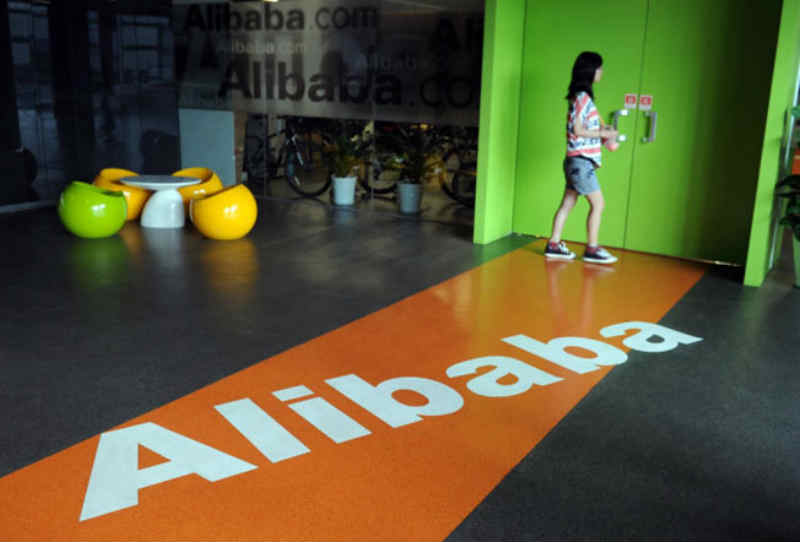
  • Alibaba betting on long-term gain from eSports investment

    Alibaba betting on long-term gain from eSports investment

    The booming eSports industry may not yet attract the sponsors and television rights of real life sports, but Chinese e-commerce conglomerate Alibaba believes it is only a matter of time before its bet on competitive video gaming comes up big.

    Alibaba’s sports arm Alisports was opened in 2015 with the aim of cashing in on the rapidly growing world of electronic sports, where players square off in lucrative video game tournaments that draw millions of viewers online.

    “We are prepared to lose money. We can accept the losses now as we hope to promote this sport,” Alisports CEO Zhang Dazhong told AFP in an interview at the European final of the second edition of Alisports’ World Electronic Sports Games (WESG) in Barcelona, which wrapped up on Sunday.

    “For a sport that has a lot of participation, it must have a bright future. Even if for now you don’t make a lot of money, in the future, you’ll definitely be rewarded. This is something we firmly believe in.”

    In 2016, Alisports entered into an agreement with the International e-Sports Federation (IeSF) to create the WESG, a market-leading international tournament.

    The first edition of the WESG saw 63,000 participants from 125 countries battle for a share of the $5.5 million prize pot.

    Yet the results weren’t so lucrative for Alisports, who lost 70 percent of their investment.

    “We estimate that we will be losing money for the next five years,” admitted Zhang.

    Long-term returns

    Alisports’ strategy, though, is a long-term one.

    “We estimate that in five to ten years…the business model will be more complete. On top of the competitions, we have to bear in mind the electronics business and marketing related to eSports,” added Zhang.

    Participation in eSports has soared as virtual games gain traction with a worldwide fan audience now estimated at 400 million people according to a study by Deloitte, more than that for baseball or American football’s National Football League.

    The size of the eSports market will more than double to $696 million this year from $325 million in 2015, according to Deloitte’s study. It predicts the market will be worth $1.5 billion in 2020.

    But the market is fragmented, with different operators staging their own tournaments, and sales of television rights and merchandising remain weak.

    An eSport fan brings only three euros to the table annually on average, according to a recent study by market research group Nielsen Sports, compared to 30 euros for a football fan.

    Yet, Alibaba believes its position as the market leader in China, the worldwide powerhouse of eSports, ensures the return on eSports will be plentiful.

    “In China we have 1.8 million eSport fanatics and 65 percent of those are between 18 and 25,” continued Zhang.

    “They play video games, but they also buy all sorts of products from Alibaba. We understand them very well.”

    Olympic dream?

    The leap in popularity has helped fuel talk that professional gaming could become an Olympic discipline, but not everyone is convinced.

    “I think we have to differentiate eSports and gaming in general,” Zhang said when he was asked about the controversy.

    “Gaming of course isn’t a sport, but eSports involve high-level confrontation, teams, individual resistance, so I think it’s a sport. And I think that sport in general is evolving towards a combination of technology and physical activity.”

    Zhang said he hopes eSports will be part of the 2024 Olympics in Paris or the 2028 Olympics in Los Angeles.

    “It could happen, because at this year’s Asian Indoor and Martial Arts Games, we already gave a demonstration of games. In the Asian Games in Hangzhou in 2022, it’s already an official event,” he said.

    The director of the Paris 2024 Olympics committee said earlier this month that the door to the Games was “not closed” to eSports.