Tag: Esprit Holdings

  • Esprit Posts HK$87.7 Million First-Half Loss as Licensing Pivot Stumbles

    Esprit Posts HK$87.7 Million First-Half Loss as Licensing Pivot Stumbles

    Esprit Holdings swung back into the red with a net loss of HK$87.7 million (US$11.2 million) for the first half of 2026. Revenue for the six months to June totaled just HK$14.9 million ($1.9 million), reflecting the brand’s radical downsizing into a pure licensing shell.

    The result reverses a brief HK$1.3 million profit recorded a year earlier. Esprit has booked a full-year profit only once since 2016, racking up more than $1 billion in cumulative losses while shuttering store networks and liquidating units across Europe and North America. In June, the company deconsolidated its Canadian business following local insolvency filings.

    Balance-sheet cash generation was minimal, with net cash inflow standing at $712,000 for the period. Total assets stood at HK$295.45 million against liabilities of HK$232.19 million, supported by HK$335 million in total credit facilities, of which HK$125.13 million was drawn at the end of June.

    Accumulating Legal Claims

    Legal liabilities from defunct operational entities continue to drain group reserves. In July, the International Court of Arbitration ordered Esprit to pay $3.93 million and HK$40,900 plus interest over disputed 2024 legal fees, forcing an additional HK$22.5 million charge on top of earlier provisions.

    A Dutch bankruptcy trustee handling the collapse of Esprit Europe is seeking up to 49 million euros ($57.1 million) over contested intra-company transfers. Esprit contends the claim is unenforceable in Hong Kong courts. A separate dispute over an early lease termination poses an estimated HK$14 million exposure.

    Retail Partners and Royalties

    Under acting chairman Bradley Wright, the company has staked its survival entirely on collecting royalties from third-party partners. Licensees handle inventory, logistics, and store operations across Asia and the Americas while Esprit trades as an asset-light trademark owner.

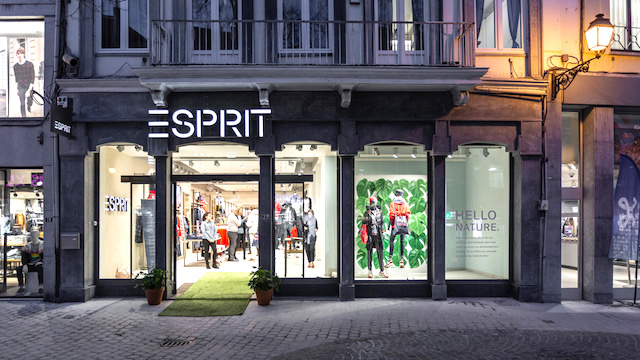
    In Hong Kong, Esprit’s licensee opened a second location with a flagship store at Olympian City. Mainland Chinese partners sell across Tmall, Douyin, Vip.com, and JD.com while pushing the brand into activewear. In North America, the local licensee placed retro logo fleece sweatshirts into Costco in the United States and Walmart in Canada in July.

    The shift mirrors the path taken by troubled apparel names across the region that abandoned direct retail in Asian markets in favor of wholesale brand licensing. Stripping away direct operating costs lowers overhead quickly, but the model leaves Esprit dependent on wholesale discounters and cut-price online channels that risk diluting whatever brand equity remains from its 1980s peak.

    Attention turns next to the legal jurisdiction dispute in Hong Kong, where proceedings on the 49 million euro Dutch trustee claim will test whether Esprit’s offshore corporate structure can protect its remaining HK$63.26 million in net assets from European creditors.
  • Esprit Holdings’ sales decline is no surprise

    Esprit Holdings’ sales decline is no surprise

    In line with expectations, a first-quarter decline of 11.8 per cent in sales has been recorded by clothing, footwear, accessories, jewellery and housewares manufacturer Esprit Holdings.

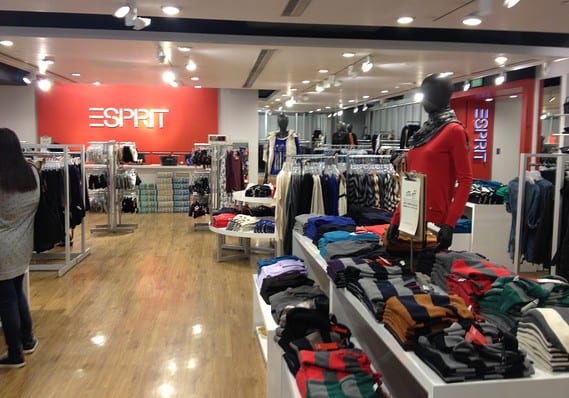
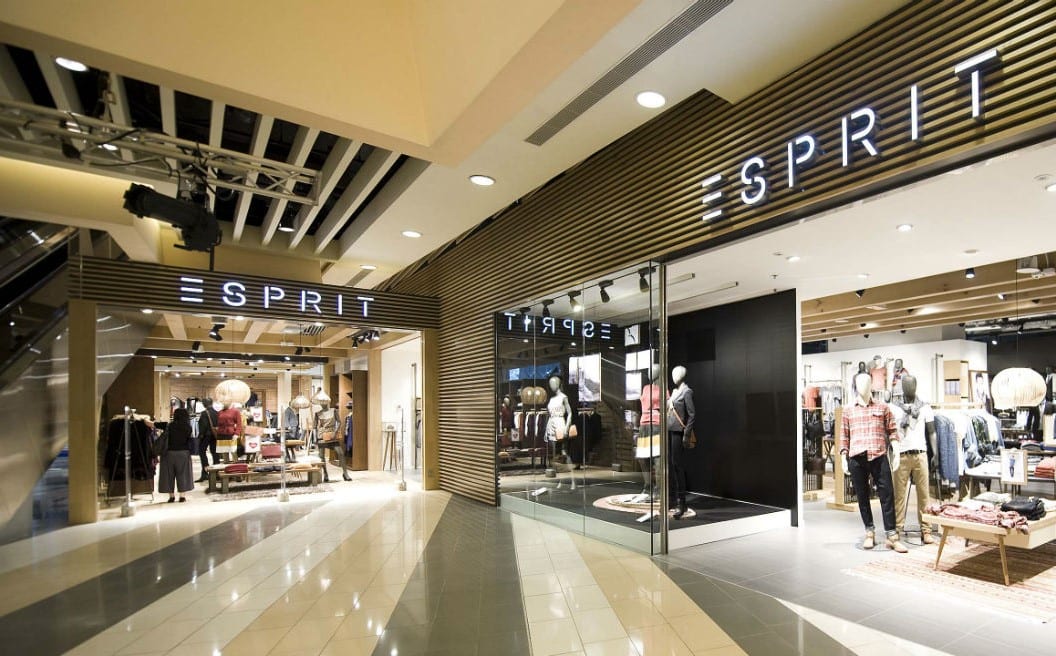
    It says the results for the quarter ended September 30 were as expected following a reduction in operating costs and store footprint. The company reduced total controlled space (retail and wholesale) by 14.5 per cent, closing unprofitable stores. During the quarter it closed 9240 sqm of retail net sales area, (mainly concession counters in China), further reducing the group’s retail net sales area to 282,332 sqm.

    Because of structural pressure in its wholesale channel, its controlled space was also further reduced, by 13,304 sqm in the quarter to 343,448 sqm. Notwithstanding this, the decline in wholesale revenue was 11.4 per cent, reflecting an improvement in space sales productivity, Esprit said.

    While sales productivity continued to improve in July and at the beginning of August, this turned negative in line with general market developments. Since mid-August temperatures in Europe were far higher than during the same period last year, significantly impacting store traffic and initial sales of the autumn collections both offline and online.

    For the Asia Pacific, lower consumer traffic hit sales, as well as a strategic decision to restructure the company’s retail footprint and cut back on promotional activity. “As expected, these measures put short-term pressure on revenue, but they are crucial for Esprit to regain profitability in the mid-term,” said the group.

    “Despite the weak sales development in the first quarter, the group’s results remain on track and management stays focussed on the execution of the strategic plan: developing the vertical and omnichannel models; tackling the challenges in the wholesale channel and in Asia Pacific; and pushing the reduction of structural costs further in order to continue the recovery of the group’s overall profitability.”

  • Esprit sales flat

    Esprit sales flat

    Reporting “flat” revenue for its third quarter, Hong Kong-listed clothing retailer Esprit Holdings points the finger at negative growth in its Asia Pacific stores, as well as weakness in its wholesale channel.

    There was a marginal decline of 0.1 per cent in Esprit sales for the three months but the company continued to benefit from improved product performance, as well as improved marketing and channel operations.

    Retail revenue (63.3 per cent of the group’s income) grew 3.1 per cent year-on-year, primarily driven by the European region.

    Particularly encouraging for the group was the continuation of the positive trends in several areas. The women’s divisions (including Esprit and EDC branded products) had retail revenue growth of 6.6 per cent for the quarter; plus comparable stores sales growth (including online) was up 10.3 per cent; while online sales totalled HK$984 million (US$126.8 million) – 35.4 per cent of the group’s retail revenue and an increase of 11.7 per cent.

    Performance, meanwhile, was still weak in Asia Pacific (15.2 per cent of the group’s revenue), with revenue tumbling 15.3 per cent.

    Esprit says the performance of Asia Pacific continued to be undermined by a combination of unfavourable macro-factors, including volatility in the financial markets, weak consumer sentiment amid the slowdown of economic growth in China, and reduced tourist flow in the region.

  • Esprit sales flat, as expected

    Esprit sales flat, as expected

    Largely in line with expectations, Esprit sales were flat, the fashion brand says in its interim report for the six months to December 31.

    While its overall turnover was down 0.4 per cent overall, retail turnover grew 6 per cent while wholesale turnover fell 11.4 per cent.

    The gross profit margin for Esprit Holdings was stable at 50.5 per cent, while the net loss of HK$238 million was in line with expectations. The group had a healthy net cash position of HK$4.2 billion with zero debt.

    Unfortunately, positive retail sales growth in Europe was offset by continued weakness in the wholesale channel, and negative development in the Asia Pacific region. Asia Pacific turnover declined 6 per cent year-on-year, mainly dragged down by China with its 11.6 per cent drop. China represents 46 per cent of the region’s turnover.

    In its breakdown of turnover in Asia Pacific, China led with HK$655 million, 7 per cent of group turnover. Then came Hong Kong (HK$185 million, 2 per cent, down 0.4 per cent), Australia and New Zealand (HK$162 million, 1.7 per cent, up 0.3 per cent), Singapore (HK$129 million, 1.4 per cent, down 4.7 per cent), Taiwan (HK$98 million, 1.1 per cent, up 6.5 per cent), Malaysia (HK$97 million, 1 per cent, down 2.7 per cent), Macau (HK$56 million, 0.6 per cent, down 12.7 per cent) and others (HK$43 million, 0.5 per cent, up 6.2 per cent).

    In the previous financial year, the group moved towards vertical integration which resulted in more cost-efficient product development and supply chain processes, allowing product improvements in terms of design, quality and value-for-money.

    To maximise the selling potential of its improved products, this past year the group started pursuing an Omnichannel business model. In its early stages, this has led to improvements in growing its loyal customer base “Esprit Friends” and fully integrating the commercial activities of all sales channels.

    In September, the group launched an intensive brand-marketing campaign to strengthen and rejuvenate its image.

    Performance during the first six months of this financial year (between July and December) indicated that the vertical and omnichannel model was an effective basis to turn around its business, the company said.

    In its report, the company paid tribute to its co-founder, Doug Tompkins, who died in December, describing him as a “conservationist, outdoorsman, philanthropist, agriculturist and businessman”. He and his then wife, Susie Buell, formed the company in 1968. Esprit’s collections are available in 40 countries, in about 870 directly managed retail stores and through more than 7500 wholesale sales points including franchise stores and department-store outlets. The Group markets its products under two brands, Esprit and EDC.

    Listed on the Hong Kong Stock Exchange since 1993, Esprit has headquarters in Germany and Hong Kong.