Tag: eternal

  • Deepinder Goyal Defends 30 Million Dollar Wearable Brand Temple

    Deepinder Goyal Defends 30 Million Dollar Wearable Brand Temple

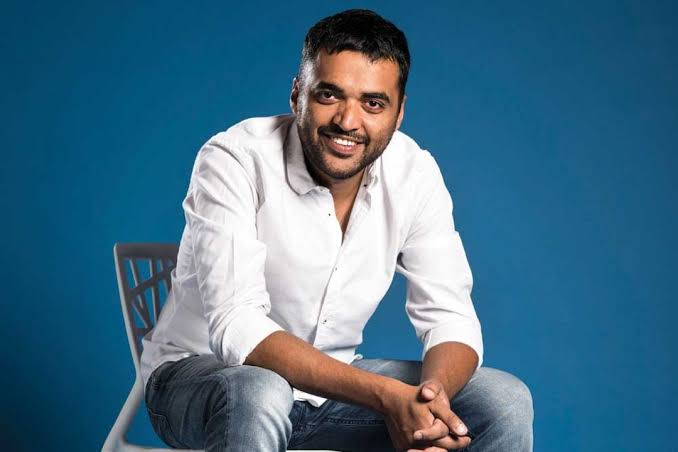
    Zomato founder Deepinder Goyal has poured $20 million of his own capital into Temple, an Indian consumer tech hardware venture that has absorbed $30 million in total development costs.

    Goyal, who stepped away from his role as Eternal chief executive to focus on the business, defended the wearable brand after medical practitioners and online reviewers questioned its scientific backing.

    Unacademy co-founder Gaurav Munjal gave the product high-profile backing this week, reporting that he wore the head-mounted monitor for roughly 30 to 40 nights. Munjal found the hardware stayed secure during workouts and sleep, while outperforming rival fitness bands such as Whoop in comfort and automatic chewing detection.

    Hardware design and jaw tracking

    Temple tracks sleep stages, mental strain through an entropy metric, and jaw motion to record food consumption. The hardware monitors chewing patterns directly, sending prompt notifications after meals to log nutrition without requiring manual initial entries from the wearer.

    Hardware comfort remains the central pitch for the headpiece. Munjal noted the unit is light enough that users forget they are wearing it, though he cautioned that the current companion software lags behind competitors on interface design. The industrial design also draws attention in public settings, frequently forcing users to explain the headpiece during business meetings.

    Return windows against scientific doubts

    Goyal countered public scepticism by offering a 14-day return policy without conditions, contrasting the retail guarantee directly against stricter hardware sales policies in India. The refund term gives consumers immediate recourse while the venture readies its initial research findings for wider release.

    Early stage hardware development carries steep cash-burn risks for Asian tech executives stepping away from established software platforms. Building a proprietary consumer electronics business out of India requires sustained testing and clinical validation that fast-moving e-commerce businesses rarely face. Goyal maintains that the business model depends entirely on immediate utility, stating the company would collapse before clawing back a tenth of its research investment if users discover the hardware fails to deliver on its tracking claims.

    Wearable competition and retail positioning

    Consumer health hardware across Asia remains dominated by wristbands and smart rings from international players like Apple and Whoop. Convincing shoppers to adopt a noticeable forehead sensor presents a heavy retail hurdle, regardless of how accurate its chewing sensors prove to be.

    Retail buyers and consumer technology investors will judge Temple on whether it can convert tech founders into ordinary retail buyers across Asian cities. Most wellness devices struggle to retain users past the first three months once the novelty of biometric readouts wears off, making app updates and software clarity critical to customer retention.

    Backing from domestic founders

    Munjal framed the venture as a necessary push to build international hardware brands out of India rather than relying solely on packaged food exporters. The domestic tech sector has historically excelled in platform software and logistics networks, while advanced sensor engineering and biometric manufacturing remained concentrated in East Asian supply hubs.

    Temple plans to publish academic preprints detailing its sensor mechanics ahead of peer-reviewed journals, alongside unreleased software modules still under development.


  • Eternal’s District Plans Dedicated Venues as Temporary Sites Top $1 Million

    Eternal’s District Plans Dedicated Venues as Temporary Sites Top $1 Million

    Eternal’s District is exploring investments in dedicated live-event venues to curb setup costs and protect its business from artificial intelligence disruption, District Chief Executive Rahul Ganjoo said in October 2026.

    Building temporary concert sites can cost more than $1 million only to be dismantled within hours, prompting the platform to hold discussions with property owners and governments on public-private partnerships.

    “Without dedicated live-event venues, it is difficult to build a sustainable business, because you spend a large amount of money setting up a venue only to take it down within a day,” Ganjoo said.

    The Math Behind Temporary Stages

    Organising large shows across major Indian metros currently relies on building temporary arenas on rented grounds. Crews assemble heavy staging, lighting rigs, safety barriers and power networks, only to dismantle the entire installation once the crowd clears.

    District chief executive Rahul Ganjoo pointed out the operational waste built into that model. “Without dedicated live-event venues, it is difficult to build a sustainable business, because you spend a large amount of money setting up a venue only to take it down within a day,” Ganjoo said.

    Sinking capital into recurring setup work drains gross margins for promoters and platforms. A network of dedicated venues would lower the recurring overhead of individual tours, giving the platform predictable acoustic and crowd infrastructure across tour calendars.

    Defending Ground Against AI Agents

    Online booking platforms face structural pressure from autonomous software agents capable of discovering, comparing and booking entertainment directly across open web protocols. When software handles discovery, platform brand loyalty erodes.

    Physical control of the physical gate flips that equation. Holding long-term master leases or co-ownership agreements over premier performance real estate gives an operator exclusive rights to on-site concessions, priority ticketing access and physical food service tie-ins that software aggregators cannot circumvent.

    The Operator Reality in India

    Live entertainment in India has expanded rapidly across tier-one metros such as Bengaluru, yet performance spaces remain scarce. International and domestic tours regularly compete for municipal stadiums, exhibition halls or vacant open plots that demand extensive civic permits and temporary civil works.

    Shifting from an asset-light digital ticketing intermediary to a venue operator introduces balance-sheet exposure. Long leases demand high sustained occupancy rates throughout the year, forcing District to programme mid-week events, regional festivals and corporate bookings alongside marquee headline acts.

    The Pipeline Ahead

    Eternal expanded District to capture out-of-home spending across dining, ticketing and leisure activities, positioning the platform against regional ticketing incumbents. Securing land parcels and municipal clearances for high-capacity performance zones will require clearance from state urban development authorities across targeted metropolitan hubs.

    District remains locked in partner discussions on the initial venue sites, with structural terms and capital commitments for the first dedicated locations pending formal sign-off.

  • Blinkit Adds 308 Stores as Net Order Value Surges to ₹20,940 Crore

    Blinkit Adds 308 Stores as Net Order Value Surges to ₹20,940 Crore

    Blinkit increased net order value by 79.3 per cent year on year to ₹20,940 crore in the September quarter, lifting dark store numbers across India to 2,751.

    The quick-commerce unit added 308 net facilities during the three-month period and turned an adjusted EBITDA profit of ₹184 crore, reversing a ₹156 crore loss reported twelve months earlier.

    Parent group Eternal revealed the operational shift in its Q2FY27 shareholder letter, where Albinder Dhindsa raised Blinkit’s network expansion trajectory. The company now plans to cross 3,500 dark stores by March 2027, up from an earlier target of 3,000, with internal blueprints aiming for roughly 5,000 locations by March 2028. Its adjusted EBITDA margin reached 0.9 per cent of net order value for the quarter.

    Inventory Swells Past Pure Grocery

    Assortment depth is driving the physical footprint expansion. In the Delhi-NCR market alone, Blinkit increased its available catalogue from roughly 80,000 stock-keeping units in Q4FY26 to about 100,000 SKUs by the end of the September period.

    The inventory push moves far past packaged food and household staples. Dark stores are stocking consumer electronics, phone chargers, premium beverages, branded diapers, and gaming consoles, with Dhindsa pointing toward household appliances and gifting items for ten-minute dispatch.

    Handling bulkier merchandise changes the operating mechanics inside each depot. Heavier white goods require dedicated storage racking and altered handling procedures, while high-value electronics mandate tighter packaging controls and loss-prevention security. Sourcing arrangements and consumer return processing also differ fundamentally from non-perishable groceries, forcing local managers to balance slow-turning goods against high-velocity essentials.

    Smaller Cities Match Metro Velocity

    Internal network data from the operator contradicts the long-held industry assumption that rapid dispatch models function exclusively inside affluent tier-one metro districts.

    New fulfillment hubs in smaller regional cities reached 1,000 daily orders at speeds identical to metro openings, with several ramping faster. Average order values in these secondary markets tracked between 85 per cent and 90 per cent of metropolitan baskets, supported by repeat purchasing patterns that mirror core capital zones.

    For regional retail ecosystems, quick commerce serves an availability function rather than simple convenience. Shoppers in tier-two and tier-three hubs turn to dark store apps to secure branded goods that organized physical retail distribution never placed on regional store shelves. Sourcing and transport overheads remain high, however, and management conceded that smaller cities with low population density will stay subscale.

    Mature Hubs Cross Profit Threshold

    Financial durability rests on dark store maturity profiles across specific municipal clusters. Hubs generating roughly 96 per cent of Blinkit’s total net order value are now contribution-positive, while municipal zones accounting for about 70 per cent generate positive adjusted EBITDA.

    Established cities in the network operate above a 5 per cent adjusted EBITDA margin. Group management projects that expanding profits from these older operating zones will absorb the start-up losses generated by new store openings, keeping consolidated margins positive throughout the rollout.

    Discount hunters are receiving less attention in the network allocation model. Dhindsa noted that coupon-dependent buyers consume the same finite dark store packing capacity as regular shoppers but disappear once subsidised incentives stop. Current software algorithms prioritize consumers who generate repeat weekly baskets across multiple categories.

    Working Capital and Rival Retailing

    RetailNews Asia notes that Blinkit’s aggressive category broadenings pit it directly against horizontal marketplace leaders. Amazon and Walmart-owned Flipkart stepped up quick-delivery investments in June, pushing ultra-fast fulfillment networks into regional Indian cities using their existing logistics muscle and supplier balance sheets.

    Holding broader stock lines carries immediate balance sheet friction. Eternal’s cash reserves contracted by ₹1,813 crore during the quarter to settle at ₹16,475 crore, dragged down by seasonal inventory build-ups before peak autumn festive consumption and settlement cycles inside its restaurant delivery arm. The corporate entity also reported 76 per cent growth in consolidated adjusted revenue, beating a 58 per cent like-for-like rate as it assumed direct merchandise ownership across its dark store supply chains.

    Private labels remain off the platform roadmap for now. Blinkit decided against introducing house brands, with Dhindsa concluding that own-label items fail to create incremental basket demand once brand-building expenses are factored in. The firm plans to protect supplier advertising income rather than undercut third-party manufacturers.

    Network eyes now turn to the execution of the 749 additional dark store openings required to hit the 3,500-unit threshold before the close of fiscal 2027.