Tag: etherium

  • UBS Serves Up Crypto ETFs in Hong Kong

    UBS Serves Up Crypto ETFs in Hong Kong

    Switzerland’s largest bank is following in the tracks of HSBC by allowing wealthy clients to trade crypto exchange-traded funds in the city.

    A selection of three crypto-ETFs related to Bitcoin and Ethereum were available on a UBS trading platform for wealthy clients as of Friday.

    The funds had been approved by the Securities & Futures Commission (SFC), with the source, who requested to remain anonymous, indicating that clients could access educational material related to the funds. UBS declined to comment on the matter, the news agency showed.

    Hong Kong implemented a new digital licensing regime related to digital assets on June 1 to both promote digital asset trading while also ensuring that investors remain duly protected.

    Zug-based Seba Bank, one of two Swiss crypto-banks, was licensed by the SFC earlier this week. The step will allow it to engage in various activities and advisory services related to securities, OTC derivatives, and structured products related to underlying virtual or digital assets.

  • Crypto is Dead. Long Live Crypto in 2023

    Crypto is Dead. Long Live Crypto in 2023

    The crypto industry is facing a very difficult 2023. In the longer term, however, there is no reason why it should not rise from the dead again, as it has in the past.

    Skeptics have long suspected it, and now they see themselves vindicated by the fiasco surrounding the now-bankrupt crypto exchange FTX in which the whole crypto boom was built on sand. Bitcoin, Ether, and pretty much every other token and altcoin is nothing more than a big scam, designed solely to take hard-earned money out of the pockets of speculative investors and gullible crypto enthusiasts.

    Spectacular bankruptcies, sensational hacks, and scams are hard to beat for audacity along with billion-dollar collapses, brazen scandals, and embarrassing confessions truly made for an annus horribilis in the crypto industry. The year 2022 was the first full year that cryptocurrencies definitely hit the mainstream, but looking back, it seemingly turned out to be a complete disaster.

    Cascading Collapse

    Beginning with stablecoin Terra and its sister token Luna in May, the crypto pyramid collapsed this year, triggering a domino effect that took the entire crypto market down with it, via industry giants like Celsius Network, Voyager Digital, and Three Arrows Capital (3AC), to FTX and BlockFi. Meanwhile, hackers are estimated to have absconded with over $3 billion in 2022 alone. Over two-thirds of the total market capitalization of cryptocurrencies evaporated into thin air during the year.

    This is not what a foundation built on confidence looks like. Fear, uncertainty, and pessimism appear to be at unprecedented levels around crypto, and numerous investors have lost interest and exited the cryptocurrency market.

    Is History Repeating Itself?

    And so the prophets of doom repeat their mantra the crypto market is dead, put into an early grave by pure speculation, especially since the two most important cryptocurrencies, Bitcoin and Ether, are seen as a fad, without use and not backed by any physical asset.

    To be sure, at least 95 percent of all tokens are junk, with many of them unlikely to survive the crypto winter in which the industry finds itself. But is the industry doomed? The market already crashed by more than 80 percent in the crypto crashes of 2014 and 2018, and yet the industry emerged stronger from each of these crises.

    External Influences

    The short- to medium-term outlook for the crypto market looks pretty bleak with 2023 expected to be a better year, albeit a very difficult one, while the long-term future still appears hopeful and promising.

    Most of the catalysts contributing to the crypto market crash since November 2021 cannot be attributed to the underlying technology. That was mostly attributable to external factors, like tighter central bank policy, fraudulent crypto players, and dubious business models.

    As painful as the crypto winter is, the associated shakeout and recovery process is healthy in the long run since weak competitors with obvious design flaws are being punished by the market and weeded out.

    Above all, the excesses of the wild speculation of recent years are being mercilessly pulled up by their roots. The disillusionment is likely to drag on for quite a while, so it seems rather unlikely bitcoin will return to its all-time high any time soon, not least because the low-interest phase that encouraged speculation is now over.

    Capital Market Cycles

    Boom-and-bust cycles are the essence of all capital markets. But cryptos as a controversial asset class, seem to attract far more media attention than other investment vehicles. Often lost in the general noise is that in the absence of adequate global regulation and due to their young age, cryptos like Bitcoin and Ether are still very vulnerable to dislocation. Both, however, have uses beyond mere speculation or criminal activity, as is often accused.

    Bitcoin is increasingly used as a rapid money transfer method via the Lightning network, while Ether is evolving into a currency for the Web3 and Metaverse. What is needed are stronger guardrails providing more legal and investment certainty in the crypto world in the future.

    At the same time, it would be illusory that all risks can be regulated away. The task of governance rules lies in creating a consistent and reliable regulatory framework. With stronger regulation, trust, and acceptance of crypto assets increase. If leading financial institutions like Blackrock and Goldman Sachs continue to back crypto, it will ultimately attract new investors.

    Innovative and Promising

    Healthy crypto companies are not taking things lying down, but taking advantage of opportunities that present themselves for new business ideas. And, last but not least, the blockchain industry spans far more than just out-of-favor cryptocurrencies. The tokenization of digital assets is seen as having a promising future, with increasingly attractive use cases popping up. The technology can lead to a more efficient, transparent, and accessible securities trading system.

    As long as the blockchain industry continues on its innovation course, and clearer global regulation provides a healthy foundation for the future, there is no reason why the crypto industry will not rise from the ashes once again, as it has done in each case in the past. Especially in an industry as dynamic as the blockchain industry, new technologies may emerge tomorrow that no one is even thinking about today.

  • Gold Holds no Glitter for Ethereum Co-Founder

    Gold Holds no Glitter for Ethereum Co-Founder

    Which has more merit, digital or traditional gold? For the Ethereum mastermind Vitalik Buterin, there is no doubt.

    For some investors, bitcoin is the better gold. Others swear by the yellow precious metal and doubt that the world’s oldest cryptocurrency could ever be an alternative to gold.

    Fund managers like Ronnie Stoeferle from Liechtenstein-based asset manager Incrementum, on the other hand, consider Bitcoin and gold to be brothers in spirit. He does not see much competition between these two asset classes.

    The debate about whether digital or traditional gold is the better option has been going on for years and has recently become louder. The correlation between the yellow precious metal and bitcoin has risen sharply.

    The correlation recently reached a 40-day high. In mid-August, the correlation was still at zero, as Bloomberg reported a few days ago. At the same time, Bitcoin’s correlation with the S&P 500 and the Nasdaq technology exchange declined.

    Crypto enthusiasts see this as a sign Bitcoin is on its way to becoming a safe haven. In the wake of this year’s market crash, the reputation of «Gold 2.0» as a hedge against inflation and recession had suffered badly.

    Ethereum co-founder Vitalik Buterin has now joined the discussion on whether cryptocurrencies or gold are the better stores of value or medium of exchange. This question is likely to divide the opposing camps for a long time to come, but for the Ethereum superstar, the answer is already clear.

    He replied to a Twitter user who questioned the advantages of cryptocurrencies compared to gold, saying that cryptocurrencies are the better choice compared to the yellow precious metal. Also, that gold is less common than cryptocurrencies.

    Buterin says gold is challenging to use when doing business with untrusted parties, not to mention incredibly impractical. In addition, the crypto icon faults gold for not supporting secure storage options like multi-sig, aka multi-signature wallets, a type of crypto wallet requiring at least two private keys to sign a transaction.

    At this point, gold has lower adoption, Buterin says, leading him to conclude cryptocurrencies are the better choice.

  • Cryptominers lose big after Ethereum ‘merge’

    Cryptominers lose big after Ethereum ‘merge’

    Vietnamese crypto miners say they have suffered heavy losses with their mining rigs turning useless after Ethereum, the second-largest cryptocurrency, completed its switch to a more energy-efficient framework.

    “Goodbye Ethereum”, “no more chances” and “sell off rigs” have become the most used keywords on online groups of Vietnamese crypto miners after Ethereum successfully changed its protocol from proof-of-work (PoW) to proof-of-stake (PoS).

    The technical upgrade, called “The Merge”, was completed in the early hours of Thursday morning. It significantly reduces the amount of energy used by the network and sets the stage for Ethereum to lower its fees and massively expand its user base.

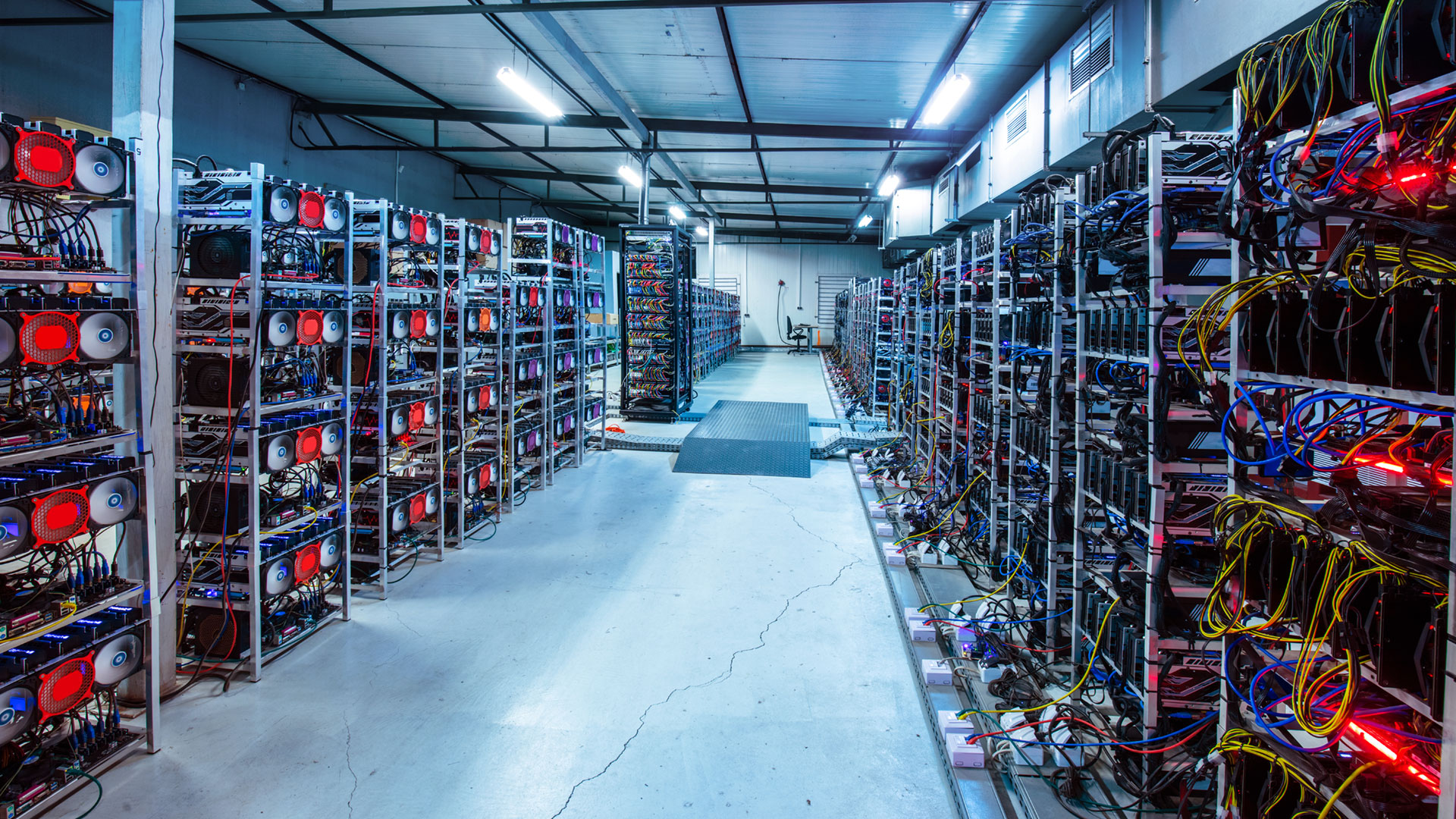
    The change will no longer require miners to use “mining rigs” and vast amounts of energy to solve arbitrary mathematical equations. These rigs have become useless for mining the popular cryptocurrency.

    Given that most Vietnamese crypto miners were mining Ethereum, many are in trouble.

    “We all knew this day will come and we have been prepared, but some hoped ‘The Merge’ would happen later so we could mine some more,” said Ngoc Can, administrator of a social group on crypto mining.”All mining pools have closed down, so miners can no longer mine and have to turn off their rigs,” Can said.

    Ethermine, the largest Ethereum mining pool, has also announced that it is shutting down its servers. Unpaid balance of miners will be automatically paid in several days, it said.

    A miner from Dong Nai said large crypto farms were being affected the most. “I started mining four years ago and expanded my farm after breaking even. I haven’t recouped my new investment and it is s almost impossible to sell it,” he said.

    “Many of my friends have collapsed and don’t know what to do with their assets”, the miner added.

    Another miner from Binh Dinh said he planned to mine other cryptocurrencies but gave up after discovering that electricity bills would eat up any profit.

    “I spent my family’s savings on the mining rig. I don’t know how to recover from that”, he said.

    “I regret gambling on these cryptocurrencies.”

    Many cryptominers also expect that Ethereum will be split into a new branch that still allows PoW mechanism, but that prospect is uncertain at this point.

  • Cryptominers unplug rigs as bottom falls out of market

    Cryptominers unplug rigs as bottom falls out of market

    Cryptominers are powering down operations, even selling equipment, as cryptocurrency prices continue to plummet. Nguyen Binh, a cryptominer in the southern Dong Nai Province, said his rigs can mine almost one Ethereum (around $2,000) a month, but hardly breaks even.

    “Electricity bills have taken away half of what I earned. With depreciation and operation and maintenance costs, I am losing money.

    “If prices of Bitcoin or Ethereum (the two largest cryptocurrencies) cannot recover in the next few months, more miners will have to shut down their machines.”

    He estimated that miners are losing 30-40 percent on selling graphic processing units, a key component in mining.Minh Nghia, administrator of a mining group, said some miners have disassembled their rigs to resell but are unable to find buyers despite falling prices.

    “Some told me they sold all their hardware and tokens but still cannot recoup their losses.

    “Financially independent miners can keep mining and wait until prices increase, but those who borrowed are finding themselves in hot water: They either sell their equipment and suffer losses or keep mining and cannot pay electricity bills and interest.”

    Experienced miner Tan Ha said many have unplugged their rigs.

    “GPUs, like other electronic devices, have a certain lifespan. It is not ideal to keep them running amid a plummeting crypto market, and so some miners choose to power down operations until prices recover.

    He said there is a high chance that prices might not recover for a long time.

    Bitcoin, the largest cryptocurrency by market cap, has fallen to $28,720 on May 18, the lowest in two years and down by half compared to its all-time peak of over $68,000 last November.

    Meanwhile, cryptocurrencies overall have lost nearly $800 billion in market value in the past month, according to data site CoinMarketCap, as investors fret about tightening monetary policy.

  • Ethereum Mastermind Supporting Ukraine

    Ethereum Mastermind Supporting Ukraine

    Russian-born Vitalik Buterin has quietly transferred Ethereum donations of around $5 million to the benefit of Ukraine.

    Ukraine has been receiving a lot of support from the crypto world since the Russian invasion, including Vitalik Buterin, co-founder of the Zug-based Ethereum (ETH).

    The software pioneer transferred ETH donations worth some $5 million to Ukraine in early April, Aid for Ukraine said on its Twitter channel. The organization is a joint initiative of the Ukrainian government, crypto exchanges FTX, Everstake, and Kuna, which collect crypto donations for the country.

    Buterin lived in Russia until he was six years old when his parents emigrated to Canada. According to the Ukrainian institution, he did not announce the transaction despite the large donation amount. It was linked to him through the Ethereum domain name vitalik.eth, which served as the origin of the transfer.

    Half of the donation went directly to Aid for Ukraine, and the other to the Unchain Fund, a cryptocurrency charity initiative founded by activists from the blockchain community to provide humanitarian aid to Ukrainians.

  • Will Ethereum Replace Bitcoin?

    Will Ethereum Replace Bitcoin?

    Backed by Greenpeace USA, a group of environmentalists wants bitcoin to switch from its current method of mining to a more energy-efficient model.

    An upgrade of the cryptocurrency Ethereum is planned for next summer. The big question here is whether it will be possible to switch to a more environmentally friendly scheme for mining. The only thing stopping bitcoin from switching from its energy-intensive method of consensus known as Proof of Work (PoW) to the less energy-intensive Proof of Stake (PoS) procedure is the cost of transitioning, supporters of the campaign Change the Code Not the Climate, say.

    If only it were that simple.

    PoS is not a perfect substitute for PoW, Professor for distributed ledger technology & fintech at the University of Basel Fabian Schaer, says. PoS is an alternative way to reach a consensus, he says. But what does that actually mean?

    Unequal Consensus Methods

    Both PoW and PoS are so-called consensus protocols used to maintain Blockchains in a decentralized way. While efficiency is an important metric in this process, it’s certainly not the only one. Framing PoS and PoW as being equivalent, except for their energy consumption, is problematic, Schaer says.

    PoW has the disadvantage of requiring immense computational resources, yet it also has the benefits of being extremely simple and open to anyone who wants to join in the verification process. There is no need to get permissions, nor to hold specific assets to be able to start proposing blocks, Schaer says.

    The PoS method, where owners stake their digital assets as locked-in collateral for the consensus process, is extremely complex. Although there has been impressive progress in the past ten years, PoS is certainly more prone to unforeseen security issues than PoW,  Schaer says.

    Bitcoin vs Ethereum

    Since Bitcoin was launchged in 2009, all cryptocurrencies have been based on the PoW concept. Crypto miners operate and secure the network and in return are compensated with the fees paid by the users of the network. At the same time they receive new Bitcoins, but this dilutes supply.

    Ethereum is a cryptocurrency used on the blockchain. If the PoS method is used, the participants will also be compensated with fees and new digital assets, thus not diluting the supply of Etherum. The downside, is there are still many technical issues to be resolved with this system.

    Market-Driven

    There are indications that if Etherum succeeds in introducing the PoS method, Bitcoin would lose massive importance.

    In the end, the market will decide as bitcoin exists in an ecosystem where companies, users and developers choose the system which suits them best. More likely than a fully-fledged shift, the blockchain road will arrive at a fork on which both consensus methods continue to co-exist.

    VHS vs Betamax

    The current debate calls the mind the video cassette recorder (VCR) battle in the 1970s between Sony’s Betamax and VHS formats. Betamax was arguably the better system and was initially the leader. As prices for VCRs came down, the VHS format pulled ahead and eventually won, because they were more attuned to the market.

    In the end, it comes down to preferences and the question what is an open database worth? Schaer says.