Tag: eu yan sang

  • Takeover bid of $196m. for Eu Yan Sang

    Takeover bid of $196m. for Eu Yan Sang

    A takeover bid for Singapore-based Eu Yan Sang has valued the traditional Chinese medicine retailer at about S$269 million (US$196 million).

    A consortium comprising Singapore state investment company Temasek Holdings’ unit Blanca, Tower Capital TCM Holdings and some members of the founding Eu family have made the final offer of 60c Singapore a share.

    About 63.2 per cent of shareholders have committed to accept the offer, including members of the Eu family, Aberdeen Asset Management Asia and First State Investment Management (UK), says Eu Yan Sang.

    Tower Capital founder Danny Koh says the consortium’s offer is attractive “considering the company’s recent financial performance and the current challenging environment”.

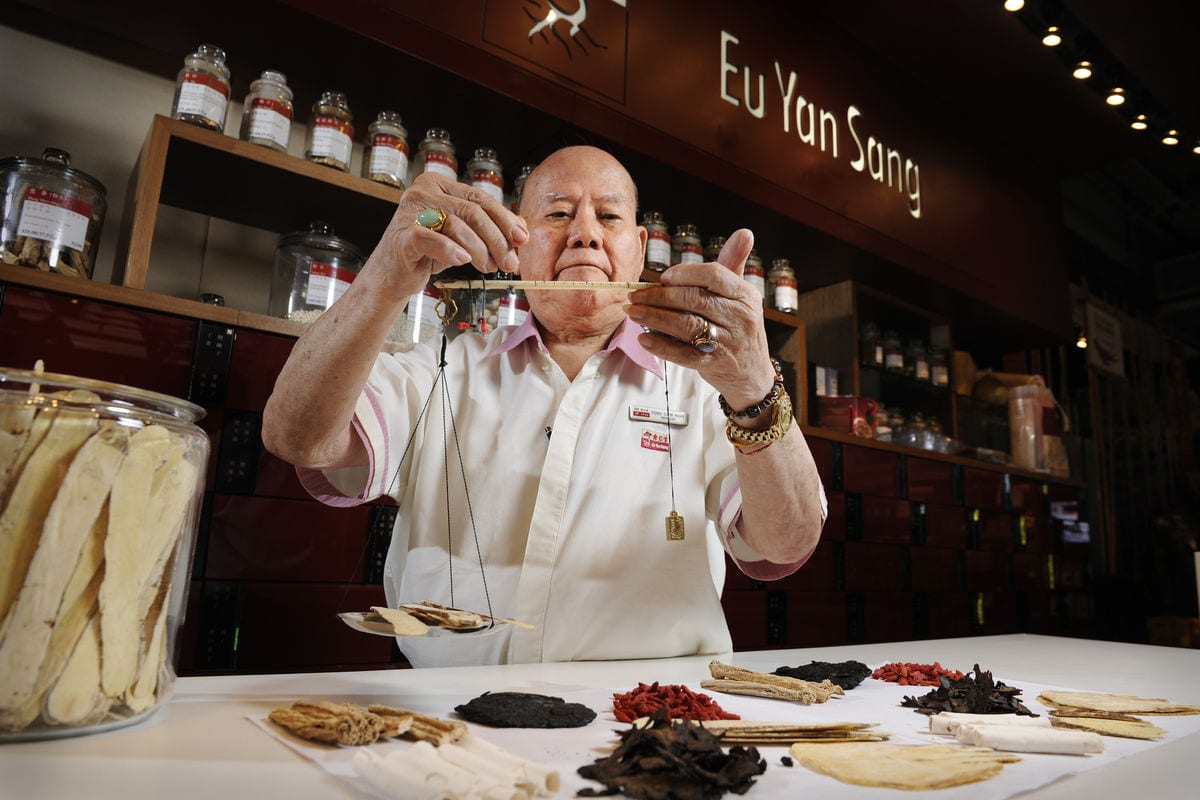
    Eu Yan Sang launched in Malaysia in 1879, expanding to more than 250 outlets in China, Hong Kong, Macau and Australia.

    Its third-quarter net income slumped to S$286,000 from S$5.45 million a year earlier, and its slide became evident in August when it lost US$3.6 million.

  • Profit slump for supplement retailer Eu Yan Sang

    Profit slump for supplement retailer Eu Yan Sang

    Singapore supplement retailer Eu Yan Sang International has had its third-quarter net profit slump to S$286,000 (US$208,515) from $5.45 million as a result of declining revenue, foreign exchange losses and expenses related to closing F&B outlets in China.

    Revenue for the four months ending March 31 slipped 6 per cent to $103.87 million, mainly because of lower revenue from the Malaysian market as well as its weakening currency.

    Foreign exchange losses of $1.9 million resulted from the weakening Hong Kong dollar during the third quarter as well as the outlet closures.

    “Despite the sluggish regional economy, we are heartened by the green shoots of recovery budding in some of our markets,” says group CEO Richard Eu. ”We remain committed to improving our performance through cost-reduction initiatives and rationalisation, while seeking greater levels of efficiency through technology.

    “On the other hand, weak macroeconomic conditions continue to weigh down our market performance in Hong Kong and Malaysia.”

  • Eu Yan Sang reports 75% plunge in Q2 net profit

    Eu Yan Sang reports 75% plunge in Q2 net profit

    Mainboard-listed Eu Yan Sang International said on Friday (Feb 12) its net profit for the second quarter plummeted 75 per cent, hurt by a weak Malaysian ringgit and lower revenue from the Hong Kong market.

    Net profit for the three months to Dec 31 was S$498,000, down from S$1.98 million in the same period a year ago.

    Revenue, however, was up 1 per cent at S$85.61 million, compared with S$84.69 million a year ago, mainly due to higher sales from Singapore and Australia.

    Revenue from Hong Kong declined 13 per cent in the quarter, due to a decline in spending by mainland Chinese tourists and the “ongoing challenging retail environment”, the company said. This was partially offset by the strong Hong Kong dollar, which helped to reduce the revenue decline to 5 per cent when translated to Singapore dollars.

    Revenue from Malaysia rose 14 per cent due to higher sales, but as a result of the weak ringgit, was down 8 per cent when translated into Singapore dollars.

    In Australia, revenue rose by 18 per cent due to an increase in the number of outlets and higher sales. However, the appreciation of the Singapore dollar against the Australian currency resulted in only an 8 per cent increment in revenue in Singapore dollars, Eu Yan Sang said.

    Revenue from Singapore improved by 13 per cent during the quarter, due to the launch of new products and promotional campaigns.

    “Despite the challenging business environments in key markets of Hong Kong and Malaysia, we are glad that Hong Kong’s rate of decline is showing signs of moderation and an improvement in Malaysia. Singapore and Australia have continued to show positive growth and added resilience to our Group’s results,” Group CEO Richard Eu said.

    The company plans to expand its retail network in Australia and Malaysia, and will also launch several joint ventures in China to boost its growth in the Chinese market, he added.

    Looking forward, Eu Yan Sang said it remains cautious on its business outlook. The company plans to reduce costs through the “rationalisation” of weak performing retail outlets, while continuing to improve its operational efficiency through technology, it said.

  • Bad medicine for Eu Yan Sang

    Bad medicine for Eu Yan Sang

    Traditional Chinese medicine retailer Eu Yan Sang lost $3.6 million in its last quarter, blaming weaker sales in Hong Kong and Malaysia.

    Its full year profit to June 30 was down 70 per cent on the previous year at $4.56 million, compared with $15.03 million in 2014.

    Fourth quarter sales dropped 15 per cent; full year sales a less dramatic four per cent to $350.4 million.

    In Malaysia, the company – like many retailers of food and discretionary goods – noticed a sharp decline in trade after the imposition of six per cent GST on April 1.

    In Hong Kong, it was the changing demographic of Mainland Chinese visitors to the territory to blame.

    “While the travel restrictions to Hong Kong imposed on mainland Chinese have affected parallel traders coming to Hong Kong to purchase Eu Yan Sang products, it has encouraged sales of our products at online sales platforms and at cross border, tax free outlets,” the company said in a statement.

    Eu Yan sang operates 252 retail stores and 25 franchised outlets. During the year it opened 13 in Australia, Malaysia and Hong Kong and closed eight in Singapore, China and Macau. A review of its Australian franchised stores saw it drop a new seven outlets.

    The news was not all bad for the Singapore-listed company. In its home market, net sales were up five per cent in the fourth quarter and four per cent over the full year – in an overall retail market best described as stagnant. Managed cited the introduction of new products and consumer marketing campaigns for the improvement.

    The company hopes continuing improvement in Singapore sales will help cushion the impact of the Hong Kong and Malaysia markets in the year ahead.

  • Costs eat into Eu Yan Sang profit

    Costs eat into Eu Yan Sang profit

    Chinese herbal medicine retailer Eu Yan Sang has repoted a 38 per cent drop in profit on stable revenues in the first quarter of its current financial year.

    Eu Yan Sang posted a net profit of S$5.45 million on sales of $110 million.

    Improved sales in Australia, Singapore and Malaysia during the Chinese New Year, and in Malaysia where shoppers stocked up ahead of the introduction of GST on April 1, balanced a decline in Hong Kong, where the company says sales were soft due to the fall in mainland visitros.

    Gross margin for the quarter dipped 2.6 per cent due mainly to the impact of sales mix and longer lead time to Chinese New Year. Correspondingly, the group’s operating profit declined due to lower gross margin contribution and increased operating expenses.

    As at 31 March 2015, Eu Yan Sang had 258 company-operated retail outlets and 30 franchises in China, Hong Kong, Macau, Malaysia, Singapore and Australia.

    Group CEO Richard Eu said despite the challenging retail environment in Hong Kong and Macau, where retail revenue fell 21 per cent, most of the company’s key markets showed resilience.

    “Singapore, Malaysia and Australia markets have reported revenue growth. We see long-term opportunities especially in rising health awareness as consumers are becoming more discerning and better educated about wellness issues and are actively seeking for healthy food and natural health remedies. This is a space where we differentiate ourselves from others, where consumers understand product quality over pricing.

    “Rising disposable income in the region also played an important role to our business. In addition, our wellness offerings are easily accessible through ongoing introduction of new, exciting products and the extension of our wholesale channels,” he said.

    Retail revenue rose five per cent driven by increased consumer spending during the longer lead up period to Chinese New Year in Malaysia and Singapore, while the increased sales in company-operated outlets and improvement in same-store sales boosted retail revenue in Australia.

    The wholesale segment dipped by 32 per cent due to the slower offtake in trade as a result of the decline in mainland tourists’ spending in Hong Kong, which was caused by China’s recent move to restrict visitations of its nationals to Hong Kong.

    “In local currency terms, Australia showed the strongest improvement with a boost of 28 per cent in revenue,” the company said in its earnings statement. “This was in line with the increase in number of company-operated outlets and the increase in same-store sales.”

    For the rest of the year, the company expects the softer market to continue in Hong Kong, and in Malaysia where consumers are still adjusting to the impact of GST.

    But after two years of decline, Singapore is showing growth.

    “Given the recent regulations to limit Chinese tourists in Hong Kong and the enforcement of GST in Malaysia, the group expects a protracted recovery in these markets. We believe that the negative impact of GST on retail sales in Malaysia will be a short-term challenge.”