Tag: european union

  • EU Trade Talks Put Thai Seed Rules and Farm Costs in Focus

    EU Trade Talks Put Thai Seed Rules and Farm Costs in Focus

    Negotiations for a free trade agreement between Thailand and the European Union have brought intellectual property standards for agriculture to the fore, with Brussels proposing alignment under the 1991 International Convention for the Protection of New Varieties of Plants (UPOV 1991).

    Adopting the framework could lift domestic crop production costs by up to 1,000 baht per rai and push consumer prices for rice-based products up by 4%, according to projections cited by Aat Pisanwanich, a lecturer at Rangsit University’s Institute of Economics.

    As of November 2026, Thailand regulates plant varieties under its Plant Varieties Protection Act of 1999 and has taken no formal stance on accession, even as regional trade partners prepare bilateral pacts scheduled for implementation through 2027.

    The Cost Burden on Farm Inputs and Shelf Goods

    Seed procurement represents between 10 per cent and 15 per cent of total crop production costs in Thailand, based on operational metrics from the Thai Seed Trade Association. Shifting to international breeder mandates would alter those balance sheets quickly. Production costs for staple paddy rice would increase by 125 to 500 baht per rai, while feed corn costs would rise by 200 to 800 baht per rai. Industrial sugar cane crops face added outlays between 250 and 1,000 baht per rai, and tapioca expenses would jump by 125 to 500 baht per rai.

    For food manufacturers, feed millers, and grocery distributors, these upstream increases squeeze operating margins along the retail supply chain. The projected 4 per cent consumer price increase on packaged rice and processed grain products comes as food retailers across Southeast Asia work to contain shelf inflation. While commercial seed companies argue that stronger intellectual property laws spur private research and development, commercial buyers face immediate procurement pressure.

    Regional Precedents Across Southeast Asia

    Vietnam provides an operating precedent for what happens when a regional farm exporter signs the agreement. Hanoi acceded to UPOV in 2006 before implementing its bilateral trade pact with the European Union in August 2020. Commercial breeders increased their registered local varieties by 50 per cent following accession. Seed prices for those protected crop lines rose six to eight times above standard open varieties, concentrating input supply among licensed private distributors.

    India took a divergent path by rejecting UPOV membership entirely, relying instead on its domestic protection framework under the World Trade Organization TRIPS agreement to protect farmers alongside commercial breeders. That stance did not block market access: New Delhi concluded its free trade agreement negotiations with the European Union, with formal signing scheduled for 16 December 2026. Meanwhile, Indonesia adopted the 1991 standards with bespoke domestic exemptions as it prepares for its EU trade pact to take effect in January 2027.

    Legislative Conflicts and Breeder Rights

    Commercial seed houses maintain that greater intellectual property protection will not distort open-market retail pricing if variety choice expands. The Thai Seed Trade Association wants the government to amend the 1999 domestic act by clarifying the legal definitions of general domestic plant varieties, preventing companies from claiming existing public germplasm while establishing protection for newly engineered strains. The group also advocates retaining legal allowances for smallholders to save seed supplies across seasons.

    Thidakoon Saenudom, director of the Plant Standard and Certification Division at the Agriculture Department, argued for explicit state backing for public cultivation pipelines. “The government must allocate sufficient funding for plant breeding R&D to ensure that publicly developed varieties remain available as an alternative for farmers.”

    Trade negotiators in Bangkok continue to review the agricultural chapter of the European trade text without taking a formal accession stance. Commercial operators and packaged food brands are tracking the ministerial review of draft exemption clauses, which will establish whether staple cereal grains receive statutory carve-outs before final bilateral ratification schedules are set.
  • China Warns UK of Firm Retaliation over Electric Vehicle Tariffs

    China Warns UK of Firm Retaliation over Electric Vehicle Tariffs

    China’s Ministry of Commerce threatened countermeasures against Britain on Monday if London introduces import duties on Chinese electric vehicles. The warning follows British trade minister Anas Sarwar’s remarks confirming ongoing discussions with European partners over potential alignment with European Union tariffs of up to 45.3 per cent.

    Beijing urged the UK to follow World Trade Organization rules and maintain equal trade terms rather than copying Brussels. Automotive cooperation between both countries relies on complementary strengths, the ministry said in an official statement.

    “China will closely monitor the UK’s actions. If the UK insists on imposing restrictions on Chinese EVs, China will take firm countermeasures to safeguard the legitimate rights and interests of its industry,” the ministry said.

    London weighs European market access

    British officials are balancing domestic trade ties with European supply integration. London wants British manufacturers included in the EU’s Industrial Accelerator Act, a framework giving local production preferential access to public procurement programs.

    Exclusion from that initiative would penalize vehicle assembly operations across Britain. To secure access, EU negotiators asked London to align vehicle tariffs directly against Chinese carmakers, turning trade protection into an entry fee for European industrial policy.

    Retaliation risks for British exporters

    British Business Secretary Jonathan Reynolds acknowledged the friction in September, pointing out that the domestic automotive manufacturing base relies heavily on export markets. Any Chinese tariff retaliation would hit British luxury vehicle shipments hard, slicing into margins for premium brands that count China as their primary profit engine outside Europe.

    For Chinese original equipment manufacturers, losing tariff-free access to Britain would alter dealer pricing models and compress gross margins on mass-market models like the MG4 hatchback. Importers would have to absorb the cost difference or pass price increases to British car buyers, dampening EV adoption rates across consumer segments.

    The fallout from the 2024 duties

    Brussels imposed definitive countervailing duties on Chinese battery electric vehicles for five years in October 2024. Those levies added between 7.8 per cent and 35.3 per cent on top of standard 10 per cent baseline import duties, pushing total import taxes to 45.3 per cent for affected producers.

    Britain chose not to replicate those duties at the time, keeping its market open and becoming an essential European distribution hub for Chinese automakers. The European Commission subsequently urged London in September to eliminate that regulatory gap.

    Expansion plans continue regardless

    Chinese brands are pressing ahead with British retail distribution networks despite the regulatory dispute. Chery plans to introduce its iCar brand into the UK market under the name iCaur with the launch of the V27 in early 2027.

    That rollout will represent Chery’s fifth distinct brand trading in Britain. Whether those vehicles face standard import duties or double-digit countervailing penalties depends on the final terms London negotiates with Brussels over the coming months.

  • Chinese Automakers Rule Out Italy over Lack of Turnkey Factories

    Chinese Automakers Rule Out Italy over Lack of Turnkey Factories

    Chinese automakers looking to expand production capacity in Europe have ruled out Italy because the country lacks suitable turnkey factories, Italian industry minister Adolfo Urso said on Wednesday, October 14.

    Urso confirmed that Chinese auto industry representatives, including BYD European adviser Alfredo Altavilla, inspected Italian facilities and met government officials several times without finding viable production sites.

    The Search for Turnkey Sites

    Chinese car companies touring Europe want operational manufacturing facilities that can start vehicle assembly immediately. Brussels is preparing regulations that will impose minimum local content requirements on electric vehicles sold across the European Union, prompting Chinese brands to secure localized assembly footprint within the trading bloc.

    Urso told lawmakers in Rome that Chinese delegations inspected several Italian facilities. None met their operational criteria.

    “They are touring Europe and what are they asking for? A turnkey factory,” Urso told lawmakers in Rome, referring to a production site that would be ready to operate immediately.

    Stellantis Retains Italian Footprint

    Italy holds only one domestic volume car manufacturer, Stellantis. Urso explained that Stellantis decided against selling or transferring any of its Italian plants to foreign competitors, choosing instead to pursue joint production partnerships with Chinese automakers.

    Because Stellantis kept all its Italian production lines open, no idle, ready-to-run auto plants exist in Italy for foreign buyers to take over. That stance closed the door on Chinese automakers looking for standalone acquisitions in the country.

    BYD Shifts Focus to Western Europe

    The refusal to sell legacy plants directly conflicts with the expansion playbook favored by major Chinese electric vehicle brands. BYD rejected shared-production arrangements and joint ventures in the country, seeking full ownership of its European manufacturing assets instead.

    Altavilla confirmed that BYD is concentrating its factory acquisition efforts on alternative European markets, specifically Spain and France. Securing dedicated assembly lines allows Chinese electric vehicle groups to maintain direct control over supply chains, production quality, and proprietary technology.

    European Manufacturing Timelines

    Automakers from China face mounting pressure to finalize European production locations before the European Commission enacts stricter local assembly mandates. Companies that fail to establish domestic production lines risk tariffs and regulatory barriers on imported completely built-up units.

    The next phase of European expansion now rests on negotiations with French and Spanish authorities, where Chinese carmakers continue to evaluate industrial sites capable of rapid commissioning.

  • Germany Blocks COSCO Buy as Chinese Logistics Firms Face EU Scrutiny

    Germany Blocks COSCO Buy as Chinese Logistics Firms Face EU Scrutiny

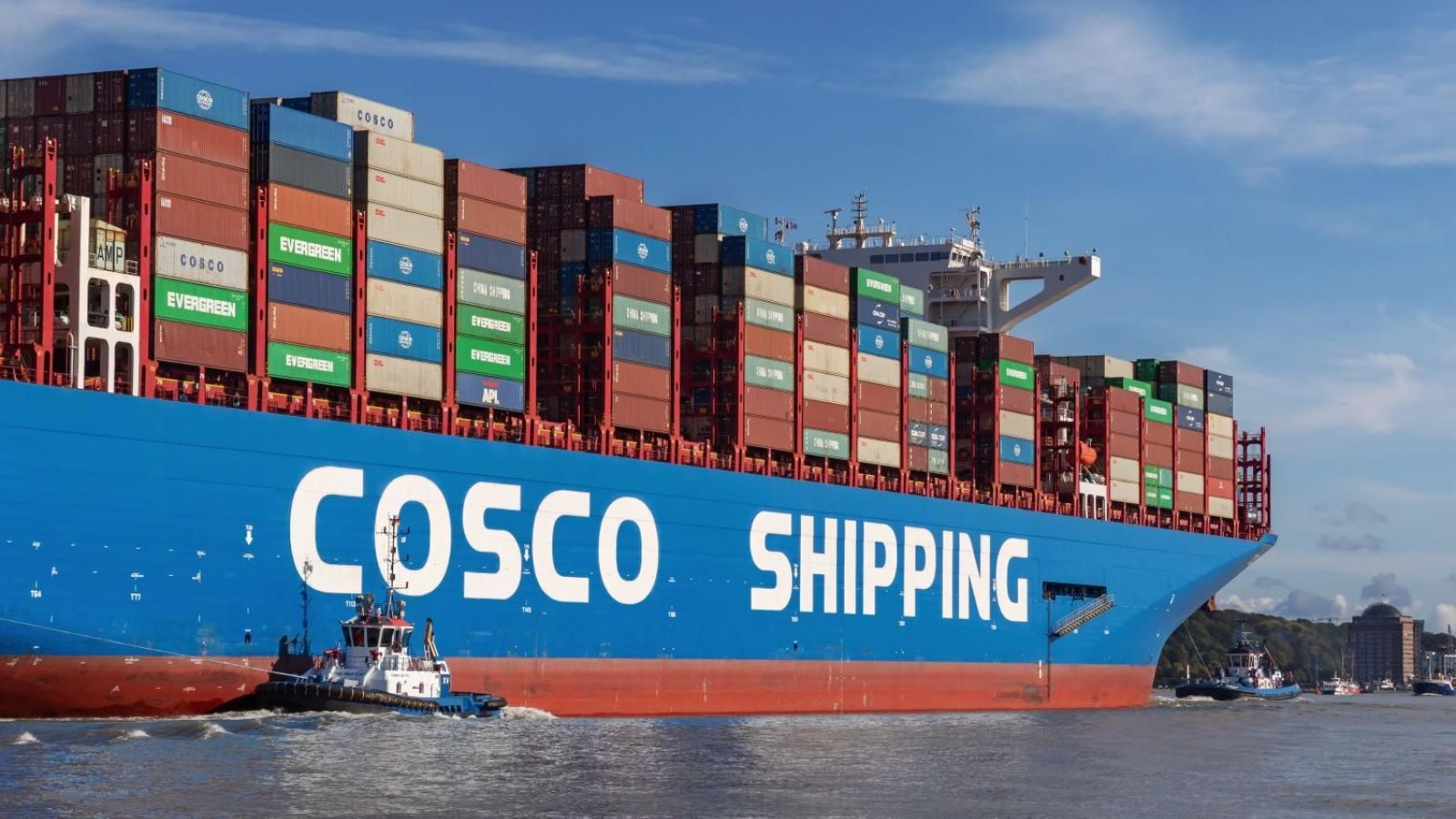
    Germany this week blocked Chinese state-owned shipping giant COSCO from acquiring one local business over national security concerns. The regulatory veto arrives as European authorities tighten oversight across transport networks and critical infrastructure assets connected to mainland firms.

    The decision immediately complicates European expansion plans for other Chinese logistics providers, including startup Speedaf. That company is working to establish a delivery hub in Switzerland and expand services into Ireland.

    Security reviews across European freight hubs

    European Union authorities have intensified investment screening across transport corridors and data-heavy distribution networks. Berlin’s intervention against COSCO sets a stricter regulatory precedent for cross-border logistics deals involving Chinese capital. Emerging operators seeking European footholds now face heightened compliance hurdles before securing warehouse assets or operational permits.

    Speedaf built its initial delivery model across developing trade lanes before targeting European distribution nodes. Establishing transport links through Switzerland and Ireland requires local clearance, which European regulators increasingly assess through the lens of strategic asset protection.

    Shifting trade dynamics between Brussels and Beijing

    Logistics operators from Asia now face higher regulatory friction when deploying direct capital into European domestic supply chains. For e-commerce platforms and Asian cross-border merchants relying on Chinese logistics operators, tighter European scrutiny raises the cost of building dedicated last-mile capacity across the bloc. Investors in cross-border logistics will need to weigh the likelihood of extended regulatory reviews or forced restructuring of planned European acquisitions.

    Trade friction between the European Union and China extends beyond freight infrastructure into high-value manufacturing. European trade officials recently held talks in Beijing addressing electric vehicle tariffs and a widening bilateral trade deficit, signaling broader economic disputes.

    Scrutiny turns to private logistics networks

    Chinese state-backed port operators have spent years purchasing stakes in European maritime terminals, drawing steady pushback from national security regulators. Berlin previously reviewed COSCO’s investment in Hamburg port infrastructure, setting the stage for wider screening across logistics assets.

    Speedaf’s planned expansion in Ireland and delivery network rollout in Switzerland now face review under these expanded European screening frameworks.

  • EU Prepares Hybrid Quotas as Chinese Imports Surge to 50,000 Units

    EU Prepares Hybrid Quotas as Chinese Imports Surge to 50,000 Units

    The European Commission is preparing import restrictions on Chinese hybrid vehicles after monthly shipments surged from 3,800 units in October 2024 to around 50,000 units by July 2026.

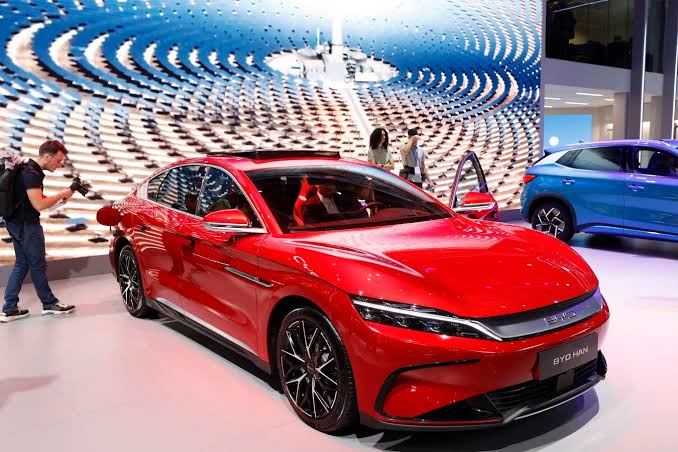
    Brussels moved toward safeguard procedures after China rejected requests for voluntary export curbs, as Chinese automakers including BYD and MG Motor increasingly pivot toward hybrid models in Europe.

    Safeguard Quotas Replace Pure Tariffs

    Under the proposed framework, Chinese hybrid models will enter the European Union under the standard 10 per cent automotive tariff up to an agreed volume ceiling. Any shipments exceeding that quota will face an additional special duty.

    Safeguard instruments apply to whole product categories rather than individual manufacturers, unlike the anti-subsidy duties on battery electric vehicles. European authorities can deploy them rapidly if sudden import surges threaten material injury to domestic car plants.

    China’s Ministry of Commerce rejected earlier requests for voluntary limits. The ministry stated that “so-called voluntary export restrictions seriously violate WTO rules and run counter to market principles and fair competition”.

    Hybrid Surge Bypasses Battery EV Duties

    Chinese automakers shifted their export focus toward plug-in and full hybrids after the European Union enacted anti-subsidy duties of up to 35.3 per cent on pure electric models in October 2024. That regulatory gap left hybrid powertrains exposed only to standard baseline import duties.

    Volume surged immediately. BYD registered 11,291 units of its Seal U DM-i plug-in hybrid in Germany alone between January and September, while SAIC Motor’s MG brand expanded its European presence through full-hybrid drivetrains.

    Total hybrid arrivals from China climbed from 3,800 vehicles in October 2024 to roughly 50,000 units by July 2026. For EU policymakers, the influx sustained price pressure on domestic carmakers while increasing fleet emissions contrary to regional climate targets.

    Local Assembly Accelerates Across Europe

    Trade barriers on fully built imports are driving Chinese investment into European production hubs. BYD begins series production at its new manufacturing plant in Szeged, Hungary, before the end of the year.

    Chery is assembling vehicles alongside Ebro at a joint facility in Barcelona. Xpeng has established semi-knocked-down assembly operations with Magna Steyr in Graz, Austria. These footprints mirror agreements Japanese manufacturers struck with European authorities four decades ago, trading import caps for regional factory investments.

    For Asian supply chains, the pivot from finished vehicle shipping to local assembly shifts freight demand toward battery cells, sub-assemblies, and specialized automotive components.

    Talks Underway in Beijing

    European Union Trade Commissioner Maroš Šefčovič opened direct negotiations in Beijing with Chinese Commerce Minister Wang Wentao. The two sides are discussing export caps and minimum price undertakings across both electric and hybrid categories.

    EU trade officials want an enforceable ceiling that shields domestic manufacturing while local factories ramp up competitive electrified powertrains. Bernd Lange, Chairman of the European Parliament’s Trade Committee, stated: “The goal is to flatten the import curve and give the European automotive industry time to do its homework.”

    Negotiators must now settle terms before the European Commission formally launches the safeguard procedure. Import volumes through the final quarter will determine the quota baseline.

  • China Rejects EU Push to Cap Hybrid Vehicle Exports

    China Rejects EU Push to Cap Hybrid Vehicle Exports

    China’s commerce ministry has rejected European Union proposals to voluntarily restrict hybrid vehicle exports, stating that such measures seriously violate World Trade Organization rules.

    The ministry issued a statement on Friday in response to reports that the EU wants Beijing to limit hybrid shipments or face higher tariffs.

    EU hybrid imports from China surged from 3,800 vehicles in October 2024 to 50,000 in July 2026 as average prices fell over the same period.

    The Tariff Shift That Triggered Hybrid Volumes

    European policymakers created this opening in October 2024 by imposing countervailing duties on battery electric vehicles. Tariffs reached 45 per cent on pure electrics while hybrids remained taxed at 10 per cent. Chinese carmakers responded by redirecting production lines toward plug-in and traditional hybrids. Pure battery models met heavy import friction. Hybrid passenger cars moved freely through European ports at lower retail prices.

    Pricing pressure hit legacy European carmakers immediately. European producers idled assembly lines and cut jobs across plants in Germany, France and Italy. Trade officials in Brussels argue that uncurbed hybrid volumes threaten domestic manufacturing employment. They now seek an informal ceiling before considering a formal duty hike.

    Domestic Cooling Forces Carmakers Abroad

    Auto manufacturers in China must defend access to foreign dealerships. Domestic sales of new energy vehicles in China fell 4.6 per cent year on year in August. Assembly lines hold excess stock that local buyers cannot absorb. Export channels supply the volume needed to keep factories running profitably.

    Total vehicle exports from China jumped 65.3 per cent year on year to 1.01 million units in August, according to data from the China Association of Automobile Manufacturers. New energy vehicles accounted for 526,000 of those shipments. That represented a 130 per cent increase compared to the same month a year earlier. Overseas shipments made up 52.1 per cent of all Chinese vehicle exports in August.

    Legal Friction Replaces Bilateral Compromise

    Beijing is setting a rigid legal perimeter rather than offering commercial concessions by framing the dispute around WTO compliance. Voluntary export restraints fell out of favour under multilateral trade treaties in the 1990s. Chinese negotiators are using that status to box in European regulators. A unilateral tariff increase by the European Commission will likely trigger immediate dispute filings in Geneva alongside targeted retaliatory duties on European goods.

    Retail networks and franchise dealers in Europe face immediate supply chain uncertainty. Showrooms that added Chinese hybrid brands to offer affordable entry-level models risk sudden inventory price adjustments if the bloc implements provisional tariffs. Component suppliers also face disruptions if Chinese brands freeze showroom rollouts across secondary European markets.

    Factory Investments and the Next Regulatory Deadlines

    European officials hoped tariff pressure would force Chinese automakers into building local factories or signing joint ventures with struggling European plants. Several Chinese brands have evaluated production sites across Central and Eastern Europe. Greenfield automotive projects take three to four years before producing finished cars at scale. An export cap would starve local retail networks long before domestic European assembly begins.

    Envoys from Brussels and Beijing will meet in October 2026 for high-level bilateral trade discussions. The key figure to monitor is whether Chinese hybrid imports hold above the 50,000-unit monthly mark when third-quarter shipment data is compiled.

  • EU Warns Pakistan That GSP Plus Benefits Cannot Be Taken for Granted

    EU Warns Pakistan That GSP Plus Benefits Cannot Be Taken for Granted

    The European Union has warned Pakistan that trade preferences under the Generalised Scheme of Preferences Plus cannot be taken for granted as the current framework expires at the end of this year.

    EU Ambassador Raimundas Karoblis told Dawn that Islamabad must address compliance issues under 27 international conventions before reapplying for the successor regime ahead of the Dec 31, 2028 transition deadline.

    Tariff Exposure for Apparel Suppliers

    European buyers take roughly 28 per cent of Pakistan’s total exports. Nearly 90 per cent of those shipments qualify for duty relief under the Generalised Scheme of Preferences Plus framework, known as GSP Plus.

    Textile and apparel factories generate between 70 per cent and 76 per cent of sales to the European market. Leather goods, processed foods, and beverages also rely on zero-tariff access. Without it, local producers struggle against rivals in South and Southeast Asia.

    Pakistan has held GSP Plus status since 2014. The current regulation expires at the end of this year, but existing beneficiaries receive a transition window running until December 31, 2028. European officials stress that the transition does not guarantee automatic inclusion in the next cycle.

    The situation is not certain. And, of course, GSP+ preferences cannot be taken for granted.

    New Benchmarks and Regional Competition

    For European fashion brands and sourcing heads, losing preferential tariffs on Pakistani cotton and knitwear would shift costs overnight. Standard tariffs would add immediate import duties on garments. That would wipe out margins against competitors in Bangladesh, India, and Vietnam.

    Brussels has stripped trade perks before. Sri Lanka lost its GSP Plus standing in 2010 over human rights issues, forcing clothing exporters there to renegotiate pricing across European retail accounts. Pakistan faces partial or full suspension during the transition window if regulators find compliance failures.

    Stricter Conditions for Islamabad

    A European Commission review covering the 2023 to 2025 period cited compliance problems in Pakistan, noting regression on forced labour, judicial independence, and civil rights. Outgoing Foreign Office spokesperson Tahir Andrabi stated that the report understates the country’s reform progress across international treaties.

    The successor framework expands qualifying criteria from 27 international conventions to 32. Islamabad has ratified the five additional treaties. Still, European monitors require a detailed action plan with verified metrics before granting approval under the new system.

    Formal European Commission monitoring reviews will run ahead of the December 31, 2028 transition deadline. Those findings will determine whether Pakistani garment manufacturers retain zero-tariff access to European ports.