Tag: ev batteries

  • EV Battery Recyclers Beyond China Struggle as Capacity Sits Underused

    EV Battery Recyclers Beyond China Struggle as Capacity Sits Underused

    Global capacity for recycling electric vehicle batteries sits underused this week as consumer adoption slows and processing volumes concentrate heavily inside China. Total operational capacity now exceeds the actual volume of discarded battery packs available for processing.

    The mismatch leaves recyclers in markets outside China struggling to secure sufficient feedstock to run their extraction plants profitably. Japanese nonferrous metals producer JX Advanced Metals maintains operational facilities engineered to extract three critical metals, lithium, nickel and cobalt, from spent battery packs, but faces a tight raw material market.

    Feedstock Shortages Squeeze Operating Margins

    Recycling facilities rely on steady streams of manufacturing scrap and end-of-life battery packs to maintain baseline utilization. When electric vehicle adoption lags behind initial automotive forecasts, fewer vehicles reach end-of-life status, delaying the volume of scrap delivered to recyclers.

    China controls the majority of existing midstream refining and battery recycling capacity. That geographical concentration pulls available regional scrap toward Chinese processors, leaving independent operators in Japan, South Korea and Western markets to compete for scarce discarded cells.

    Regional Imbalances in Metal Recovery

    Processing plants require high throughput to offset the capital costs of hydrometallurgical and pyrometallurgical extraction systems. Without steady volumes of spent cells, recyclers face rising unit costs while competing against large-scale Chinese refiners that benefit from integrated domestic supply chains.

    For automakers and electronics manufacturers, the imbalance creates supply chain exposure. Slower domestic recycling development outside China delays closed-loop raw material procurement for critical battery metals such as lithium and nickel.

    Slower Vehicle Adoption Shifts Timelines

    Automakers originally calibrated battery recycling investments to meet expected surges in vehicle replacement cycles. Slower customer uptake of purely electric models has stretched the average lifespan of internal combustion and hybrid fleets, postponing the anticipated wave of retired battery packs.

    Facilities built in anticipation of immediate material shortages are now absorbing higher maintenance and holding costs. Companies that built extraction units early must now navigate extended ramp-up periods before regional vehicle retirements generate adequate feedstock.

    Scrap Flows and Supply Chain Realignment

    Industrial processors continue to adjust processing schedules to match actual recovery volumes. Securing reliable scrap contracts from regional battery cell producers and automotive dismantlers remains the primary hurdle for non-Chinese operators.

    The near-term test rests on whether domestic battery scrap yields from local manufacturing plants will rise enough to bridge the feedstock gap before older electric vehicles enter salvage yards in volume.
  • LG Energy Solution to Supply 46100 Battery Cells to Mercedes-Benz

    LG Energy Solution to Supply 46100 Battery Cells to Mercedes-Benz

    LG Energy Solution will supply Mercedes-Benz with a new 46100 cylindrical battery cell for the German automaker’s next-generation electric vehicles starting in 2028.

    The agreement expands a series of four long-term supply contracts signed between the two companies since October 2024.

    New Dimensions for Cylindrical Packs

    With a diameter of 46 millimetres and a height of 100 millimetres, the 46100 format is an unannounced variation within the broader 46-series family. The cylindrical format gained industry prominence after Tesla adopted the 4680 size. Other manufacturers have experimented with 4695 and 46120 designs. The 100-millimetre height fits the specific packaging requirements of Mercedes-Benz vehicle architectures.

    Pilot manufacturing for the 46100 cell will take place at LG Energy Solution’s domestic facility in Ochang, South Korea. That site will calibrate machinery and refine production tolerances before equipment ships to Europe. Mass production will run at the group’s manufacturing complex in Wrocław, Poland, where line installation begins next year. The supplier is also weighing capital expenditures for dedicated module assembly lines at the Polish site to deliver complete clusters directly to vehicle assembly plants.

    Diversification Across Cell Geometries

    Automakers in Europe and Asia are rethinking their dependence on pouch and prismatic cell formats. Cylindrical cells offer superior structural stability and heat dissipation. That reduces the risk of thermal runaway in high-output drivetrains. Mercedes-Benz previously relied heavily on pouch cells from suppliers including SK On and Farasis Energy. Safety recalls and module complexity pushed the brand toward mixed procurement strategies.

    LG Energy Solution has built out manufacturing capacity for varied cylindrical specifications. The company started production of 4695 cells at the Ochang plant late last year. It is preparing to manufacture cylindrical units ranging from 4680 to 46120 specifications at its facility in Arizona by the end of this year. Adding a 46100 line gives the manufacturer a customized offering for premium European carmakers without redesigning its core cell chemistry.

    Procurement Rivalry Among Korean Suppliers

    Mercedes-Benz is maintaining a competitive supplier base across Asian manufacturers rather than granting exclusivity to a single partner. In April, the carmaker signed its first long-term electric vehicle battery contract with Samsung SDI. China’s CATL continues to supply large volumes across multiple vehicle platforms. Sourcing from multiple cell makers prevents bottlenecks and keeps downward pressure on pricing per kilowatt-hour.

    For Korean battery producers, securing multi-year European supply pacts offsets softer domestic electric vehicle adoption and tariff uncertainties in North America. The challenge sits in production yield rates for large-diameter cells. Scaling 46-millimetre lines requires tight welding tolerances and rapid tabless assembly processes. Both have created ramp-up delays across the sector.

    Manufacturing Milestones Ahead

    Validation testing on the Ochang pilot line will finish before commercial tooling is installed in Poland next year. Initial volume shipments will follow for the 2028 model rollout, building on supply agreements executed over the past two years as Mercedes-Benz overhauled its platform roadmap.

  • Sunwoda Unveils 15C Flash Battery to Challenge BYD in Fast Charging

    Sunwoda Unveils 15C Flash Battery to Challenge BYD in Fast Charging

    Sunwoda Electric Vehicle Battery unveiled a 15C flash charging system in Zaozhuang on September 17 that charges an electric vehicle from 10 to 97 per cent in nine minutes.

    The system matches the benchmark room-temperature charging speed established by market leader BYD. It also comes with a company commitment to deploy 10,000 megawatt charging stations by the end of 2027.

    Charging Performance and Cold Weather Specs

    At room temperature, the battery charges from 10 to 70 per cent in five minutes. That adds 100 kilometres of driving range in 60 seconds. Total driving range exceeds 700 kilometres on a full charge.

    Cold weather tests show the pack charges from 10 to 97 per cent in 15 minutes at minus 20 degrees Celsius. Sunwoda attached a warranty covering 10 years or 300,000 kilometres to non-commercial vehicles with unlimited ultrafast charging cycles, targeting buyer anxiety over high-current cell degradation.

    Hardware Architecture and Grid Storage

    Hardware diagnostics rely on proprietary cell sensors, an energy domain controller and a cloud monitoring engine. Sunwoda stated the platform identifies more than 20 separate failure modes between two and 10 days before a breakdown. Its detection rate reaches 99.77 per cent.

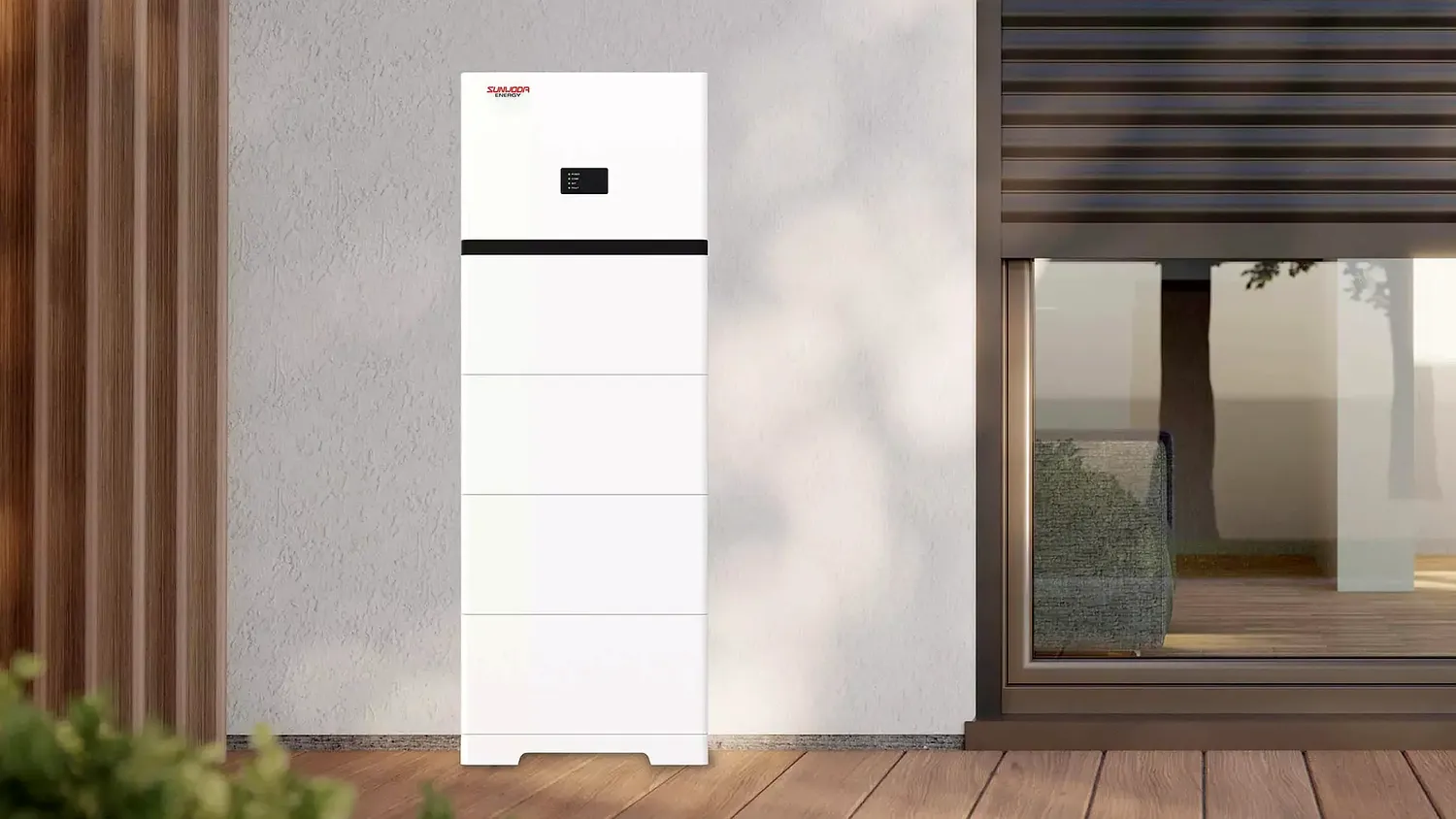
    On the grid side, the company introduced an integrated platform that bundles solar generation, stationary battery storage, liquid-cooled charging posts and megawatt-scale dispensers. The multi-brand terminal design allows third-party automakers to access the high-voltage stalls under commercial sharing agreements.

    The Race for Megawatt Infrastructure

    China’s EV power race has shifted from laboratory power ratings to physical network footprint. BYD crossed its 10,000th flash charging station milestone on August 28. It maintains a target of 20,000 operational stations by the end of 2026.

    Other domestic manufacturers are pushing similar power thresholds. Dongfeng introduced a prototype 1,500-kilowatt charger on July 29, matching BYD’s peak terminal rate. FAW Hongqi posted July laboratory results showing a 10-to-70 per cent charge in three minutes and 41 seconds with battery partner CNET. In Hong Kong, Xpeng energised its first one-megawatt X-Energy stall with 400 kilowatt-hours of local storage on September 15.

    Commercial Rollout and Factory Timelines

    Sunwoda EVB faces a crowded manufacturing landscape. CATL and BYD command more than 60 per cent of China’s domestic vehicle battery volume. Total battery installations across the country grew 26.3 per cent year-on-year in August, but second-tier cell makers must prove station economics to justify high capital spending on utility-scale grid connections.

    Initial announcements omitted capital expenditure figures, manufacturing site allocations, commercial vehicle partnerships and the first production passenger car chosen for the 15C pack. Filings with the Ministry of Industry and Information Technology will soon show which automaker integrates the hardware first ahead of the 2027 station rollout target.

  • China Orders Year-Long Auto Safety Review as EV Deliveries Fall 12.5 per Cent

    China Orders Year-Long Auto Safety Review as EV Deliveries Fall 12.5 per Cent

    China’s industry ministry has launched a nationwide quality inspection campaign across the auto sector. The decision follows a 12.5 per cent drop in domestic electric vehicle deliveries in the first seven months of 2026.

    Roughly 100 domestic manufacturers fall under the one-year regulatory review. Officials are targeting smart driving features, vehicle design standards and battery hardware. Vice-Minister of Industry and Information Technology Xin Guobin told a Beijing press conference that authorities will bar new auto technologies from the market if they fail stricter verification protocols.

    Stricter rules for driver assistance

    Regulators stepped in following fatal crashes and a rise in complaints over software malfunctions and battery defects. In central China’s Anhui province, three people died when a Xiaomi SU7 crashed into a barrier under driver-assistance software. The system alerted the driver only two seconds before impact. State media also reported an increase in formal battery quality complaints filed with public inspection bodies this year.

    Automakers must now redirect capital toward core manufacturing controls instead of racing to roll out experimental software. For years, domestic brands used rapid updates to autonomous driving and digital cockpits to stand out in crowded showrooms. Stricter approvals will slow product rollouts across the board. That gives established global marques breathing room while putting cash-strapped local startups under immediate strain.

    Price wars and dropping sales

    Showroom traffic is contracting sharply as the checks begin. Data from the China Passenger Car Association showed overall passenger vehicle deliveries fell 20.9 per cent year on year in July to 1.46 million units. Electric vehicle deliveries dropped 3.9 per cent to make up 65.1 per cent of that total. It was the seventh straight month of declining volume.

    Price cuts have failed to revive foot traffic as consumer subsidies taper off. Domestic manufacturers delivered 5.67 million electric vehicles between January and July, down from the same period a year earlier. RetailNews Asia will track whether the ministry’s inspection guidelines, scheduled to take effect within weeks, trigger formal product recalls or delayed model launches in the fourth quarter.