Retail News CRM

Tag: even

  • Elon Musk’s X Tests New Strategy To Enhance User Engagement And Personalize Content

    Elon Musk’s X Tests New Strategy To Enhance User Engagement And Personalize Content

    The issue of social media links driving users away from the platform has been a longstanding challenge. A new solution is being tested by Elon Musk’s X. The aim is to retain users on the app even as they navigate away to external links.

    Enhancing User Engagement on X

    Users of X on iOS may soon observe a change when they tap on links within the app. Rather than entirely exiting the current post, the link will launch without obscuring the original post and its interactive features such as like, reply and repost buttons.

    Nikita Bier, the Head of Product, described the change as a strategy to maintain user engagement. Currently, full-screen opening of links often results in users not returning to the original post to engage, a practice that negatively impacts engagement metrics.

    With this alteration, rather than the webpage taking over the entire screen, the initial post will minimize to the bottom of the screen, allowing users to continue to interact with it. This minor modification aligns with Musk’s broader objective for X – to develop an “everything app” where users can read, shop, converse and browse without ever needing to exit the app.

    Improving Performance of Linked Posts

    Traditionally, posts containing links have shown lower performance compared to regular ones on X and beyond. The newly proposed design is aimed at rectifying this by retaining users within the app rather than redirecting them to a browser tab. Consequently, this will aid the algorithm in better understanding the user’s content preferences.

    Recently, Elon Musk disclosed plans to enhance X’s recommendation system. The company plans to eliminate traditional engagement indicators like likes and replies from the algorithm within the next four to six weeks. Instead, Grok, X’s built-in AI, will analyze more than 100 million posts and videos daily to predict user preferences. The exact workings of Grok’s predictive capabilities remain to be seen.

    AI-Dominated Content Curation

    The concept of AI taking full control of what content appears on X’s platform isn’t new, but it is becoming increasingly concrete. Grok will have the capability to read and watch every piece of content on the platform, enabling it to suggest posts that it believes would be of interest to users, regardless of the account’s popularity.

    However, such extensive AI control comes with its own set of risks. While it could potentially make X more streamlined and personalized, concerns about bias and control remain, particularly given Grok’s imperfect track record with content decisions.

    Questions & Answers

    What is the primary goal of the changes being made to X?
    The main goal is to enhance user engagement by keeping users within the app even as they access external links.

    How does X plan to improve the performance of posts with links?
    X is planning to allow users to access linked content while still being able to interact with the original post, thereby keeping users within the app.

    What role will AI play in X’s new content curation strategy?
    Grok, X’s built-in AI, will analyze over 100 million posts and videos daily to predict users’ preferences, playing a key role in deciding what content is shown to users.
  • VR is dead! And even Apple and Samsung can’t save it

    VR is dead! And even Apple and Samsung can’t save it

    My Decade-Long Journey with Virtual Reality

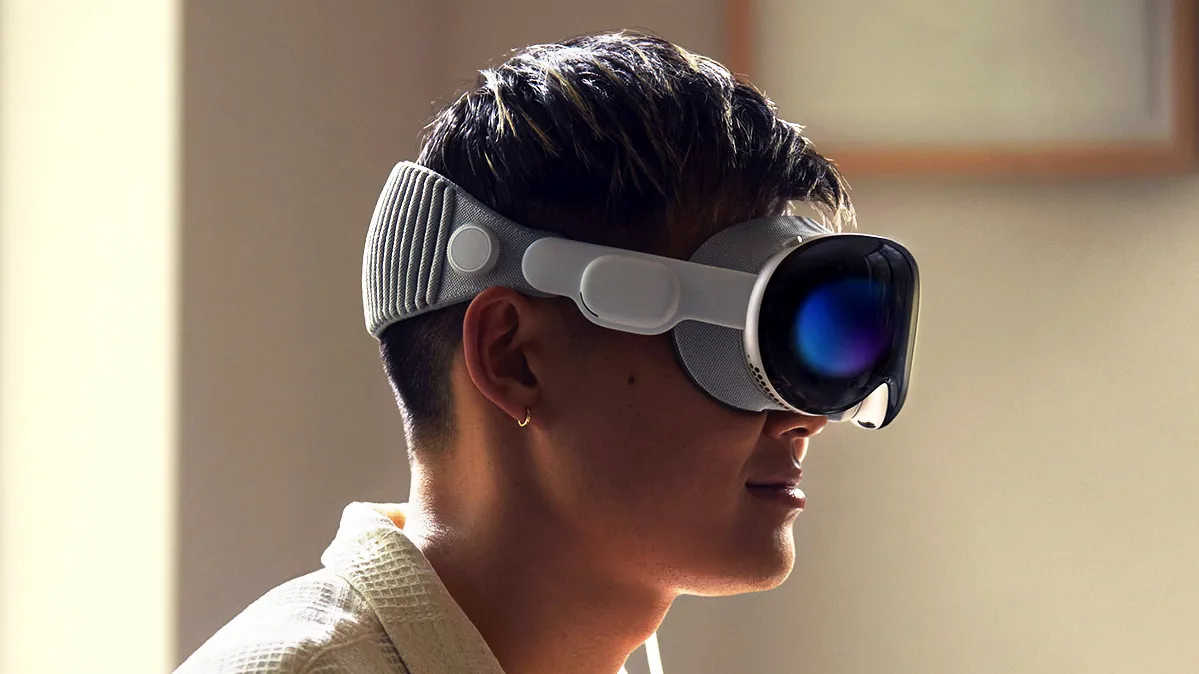
    Nearly a decade ago, I was struck by the potential of virtual reality (VR) technology when I had my first experience with an early prototype of the HTC Vive. The dynamics of VR were expected to dominate the tech industry and influence lifestyle on a global scale. However, the present scenario seems to paint a different picture with growing rumors of Apple’s plans to transform the Vision Pro headset into a lighter, more affordable, augmented reality system. This has made me question the success trajectory of VR, a technology that was expected to revolutionize our world.

    The Limitations of Virtual Reality

    As time went on, some of the issues that initially seemed like minor growing pains have turned out to be significant drawbacks. The most persistent of these is the discomfort associated with VR headsets. The first generation HTC Vive, weighing 470 grams, proved to be quite tiresome to use after just fifteen minutes. This discomfort has only increased with the Apple Vision Pro headset, which weighs between 600 and 650 grams. This weight does not include the additional 350 grams of the battery pack that’s meant to be carried in your pocket.

    Another deterring factor is motion sickness, commonly referred to as VR sickness, characterized by symptoms such as sweating and eye strain. Although one can adjust to these physical discomforts over time, the sense of disconnect from the real world remains a significant negative factor.

    The Challenge of Affordability

    The high cost of VR technology has been a significant barrier to its widespread adoption. The Apple Vision Pro comes with a hefty price tag of $3,500, whereas the HTC Vive retails for $799. These are not price points that would encourage mass adoption of the technology. To add to this, a report from analyst firm Omdia indicated a 10% decrease in sales of consumer VR headsets in 2024.

    Developers’ Skepticism Towards VR

    Interestingly, there’s a growing skepticism towards VR even among developers. A recent study found that only 13% of developers, who do not currently work in VR, envision shifting their focus to this technology in the next 5 years. This is not a promising figure for the future of VR. The software scene also seems to lack innovative advancements that could make VR indispensable.

    The Future: Augmented Reality?

    The Samsung Galaxy XR headset, which has been leaked extensively, shows the Korean company’s attempt to mainstream the headset Apple Vision Pro couldn’t. However, the Galaxy XR does not seem to offer anything significantly different. On the other hand, Augmented Reality (AR) seems to be making its mark by offering features that are more user-friendly and essential. AR glasses enhance users’ interaction with their environment without the physical discomforts associated with VR.

    Questions & Answers

    What is one of the biggest challenges VR technology faces?
    One of the biggest challenges VR technology faces is the physical discomfort users experience when using VR headsets for extended periods. This includes motion sickness and the heavy weight of the headsets.

    How has the cost of VR technology affected its adoption?
    The high cost of VR headsets has been a significant barrier to its widespread adoption. With price points in the hundreds or even thousands of dollars, many potential users are discouraged from purchasing these devices.

    What is the outlook for VR according to developers?
    A recent study showed that only 13% of developers who do not currently work in VR can see themselves shifting focus to this technology in the next 5 years, pointing to a bleak outlook for the future of VR.

  • Samsung Strengthens Global Audio Dominance With Strategic Acquisition Of Prominent Audiophile Brands

    Samsung Strengthens Global Audio Dominance With Strategic Acquisition Of Prominent Audiophile Brands

    Samsung, through its subsidiary Harman, has further solidified its standing in the global audio market following the acquisition of a number of prominent audiophile brands. This move builds on the Korean corporation’s already robust audio portfolio, which was boosted by an $8 billion deal to acquire Harman in 2016.

    Notable Acquisitions

    Samsung has significantly deepened its footing in the global audio industry by acquiring a host of legendary brands, including Bowers & Wilkins, Denon, Marantz, Polk, and others. These brands were acquired when Harman purchased Sound United, previously the consumer audio wing of Masimo. This move follows a significant legal payout by Masimo to Apple, amounting to $250.

    The acquisition, valued at $350 million and initially announced in May, is set to further enhance Samsung’s already impressive audio brand offerings. Prior to this deal, Samsung, via Harman, owned such popular brands as Harman Kardon, JBL, and AKG. The purchase of Sound United is referred to as a “strategic milestone” by Harman.

    Impacts on Samsung’s Products Line

    While the acquisition of Sound United is undoubtedly significant, it is unlikely to bear immediate changes in Samsung’s product line. For instance, consumers shouldn’t expect to find a Bowers & Wilkins speaker or headphones included with the Galaxy S26. Sound United will continue to function as a standalone business within Harman’s lifestyle division. The intent behind this arrangement is to allow each audio brand to maintain its distinct identity.

    Despite the preservation of individual brand identities, the newly acquired brands will have access to Harman’s resources to facilitate growth and expansion. Concurrently, Harman anticipates leveraging the expertise and talent that will be introduced via Sound United. This approach mirrors Samsung’s strategy with Harman, which operates autonomously.

    The Preference for Convenience Over High Fidelity

    While there is potential for Samsung to enhance its phone audio capabilities and dive deeper into mobile hi-fi, the overall market trend leans towards convenience. The majority of consumers prefer the comfort and ease of listening to compressed audio from streaming services via Bluetooth. This trend, which appears to have overcome the demand for high fidelity audio, is unlikely to change in the foreseeable future.

    Questions & Answers

    What brands did Samsung recently acquire?
    Samsung’s subsidiary, Harman, recently acquired several prominent audio brands, including Bowers & Wilkins, Denon, Marantz, Polk, and others through the purchase of Sound United.

    What impact will this acquisition have on Samsung’s product line?
    The acquisition is not expected to bring immediate changes to Samsung’s product line. Sound United will operate as a separate business under Harman’s lifestyle division, and each audio brand will retain its unique identity.

    What is the current trend in the audio market?
    The current trend in the audio market leans towards convenience, with most consumers preferring to listen to compressed audio from streaming services via Bluetooth. This trend seems to have overtaken the demand for high fidelity audio.

  • Apple To Revolutionize Mixed Reality With Next-gen Vision Pro 2: New Chip, Enhanced Performance

    Apple To Revolutionize Mixed Reality With Next-gen Vision Pro 2: New Chip, Enhanced Performance

    Apple’s Vision Pro, rather than relying solely on one chip for power, utilizes both the M2 and the R1 chips. In a recent development, reports suggest that Apple plans to incorporate the R2 chip in the next iteration of its premium Mixed Reality (MR) headset, adding a new feature to the device’s already impressive specifications.

    Delayed Announcement

    The successor to the Vision Pro was initially anticipated to be unveiled this month, along with the iPhone 17 series. To the disappointment of many MR aficionados, this did not occur, as the event was exclusively dedicated to the launch of the newly redesigned phones. Many speculate that the delay in the headset’s announcement is due to the incorporation of the R2 chip, pushing the launch to next year.

    Towards A More Capable Headset

    The new R2 chip is said to be created using TSMC’s 2 nm process, a significant advancement from the R1 chip. Combined with the M4 processor — speculated to be part of the new headset — the Vision Pro 2 promises to deliver significantly enhanced performance. The R-series chips are designed to work in sync with the M-series processor, managing the input from the headset’s numerous sensors and cameras. This functionality made the Vision Pro a feature-packed device, a contributing factor to its steep price tag of $3,499.

    The 2 nm R2 chip is expected to process these inputs even quicker, thereby enabling the new Vision Pro to support more complex applications. However, this improvement might not be noticeable for an average user. The general performance will be significantly improved, but not necessarily in a discernible manner.

    Staying Relevant in the XR Industry

    The new Vision Pro headset is primarily intended to ensure Apple’s relevance in the Extended Reality (XR) industry. The key ambition for the company is the development of AR smart glasses, with the aim to outpace Meta in the market. Recently, the new Meta Ray-Ban Display smart glasses were unveiled. While these glasses don’t offer true AR, they mark the company’s entry into the AR market, reminding Apple to reiterate its commitment to XR devices.

    Questions & Answers

    What significant changes are expected in the successor to the Apple Vision Pro?
    The successor is expected to incorporate the R2 chip, which is a significant enhancement from the R1 chip used in the current model.

    What is the speculated release date for the successor to the Vision Pro?
    The release is projected to be delayed till next year, due to the proposed incorporation of the new R2 chip.

    Why is Apple developing the new Vision Pro headset?
    The new Vision Pro headset is primarily a measure to maintain Apple’s presence and relevance in the rapidly growing Extended Reality (XR) industry.