Tag: Evolution

  • Indonesia Sparks Digital Evolution in Retail with First Nationwide Connected Packaging Contest

    Indonesia Sparks Digital Evolution in Retail with First Nationwide Connected Packaging Contest

    Over 40 universities are participating in a national initiative to explore how product packaging can be transformed into a constant customer engagement platform through augmented reality. This comes at a time when retailers and brands are grappling with increased customer acquisition costs, diminishing organic social media reach, and the growing need to cultivate direct customer relationships. In response to these challenges, a new avenue for marketing is emerging in the form of product packaging, a tool consumers already bring home with them.

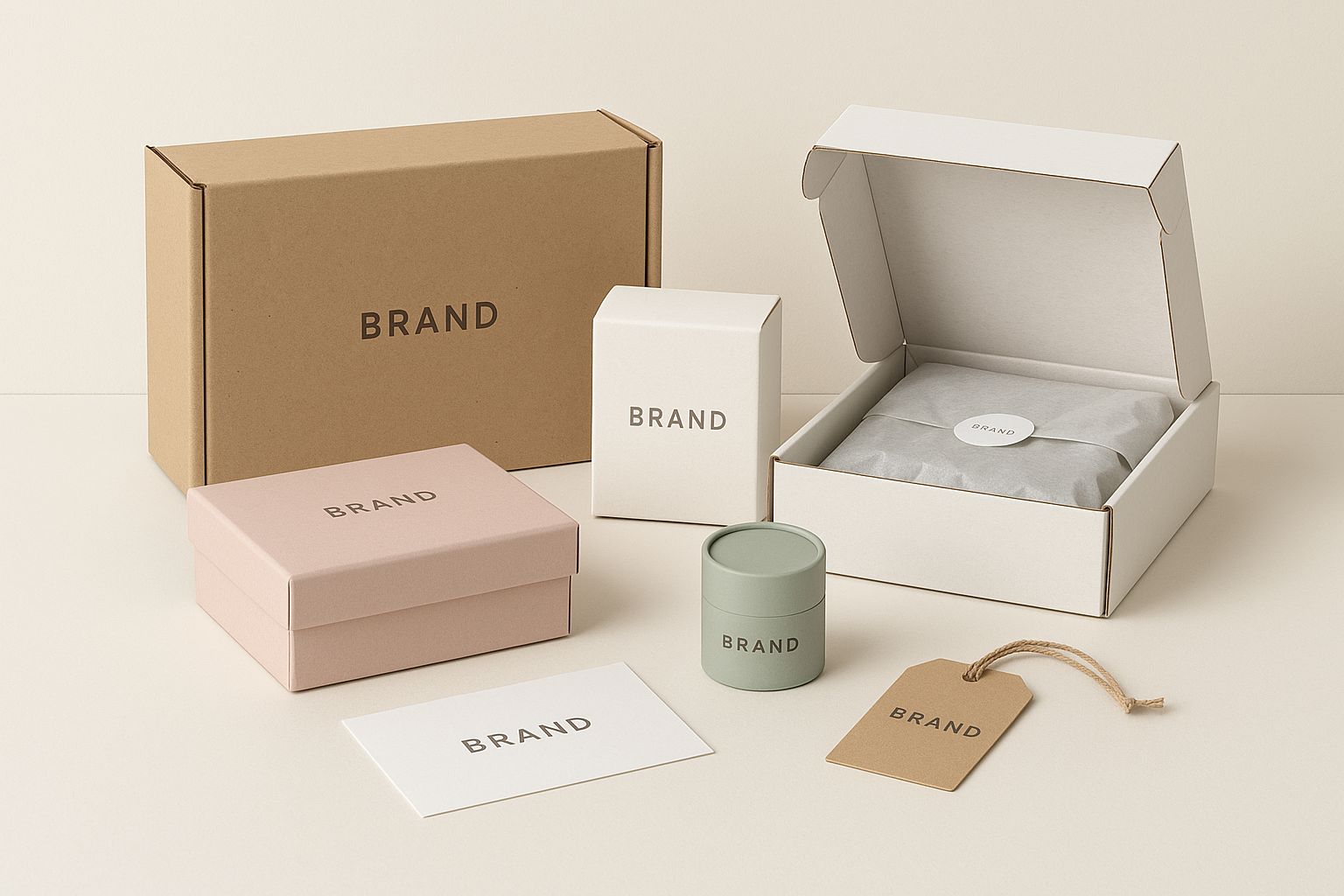
    Traditionally viewed as a mere protective container or branding surface, packaging is increasingly transitioning into a digital touchpoint capable of extending the customer journey beyond the point of purchase. This connects physical products with digital experiences on the web, enabling brands to continue educating consumers, tell more elaborate product narratives, verify authenticity, provide after-sales services, encourage repeat purchases, and foster direct customer interaction even after products have left the retail shelves.

    This transformation underlines a wider evolution happening in retail, where every physical product has the potential to transform into an owned media channel. This allows brands to maintain direct communication with consumers, minus the reliance on paid advertising or third-party digital platforms.

    Turning Packaging into Interactive Retail Experiences

    Recognizing this opportunity, Singapore-based MarTech firm HOVARLAY has launched the Nusantara Packaging Experience Awards (NPEA) 2026, Indonesia’s inaugural national competition focusing on connected packaging innovation.

    Participants from over 40 universities and polytechnics across Indonesia have come together for this competition, which encourages students to reimagine traditional packaging as a strategic business asset. It is not just about visual design; it’s about strengthening customer interactions, improving retail experiences, and creating tangible value for brands.

    The participants, focusing on Indonesia’s rich oleh-oleh industry, have been tasked to revamp regional food, beverage, and souvenir packaging using HOVARLAY’s no-code, web-based augmented reality platform. By merely scanning with a smartphone, consumers can unlock interactive digital experiences that range from destination storytelling and artisan heritage to product education, loyalty programs, recipes, promotions, sustainability information, and brand experiences.

    Seizing Opportunity through Connected Packaging

    For Indonesia, one of Southeast Asia’s most extensive consumer markets, this opportunity is particularly notable. With its vibrant ecosystem of regional specialty products and tourism-driven retail, connected packaging offers local brands the chance to stand out and emphasize the cultural stories behind their products.

    While technologies like QR codes have become increasingly familiar to consumers, their use has largely been confined to payments or basic product information. Through NPEA, students are challenged to broaden their vision and transform packaging into an interactive retail experience that fluidly merges physical products with digital storytelling and customer engagement.

    Questions & Answers

    1. How is packaging evolving in the retail industry?
    Packaging is no longer just a protective container or branding surface. It’s becoming a digital touchpoint that extends the customer journey beyond the point of purchase, by linking physical products to digital experiences.

    2. What is the Nusantara Packaging Experience Awards (NPEA) 2026?
    The NPEA 2026 is Indonesia’s first national competition dedicated to connected packaging innovation. It pushes students to reconsider traditional packaging and view it as a strategic business asset that can strengthen customer engagement and enhance retail experiences.

    3. How can connected packaging benefit brands and consumers?
    Connected packaging can extend customer engagement beyond the point of purchase, providing ongoing education and support. For brands, it creates an owned media channel for direct communication with consumers, gathering valuable engagement insights for future marketing and customer retention strategies.


  • Instagram’s Hashtag Revolution: Limiting Tags Per Post, A Millennial Nightmare or Gen Z Evolution?

    Instagram’s Hashtag Revolution: Limiting Tags Per Post, A Millennial Nightmare or Gen Z Evolution?

    Over the past decade, hashtags have stood as a vital feature of Instagram, rarely experiencing any significant changes since their introduction in 2011. However, Meta, the tech giant behind Instagram, is in the process of testing what could potentially be the most significant change to the platform’s hashtag system to date.

    Testing Hashtag Limitations

    Instagram appears to be experimenting with restricting the number of hashtags users can include in their posts. Some users have taken to online forums to voice their experiences with the new limitations, reporting that the platform is preventing them from adding more than three hashtags to a post’s description. If users attempt to go beyond this limit, they are met with an error message.

    This restriction has not been officially announced by the platform and does not appear to be universally applied to all accounts. It seems that Meta is currently in the process of testing the change on a select number of accounts before deciding whether to roll it out platform-wide. Alternatively, the feature could be in the early stages of a gradual rollout, similar to Instagram’s recent interface redesign.

    Instagram’s Changing Landscape

    When Instagram launched its hashtag feature in 2011, it became one of the most effective methods for users to discover posts related to specific topics. For many users, particularly those looking to reach beyond their immediate follower base, the use of up to 30 hashtags per post was key to expanding their reach.

    However, the perceived importance of hashtags has been diminishing in recent years. Instagram’s ‘Explore’ page now curates posts and reels for users based on a variety of factors, including content and description, rather than just hashtag use. Instagram CEO Adam Mosseri has also publicly stated that hashtags do not contribute to a post’s reach, instead serving as a tool for categorization.

    Hashtag Use and Generational Differences

    For millennials, understanding and strategically using hashtags was a valuable skill in the mid-2010s. Yet, the perception of hashtags has changed, with their use now potentially being seen as outdated or even as an indication of trying too hard. Some have argued that changing the hashtag system is unnecessary and could be seen as an unwarranted critique of millennials. If, as stated, hashtags do not significantly impact the reach of posts, the utility of changing the system is questioned.

    Questions & Answers

    What changes are being tested by Instagram?

    Instagram is currently testing a limitation to the number of hashtags users can include in their posts, restricting them to a maximum of three.

    How important are hashtags in increasing a post’s reach on Instagram?

    According to Instagram’s CEO, Adam Mosseri, hashtags do not significantly increase the reach of a post, instead functioning as tools for categorization.

    What is the perception of hashtag use across different generations?

    While hashtag use was a valuable skill for millennials in the mid-2010s, it is now potentially viewed as outdated or trying too hard, particularly among newer generations of social media users.

  • Australia’s IoT Boom: 5G Evolution to Fuel 22.1 Million Connections by 2030

    Australia’s IoT Boom: 5G Evolution to Fuel 22.1 Million Connections by 2030

    The expansion and modernization of 5G networks, coupled with the increasing use of IoT/M2M connectivity and strong government backing for these ecosystems, is set to significantly increase M2M/IoT cellular connections in Australia. By the end of 2030, it’s projected that there will be 22.1 million such connections. This represents a robust compound annual growth rate (CAGR) of 8.7% from 2025 to 2030.

    5G Growth and Impact on IoT/M2M Market

    Forecasts for Australia’s mobile broadband landscape indicate that 5G mobile subscriptions will see a CAGR of 12.6% between 2025 and 2030. This growth will have positive implications for the M2M/IoT market. The higher capacity, lower latency, and greater scalability of 5G connectivity will enhance M2M/IoT deployments across a range of sectors.

    Telecom analyst Srikanth Vaidya notes that evolving M2M/IoT use cases across industries will also stimulate adoption. Examples of these use cases include telehealth & remote diagnostics, smart retail stores, smart manufacturing, fleet management & logistics, smart cities & infrastructure, automation in agriculture, and cybersecurity-enhanced networks. Dedicated connectivity plans offered by telecommunications companies will further facilitate this growth.

    Government Support and Industry Initiatives

    In 2025, the Australian government, together with IoT Alliance Australia (IoTAA), launched a Labelling Scheme for Smart Devices. This initiative, backed by funding of up to AUD 1.7 million (USD 1.07 million), is designed to improve security and standards in the IT industry. It focuses specifically on M2M/IoT consumer smart devices, opening up new opportunities for telecommunications companies in this sector.

    Telstra is anticipated to dominate Australia’s M2M/IoT market in terms of subscriptions through to 2030. This is largely due to its versatile IoT/M2M data plans, which cater to both low data sensors and high-usage connected devices. Optus also provides a variety of IoT solutions, including telematics, connected cars, emergency lift phones replacing PSTN, and digital signage, all designed to streamline and enhance business processes.

    Conclusion

    Vaidya concludes that the increasing demand for IoT solutions and connectivity will bring about significant changes in Australia’s mobile services market. Operators providing dedicated M2M/IoT connectivity plans and services that cater to emerging use cases will be in a solid position to benefit from this trend.

    Questions & Answers

    What is the projected growth rate for M2M/IoT cellular connections in Australia by 2030?
    The projected compound annual growth rate (CAGR) is 8.7% from 2025 to 2030, with total connections expected to reach 22.1 million.

    What initiatives have been introduced to support the growth of M2M/IoT technologies in Australia?
    In 2025, the Australian government and IoT Alliance Australia (IoTAA) introduced a Labelling Scheme for Smart Devices, an initiative designed to enhance security and standards within the IT industry, particularly for M2M/IoT consumer smart devices.

    Which company is expected to lead the M2M/IoT market in Australia?
    Telstra is expected to lead in terms of subscriptions through 2030, mainly due to its flexible IoT/M2M data plans.