
Tag: exchange traded funds

  • Indian Women Triple Gold ETF Holdings as Mutual Fund Assets Reach 15.88 Lakh Crore

    Indian Women Triple Gold ETF Holdings as Mutual Fund Assets Reach 15.88 Lakh Crore

    Women investors in India expanded their gold exchange-traded fund holdings to 16.4 percent of their passive portfolios in March 2026, up from 6.4 percent a year earlier. The reallocation accompanied a surge in total mutual fund assets managed by women to ₹15.88 lakh crore, up by ₹10.04 lakh crore over five years.

    Data from the AMFI-Crisil Factbook 2026 shows women accounted for 1.61 crore of India’s 6.09 crore mutual fund investors by March 2026. Gold ETF net inflows across the industry reached ₹0.69 lakh crore during fiscal 2026, more than double the combined ₹30,213 crore recorded across the preceding five financial years. Precious metal funds drew more fresh capital than equity ETFs during the period, driven by price rallies and global volatility.

    How Portfolios Shift Across Age Groups

    Asset allocation among female investors showed clear differences by age bracket. Investors under 25 directed 88.3 percent of their capital into equity funds, with 5.4 percent going to hybrid funds and 2.1 percent to debt. In the 25 to 44 age bracket, equity allocations stood at 76.2 percent, while passive funds took 6.6 percent.

    Older demographics moved toward income stability. Women aged 45 to 58 allocated 64.8 percent to equities and 20.1 percent to hybrid funds. Investors above 58 lowered equity exposure to 51.2 percent while raising hybrid assets to 29.6 percent and debt holdings to 12.0 percent.

    Folio Sizes and Hedging Strategies

    The turn toward precious metals reflects a broader shift across Indian retail finance, where digital distribution and systematic investment plans have converted traditional jewellery buyers into paper commodity holders. Retail investors overall saw gold ETF assets rise to 14.9 percent of their passive portfolios in fiscal 2026, up from 4.6 percent in fiscal 2021.

    Average folio sizes for women tracked higher than those of men in March 2024 and March 2025 before reaching parity at the end of fiscal 2026. The next indicator will be whether gold inflows sustain their share against monthly domestic equity systematic investment plans running above ₹30,000 crore.
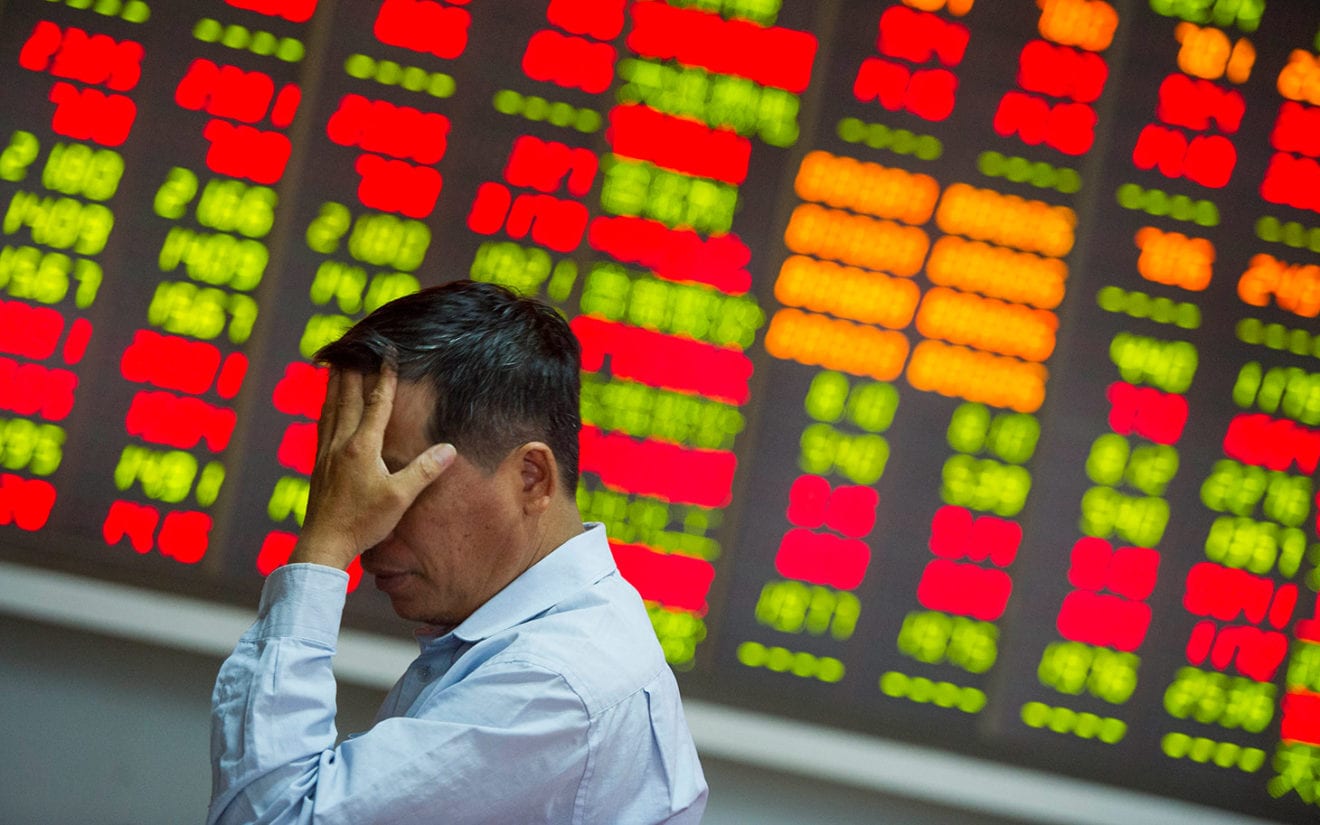
  • ‘Don’t blame retail investors for China’s flash crash’

    ‘Don’t blame retail investors for China’s flash crash’

    Picture this: the market plunged 9 percent in around 30 minutes of hectic trading. Regulators raced to contain the damage, that was estimated in the trillions. Later, the plunge was repeated with a market collapse of 6.5 percent as 1,100 points were wiped in about five minutes. Trading was halted multiple times and circuit breakers were praised for preventing a full-on market crash of epic proportions.

    It just goes to show that this is an untrustworthy, poorly developed market that has to be managed externally by imposing trading halts.

    Hang on, there’s just one problem with this assumption. The 9 percent plunge happened on May 6, 2010. It was the infamous Flash Crash on the New York Stock Exchange. The second 6.5 percent fall was the August 24, 2015 flash crash, also on the NYSE.

    And rather than signaling the end of the financial world as we know it, markets simply shrugged their collective shoulders and moved on.

    But analysts seem to apply a different yardstick to the China market and are using this week’s Shanghai Composite flash crash to highlight what they see as China’s economic disaster.

    This is more than easily dismissed as double-standard analysis, because closer examination suggests some alternative explanations.

    Let’s first go back to the US flash crashes. The 2010 crash was widely attributed to the activity of exchange traded funds (ETFs). The 2015 crash was attributed to high frequency trading because sell algorithms cascaded in a falling market.

    The true reasons are certainly more complex, but it’s the nature of these suspects that is interesting because they highlight the connection between the derivative markets and the underlying market.

    One of the key connections is the rapid placement and withdrawal of trading orders that lies at the core of high frequency trading. These are placed in the futures and associated markets. In its subsequent investigation, the Commodity and Futures Trading Commission (CFTC) concluded that this activity was at least significantly responsible for order imbalances in the derivatives market, which in turn affected the stock market.

    The key feature is that these types of extreme and rapid market collapses are most often associated with markets dominated by derivative trading. These crashes are caused by institutional trading from ETFs and HFT. They are not caused by mums and dads trading because mums and dads simply do not act in such a coordinated fashion in such a short timeframe. Mums and dads also do not have the leverage to shift markets in this way within 30 minutes or an hour. That power lies in the hands of large-scale derivative traders.

    So, heres the rub. The onshore China market is dominated by retail traders. The offshore derivative market is dominated by institutional funds and ETFs and trading activity has been facilitated by the Shanghai-Hong Kong Stock Connect that opened in November 2014.

    Chinese authorities have been concerned for some time by allegations of Qualified Foreign Institutional Invetor (QFFI) funds being used in offshore shadow derivative trading. In June 2015 there were claims that the Shanghai index sell-off from the high of 5,176 was preceded by a spike in the placement and rapid removal of sell orders that is typical of HFT activity. It took the CFTC 4 years to deliver a final report on the 2010 Flash Crash so its unreasonable to expect a CSRC report on the June 2015 fall anytime soon.

    The January 1 Shanghai flash crash has all the characteristics of the NYSE flash crashes but in a market that is not dominated by fund managers and institutional trading. It’s the imposition of circuit breaker-thinking, imported directly from the flash crash-vulnerable NYSE market, that stopped this Shanghai flash crash from worsening.

    It’s convenient but far too simplistic to blame Chinese retail traders. The pattern of order placement in the physical and derivative markets need further investigation.